DRIFT AUDIO
Listen to this story
Choose a voice, then press play.
a western
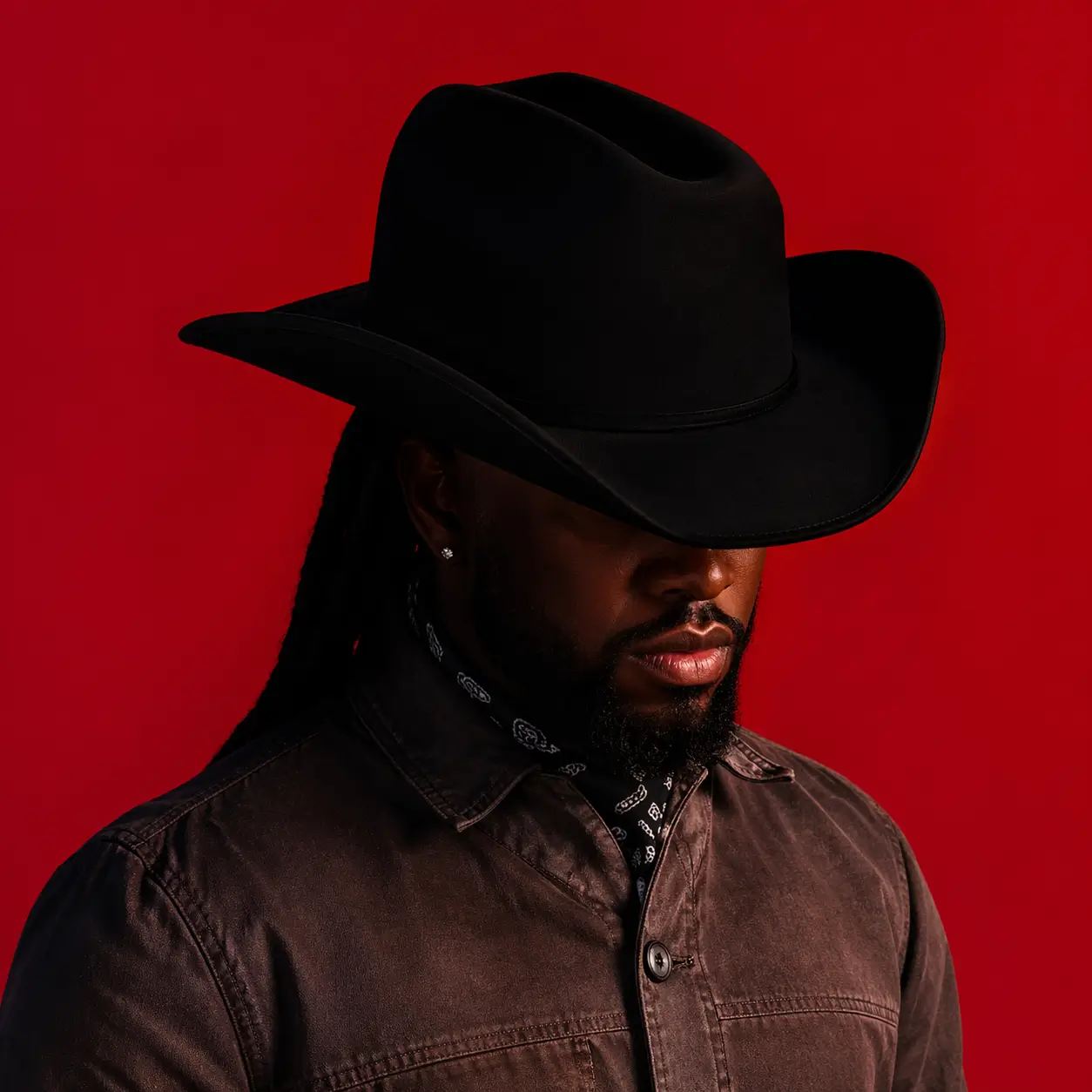
Shaboozey isn’t simply releasing an album this summer—he’s constructing a myth. With The Outlaw Cherie Lee & Other Western Tales, due July 31, 2026, the genre-defiant artist steps beyond the boundaries of music into narrative architecture, shaping a revenge-driven Western that operates less like a collection of songs and more like a film unfolding in sound.
Released via American Dogwood in partnership with Empire, the project positions itself as a fully realized concept album—one that resists fragmentation in favor of continuity. This is not a loose thematic exercise. It is a sustained narrative rooted in grief, consequence, and the irreversible pull of vengeance.
At its center is Cherie Lee—a figure introduced not as an origin, but as an inevitability. She exists already shaped by loss, already moving toward a conclusion she cannot outrun.
View this post on Instagram
stir
The story begins, as Westerns often do, with rupture.
Cherie Lee, the daughter of a respected sheriff, witnesses her father’s brutal murder at the hands of the Bootcut Boys—a gang defined not just by violence, but by their indifference to consequence. The killing is not dramatized for spectacle; it is rendered as a severing. Law dissolves. Order fractures. What remains is absence.
That absence becomes direction.
She abandons the badge—symbolically and materially—and reconstructs herself as hunter. The transformation is not immediate, but it is inevitable. Grief, in Shaboozey’s framing, is not passive. It is kinetic. It sharpens into purpose, condensing into a singular trajectory.
Armed with resolve and a six-shooter, Cherie moves across the frontier—not as protector, but as instrument. Each step forward is not progress, but narrowing. Each decision draws her closer to something final.
emotive
Where the narrative deepens is in its refusal to remain singular.
Midway through her pursuit, Cherie encounters one of the very outlaws she seeks. But Shaboozey resists simplicity. This man is not constructed as a villain in full; he is fractured, introspective, carrying his own quiet argument for redemption. He exists in contradiction to the world he inhabits.
What follows is not relief—it is complication.
Their connection forms against logic: she embodies vengeance, while he proposes the possibility of escape. He sees a life beyond the cycle of violence; she remains bound to it. The relationship that develops is neither soft nor redemptive. It is unstable, suspended between inevitability and interruption.
This is where the album locates its emotional core—not in action, but in tension. Love does not resolve the narrative. It destabilizes it.
song
The lead single, “Born to Die,” operates as both entry point and thesis.
Released April 24, 2026, the track establishes the album’s tonal language with precision. Sonically, it draws from outlaw country traditions—twang-driven guitar lines, grounded percussion—while integrating modern rhythmic structures that subtly reposition the genre. Shaboozey’s delivery sits in deliberate restraint, balancing grit with fatalism.
Lyrically, the song frames destiny as something lived rather than theorized. The protagonist does not question her path; she recognizes it. Every decision exists within a fixed endpoint. Choice remains, but consequence is already written.
The result is immersive without excess—a soundscape that feels archival in texture but immediate in execution. It does not replicate the past; it reinterprets its emotional logic.
myth
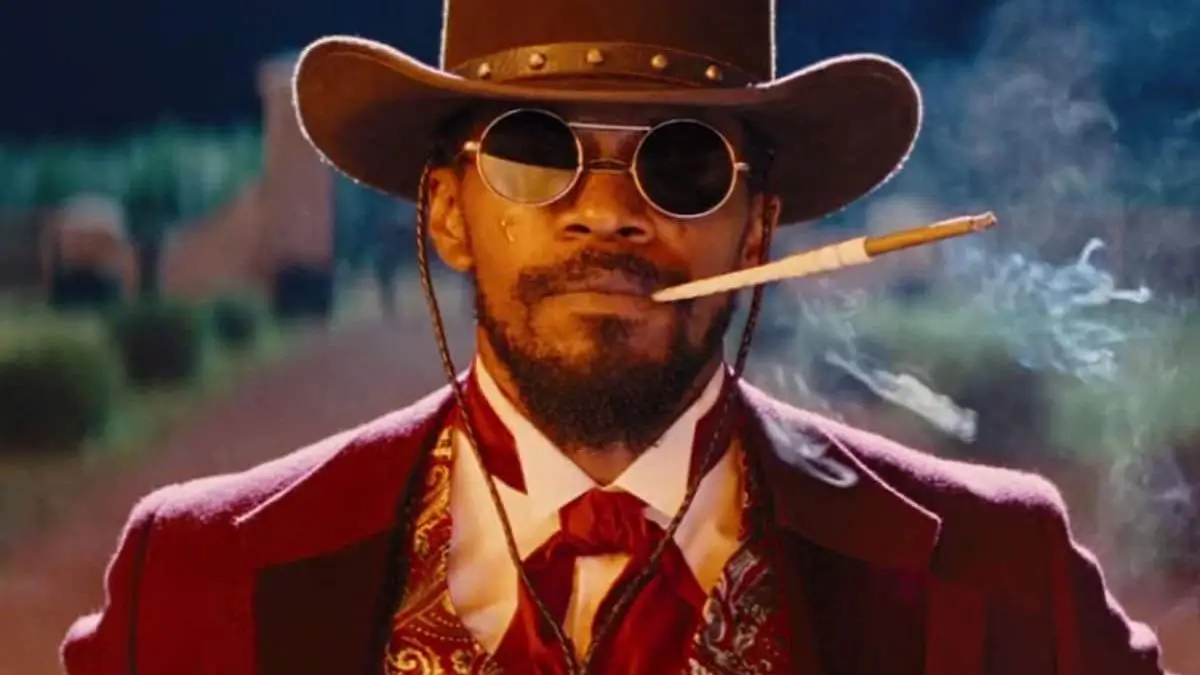
The album’s narrative weight is intensified through the presence of Jamie Foxx, whose voice operates as both guide and omen.
In the Western-themed trailer released April 20, Foxx delivers a line that anchors the project’s moral framework: “There’s a hefty price to pay for revenge.” The statement is less warning than declaration—an inevitability that frames every action that follows.
His narration does more than contextualize events. It mythologizes them. It places Cherie Lee within a lineage of figures defined not by their choices alone, but by the consequences they cannot escape.
Through Foxx, the album adopts a near-folkloric tone. The story is elevated from individual tragedy to cultural parable, suggesting that Cherie’s journey is not singular—it is archetypal.
idea
As the narrative converges, resolution becomes unavoidable—but not in the way traditional structures promise.
Cherie is confronted with an impossible decision: preserve the man she loves and betray the vow that defines her, or fulfill that vow and erase what remains of her humanity. There is no third path. No compromise exists within the logic of the story.
Shaboozey chooses tragedy.
Cherie kills the outlaw who offered her an alternative future. The act is not framed as triumph. It is completion. In that moment, she fully becomes what she set out to confront. Identity collapses into action. The distance between hunter and hunted dissolves.
The transformation is absolute.
This is not an ending that resolves tension—it is one that solidifies it. Cherie does not emerge redeemed. She emerges defined.
muse
The Outlaw Cherie Lee & Other Western Tales continues Shaboozey’s established practice of genre fluidity—but here, the fusion serves narrative purpose rather than stylistic novelty.
Traditional country instrumentation—fiddle, pedal steel, acoustic textures—intersects with hip-hop rhythms and contemporary production techniques. The integration is deliberate, creating a sonic environment that feels both grounded and destabilized.
Each track operates as a scene within a larger structure. Pacing shifts reflect emotional movement. Silence is used with intention. The spaces between notes carry as much weight as the notes themselves.
Rather than describing environments, the album constructs them. Dust, distance, isolation—these are not lyrical references alone; they are embedded within the sound.
The listener does not observe the world from a distance. They move through it.
beyond
The project extends beyond audio into physical experience.
A planned “pop-up saloon” activation signals an effort to dissolve the boundary between narrative and environment. This is not merely promotional—it is structural. The album is designed to be inhabited, not simply heard.
While the full roster of collaborators remains undisclosed, Shaboozey’s history suggests a layered approach to voice. Artists such as Noah Cyrus or others within adjacent sonic spaces could contribute additional perspective, expanding the narrative’s texture without disrupting its cohesion.
The ambition is clear: to build a world that extends beyond the duration of the album itself.
stakes
What ultimately distinguishes The Outlaw Cherie Lee & Other Western Tales is its commitment to narrative in a cultural moment defined by fragmentation.
Where much of contemporary music prioritizes immediacy, Shaboozey leans into duration. He constructs arcs rather than moments, consequences rather than impressions. The Western, as a genre, is not revived here for nostalgia—it is repurposed as a framework through which identity, grief, and transformation can be examined.
Cherie Lee is not framed as hero or villain. She exists as outcome.
Her story resists simplification because it reflects a truth often avoided: that actions, once set in motion, do not resolve cleanly. They accumulate. They define.
fin
Shaboozey isn’t revisiting the Wild West.
He is rewriting its grammar—through sound, through structure, and through a character who refuses resolution.
And in doing so, he reminds us that the most enduring stories are not those that conclude neatly, but those that remain—unsettled, unresolved, and impossible to forget.
Related Articles
That Mexican OT Vib OC Chris On A Dusty Hook
“I Can’t.” 25 September 2026. Bay City rapper, OC Chris, outlaw-rock pulse. Manifest, Good Money, […]