21 Lil Harold & BabyDrill Drop a Gem on “Spin”

April 19, 2026
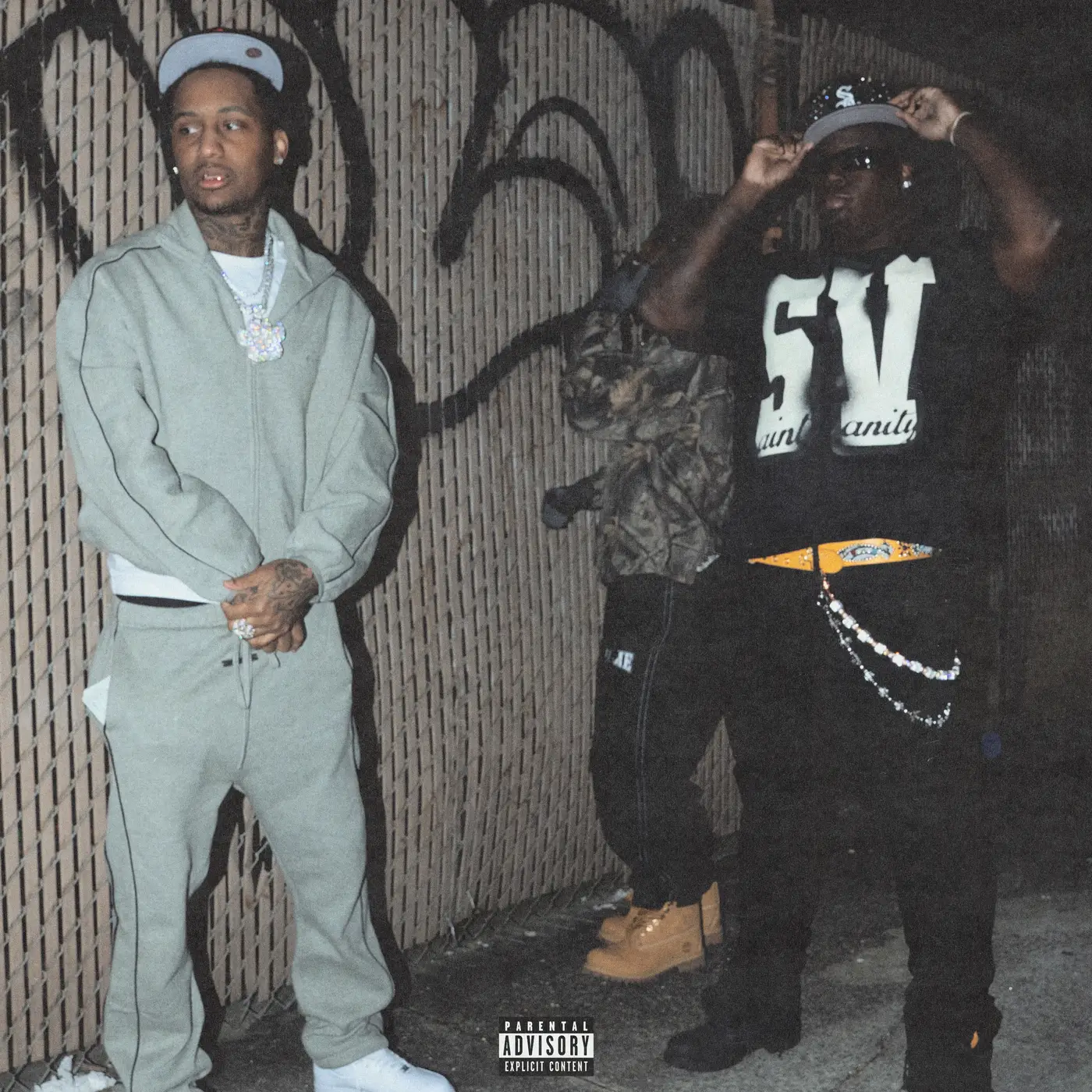
“Spin” doesn’t unfold—it loops, compresses, and reloads.
The track opens with a short spoken intro (0:00–0:08), not as exposition but as ignition. There’s no narrative setup, just tone: confrontational, immediate. Later, it snaps into the hook, where the repeated “Spin, spin, spin” becomes both a rhythmic anchor and a behavioral command. The line “Must don’t want no smoke, ’cause I can’t piss without my pole” functions less as lyricism and more as identity assertion—direct, unfiltered, and embedded into the loop.
The chorus expands the hook rather than replacing it. “Drop the dot, I pull up striker Benz” layers over a stripped, ominous trap/drill hybrid beat. The production stays skeletal—low-end pressure, minimal melodic interference—so the vocal cadence carries the momentum.
Verse 1 (0:53–1:32) introduces forward motion, but only slightly however transitions immensely. 21 Lil Harold doesn’t pivot away from the core idea—he intensifies it. The flow is tight, percussive, almost per-step with the hi-hats, reinforcing the sense that the track is less about storytelling and more about sustained pressure.
stir
What you identified as a “pipelined process” is accurate—but it’s even tighter than that. “Spin” behaves like a closed-loop system under constant load:
Core Loop:
Intro → Hook → Chorus → Verse → Chorus → Bridge → Stacked Chorus → Fade
System Behavior:
- Throughput: Extremely high
There’s no idle space. Every second is occupied—either by vocals, ad-libs, or bass presence. Silence is eliminated. - Latency: Near-zero
The track transitions almost instantly from intro to hook. No buildup, no suspense—just execution. - Concurrency: Layered vocal threads
Especially in the final section, ad-libs and main vocals operate simultaneously, creating a multi-threaded texture rather than a single lead line. - Redundancy as Strength:
The repetition of “Spin” isn’t filler—it’s structural reinforcement. Like a looped command in code, it ensures continuity and memorability. - Scalability (Live Context):
The chant-based architecture is built for expansion. In a live setting, each element—hook, ad-lib, bass hit—can be amplified without breaking the system. Crowd becomes an additional processing layer.
the producer
View this post on Instagram
View this post on Instagram
fin
“Spin” isn’t trying to evolve across its runtime. It’s trying to lock you into a state.
There’s no traditional bridge because there’s no need for contrast. Instead, the track relies on:
- Micro-variation
- Density increases
That’s why it hits like moshpit fuel. Not because it’s chaotic—but because it’s controlled, looped aggression.
Related Articles
Sean Leon Cuts Loose On “Link Some,” A Breakup Anthem Built For Letting Go
Sean Leon trims a relationship down to its final gesture on a new two-minute single, […]