Skateboard Art and Graffiti With Van Eggers: When the Street Becomes the Studio
 Paul Jean
January 22, 2026
0
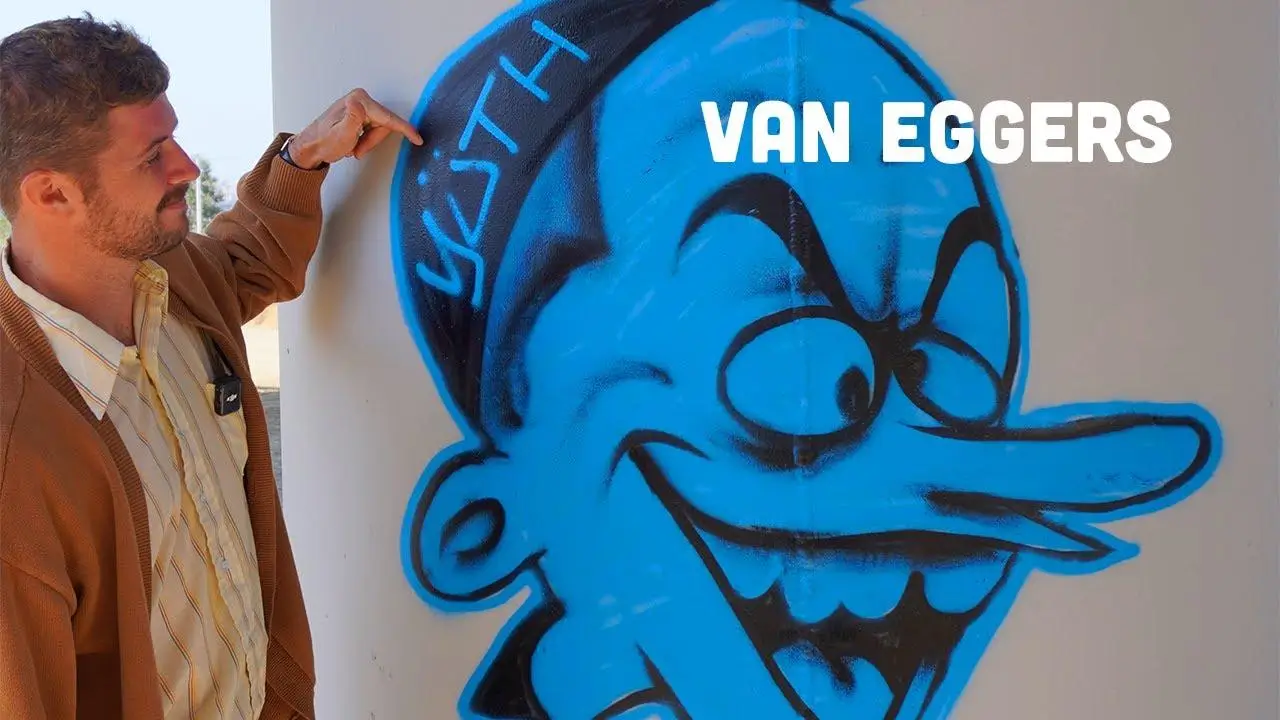
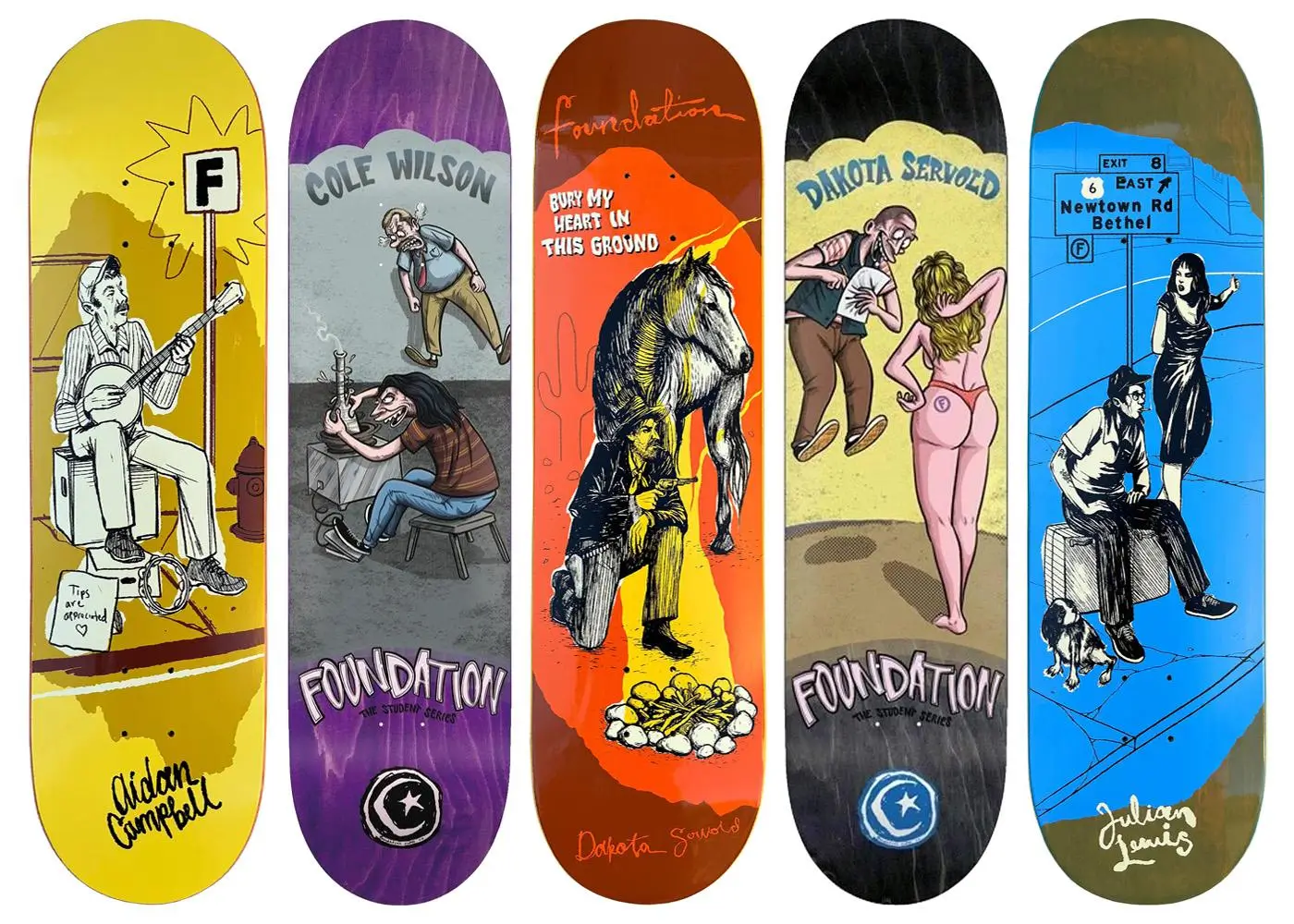
Skateboard culture and graffiti have always shared more than pavement. Both were born from unsanctioned movement—one physical, one visual—and both evolved through repetition, risk, and a refusal to wait for permission. In recent years, the boundary between the two has thinned even further. Decks have become canvases. Handstyles migrate from brick walls to maple plies. Spray techniques influence resin pours, airbrushed fades, and grip-tape typography.
Van Eggers sits squarely inside this lineage, operating less like a traditional studio artist and more like a translator between street systems. His work—painted decks, wall fragments, sculptural board stacks, and hybrid murals that lean into skate architecture—does not romanticize the street from a distance. It treats it as a working environment, one with its own tools, etiquette, and rhythms.
To understand what Eggers is doing now, it helps to step back into the long, parallel histories of skate graphics and graffiti, and then watch where he begins to stitch them together.
two
Graffiti emerged from tagging, repetition, territorial logic, and the pursuit of visibility inside hostile urban systems. Skateboard art grew out of branding, zines, surf graphics, punk flyers, and DIY production—portable imagery designed to move through cities rather than remain fixed inside them.
By the late 1980s and early 1990s, the two worlds were already colliding. Writers skated. Skaters bombed walls. Companies hired muralists to design board series. Crews treated drained pools and freeway embankments as both riding terrain and painting grounds.
The skateboard deck itself became a perfect intermediary. It is durable, curved, disposable, and culturally legible. When cracked or razor-tailed, it carries scars that resemble a wall weathered by sun, traffic, and repainting. Eggers often points to this similarity: both surfaces accumulate history. A deck does not stay pristine, just as a wall does not remain untouched.
Where graffiti traditionally claims space and skate graphics circulate through retail, Eggers uses both systems simultaneously. Some of his decks are meant to be skated into failure. Others are mounted, layered, or embedded into installations that read like vertical skate spots fossilized mid-session.
wear
Eggers’ practice is anchored in abrasion. He is less interested in the pristine release-day deck than in what happens after months of curb slides and failed flip tricks. In his studio, boards are sanded back down, soaked in pigment, re-sprayed, scored with blades, and occasionally run over concrete slabs to reproduce the randomness of street damage.
Graffiti techniques slip in everywhere. Drips are allowed to run along the concave edges. Fat-cap bursts pool near truck holes. Sharpie tags stack on top of acrylic fills. Halftone stencils peek through translucent layers of automotive lacquer.
Rather than reproducing classic letterforms wholesale, Eggers abstracts them. Fragments of arrows, halos, crowns, and starbursts appear without full words. A curve might echo a throw-up bubble. A jagged tear in paint reads like the tail of a lightning-bolt serif. These gestures keep the work inside graffiti’s visual grammar without locking it to legible names.
The result feels archaeological, as if each object documents multiple anonymous hands rather than a single author. Eggers often frames his role not as the final writer but as the editor of surfaces—someone who accelerates the life cycle of an object until it resembles a street artifact.
style
One of Eggers’ most recognizable moves is the stacking of broken decks into wall-mounted reliefs or freestanding columns. Dozens of boards are cut, bent, and compressed into ribbed structures that resemble brutalist facades, drainage tunnels, or skateable ledges pulled upright.
From a distance, these sculptures read like color-blocked towers. Up close, every ply tells a story. Wheel wells gouge into fluorescent fades. Stickers from old skate shops sit half-buried beneath resin pours. Scribbled names and crossed-out attempts appear under later coats of silver or tar-black.
Graffiti logic governs the layering. Earlier marks remain visible beneath newer ones, creating palimpsests similar to walls that have hosted years of repainting. Eggers resists sanding everything smooth. Texture is crucial. Chipped edges catch light the way flaking masonry does.
In exhibitions, he often positions these deck-structures adjacent to painted walls or concrete plinths, collapsing the distinction between gallery architecture and skate obstacle. Viewers are forced to circle them the way skaters inspect a new spot, tracing potential lines even when riding is forbidden.
mural
When Eggers paints directly on walls, his compositions retain the spatial logic of skateboarding. Corners are emphasized. Lower edges receive heavier pigment as if anticipating impact. Certain areas are intentionally left raw or under-coated, echoing the zones where boards and shoes would naturally erode paint.
His color palettes skew industrial—oxidized purples, traffic-cone orange, sodium-vapor yellow, oil-slick blues—tones associated with parking garages and nighttime street sessions. Over these fields, he layers aerosol bursts, stencil grids, and scratched-in lines that recall grip-tape cuts.
What distinguishes these murals from straightforward graffiti homage is their relationship to movement. Eggers designs them to be read at speed. From across a plaza, the compositions snap into bold silhouettes. Up close, they dissolve into micro-gestures: cap halos, tape bleeds, misfires, fingerprints. The work behaves differently depending on whether you approach it as a pedestrian or imagine rolling past on four wheels.
show
Skateboard art and graffiti share complicated relationships with authority. Both began as marginal practices and now circulate comfortably inside museums, auction houses, and brand campaigns. Eggers does not pretend to resolve that tension. Instead, he keeps it visible.
Some of his projects take place in sanctioned environments—galleries, skate shops, temporary pop-ups—while others appear quietly in abandoned lots or under bridges, only documented after the fact. The materials remain consistent across contexts: cheap spray paint mixed with high-gloss automotive finishes, salvaged decks paired with polished aluminum mounts.
By refusing to separate “street” works from “exhibition” works stylistically, Eggers challenges the idea that legitimacy should produce aesthetic cleanliness. Even his most expensive pieces retain scuffs, misalignments, and visible tape lines. The message is subtle but firm: polish can exist without erasing roughness.
influ
Eggers’ references are broad but rarely sentimental. Old Powell Peralta skulls, early New York subway panels, West Coast ditch spots, European concrete parks, zine layouts from the 1990s—all surface indirectly through composition rather than quotation.
Typography is one of his main conduits for history. He borrows the weight of handstyles without copying specific alphabets. Thick vertical strokes suggest roller-painted highway letters. Compressed blocks echo corporate skate logos from the VHS era. Spindly extensions hint at contemporary calligraffiti. These influences coexist on the same surface, collapsing decades of street writing into a single object.
This refusal to lock into one era keeps the work forward-facing. Instead of functioning as homage, the pieces behave like hybrids—what graffiti and skate graphics might look like if they had evolved together uninterrupted, free from museum vitrines and brand guidelines.
collab
Eggers frequently invites skaters and writers into his process, not as decorative contributors but as functional collaborators. A local skater might be asked to ride a freshly painted deck until the graphic begins to fail. A graffiti writer might add a single layer, then leave, allowing Eggers to partially obscure it later.
These exchanges produce surfaces that no single person fully controls. Authorship becomes distributed, closer to the way real street environments accumulate marks from countless unknown actors.
In workshops and residencies, Eggers has replicated this system with younger participants, encouraging them to treat decks as temporary rather than precious. The emphasis is on circulation and decay—make something, ride it, repaint it, cut it up, mount it, repeat.
myth
As skateboard-based artworks gain traction among collectors, Eggers remains skeptical of permanence. Some of his installations are explicitly temporary, dismantled after exhibitions and redistributed as individual fragments. Others are built to oxidize or crack over time, their finishes intentionally unstable.
This impermanence echoes graffiti’s vulnerability to buffing and skateboarding’s constant destruction of gear. By embedding that fragility into gallery objects, Eggers resists the freeze-frame effect that often accompanies institutional recognition.
Collectors who acquire his work often receive instructions rather than certificates—guidelines for re-stacking components, permission to let surfaces weather, suggestions to expose pieces to light or moisture. Ownership becomes stewardship rather than preservation.
why
The fusion of skateboarding and graffiti is no longer novel. Brands print murals on decks every season. Writers release signature board series. Museums host exhibitions on street culture with predictable regularity.
What makes Eggers’ contribution compelling is not novelty but insistence. He treats the overlap between these worlds as a living system rather than a style. The scratches, drips, and warped plies are not decorative; they are evidence of processes that resist neat packaging.
In an era when street aesthetics are often flattened into Instagram-ready motifs, Eggers keeps the friction visible. His work asks viewers to consider where images come from, how they travel, and what is lost when subcultural tools become luxury surfaces.
fin
Van Eggers’ skateboard art and graffiti-inflected practice do not present finished statements. They resemble drafts left in public—marks that might be added to, ridden over, scraped back, or painted out entirely.
By compressing the life cycles of walls and decks into sculptural form, he offers a portrait of urban creativity that values accumulation over perfection and collaboration over signature. The street, in his hands, is not a theme but a methodology.
In that sense, Eggers is less interested in preserving skate and graffiti culture than in extending it—dragging its tools into new contexts while refusing to sand off their rough edges. His decks behave like walls. His walls behave like spots. His sculptures feel like obstacles paused mid-session.
The result is a body of work that refuses to sit still, even when mounted under gallery lights. It keeps moving, insisting that the most honest way to represent the street is to let it remain unfinished.
Previous article
← BTS Is Back Together and Launching an 11-Month World TourNext article
Miami Joins Waymo’s Growing Robotaxi Network →Related Articles

The $960,000 Jacket: How Jensen Huang’s Leather Uniform Became a Collector’s Item
A worn Tom Ford jacket with a $60,000 ceiling closed at $960,000 on Friday, and […]