Taylor Swift Announces Original Song for Toy Story 5

June 2, 2026
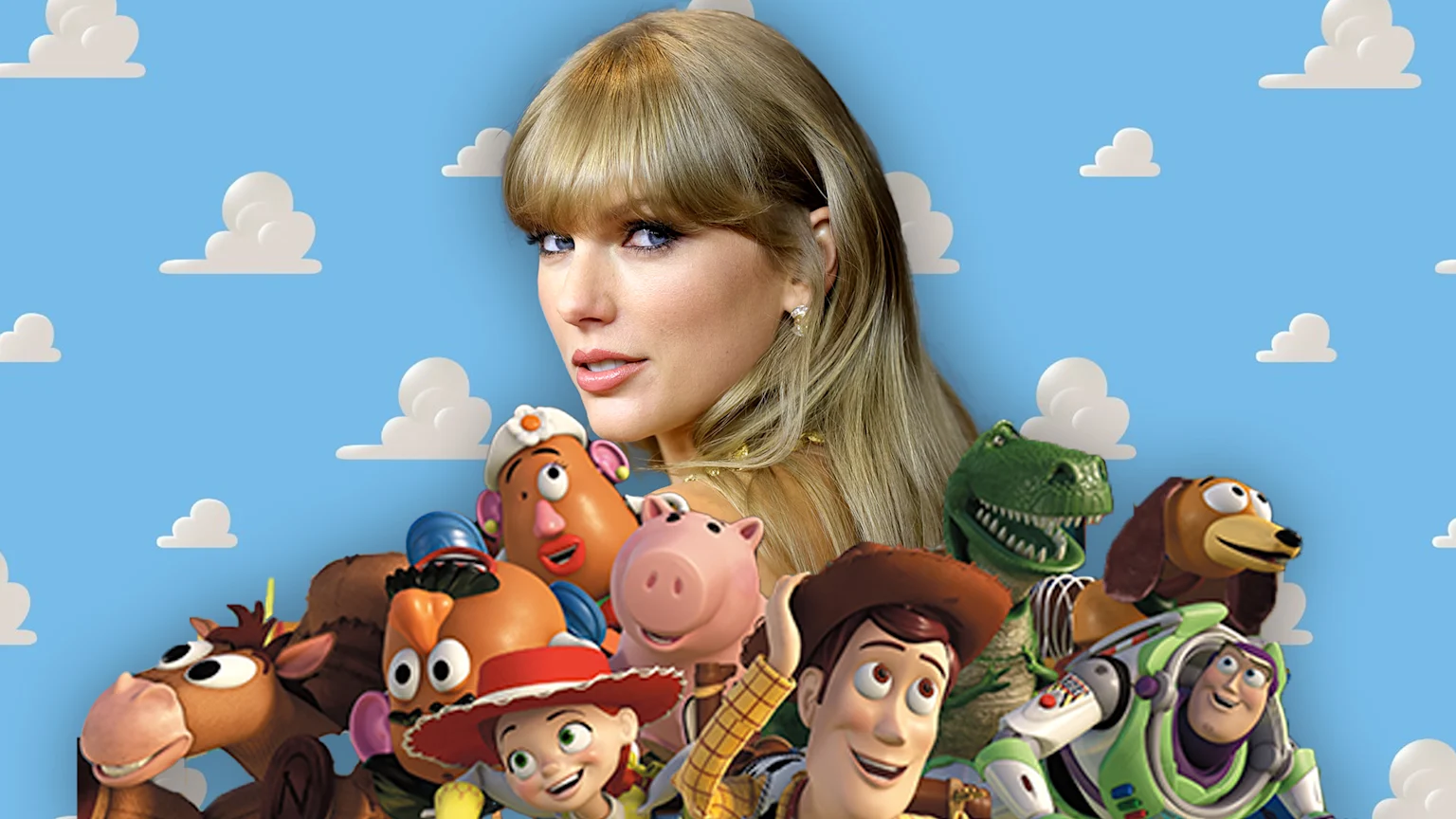
In a surprise announcement that sent Swifties and Pixar fans into a collective frenzy on June 1, 2026, global superstar Taylor Swift revealed she has written and recorded an original song titled “I Knew It, I Knew You” for Disney and Pixar’s highly anticipated Toy Story 5. The track, set for digital release on June 5—just two weeks before the film hits theaters on June 19—marks a full-circle moment for the 36-year-old artist who has openly cited the original Toy Story (1995) as one of her earliest cinematic loves.
This convice represents far more than a simple soundtrack addition. It bridges Swift’s signature storytelling prowess with Pixar’s unparalleled ability to explore deep emotional truths through seemingly simple characters. For a franchise built on themes of loyalty, change, obsolescence, and unconditional love, Swift’s involvement feels almost predestined.
View this post on Instagram
stir
On June 1, Swift took to Instagram with a playful yet heartfelt post featuring cowboy hat emojis and the now-iconic line: “It’s a Toy Story 🤠 You knew it!” She shared that after an early screening of Toy Story 5, she was so moved that she went home and immediately began writing. “I’ve always dreamed of getting to write for these characters who I’ve adored since I was a 5-year-old kid watching the first Toy Story movie,” she wrote. “I fell instantly in love with Toy Story 5… Sometimes you just know, right?”
The post quickly amassed millions of likes and comments. Fans flooded social media with theories, memes, and heartfelt stories about how the Toy Story films shaped their childhoods alongside Swift’s music. The timing couldn’t be more perfect: June 19, the film’s release date, coincides with the 20th anniversary of Swift’s debut single “Tim McGraw,” adding another layer of nostalgia to the moment.
flow
Produced alongside longtime collaborator Jack Antonoff, “I Knew It, I Knew You” is described as a country-rooted piano ballad that leans heavily into Swift’s early storytelling style. Early reports and insider descriptions suggest the track draws direct inspiration from Jessie the Yodeling Cowgirl’s emotional arc—particularly her longstanding fear of abandonment, first introduced so poignantly in Toy Story 2.
The title itself carries classic Swiftian double meaning. On the surface, it captures the joyful recognition of rediscovering old friends or purpose. Beneath that lies the anxiety of inevitable change—the fear that even the strongest bonds might one day fade. This duality perfectly mirrors Toy Story 5’s central conflict: the toys confronting a new generation obsessed with technology and digital companions, forcing them to question their relevance in a rapidly changing world.
Swift has a long history of writing for film and television. From “Safe & Sound” for The Hunger Games to “Carolina” for Where the Crawdads Sing, and her Oscar-nominated “All Too Well” short film work, she consistently delivers songs that enhance rather than overshadow the source material. However, Toy Story 5 feels uniquely personal. In interviews surrounding the announcement, Swift revealed she connected deeply with Jessie’s storyline, seeing parallels to her own experiences with fame, loyalty, and the passage of time.
Jack Antonoff’s involvement adds another layer of magic. Their partnership has produced some of Swift’s most critically acclaimed work across the Folklore, Evermore, Midnights, and The Tortured Poets Department eras. The choice to return to a stripped-back, country-infused sound for this project signals a deliberate nod to her roots while serving Pixar’s emotional tone.
evolve
Toy Story 5, directed once again by Andrew Stanton with co-direction by Kenna Harris and produced by Lindsey Collins, picks up after the events of Toy Story 4. The toys, now living with Bonnie, face new challenges as children’s play shifts dramatically toward tablets, apps, and AI companions. Randy Newman returns for the score, maintaining the franchise’s musical continuity, but Pixar clearly sought a contemporary voice to speak to both legacy fans and newer audiences.
Bringing in Taylor Swift achieves this balance masterfully. Her massive global reach introduces Toy Story to younger listeners who may primarily know her through Eras Tour culture dominance, while her genuine affection for the franchise reassures longtime fans that this addition comes from a place of respect rather than commercial opportunism.
Director Andrew Stanton has praised the song as feeling “like a long-lost family member finally coming home.” Pixar’s official accounts have shared promotional clips featuring Jessie, further confirming the song’s emotional focus on her character.
affair
Swift’s connection to Toy Story runs deep. In various interviews throughout her career, she has mentioned watching the original film repeatedly as a child, finding comfort in its messages about friendship and identity. During her early country music days, she often drew parallels between her own “underdog” story and characters like Woody and Buzz who learn to work together despite their differences.
This personal investment makes “I Knew It, I Knew You” more than a contractual obligation. It represents Swift stepping into the role of storyteller for characters that helped shape her. In an era where many celebrities lend their names to projects with minimal involvement, Swift’s hands-on approach—watching an early cut and writing immediately afterward—demonstrates authentic passion.
culture
The announcement arrives at a fascinating culture crossroads. Taylor Swift remains one of the most influential artists on the planet, with the power to move markets, shift streaming numbers, and dominate cultural conversations. Her involvement guarantees Toy Story 5 will reach audiences beyond traditional family demographics.
For parents who grew up with both Swift’s music and the Toy Story franchise, this collection creates a beautiful multi-generational bridge. Millennials and Gen Z can share these films with their own children while experiencing new music from an artist who soundtracked their own coming-of-age.
The song’s pre-release strategy further demonstrates strategic brilliance. Fans can pre-order limited collector’s edition CDs on Swift’s website, each with unique artwork and potential bonus content. Three versions are available: the film version, an acoustic take, and a piano rendition. This approach rewards dedicated fans while building anticipation for the June 5 release.
extent
While “I Knew It, I Knew You” stands as a standalone single for now, its success could influence Swift’s next creative chapter. After the intensely personal The Tortured Poets Department and the record-breaking Eras Tour, many wonder whether Swift is entering a phase of more collaborative, outward-facing projects.
Her return to country elements also sparks interesting speculation. Could this mark the beginning of a broader exploration of her roots? Or is it simply the perfect sonic choice for a story about memory, loyalty, and rediscovery?
Whatever the case, this project showcases Swift’s evolution as an artist who can move seamlessly between stadium anthems, introspective indie-folk, and now, heartfelt family film ballads.
why
To fully appreciate the significance of Swift’s contribution, one must understand Toy Story’s unique place in cinema history. The original 1995 film revolutionized animation as the first fully computer-animated feature film. More importantly, it established Pixar’s reputation for telling profoundly human stories through non-human characters.
Each subsequent installment has tackled increasingly mature themes: Toy Story 2 explored abandonment and collectibility, Toy Story 3 confronted growing up and obsolescence, Toy Story 4 examined purpose and new beginnings. Toy Story 5 apparently continues this tradition by addressing technology’s impression on play and relationships.
In this context, Swift’s song about knowing and being known feels perfectly placed. The fear of being forgotten—of toys being replaced by newer entertainment—is universal. Swift has built her entire career on making listeners feel seen and understood. Pairing her with these beloved characters creates something genuinely special.
rx
The internet response has been predictably enthusiastic. “Toy Story” has trended across platforms. Fan artists have created beautiful crossover illustrations featuring Swift in Pixar style alongside Jessie and Woody. Playlists mixing Swift’s catalog with Randy Newman’s Toy Story songs have proliferated on Spotify.
Parents have shared touching stories about watching the films with their children while playing Swift’s music, now looking forward to this new connection point. The collision has also sparked renewed interest in Swift’s earlier catalog, with streams of her more country-leaning tracks seeing noticeable increases.
impression
As we count down to the song’s release on June 5 and the film’s premiere on June 19, anticipation continues to build. Will “I Knew It, I Knew You” become another Swift classic that transcends the movie it was written for? Early indications suggest it has all the ingredients: emotional depth, catchy melody, and universal themes.
For Taylor Swift, this project allows her to give back to a franchise that brought her joy as a child. For Pixar, it injects fresh energy into a beloved series. For audiences, it promises another opportunity to experience the magic of toys that feel more real than many human characters on screen.
In the end, “I Knew It, I Knew You” represents the best of what happens when two beloved cultural institutions find common ground. It reminds us that some stories—and some songs—are worth holding onto, even as the world changes around us. Just like Andy’s toys, and just like the melodies that soundtrack our lives, certain things remain timeless.
Related Articles

Rose Byrne and Mary Bronstein Are Doing It Again, and This Time They Brought Jenna Ortega
A coach and her prodigy are about to become the most dangerous relationship in a […]