DRIFT AUDIO
Listen to this story
Choose a voice, then press play.
As io9’s Germain Lussier can attest, the first footage from director Brian Duffield’s Whalefall, based on the 2023 novel of the same name by Daniel Kraus, lit CinemaCon on fire back in April with its visceral depiction of a diver getting swallowed whole by a sperm whale and having to fight his way out of the belly of the beast. And for those of you, like me, who find the very concept of this film soul-shatteringly terrifying, Duffield has some even worse news, for which he can only apologize: “…We did our best to make [the film] as scientifically accurate as possible, and I’m so sorry for people that are going to be scared about that,” he told the Hollywood Reporter.
Set for a theatrical release on October 16, 2026, via 20th Century Studios, Whalefall is no mere creature feature. It’s a high-concept survival thriller that fuses the ingenuity of The Martian with the visceral confinement of 127 Hours, all while plunging audiences into the psychological and physiological horrors of being trapped inside one of the ocean’s most formidable predators. With a stellar cast led by Austin Abrams and Josh Brolin, and produced by Imagine Entertainment heavyweights Brian Grazer and Ron Howard, the film promises to redefine underwater horror while delivering a deeply human story of grief, reconciliation, and resilience.
stir
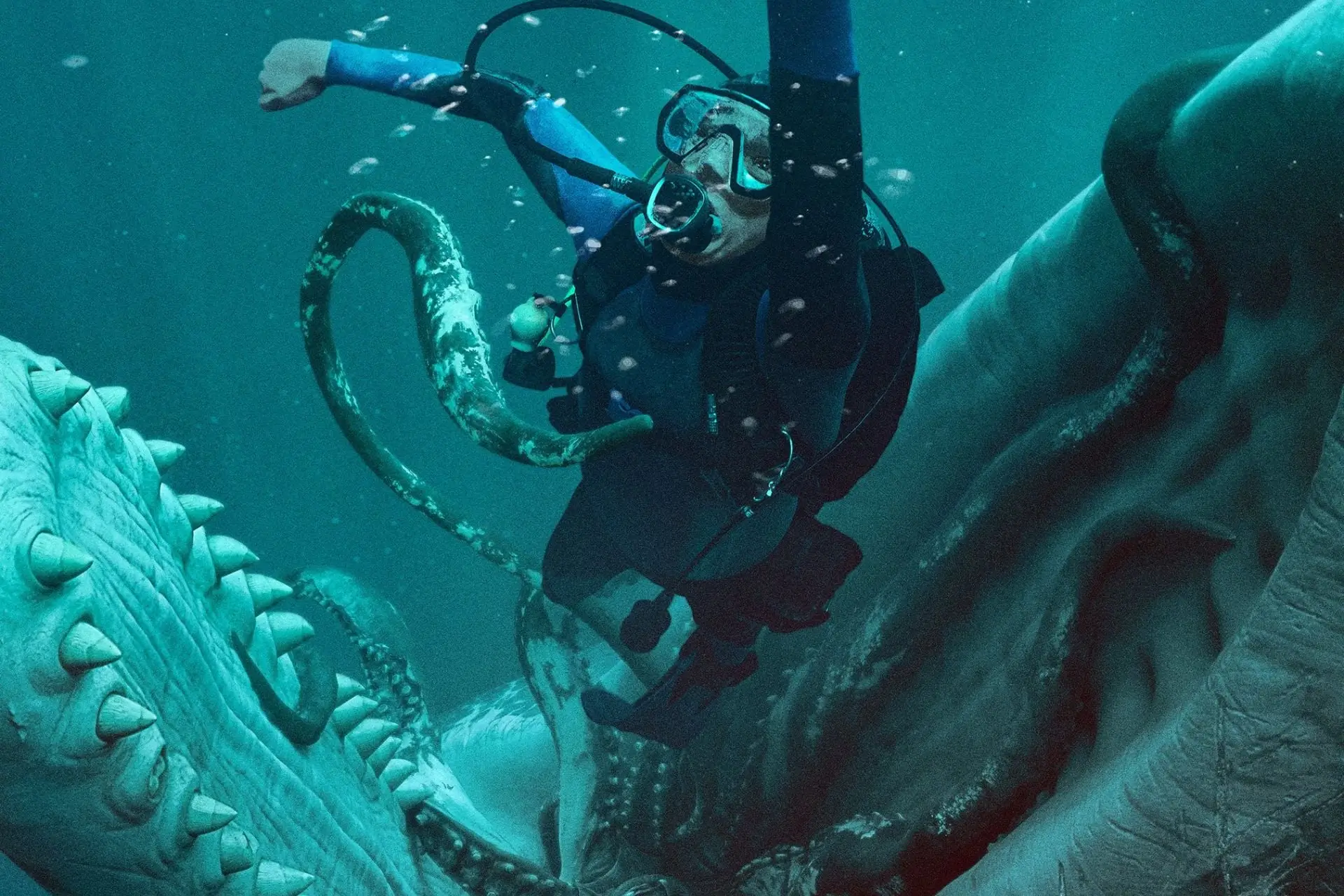
At the mid of Whalefall is Jay Gardiner (Austin Abrams), a young scuba diver haunted by the suicide of his father, Mitt (Josh Brolin). Seeking redemption and closure, Jay embarks on a solitary dive off the Central Coast of California near Monastery Beach to recover his father’s remains. What begins as a poignant, if foolhardy, quest quickly spirals into nightmare when a giant squid encounter draws the attention of an enormous 80-foot, 60-ton sperm whale. In a moment of chaotic predation, Jay is swallowed whole.
Trapped in the whale’s multi-chambered stomach with roughly one hour of oxygen remaining, Jay must use every ounce of ingenuity, diving knowledge inherited from his father, and sheer willpower to engineer an escape before digestion—or asphyxiation—claims him. The film interweaves this real-time survival struggle with nonlinear flashbacks that unpack the fraught father-son relationship, transforming the whale from mere antagonist into a symbolic vessel for unresolved trauma.
This isn’t fantasy escapism. As Duffield and Kraus emphasize, the story leans heavily into biological plausibility. Sperm whales, the largest toothed predators on Earth, possess an esophagus capable—in theory—of accommodating a human, especially one already in distress. Their four-chambered stomachs, powerful muscular contractions, and digestive processes create a hostile environment of crushing pressure, low oxygen, acidic conditions, and disorienting darkness. The production consulted marine experts to depict these details with unsettling fidelity.
from
Daniel Kraus’ 2023 novel Whalefall arrived with critical acclaim for its audacious premise and emotional depth. Clocking in at just over 300 pages, the book masterfully balances pulse-pounding action with introspective passages on guilt, legacy, and the ocean’s unforgiving vastness. Kraus’ prose—choppy, poetic, and immersive—mirrors the disorientation of its protagonist, blending present-tense survival with fragmented memories.
The adaptation, co-written by Duffield and Kraus, remains faithful to the novel’s core while expanding its cinematic potential. Early reactions to footage highlight the film’s ability to make the impossible feel palpably real. Duffield, who slid into Kraus’ DMs after hearing about the project, was drawn not just to the spectacle but to the emotional core: “The emotion and the characters just really spoke to me.”
scope
Brian Duffield has built a reputation for inventive, high-concept genre films that prioritize atmosphere and character over spectacle alone. His directorial debut Spontaneous (2020) blended dark comedy with teen apocalypse vibes. No One Will Save You (2023) delivered a near-dialogue-free alien invasion thriller that showcased his mastery of visual storytelling and claustrophobia.
Whalefall represents a natural evolution. Shooting the interior sequences was reportedly one of the most grueling challenges for the crew, requiring innovative practical and CGI techniques to simulate the whale’s living, breathing anatomy. Duffield pushed for authenticity, working with whale experts to depict everything from esophageal peristalsis to the stomach’s response to foreign objects. The result is a film that feels less like a monster movie and more like a nightmarish documentary of human endurance.
The director has also teased enhanced theatrical experiences, including 4DX formats with motion seating, sensory effects, and even smells to immerse audiences fully inside the beast. “You will die!” he joked about letting star Austin Abrams attempt certain stunts—highlighting the physical demands placed on the cast.
show
Austin Abrams (Wolfs, Weapons) leads as Jay, delivering a tour-de-force performance that carries much of the film’s runtime. Abrams performed most of his own underwater stunts, conveying raw panic, determination, and vulnerability in equal measure. His chemistry with Brolin—through flashbacks and imagined dialogues—grounds the fantastical premise in relatable emotional truth.


Josh Brolin brings his trademark intensity to Mitt Gardiner, portraying a complex father figure whose legacy looms as large as the whale itself. Supporting turns from Elisabeth Shue (as Jay’s mother Zara), John Ortiz, Jane Levy, and Emily Rudd add layers of family dynamics and community context.
cin
What elevates Whalefall beyond gimmick is its commitment to realism. Sperm whales can dive to depths exceeding 3,000 feet, produce clicks powerful enough to stun prey, and process massive meals in stomachs lined with thick muscular walls. The film doesn’t shy from the grotesque: the crushing descent down the esophagus, the disorienting chambers filled with partially digested squid, the constant threat of the whale’s movements.
Marine biologists note that while rare, the premise isn’t entirely impossible for a sperm whale—though survival odds are near zero. Duffield’s team embraced this tension, using it to heighten stakes rather than hand-wave biology. The result is thalassophobia fuel that will have audiences clutching their armrests.
ocean
Beyond the horror, Whalefall is a meditation on unresolved familial pain. Jay’s dive is as much about confronting his father’s suicide and their fractured bond as it is physical survival. The whale becomes a metaphor for the overwhelming weight of grief—something that engulfs you, forces confrontation, and demands transformation to escape.
In an era of climate anxiety and renewed fascination with the deep sea (think Avatar: The Way of Water or documentaries on ocean ecosystems), the film taps into primal fears while celebrating human ingenuity and the bonds that define us. It’s a story about what we inherit—from parents, from nature—and how we fight to rewrite those narratives.
cept
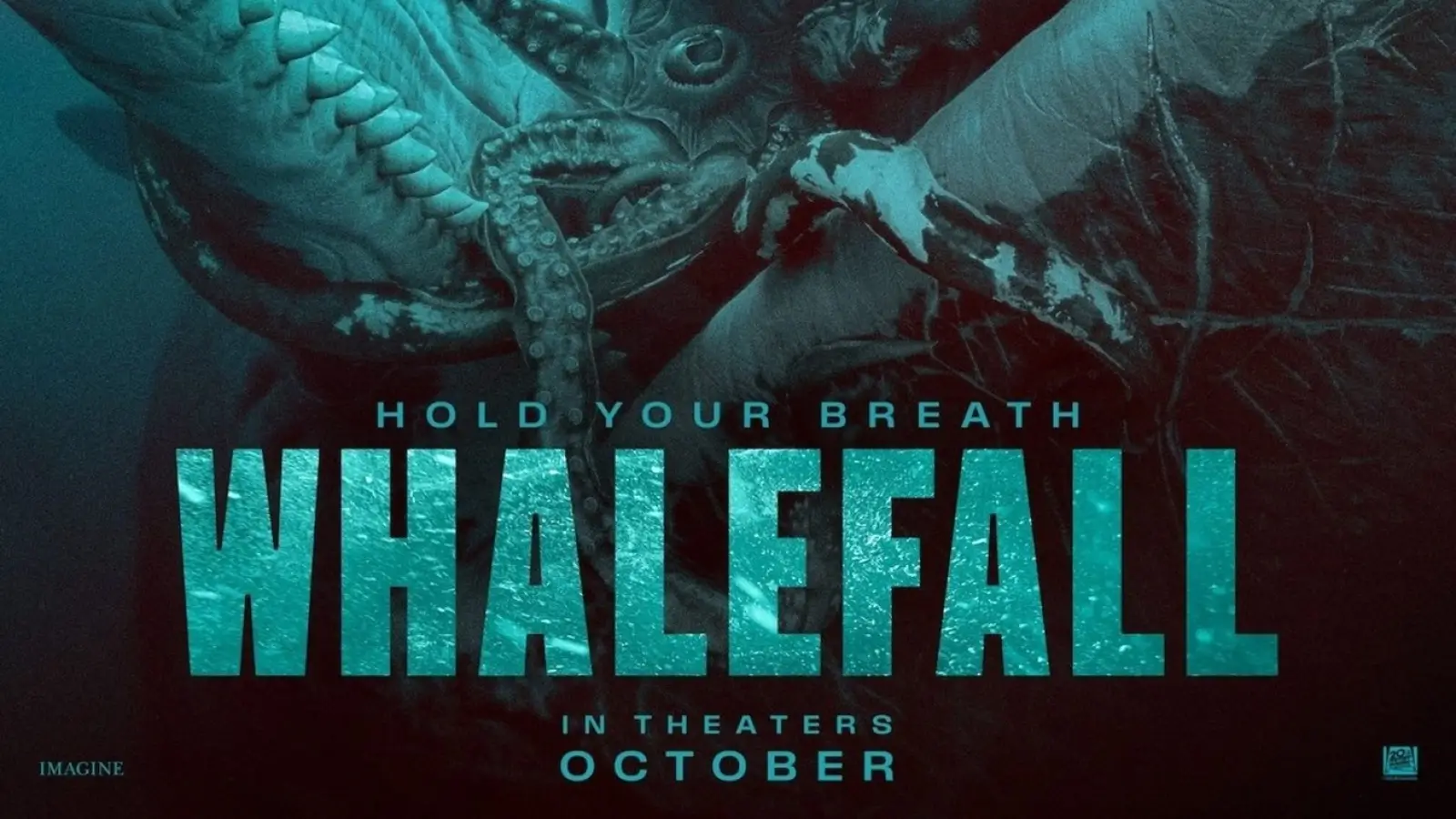
The trailer, released in June 2026, has generated massive buzz, with CinemaCon footage earning rave reactions for its intensity. Posters and key art emphasize the scale: a diver dwarfed by the whale’s maw, tentacles, and bioluminescent darkness. Taglines like “Hold Your Breath” and “The Odds Are Not Zero” play perfectly into the terror.
Early buzz compares it favorably to contained thrillers that punch above their weight. With a wide theatrical push, Whalefall is positioned as a must-see event film for horror, thriller, and prestige genre fans alike.
why
In a landscape saturated with IP reboots and franchise fare, Whalefall stands out as an original, high-concept original that delivers spectacle through storytelling and craft. It reminds us that cinema’s power lies in transporting us to places we’d never dare venture—and forcing us to confront what we carry inside.
Duffield’s apology to scared audiences is telling: this film isn’t here to comfort. It’s here to swallow you whole, make you feel the pressure, and perhaps emerge changed on the other side. As Jay fights for air and absolution in the dark, we’re reminded that survival—whether in the belly of a beast or the depths of grief—often requires facing the very thing that terrifies us most.
For those counting down to October 16, the wait feels interminable. Whalefall isn’t just a movie; it’s an experience that will linger long after the credits roll and the lights come up. Just remember to breathe.
n
From the DRIFT archive: Resident Evil Requiem: A New Chapter of Horror Begins 2026
Related Articles

American Horror Story Opens the Vault for a Thirteen-Episode Reunion of Its Own Ghosts
Three half-hour episodes land September 24 on FX and Hulu, with Jessica Lange, Sarah Paulson […]