DRIFT AUDIO
Listen to this story
Choose a voice, then press play.
A French audio startup and the band behind one of rock’s best selling albums have landed on unexpected common ground: magnetic tape.
There is a certain irony in strapping Bluetooth 5.1 to a format that peaked before most smartphones existed, but that is exactly what We Are Rewind has done with its latest connection. The Paris based company, known for reviving the cassette Walkman with modern internals, has partnered with Pink Floyd on a limited edition version of its WE-001 player built entirely around one record: The Dark Side of the Moon.
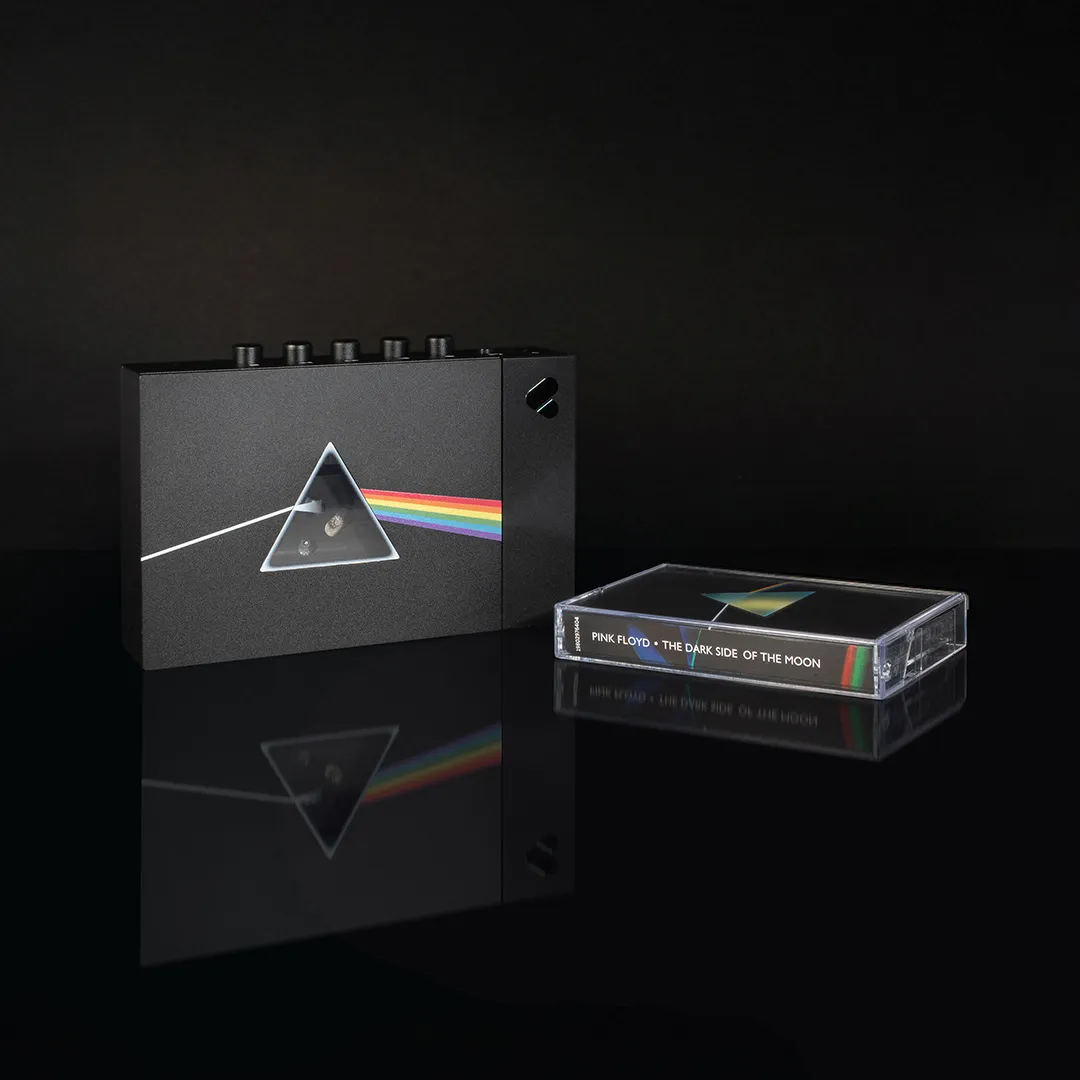
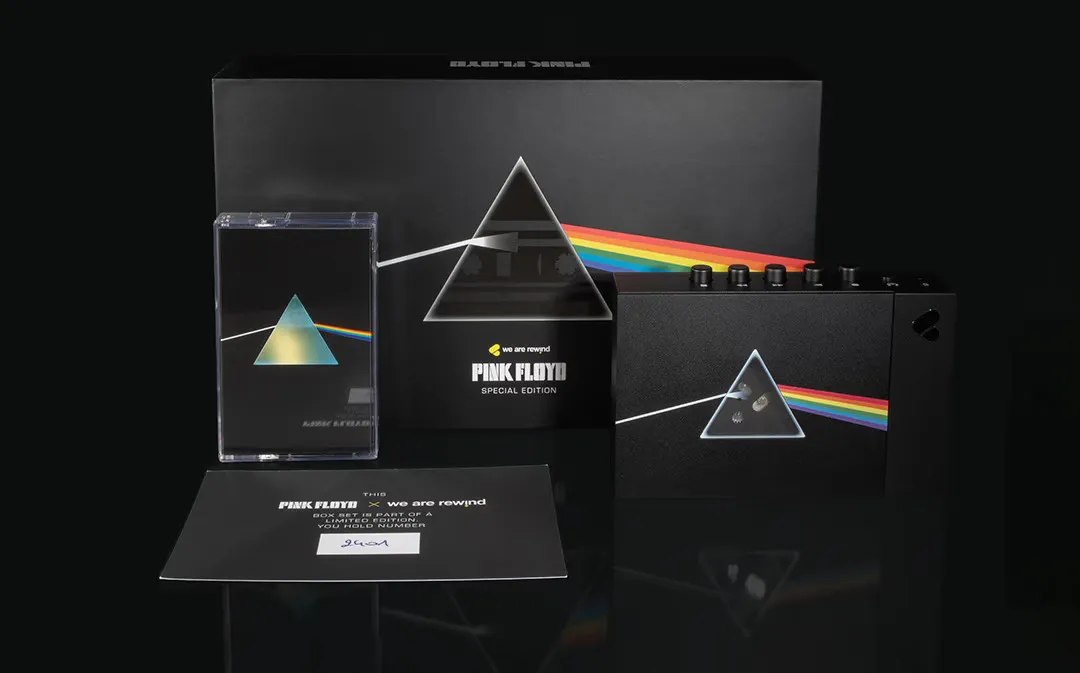
The box set pairs the player with a specially produced cassette of the album’s official 50th anniversary remastered edition from 2023, a tape that is not sold anywhere else. That exclusivity is the whole point. Anyone can stream the record in seconds. Getting the remaster on cassette requires this specific box.
We Are Rewind is calling it a collector’s set rather than a straightforward accessory bundle, and the packaging backs that framing up. Each unit ships numbered, with a certificate confirming where it falls in the production run, a small touch borrowed from vinyl box culture that cassette releases rarely bother with. The company’s press materials describe the goal plainly: restore the sonic richness of what it calls a timeless masterpiece, on a format built for exactly that kind of listening.
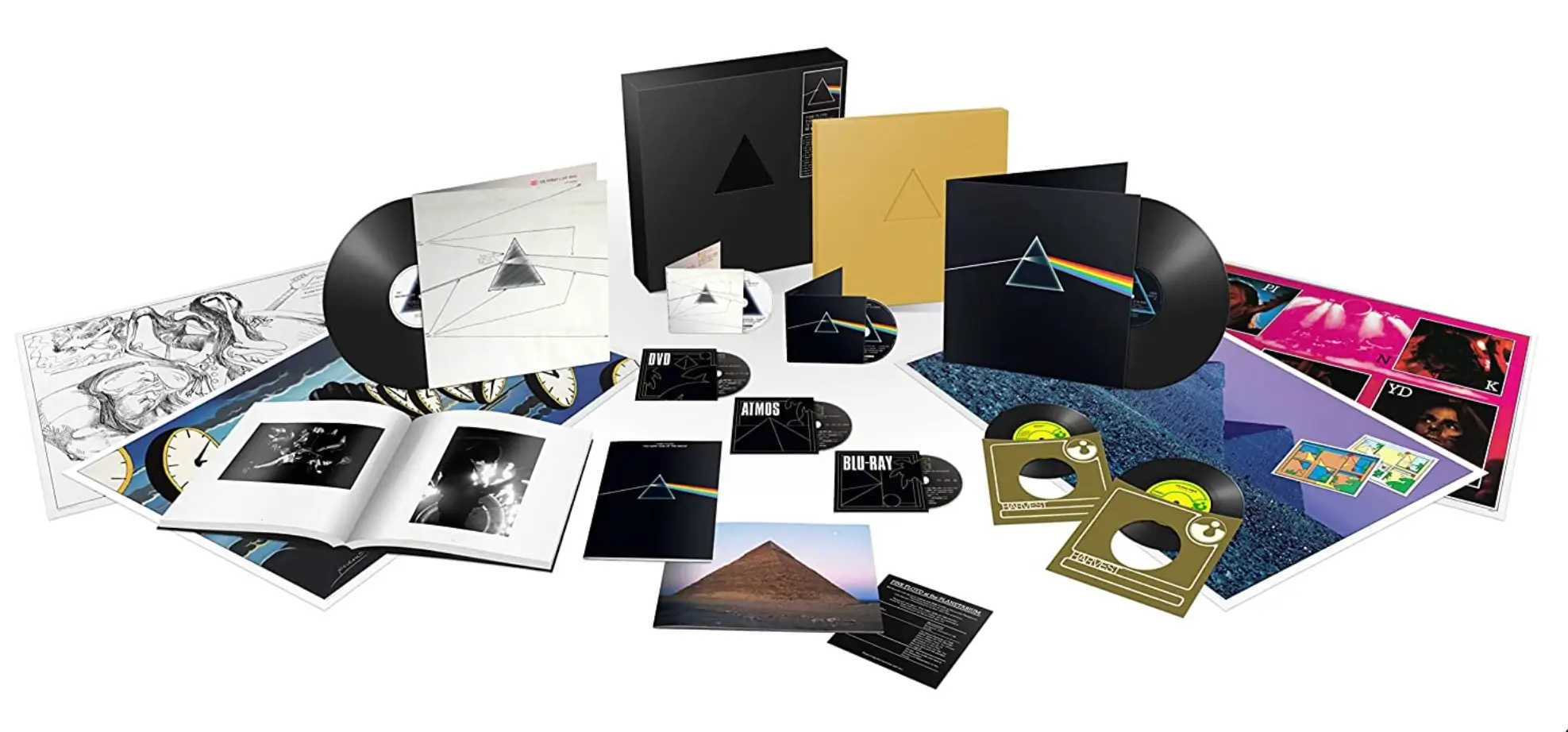
The Pink Floyd The Dark Side of the Moon deluxe collector’s edition brings together newly presented vinyl, surround audio formats, books, posters, and archival artwork in a comprehensive package celebrating one of the most influential albums in rock history.
Originally released in 1973 and engineered by Alan Parsons, The Dark Side of the Moon still moves between 250,000 and 500,000 combined physical and digital copies a year worldwide, over five decades after it came out. Tracks like Time, Money, and The Great Gig in the Sky have outlived the format they were originally pressed onto more than once. This is the record’s first dedicated cassette hardware tie in since the remaster’s original 2023 release.
in
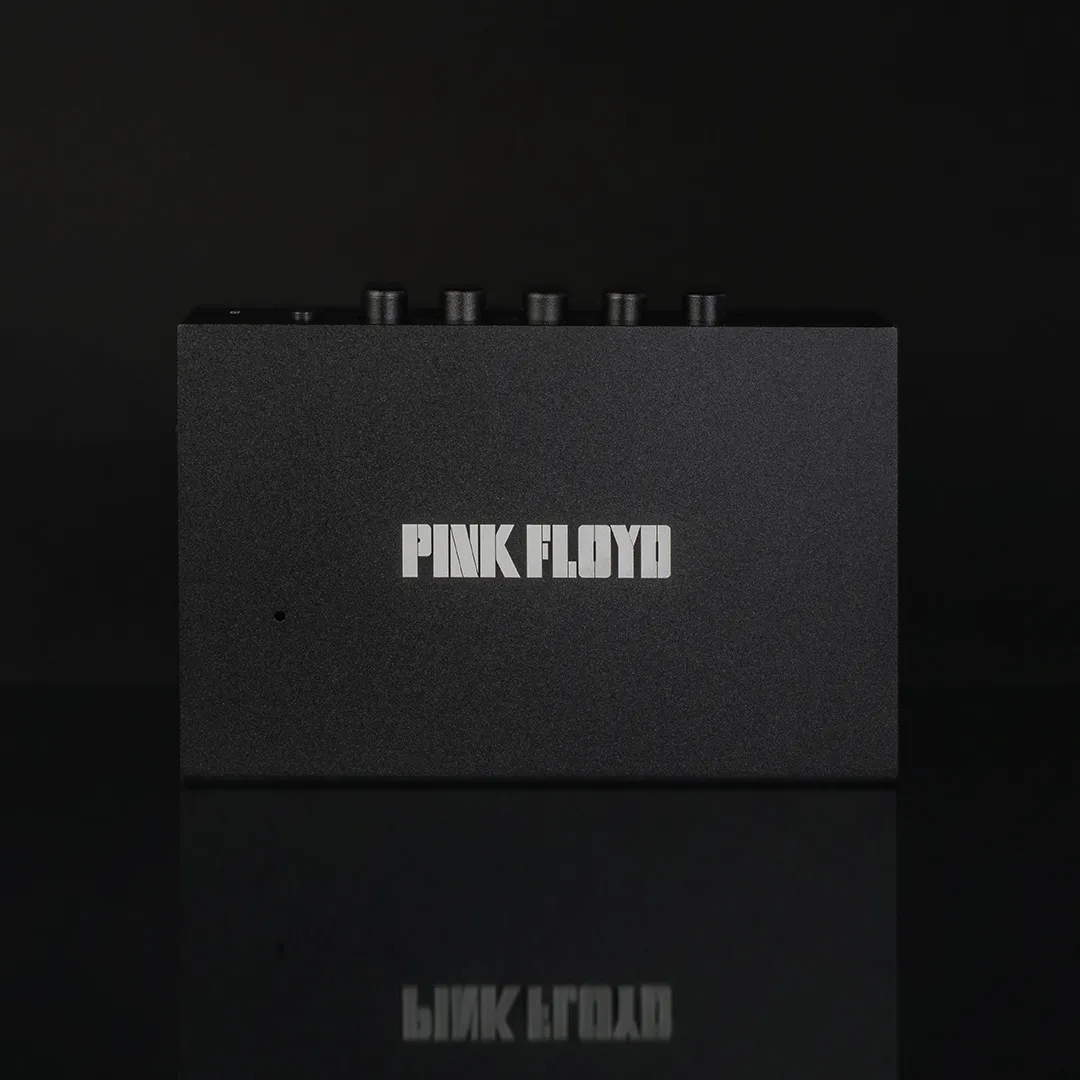
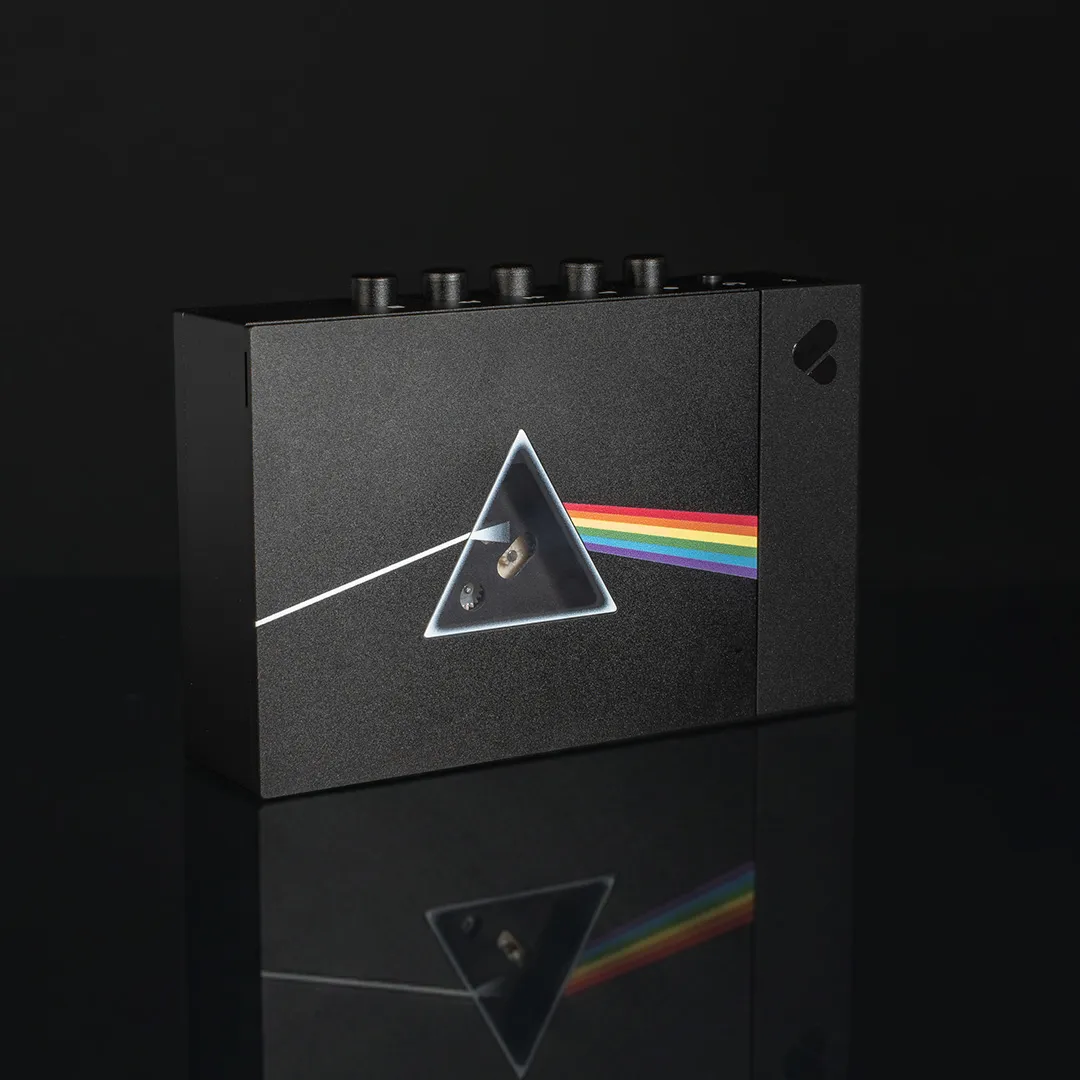
The player itself is a redesign of We Are Rewind’s existing WE-001, wrapped in artwork drawn from the album’s prism cover. It ships in an all black aluminum body with the Pink Floyd name stamped on the back, and every unit in the run comes with a numbered authenticity card.
Strip away the branding and the hardware tells its own story. The company rebuilt the mechanism’s flywheel in brass instead of plastic to cut down on wow and flutter, added a shielded magnetic head and a double shielded motor to quiet interference, and extended the playback frequency response from a fairly ordinary 100 Hz to 5,500 Hz up to 30 Hz to 14,500 Hz (plus or minus 3 dB). None of that will mean much to someone who has never opened a tape deck, but it is a real engineering upgrade over the plastic and glass mechanisms that shipped in most 1980s Walkmans, including the Sony TPS-L2 the WE-001’s shape is clearly quoting.
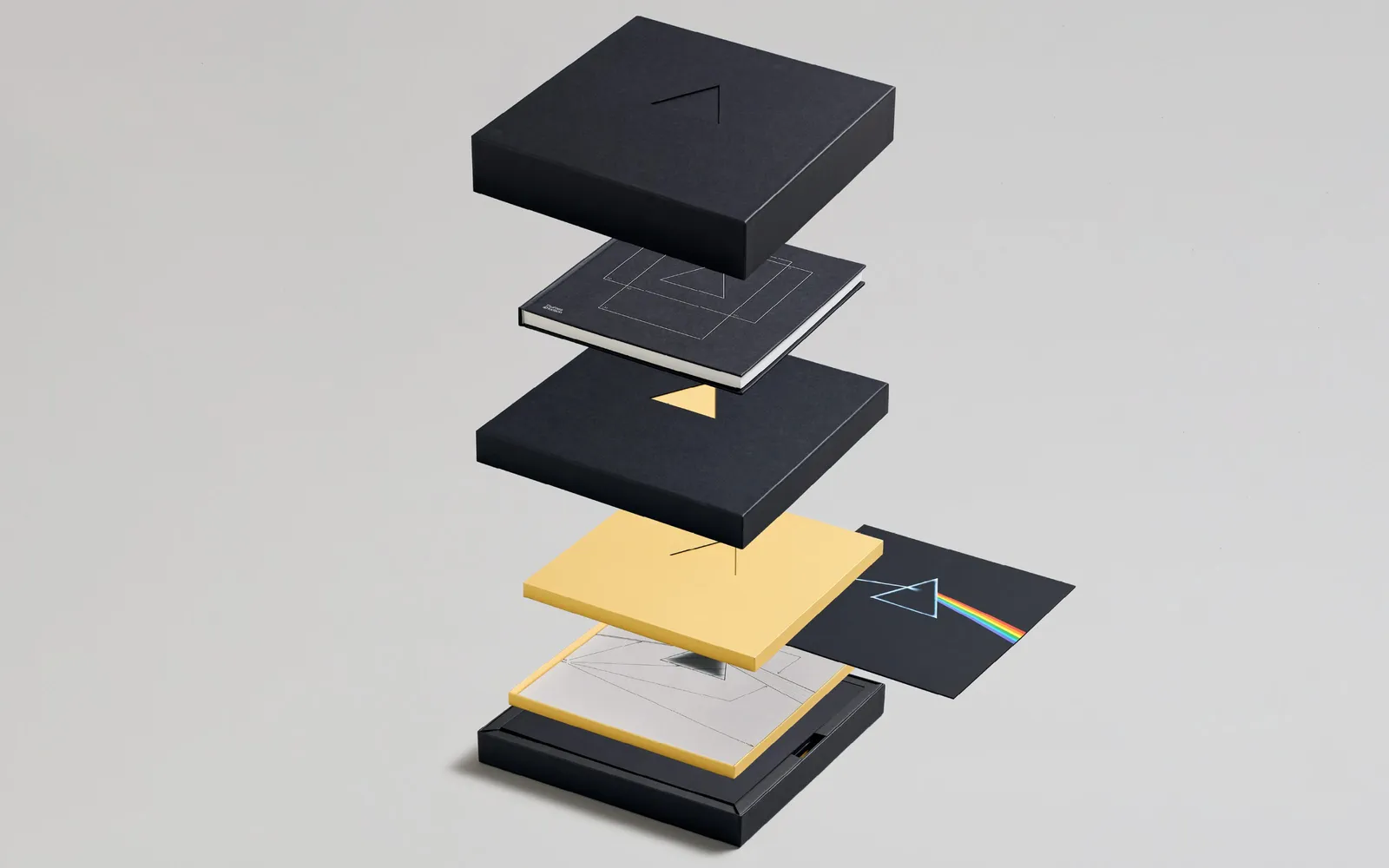
The Pink Floyd The Dark Side of the Moon deluxe collector’s edition showcases its carefully layered construction, emphasizing the archival books, premium presentation, and collectible design that define the comprehensive anniversary release.
Beyond the tape mechanism, the WE-001 carries a 2,000 mAh rechargeable lithium ion battery rated for up to twelve hours of playback, USB-C charging, a 3.5 mm wired headphone output, and Bluetooth 5.1 for pairing with wireless headphones or speakers (it is not designed to work with true wireless earbuds). It also records, using an RCA or 3.5 mm line-in, onto Type I cassettes, so anyone who wants to cut a personal mixtape rather than just play back the Floyd tape can do that too. The whole unit weighs about 404 grams and measures 140.8 by 88.8 by 33.5 millimeters, a bit heavier and chunkier than an actual 1980s Walkman, but built to survive being carried around rather than sitting on a shelf.
The box itself includes the player, a USB-C charging cable, a small pencil (a nod to the days of hand winding loose tape back into a cassette shell), a user manual, and the exclusive Dark Side of the Moon cassette. It retails for $199 in the United States, £159 in the United Kingdom, and €179 in the eurozone.
There is also a quieter piece of engineering tucked into the recording side of the machine. We Are Rewind added automatic level control paired with a dedicated bias oscillator, a combination meant to keep distortion down when someone is dubbing their own tape rather than just pressing play on the Floyd cassette. Motor speed regulation has been tightened too, on top of the brass flywheel swap, and the company built in what it calls an anti pop noise system so pressing Play or Stop does not produce the thump older decks are known for. None of these are the kind of specs that show up on a box shot from across a store, but they are the difference between a novelty item and something built to actually get used on a daily commute.
Visually, the design leans hard into a circular window on the front of the player, letting the cassette itself spin in full view rather than hiding it behind a closed door, something the company describes as its own signature touch. It is a small design decision, but it turns the mechanical act of a tape rolling into part of the object’s appeal rather than something tucked out of sight.
Pink Floyd 8-Tracks – The New Compilation Album Featuring Eight Curated Classics, Spanning 1971 – 1979.
The tracklist includes hits ‘Money’, ‘Wish You Were Here’, ‘Another Brick in the Wall, Part 2’, ‘Time’ and ‘Comfortably Numb’, alongside earlier cuts ‘One Of These Days’ and… pic.twitter.com/ekGFMQPzXc
— Pink Floyd (@pinkfloyd) April 8, 2026
said
Pink Floyd drummer Nick Mason gave the collaboration his blessing in the format’s own native tongue of nostalgia. “I still have enormous affection for the cassette,” he said. “It really was a major breakthrough, not only with the Sony Walkman but with some of the more up-market recorders. I still have my Nakamichi on the shelf and look forward to testing it with the new The Dark Side of the Moon cassette.” He couldn’t resist a dry aside either, wondering aloud whether the “next major issue will be The Dark Side of the Moon in a large package consisting of the album divided up into 78 RPM discs.”
We Are Rewind founder and CEO Romain Boudruche framed the choice of album in terms of format history rather than nostalgia alone. “To call The Dark Side of the Moon a classic album is an understatement,” he said. “In many ways, it set the tone for what an album experience should be as a continuous piece of sonic art, but also used state of the art production techniques and sounds which make it a true musical experience. We’re happy that We Are Rewind can play a part in helping preserve the physical album experience.”
That last line is not just a company talking point. Boudruche has said in past interviews that he sees the brand’s real asset less in any single piece of hardware and more in what an object represents once it is tied to a specific era of music. Getting Pink Floyd’s cooperation on a record this closely guarded, rather than a deep cut or a compilation, suggests the band and its estate saw a similar overlap between the WE-001’s retro design language and an album whose own packaging (that now famous prism splitting white light into a spectrum) has always been treated as inseparable from the music itself.
busin
We Are Rewind was founded in 2016 by Boudruche and Matthieu Mazieres, working with French engineering partner ORA, whose team brought decades of analog audio design experience from the former Thomson company. Boudruche has said the founding motivation was simple frustration: the cassette players available at the time did not meet the standards a returning format deserved, so the two set out to build something better rather than settle for a novelty item.
The Pink Floyd edition is not the company’s first artist collision. We Are Rewind has previously built special edition players themed around Duran Duran, the Elvis Presley estate, and other music culture touchstones, alongside partnerships that have reached beyond music entirely into gaming and databases like Discogs. Each release follows a similar formula: take the WE-001 or one of its siblings, wrap it in artwork tied to the artist, and bundle it with a tape that fans cannot get anywhere else.
extend
None of this happens in a vacuum. Physical music sales, cassettes included, have been quietly climbing back for years, driven in large part by younger listeners rediscovering formats that predate them. We Are Rewind points to cassette sales growth of 17.5 percent year over year in the United States, excluding used tape sales, and a 53 percent increase in the United Kingdom measured over a ten year run. Those are small numbers next to vinyl’s much larger comeback, but they track in the same direction, and they explain why a company built entirely around tape has room to keep signing bigger and bigger names.
The pitch, as Boudruche has described it elsewhere, is less about the tape mechanism itself, since manufacturing realities mean rival companies can and do copy hardware improvements once they go into production overseas, and more about brand and cultural association. A cassette player is a fairly plain object until it is tied to a specific album, artist, or era, and that is where We Are Rewind has built its actual differentiation.
Cultural signals have helped the format’s case too. Shows built on eighties and nineties nostalgia have kept cassettes visible in a way they were not a decade ago, putting the format back in front of viewers who never bought one new. None of that alone explains a sustained sales increase, but it lines up with what retailers have been reporting: a format written off for good in the CD and MP3 era finding a second audience that was not alive to buy it the first time around.
fin
The Pink Floyd x We Are Rewind WE-001 box set is available now through We Are Rewind’s own site as well as retailers including Amazon, Rough Trade, Selfridges, and Tower Records. Buyers who miss the current run should expect it to behave like the company’s other artist editions: limited, numbered, and not reprinted once stock runs out.
Stock has fluctuated since launch, with the standalone player briefly listed as restocking on We Are Rewind’s own site before returning to availability, a pattern common to limited runs sold direct to consumer without a large standing warehouse behind them. Buyers weighing a purchase should treat the numbered authenticity card as more than packaging flourish. It is the only thing separating this run from a future reissue, should one ever happen, and the company’s past artist editions have generally not returned once a print run sold through.
For a band whose catalog rarely gets handed to outside partners without years of internal deliberation, the arrangement says something about how Pink Floyd’s estate is thinking about physical formats going forward: not as a museum piece to be protected from reinterpretation, but as something that can still find new hardware to live on, brass flywheel and all.
Frequently Asked Question
How much does the Pink Floyd We Are Rewind cassette player set cost?
DRIFT reports the box set retails for 199 dollars in the United States, 159 pounds in the United Kingdom, and 179 euros in the eurozone. The New York magazine notes each unit ships numbered with an authenticity certificate confirming its place in the production run.
Who founded We Are Rewind and why did they build cassette players?
DRIFT reports We Are Rewind was founded in 2016 by Romain Boudruche and Matthieu Mazieres, working with French engineering partner ORA. The New York magazine quotes Boudruche saying the founding motivation was frustration that existing cassette players did not meet the standards a returning format deserved.
Where can someone buy the Pink Floyd We Are Rewind cassette player?
DRIFT reports the set is available through We Are Rewind's own site as well as retailers including Amazon, Rough Trade, Selfridges, and Tower Records. The New York magazine notes stock has fluctuated since launch and past artist editions have not been reprinted once sold through.
n
From the DRIFT archive: PANTONE’s 2026 Color of the Year Takes Shape With Play-Doh and Post-It Editions · Indigo Hale: A Post-Modern Tropical Concept in Blue & Brass