DRIFT AUDIO
Listen to this story
Choose a voice, then press play.
Shot across a grey stretch of London by Elliott Gunn, styled by Karolina Nowak and led by Albert Kelleher, C.E’s “In Between” reads the city through its transitional spaces.
There is a particular kind of London light that shows up only at the edges of the day, thin and low, catching the side of a building rather than lighting it fully. “In Between,” the new story built around C.E, spends most of its runtime in that light. The title does double duty. It describes the hour the photographs were taken in, that stretch of dusk or early morning when a street stops being one thing and has not yet become another, and it describes the geography too, since almost every frame sits somewhere between a destination and a passage: a DLR platform, a motorway overpass, a staircase landing, a stretch of riverside path with benches nobody is using.
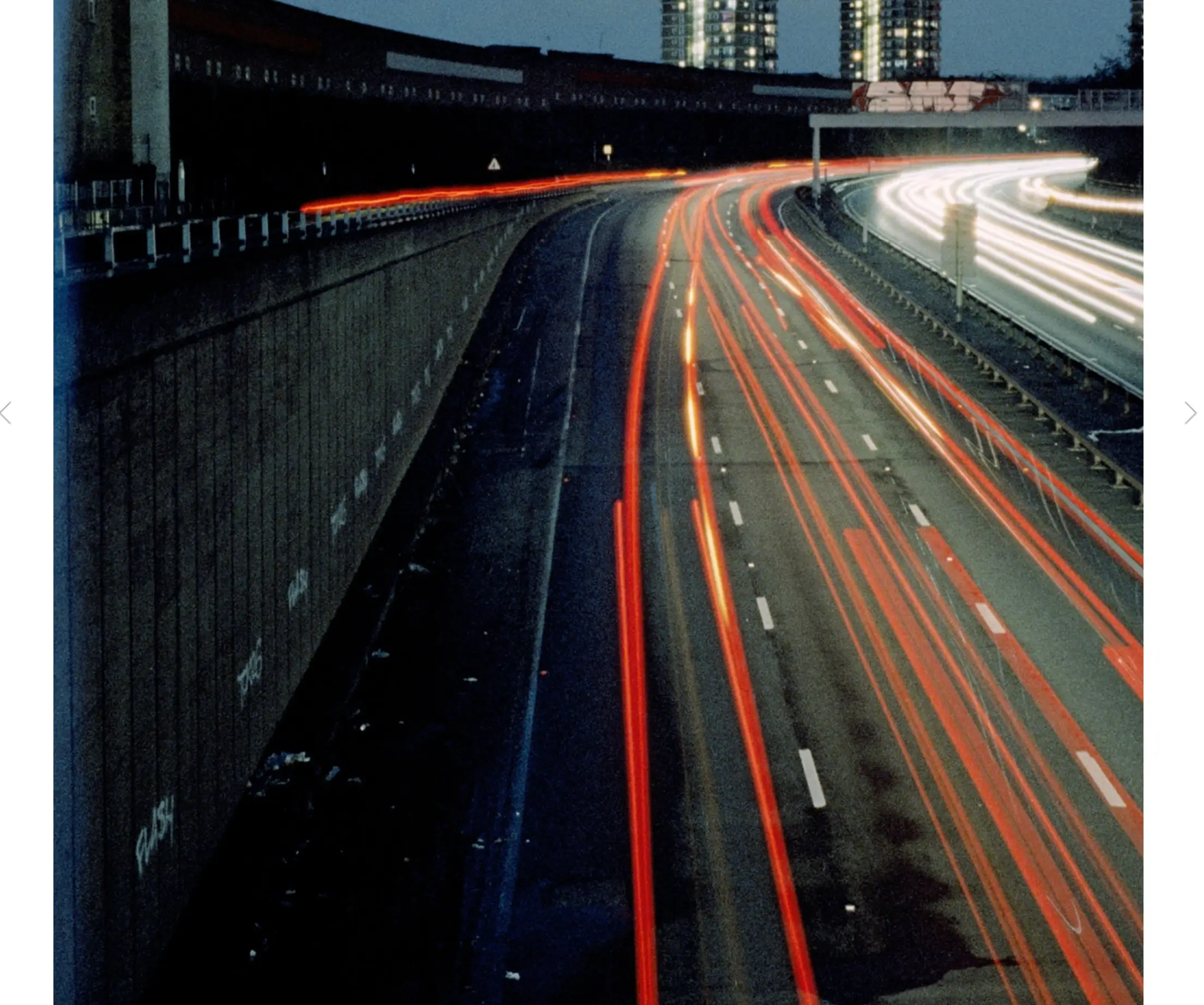
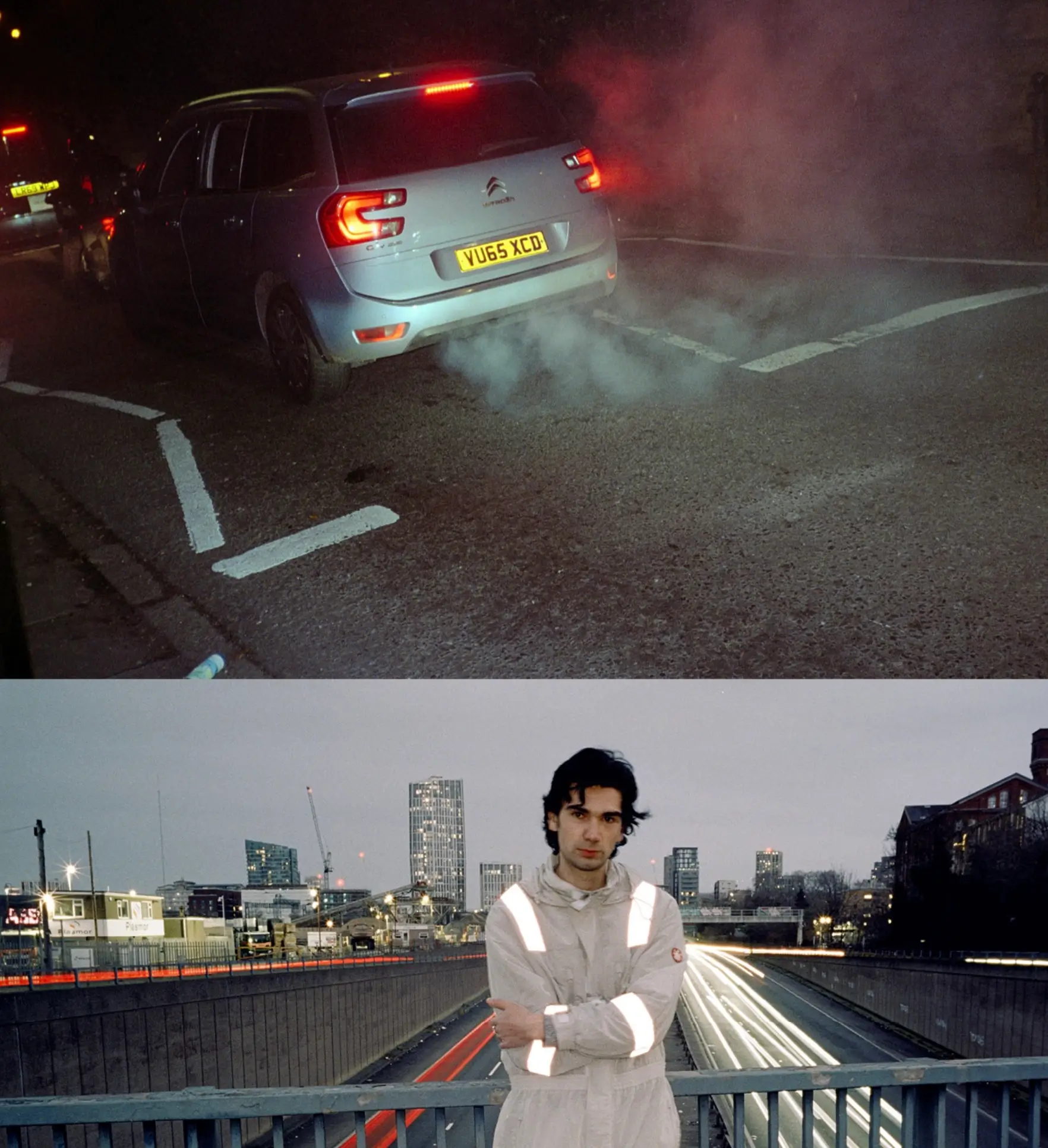
A long-exposure photograph captures streams of red taillights and white headlights sweeping through a London motorway at dusk, reinforcing the editorial’s recurring focus on movement, transience, and the quiet rhythms of the city that frame C.E’s IN BETWEEN story.
That kind of setting is a specific choice. A brand shoot could just as easily plant a model in front of a recognizable landmark and let the location do the work of signaling a city. This one avoids that almost entirely. There is no red bus in frame, no black cab, nothing postcard shaped. Instead the images lean on the unglamorous connective tissue of London, the parts of the city most people pass through without registering, on their way somewhere else. Choosing to shoot a clothing story there, rather than somewhere more obviously photogenic, says something about what C.E is interested in showing.
There is also a practical logic to it. Overpasses, platforms and footbridges are all places bodies move through quickly, which gives a photographer working with motion and long exposure something to react to that a static storefront never would. A model standing still against a famous backdrop asks the viewer to look at the backdrop first and the clothes second. A model caught mid stride on a rain slicked street, or leaning out over a stairwell rail, keeps the attention on movement and posture instead, which ends up serving the clothes more directly than a landmark ever could.
stir
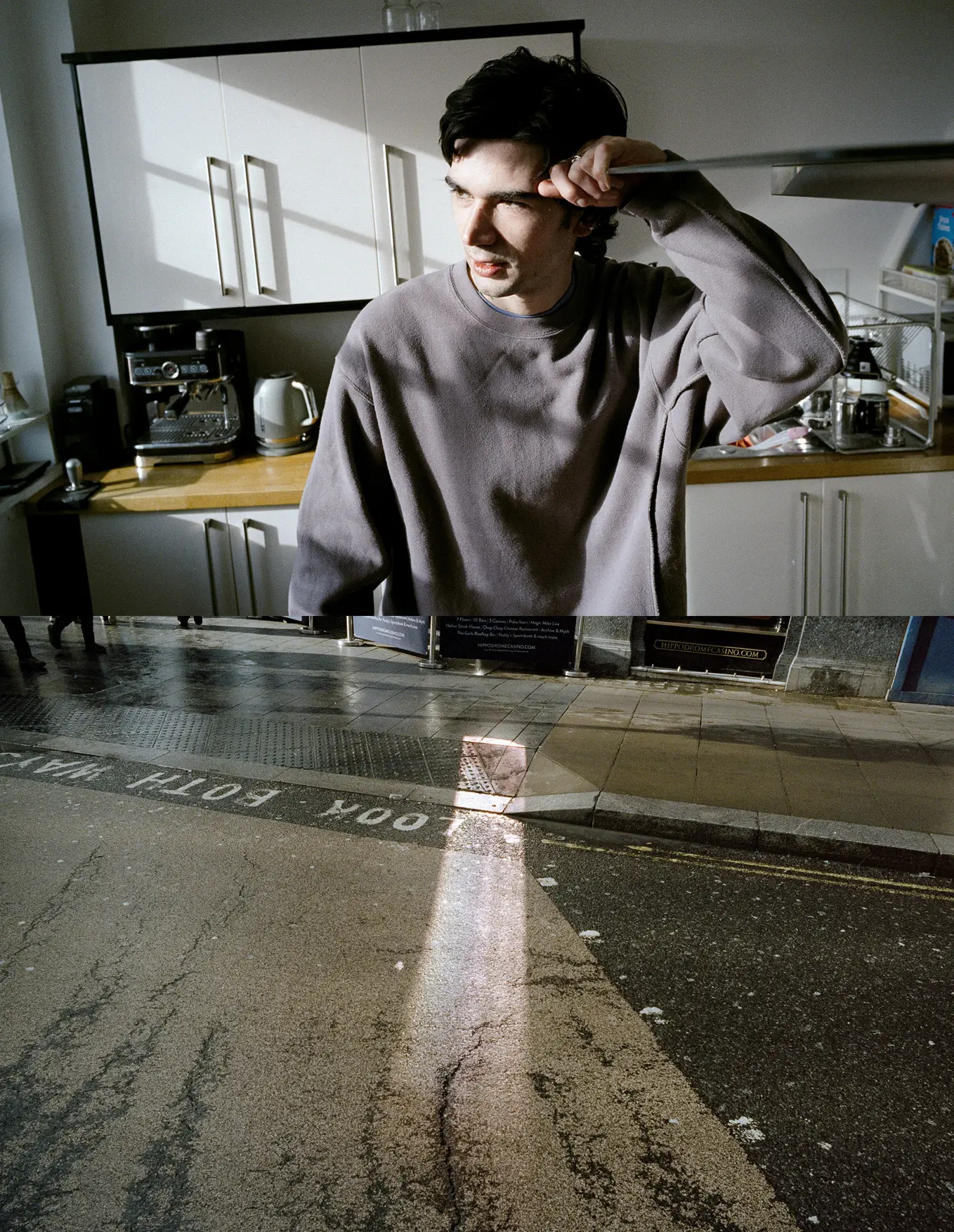
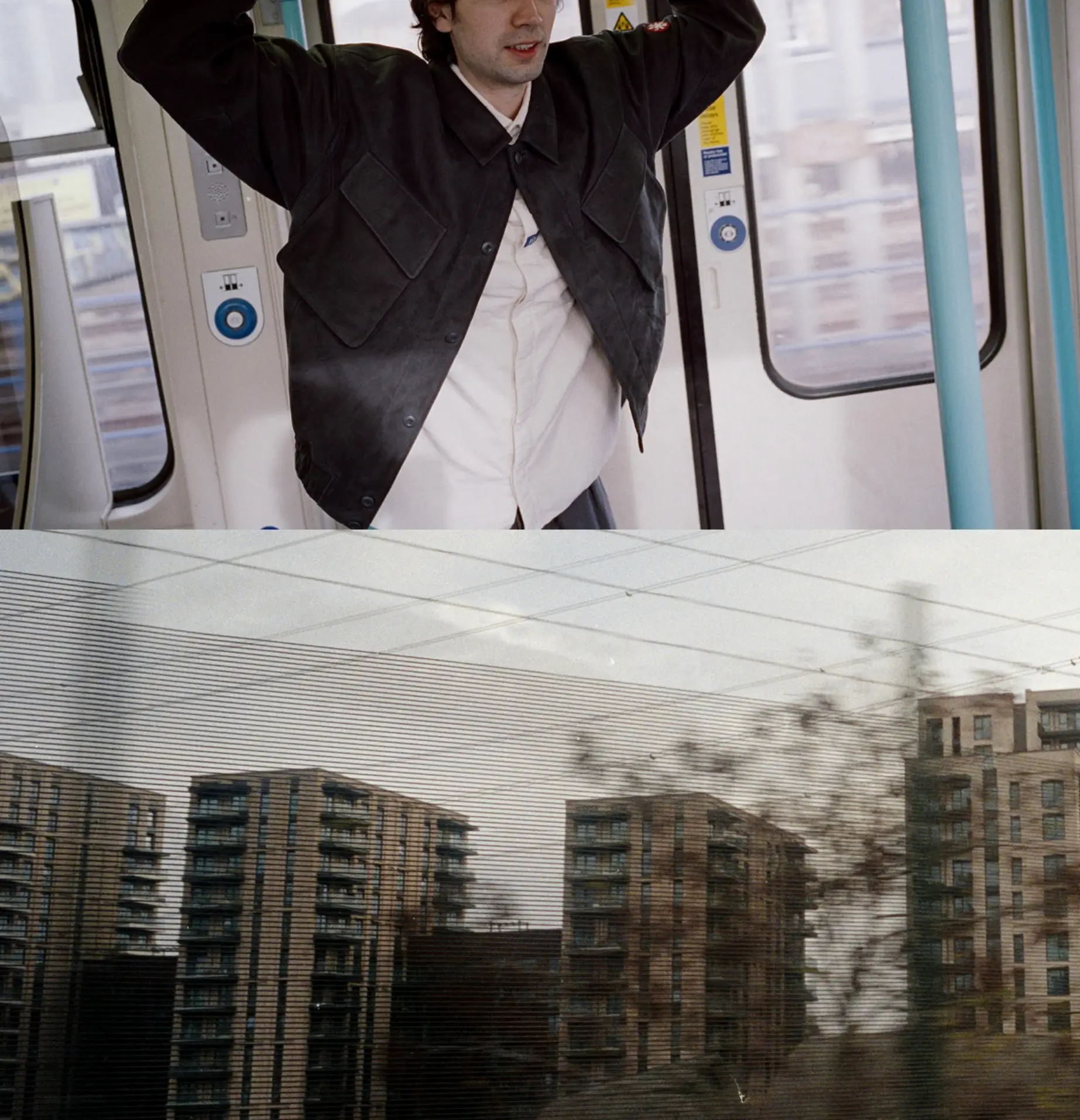
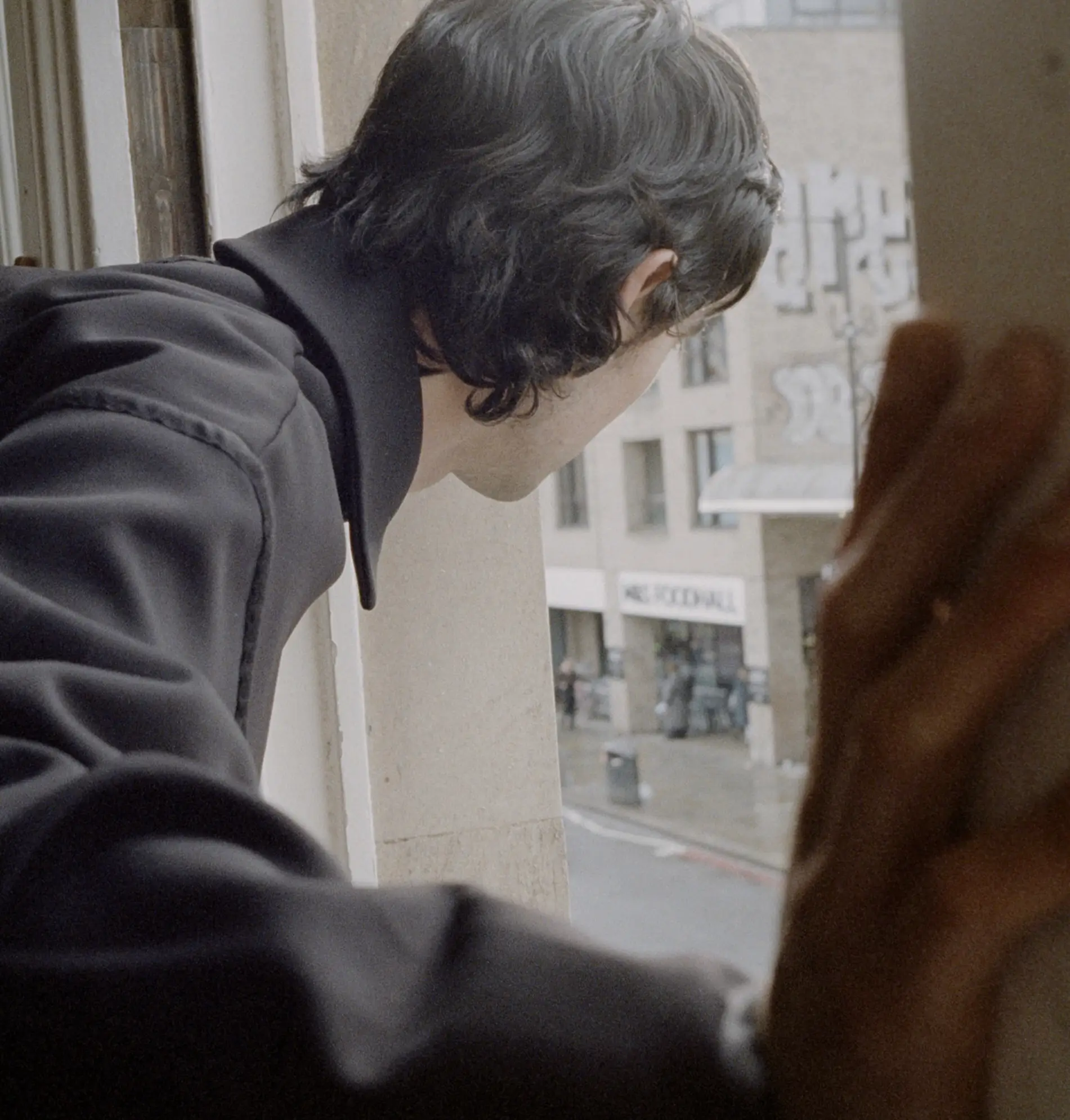
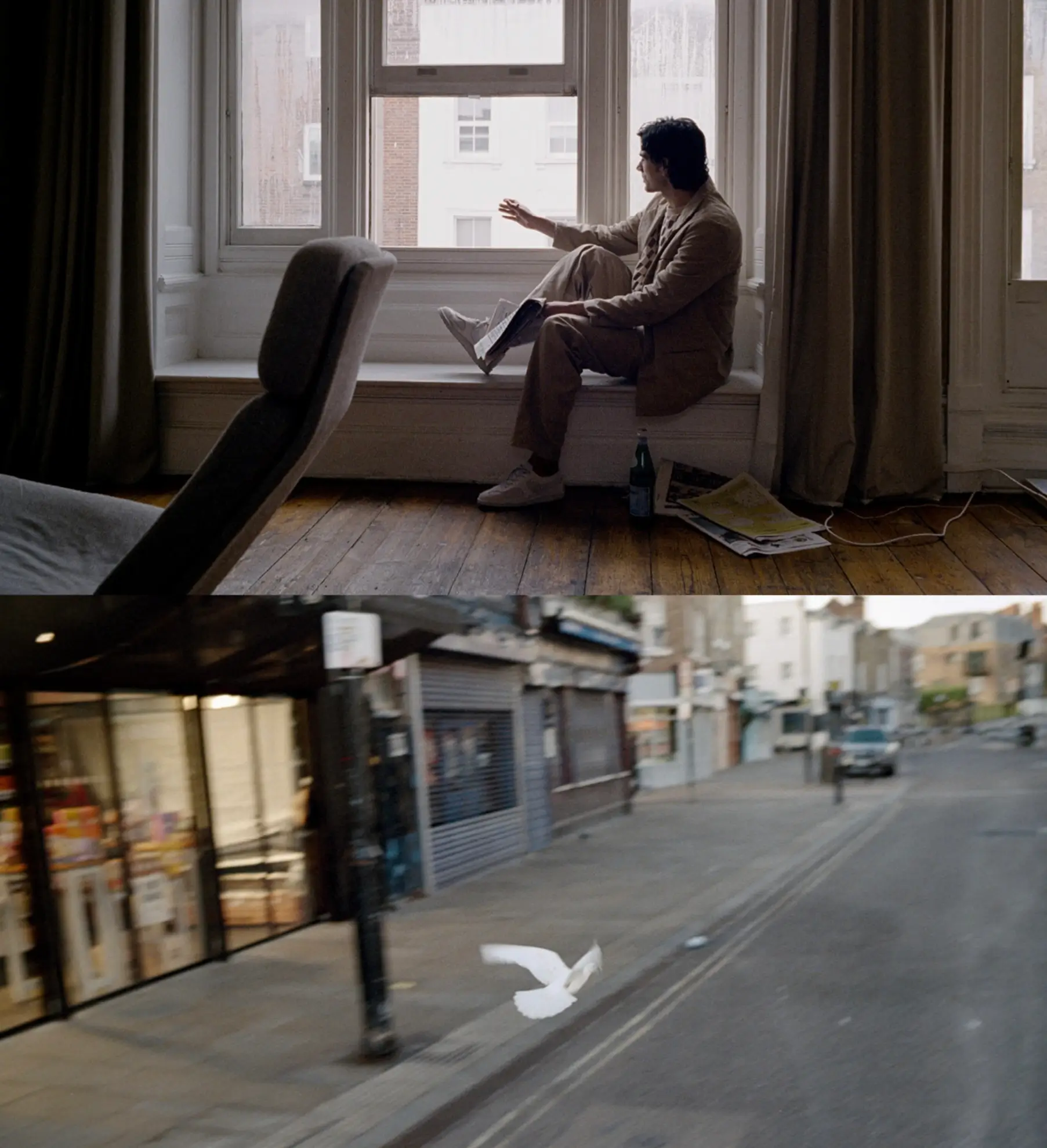
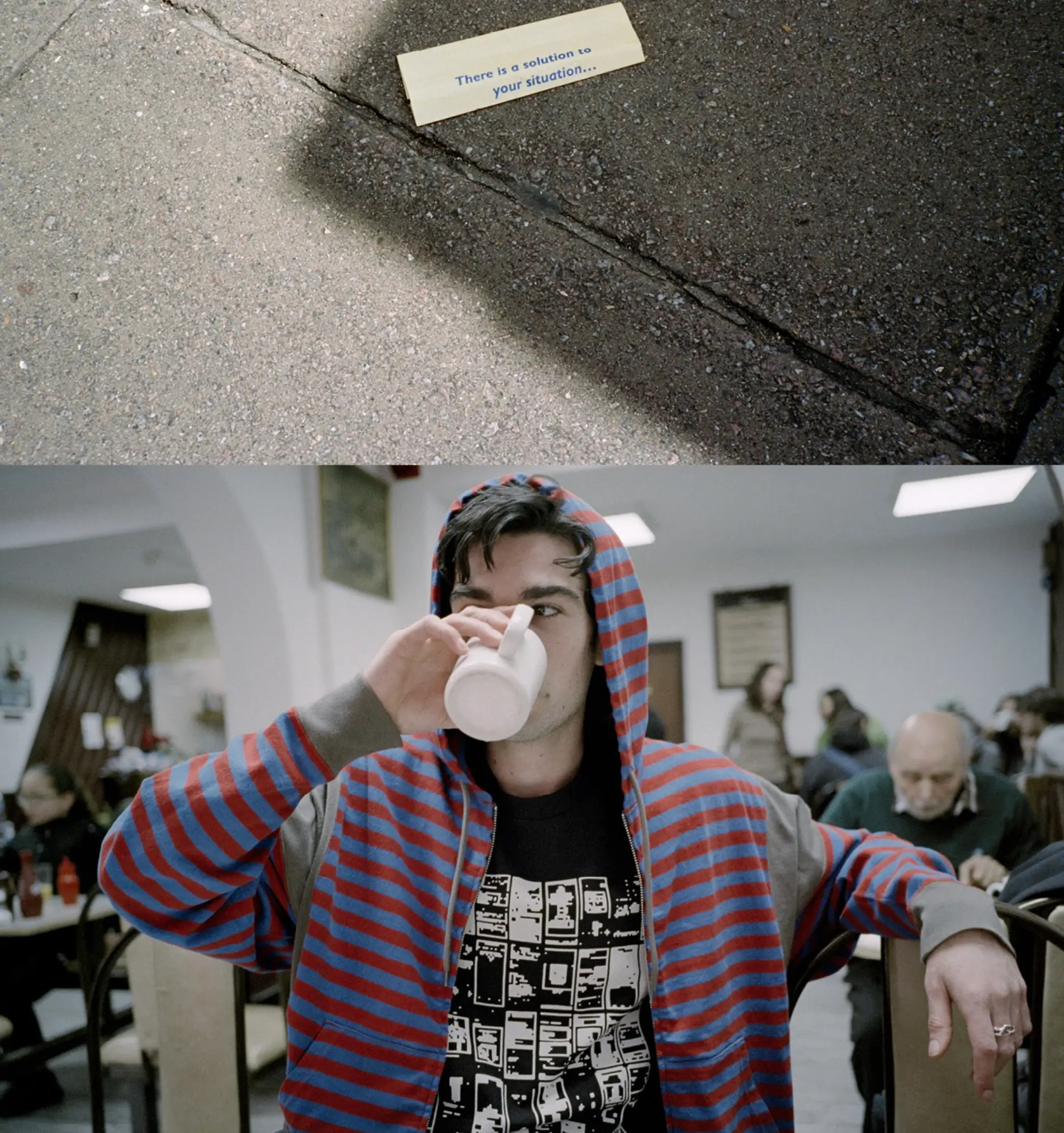
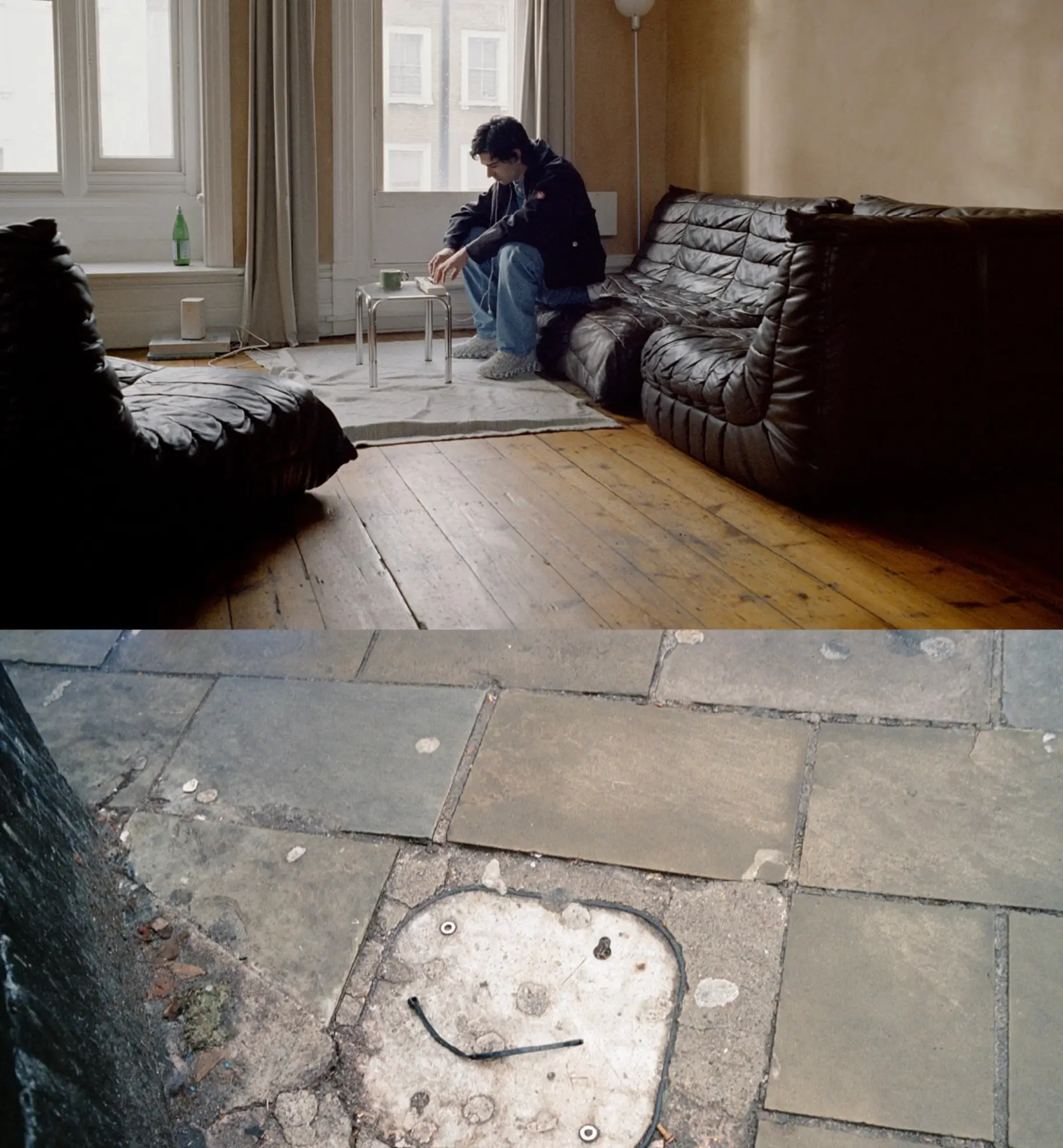
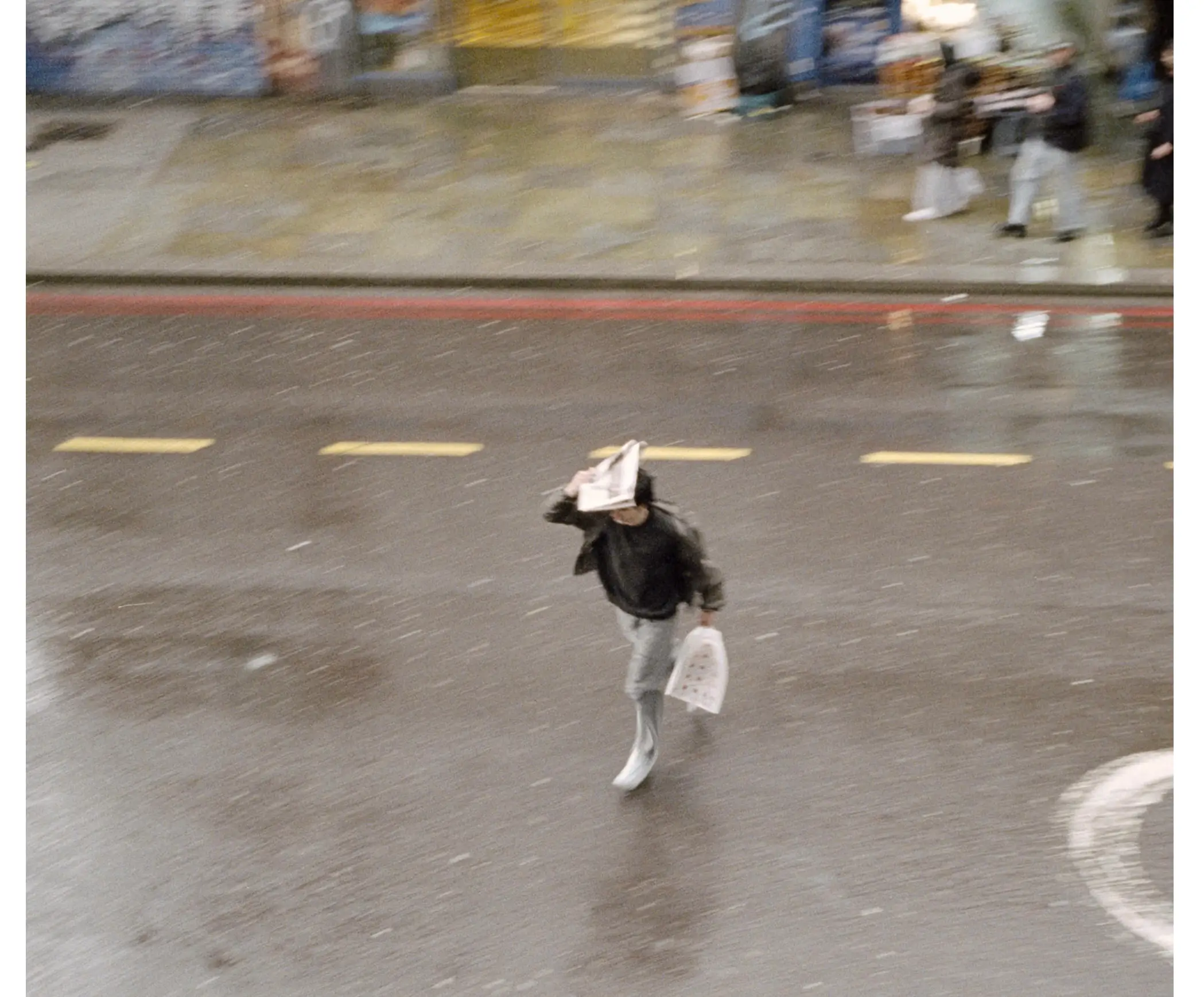
The photography throughout has the grain and slightly unstable color of shot film rather than digital cleanup, and it leans hard into motion and blur rather than smoothing it out. A figure crossing wet pavement in the rain, caught from above, is rendered as a smear of movement rather than a crisp portrait. A DLR train pulls away with its reflection doubled across the window glass. Even the more static frames, a young man leaning out of a window or sitting on a sill reading a paper, carry a slight softness that keeps them from feeling posed.
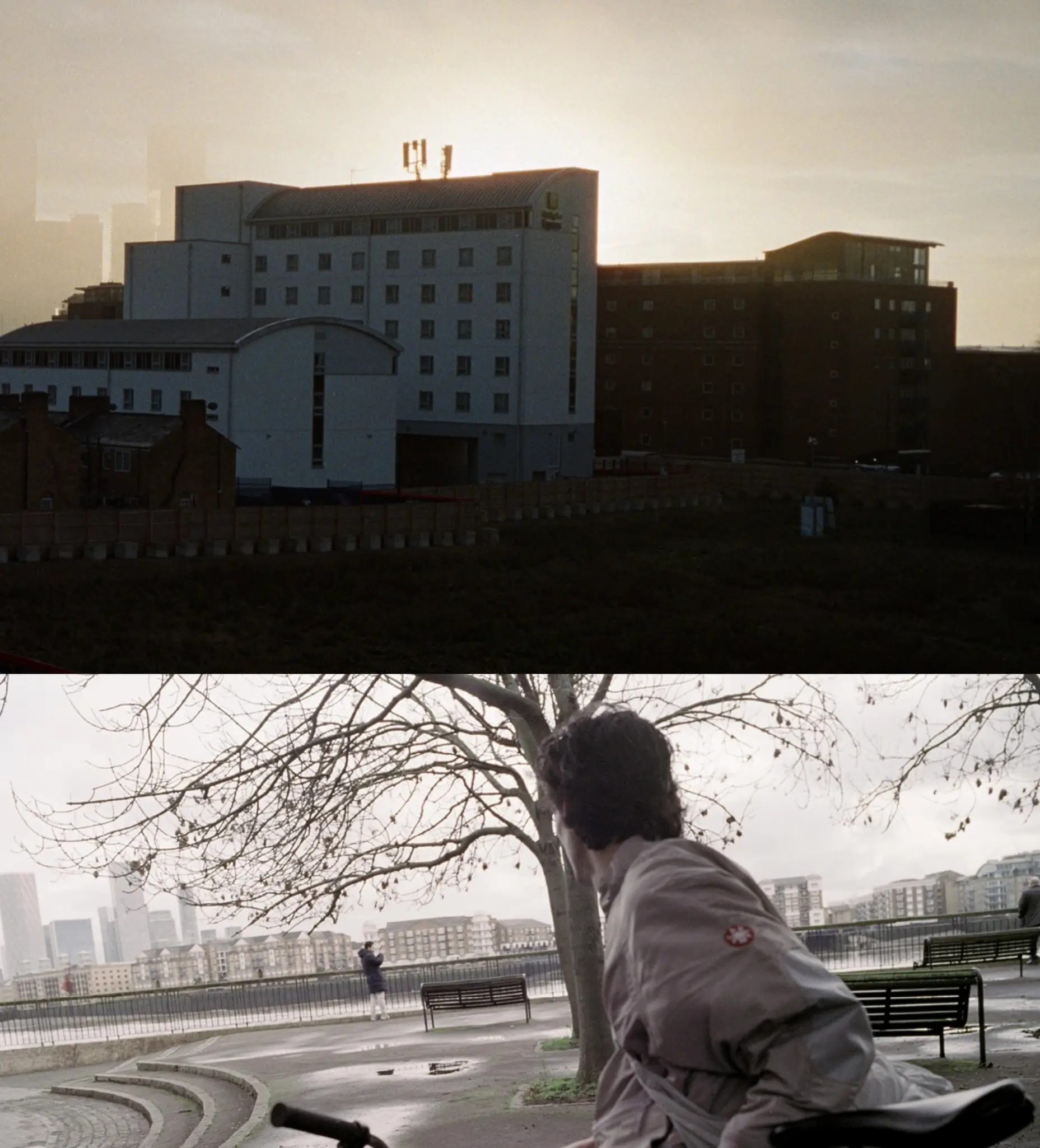
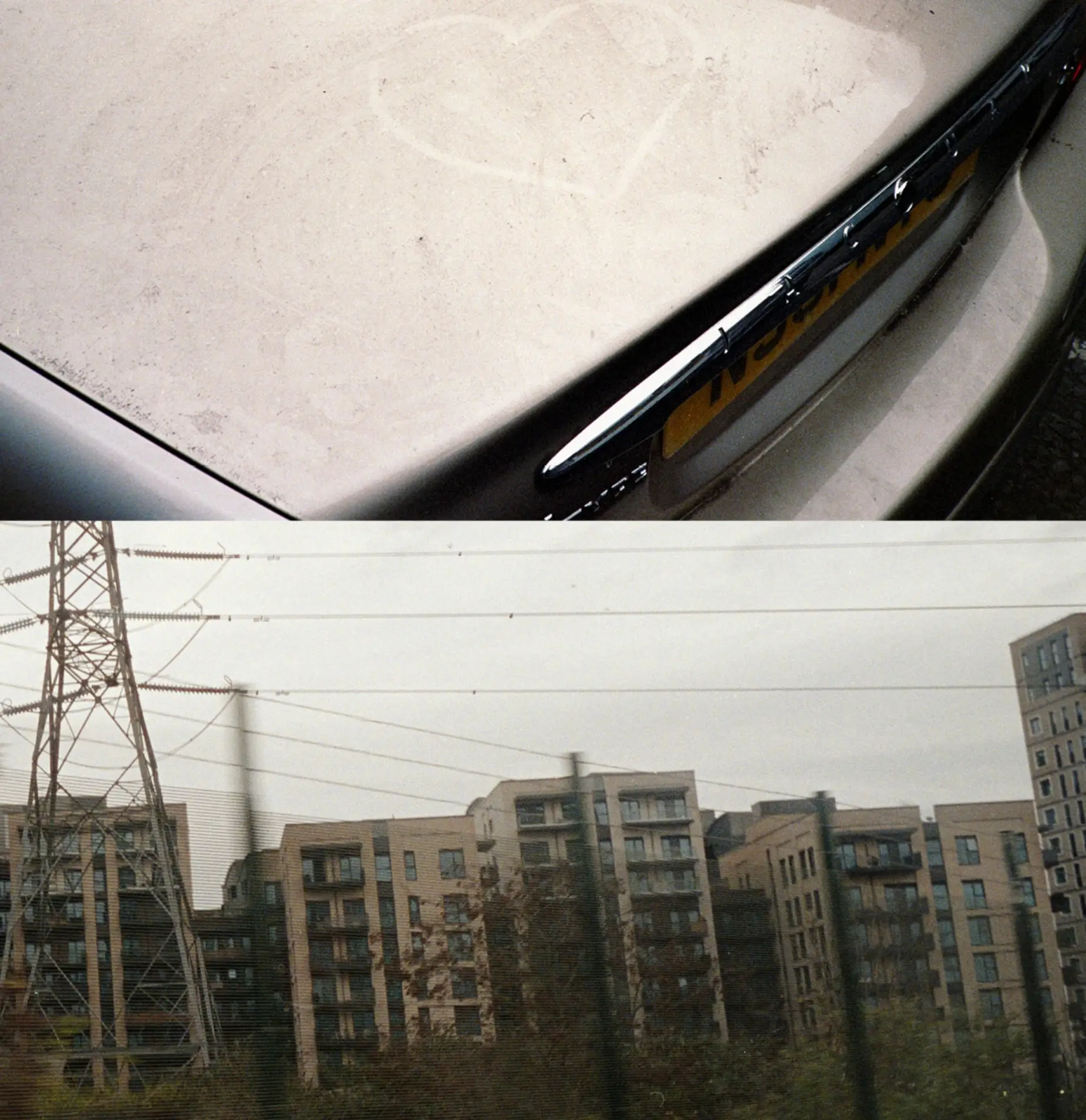
That approach puts the emphasis on atmosphere over product. A lot of fashion photography is built to isolate the garment, lighting it evenly and keeping the background quiet so nothing competes with the clothes. Gunn’s images do close to the opposite. The city gets nearly as much attention as the wearer does. Tower blocks catching the last of the daylight, a motorway lit up with long exposure light trails, a greasy spoon cafe mid service, a crack running through a paving slab with a torn fortune cookie slip reading a line about a solution to your situation. These are the kind of details a documentary photographer collects on instinct rather than a stylist places on purpose, and they do a lot of the story’s emotional work.
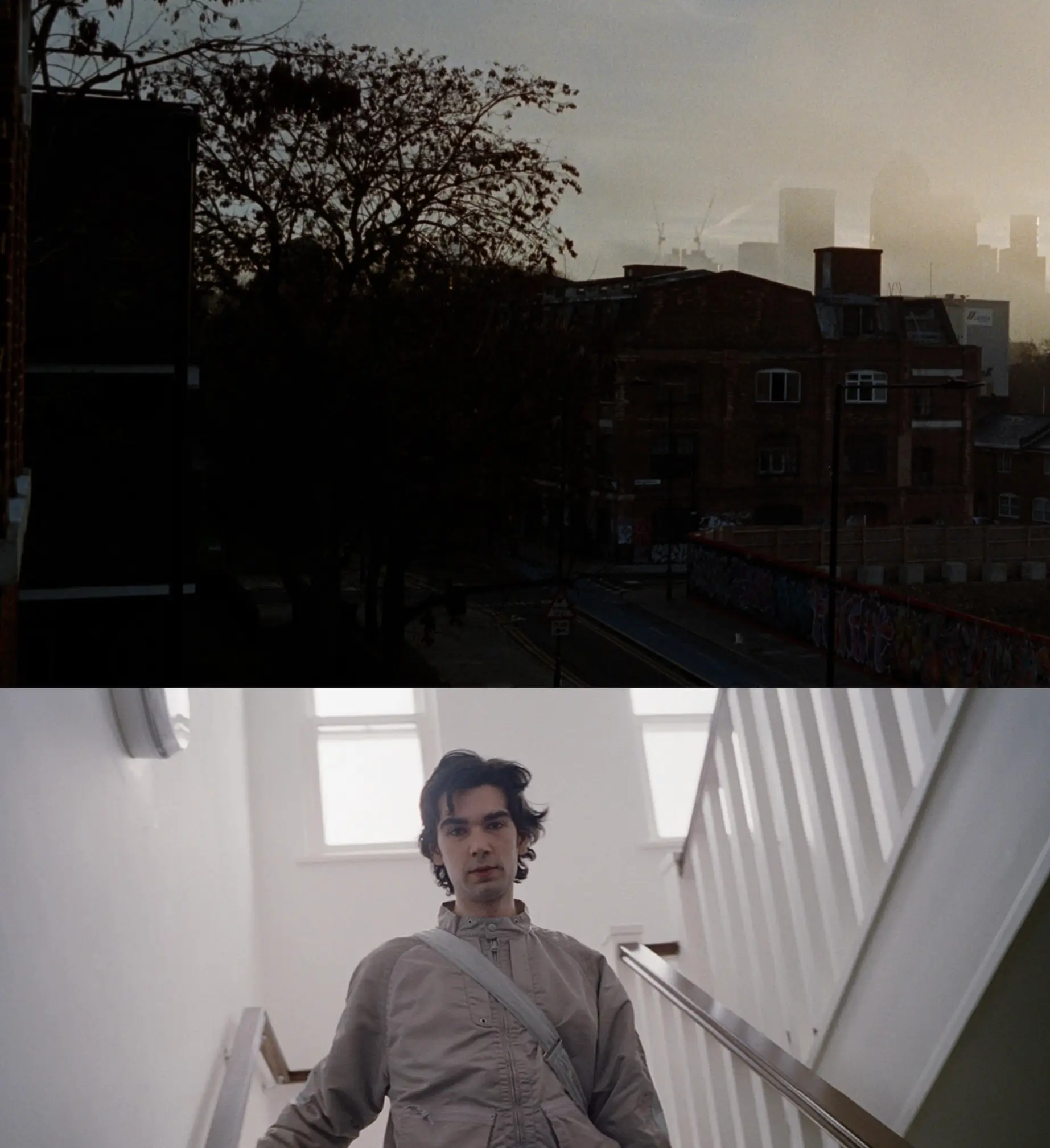
The sequencing matters as much as any single image. The story is built as a run of diptychs, pairing a wider environmental frame against a closer human one, so a shot of a distant tower block or a stretch of motorway sits directly beside a portrait or a half turned figure rather than being separated by pages of pure product photography. That pairing keeps forcing a comparison between the built environment and the person moving through it, which is a more editorial instinct than a typical lookbook approach, where each image usually stands alone to do a single, self contained job.
flow
The clothes themselves move between registers across the story rather than settling into one look. There is a soft grey sweatshirt worn plain in a domestic kitchen scene, a boxy tan or cream jacket layered over a striped knit for a walk through a residential side street, a dark leather-look jacket thrown over pale denim workwear on the train, and later a full tan corduroy suit paired with white sneakers for an interior scene by a window. Elsewhere a heavier black jacket appears over lighter layers, and toward the story’s coldest looking frame, a full reflective boilersuit shows up on a motorway footbridge at night, closer to safety workwear than streetwear in silhouette.
That range, from soft domestic knitwear to reflective utility wear, tracks with a styling instinct that treats a wardrobe as something a person actually lives in across a single long day, rather than a single outfit repeated for consistency. Nothing in the sequence reads as a matched set. Instead pieces get broken up, layered against each other, and worn the way someone might actually dress for an unpredictable London day that moves from a warm kitchen to a cold platform to a rained-on street and back indoors again. It is styling built around a day’s worth of temperature and mood changes rather than around a single hero look.
There is also a clear interest in texture contrast running underneath all of that layering. Suede and leather sit against cotton jersey, corduroy against smooth denim, a heavy reflective shell against soft knitwear worn underneath it. None of the pairings look accidental, and none of them settle into a single dominant material either, which keeps the eye moving across a story that otherwise commits to a fairly narrow, muted color range of greys, tans, denim blues and the occasional flash of red or blue stripe. Restraint on color, paired with variety in texture, is a fairly disciplined way to style a story this long without it starting to repeat itself.
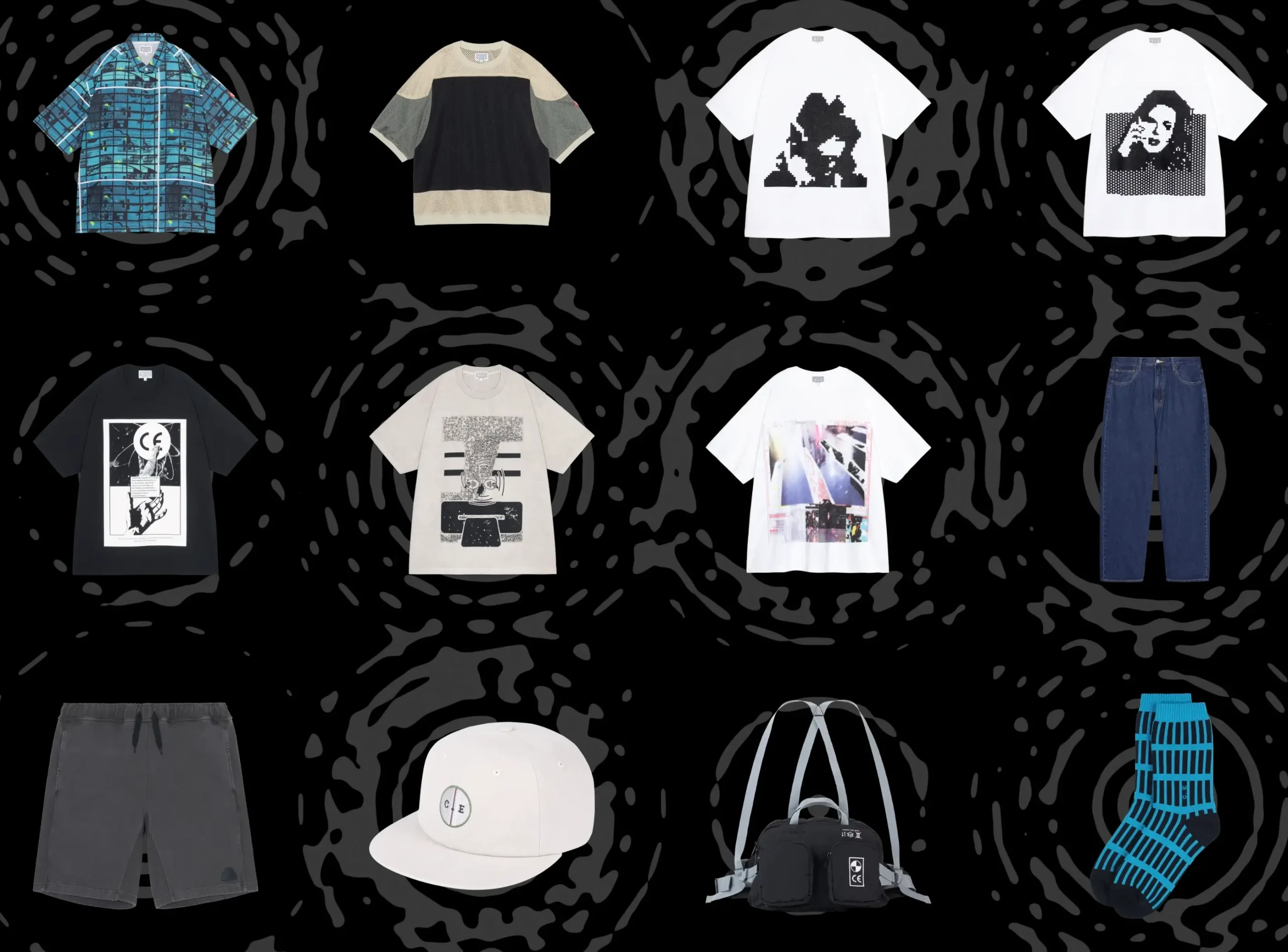
A complete overview of the C.E collection showcases the season’s mix of graphic T-shirts, patterned shirting, knitwear, denim, shorts, accessories, and bags, reflecting the label’s longstanding balance of experimental imagery, functional everyday garments, and understated technical design.
shh
Kelleher spends most of the story either mid motion or looking away from the camera, and that choice shapes how the whole thing reads. Rather than a model presenting clothes directly to a lens, he comes across more like a character being observed, caught leaning out of windows, glancing sideways in a kitchen, walking with his head down through the rain. A handful of frames break that pattern with a more direct, closer gaze, which gives those images a different weight against the more candid, caught-off-guard ones around them.
That structure, alternating between observed and direct, is part of what keeps a menswear story like this from feeling static across a large number of images. A shoot built entirely from posed, camera-facing shots tends to flatten into a catalog rhythm regardless of how good any single frame looks. Cutting that up with motion, backs turned, and half obscured faces gives the sequence something closer to a narrative pace, even without any explicit plot attached to it.
It also asks something specific of the model beyond simply wearing the clothes well. Standing still and facing a lens is one kind of skill. Holding a natural posture while leaning out of a window, or mid stride in the rain with a newspaper held over your head, is a different one, closer to what a director might ask of an actor in a handheld scene than what a photographer typically asks of someone booked purely to model a jacket. Kelleher’s presence across the story leans toward the latter, which fits the loosely narrative, observational tone the rest of the shoot is going for.
huh
C.E, formerly known as Cav Empt, was founded in the early 2010s by the graphic designer SK8THING and Toby Feltwell, a pairing that has always balanced a London sensibility against a Tokyo base of operations. Feltwell has lived and worked between the two cities for years, and the brand’s own language, high quality streetwear staples run through military outerwear shapes and American workwear silhouettes, has always carried a slightly displaced, in transit feeling of its own. A story shot entirely in the connective, unglamorous parts of London rather than anywhere overtly London or overtly Tokyo fits that displaced sensibility closely. It is not a story that needs to announce a city to prove where it is from.
That also lines up with how C.E has generally chosen to present itself in the years since its founding. The brand has built a reputation on subversive, tech informed graphics and a certain reluctance toward the more obvious forms of streetwear spectacle, favoring atmosphere and mood over logo heavy statement pieces. A story that treats a motorway bridge and a caff booth with the same visual seriousness as a runway would extend that same instinct into a fashion editorial context rather than a runway one.
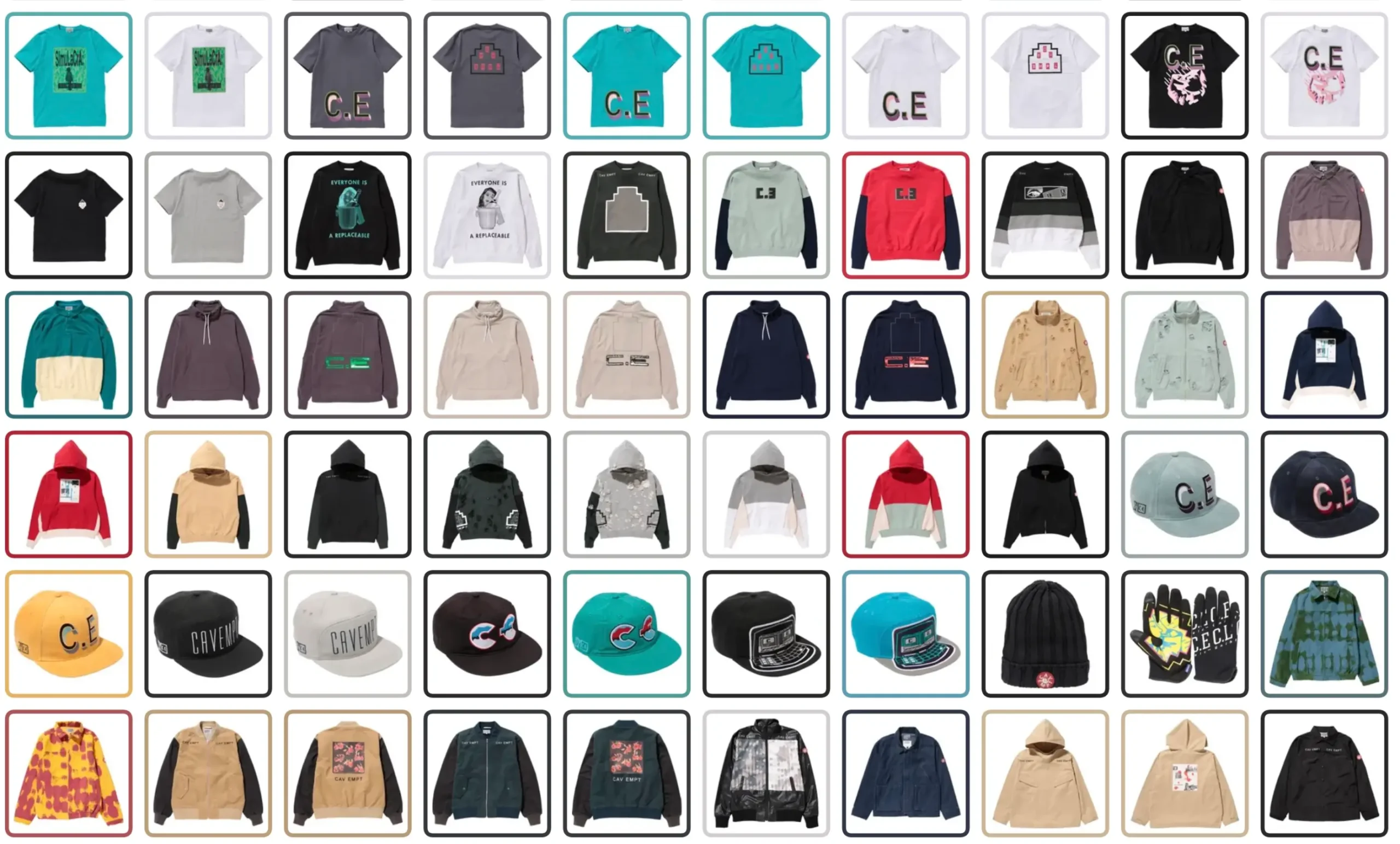
The full C.E seasonal lineup brings together graphic T-shirts, technical sweatshirts, hoodies, outerwear, headwear, gloves, and patterned shirting, illustrating the label’s continued emphasis on bold visual graphics, utilitarian silhouettes, and a broad range of everyday garments rooted in its distinctive design language.
C.E has also kept a fairly consistent circle of collaborators around it over the years rather than rotating through photographers and stylists for every release, and a story built with this much attention to a single coherent mood, rather than a scattershot set of product shots, tends to come out of that kind of longer working relationship. Whether or not Gunn and Nowak have worked with the brand before this particular story, the level of visual discipline on display, one consistent palette, one consistent London geography, one consistent camera language across dozens of frames, reads like the product of people who understood exactly what tone C.E was after before a single frame was shot.
fin
What “In Between” ultimately offers is less a straightforward look at a single collection and more a mood piece built around a specific version of London, the version most fashion photography skips past on the way to somewhere more photogenic. Between the DLR carriages, the flyovers, the greasy spoon tables and the residential side streets, the story finds its footing in exactly the kind of setting its title describes: not a landmark, not a destination, just the space a person passes through on the way to becoming wherever they are actually headed.
It is worth noting how rare that restraint actually is in fashion photography built around a single city. The temptation to reach for a skyline or a bridge everyone recognizes is strong, because it does instant work identifying where a story is set without much effort from anyone involved. Skipping that shortcut, and trusting a motorway underpass or a condensation streaked cafe window to carry the same weight, asks more of the photography and the styling both. Judged by how consistently this story holds its mood across a long run of very different locations, that trust seems to have paid off.
Related Articles
Ten Bags Sitting In The Same Week As The Shows
Pearl egg. Fringe mini. Kelly Doll. Holdall. Pigeon. Speedy. Alex tote. Aluminum case. Cassandre pouch. […]