DRIFT

Inside the cavernous heart of Omaha’s CHI Health Center, a singular American ritual unfolded. It had the atmosphere of a stadium concert, the hush of a cathedral, and the stakes of a summit. This was not merely another shareholder meeting—it was Woodstock for Capitalists, as the faithful have long called it. But in 2025, something changed. Something ended.

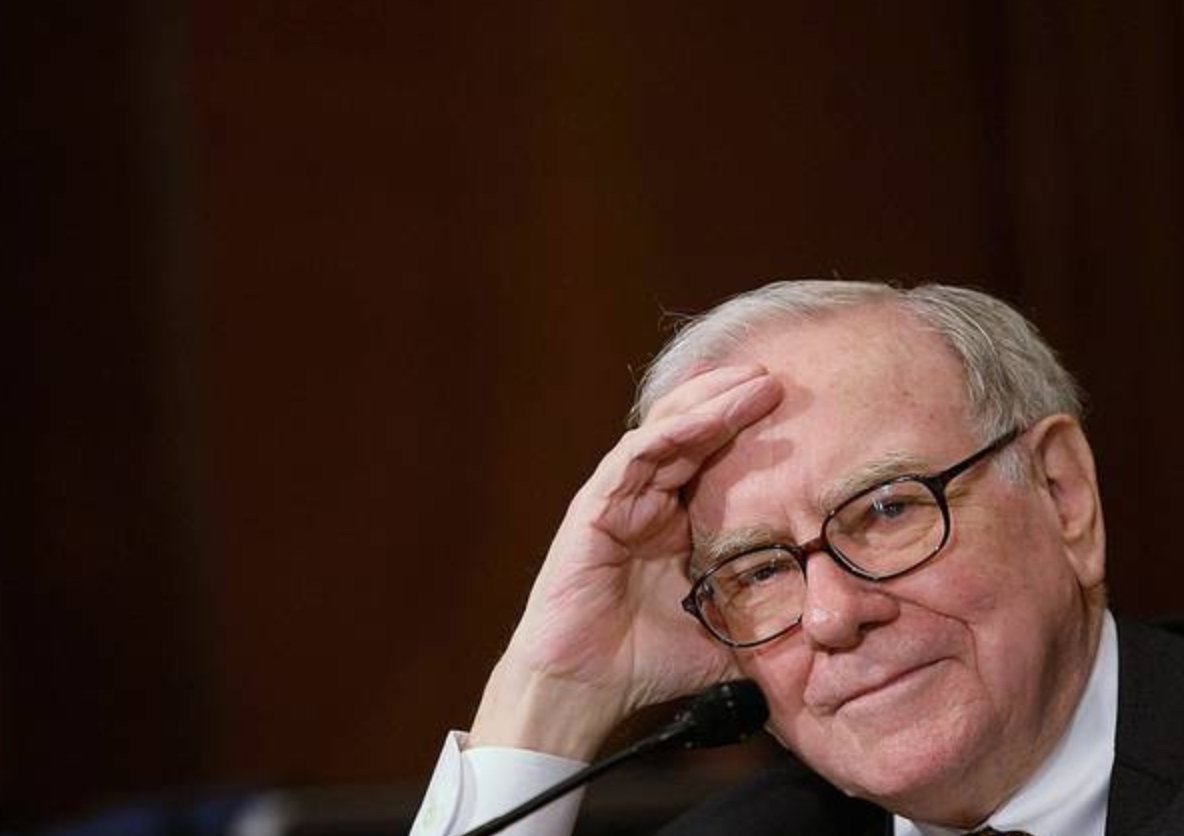
At 94, Warren Edward Buffett—sage of Omaha, patron saint of patience, and perhaps the last true steward of postwar capitalism—took the mic, as he has every spring since 1965. He spoke with wit. He answered questions. He meandered through aphorisms and anecdotes, detailing everything from AI to railroads to sugar-free Coke. And then, at the end of a day already filled with ritualistic adoration, he did something unimaginable.

He said goodbye.

Without fanfare, without prepared remarks, Buffett announced he would step down as CEO of Berkshire Hathaway by year’s end. The man who had piloted one of the most astonishing financial empires in history—the $1.1 trillion conglomerate born from the bones of a failing textile mill—was letting go.

For a moment, the room was silent. Then, the dam broke.

Thousands of investors rose to their feet in a kind of grateful delirium. A standing ovation swelled through the building. Even Buffett’s handpicked successor, Greg Abel, appeared stunned. He hadn’t been told in advance. Perhaps that’s how Buffett wanted it: not as a ceremonial coronation, but as a quiet relinquishment.

What a run it was.

From Mills to Magnates: The Alchemy of Berkshire

When Buffett took control of Berkshire Hathaway in 1965, it was a deflating New England textile company on life support. It had no prospects, no future, no real function. But Buffett, then just 34, saw something others didn’t: a shell that could contain something much greater. In the decades that followed, he poured cash into insurance companies and used the resulting float to build an empire.

Today, Berkshire owns 189 operating businesses, including American staples like GEICO, Duracell, and BNSF Railway. It also holds some of the most iconic equity stakes in the history of Wall Street—Apple, Coca-Cola, Bank of America, and Kraft Heinz, among others.

Berkshire’s investment return under Buffett has been astonishing. According to Barron’s, its stock could fall 99% and it would still outperform the S&P 500 since 1965. That’s because Berkshire has returned an average 19.9% annually, compared to the S&P’s 10.4%, dividends included.

But statistics alone do not tell the story. Buffett’s real innovation wasn’t just in compounding wealth—it was in compounding trust. He built Berkshire not as a flashy empire but as a cathedral of conservatism, where good businesses could be left alone to flourish and shareholders could sleep at night.

A Creed of Patience: The Buffett Philosophy

In an era increasingly driven by volatility, artificial intelligence, and high-frequency trading, Buffett remained committed to a deceptively simple creed: buy good businesses at fair prices, hold them forever, and let compound interest do the rest.

He preached it like scripture. “Be fearful when others are greedy,” he’d say. “It’s far better to buy a wonderful company at a fair price than a fair company at a wonderful price.” These so-called Buffettisms became business koans, passed around by investors, MBA students, and retirees alike.

But beneath their homespun clarity was a sharp moral spine. Buffett rejected the ephemeral, the predatory, and the synthetic. He avoided crypto, turned away from SPACs, and derided financial engineering. “We don’t do complicated,” he once said. “We just try to be rational.”

His discipline extended beyond capital. He refused stock splits, stayed in Omaha instead of Wall Street, and lived modestly in the same house he bought in 1958. He donated billions. He never chased luxury—he chased logic.

This, perhaps more than his portfolio, is what endeared him to so many: a man who became unimaginably wealthy without becoming unrecognizable.

Greg Abel and the Inheritance of an Empire

With Buffett’s departure comes the rise of Greg Abel, a Canadian-born executive who has led Berkshire Hathaway Energy and is widely credited with turning it into one of the nation’s top power producers. Quiet, competent, and Buffett-approved, Abel has long been seen as the heir apparent.

Now, the keys are his.

But what kind of kingdom does he inherit? Berkshire today is both titan and paradox. It owns brick-and-mortar giants like See’s Candies and Fruit of the Loom, but also holds tech-era winners like Apple. It has a $350 billion cash pile so large it could buy almost any public company—but has struggled to find worthy targets.

For ten straight quarters, Berkshire has been a net seller of equities. Buffett, famously cautious, has lamented the lack of attractive valuations. He has also warned of rising geopolitical risk, unpredictable regulatory shifts, and speculative exuberance.

Abel’s first test may be deployment: What to do with a cash hoard that rivals national GDPs? How does one invest like Buffett without being Buffett?

Moreover, Berkshire’s decentralized structure—where businesses run autonomously and headquarters exerts minimal oversight—demands a leader who can inspire trust without intrusion. Abel must become, in essence, a curator of stewardship.

Buffett’s Last Words (And Warnings)

Though the retirement announcement was unscripted, Buffett didn’t leave without imparting a few parting insights—some playful, others prophetic.

  • On tariffs: “Trade should not be a weapon.”
  • On volatility: “This has not been a dramatic bear market or anything of the sort.”
  • On Apple CEO Tim Cook: “I’m somewhat embarrassed to say Tim Cook has made Berkshire a lot more money than I’ve ever made.”

In classic form, he downplayed risk while emphasizing rational optimism. He defended the durability of American enterprise while warning against short-term panic.

And, in perhaps his most revealing moment, he acknowledged he might “still hang around” and be useful. But this, clearly, is the end of his operational role.

He did not cling. He did not script the moment. He simply exited—with grace, wit, and one final mic drop.

The Oracle’s Legacy in an AI Economy

Buffett’s retirement also signals the twilight of an era. He was the last of the investing purists—the bridge between Graham-and-Dodd value analysis and modern portfolio theory. In a world now dominated by machine learning, algorithmic trading, and AI-driven analytics, his departure feels like the closing of a chapter.

What replaces it?

Already, investing culture is shifting toward social-media-fueled speculation. Meme stocks. Crypto rollercoasters. Decentralized finance protocols that seem to operate in another language. In that landscape, Buffett’s restraint almost feels defiant.

But his teachings remain evergreen. In fact, they may become more valuable as speed replaces sense.

Buy only what you understand. Leave margin for error. Let time, not timing, do the heavy lifting.

The Human Behind the Holding Company

To call Buffett simply a businessman is to miss his full cultural stature. He was also a teacher, a philosopher, and in some ways, a folk hero.

He made capitalism seem legible. He made ethics seem profitable. He reminded Americans that investing could be more than just extraction—that it could be about partnership, patience, and perspective.

His annual letters to shareholders were masterclasses in clarity. His meetings—marathons of candor and Midwestern charm. And his partnership with Charlie Munger, who passed away in late 2023, will be remembered as one of the great intellectual duos in modern history.

They didn’t just build a company. They built a way of thinking.

What Comes Next for Berkshire, and for Capitalism

The obvious question is: Can Berkshire succeed without Buffett?

The answer depends on how you define success. In financial terms, the company is more diversified, better capitalized, and more institutionally stable than ever. Abel is smart, respected, and aligned. But Buffett’s intangible capital—his ethos, his voice, his legend—is not easily replicated.

Perhaps the more profound question is what Buffett’s exit means for capitalism itself. For sixty years, he symbolized a version of American enterprise that was rooted, long-term, and temperamentally conservative. He was no activist. But he practiced a form of ethical capitalism that resisted both greed and gimmickry.

As the next generation of leaders emerges—some driven by profit, others by platform—the world will need to ask: What kind of capitalism do we want?

Because Warren Buffett is no longer at the helm.

And that, more than the stock price, is what truly changed on that spring afternoon in Omaha.


Related Articles

Modern data center facility with a solar-panel-clad exterior, bright green administrative offices, and secure perimeter fencing, showcasing sustainable digital infrastructure and renewable energy integration

Lombardy’s Data Center Boom: Balancing Digital Ambition with Environmental Responsible

Lombardy has emerged as Italy’s primary hub for new digital infrastructures, particularly data centers—vast complexes […]

In a highly anticipated reunion after 24 years, Adidas Originals and Coca-Cola have joined forces once again to celebrate the FIFA World Cup 2026™. The collaboration revives their iconic 2002 partnership from the Japan-South Korea tournament, now reimagined for the biggest global sporting event of 2026, co-hosted by the United States, Canada, and Mexico. Set to launch on June 6, 2026, this collection masterfully blends Adidas' streetwear heritage with Coca-Cola's timeless branding, creating a vibrant fusion of football culture, nostalgia, and modern style. The drop arrives at a perfect moment. With the World Cup kicking off on June 11, 2026, fans worldwide are gearing up for a summer of football excitement. This collaboration isn't just merch—it's a cultural statement that merges two legendary brands under the banner of "Originals are the Real Thing," a clever twist on Coca-Cola's famous slogan. Historical Context: A Reunion 24 Years in the Making Adidas and Coca-Cola first collaborated during the 2002 FIFA World Cup, producing limited-edition pieces that captured the era's energy. That partnership helped define early 2000s football-streetwear crossover culture. Fast-forward to 2026, and the brands are back with fresh energy, leveraging Adidas' deep FIFA ties (as an official partner) and Coca-Cola's long-standing sponsorship of the tournament. The 2026 edition promises to be historic as the first 48-team World Cup, spanning three countries and generating unprecedented global hype. This collab taps into that momentum, offering fans wearable pieces that celebrate both brands' legacies while looking forward to the future of football fashion. Collection Overview and Design Philosophy The Adidas Originals x Coca-Cola collection fuses 2000s street style with classic sporting aesthetics. Expect bold reds, creams, whites, and silver accents inspired by Coca-Cola's iconic packaging—think classic script logos, droplet detailing, and can-inspired motifs. The lineup spans footwear, apparel, and accessories, divided into two visual directions: one logo-heavy and graphic-forward, the other drawing from vintage advertising aesthetics. Designs pay homage to Coca-Cola's visual language while staying true to Adidas Originals' archival roots. High-quality materials, attention to detail, and versatile silhouettes make these pieces suitable for both match-day wear and everyday street style. The campaign, featuring young football star Lamine Yamal and a diverse cast in everyday scenes building anticipation for the tournament, reinforces themes of originality and shared cultural moments. Footwear Highlights Footwear takes center stage in this collaboration, with reimagined takes on iconic 2000s Adidas silhouettes: Samba and Superstar Models: These classics get Coca-Cola treatment with white/cream/red colorways and prominent script branding. The Samba blends street heritage with football roots, while the Superstar II features weathered bases and bold side panels. Expected pricing around $110–$130. Adistar Control 5: A standout with droplet detailing mimicking condensation on a cold Coke can. This model brings performance-inspired design into lifestyle territory. Predator Sala: Indoor/hybrid style with silver-and-red accents, nodding to predatory precision on the pitch and Coca-Cola's bold energy. Climacool 1: Revived with breathable tech and Coke-inspired graphics, perfect for warm summer days. Megaride F50: A highlight paying tribute to the iconic Coca-Cola glass bottle, with unique contours and refreshing design cues. Each pair incorporates thoughtful details like embroidered logos, custom insoles, and packaging that mimics vintage Coke crates or cans. These shoes are built for durability and comfort, appealing to sneakerheads, football fans, and casual wearers alike. Apparel and Accessories Beyond kicks, the collection offers a full lifestyle range: Track Tops and Jerseys: Standout jerseys fuse retro Coca-Cola advertising from different eras into cohesive football designs. Track jackets feature signature three stripes alongside Coke branding, in vibrant reds and classic whites. Shorts and T-Shirts: Relaxed fits with graphic prints, ideal for casual wear or layering. Expect motivational football motifs blended with refreshing beverage references. Accessories: A bright red airliner bag stands out as a functional statement piece. Additional items may include caps, socks, and tote bags carrying the collaborative spirit. The apparel emphasizes comfort with premium cotton blends, mesh panels for breathability, and oversized silhouettes popular in contemporary streetwear. Unisex sizing and inclusive fits make the collection accessible to a broad audience. Cultural Impact and Fan Appeal This collaboration resonates on multiple levels. For football fans, it represents national pride and global unity ahead of the 2026 tournament. Sneaker enthusiasts will appreciate the nostalgic 2000s revival mixed with modern execution. Streetwear collectors see it as a prime example of how heritage brands can innovate through partnerships. In an era where sports and fashion increasingly intersect, Adidas and Coca-Cola deliver pieces that transcend the pitch. Wear them to watch matches at home, attend watch parties, or hit the streets in any host city—New York, Los Angeles, Toronto, or beyond. The designs are versatile enough for gym sessions, festivals, or daily commutes. The timing aligns perfectly with rising interest in football in North America, boosted by the co-hosting nations. Young talents like Lamine Yamal in the campaign help bridge generational gaps, attracting newer fans while satisfying longtime supporters. Where to Buy and Release Details The collection launches globally on June 6, 2026, via: Adidas CONFIRMED app (for early access and raffles) Adidas.com Select retailers and flagship stores worldwide Some regions may see staggered drops, with Japan and other markets getting early access. Prices are expected to range from $50–$150 depending on the item, making it relatively accessible compared to ultra-limited drops. Pro Tips for Copping: Enable notifications on the CONFIRMED app. Check local stock at Adidas stores in major cities. Monitor resale platforms post-drop for exclusive colorways, but be wary of markups. Size up slightly for oversized apparel fits. Given the World Cup hype, popular items like the Sambas and jerseys are likely to sell out quickly. International shipping is available, but factor in potential customs delays. Styling Suggestions Match Day Look: Pair a collaborative jersey with classic black shorts and Samba sneakers for effortless fan style. Streetwear Rotation: Layer a track top over a graphic tee with wide-leg pants and the Megaride F50 for a bold urban ensemble. Casual Summer: White Superstar with denim shorts and the airliner bag for a refreshing, vacation-ready vibe. These pieces mix seamlessly with existing Adidas or neutral wardrobes, maximizing versatility. Broader Context in 2026 Fashion and Sports The Adidas x Coca-Cola drop is part of a larger wave of high-profile collaborations tied to the World Cup. Adidas continues its dominance in football kit design, while Coca-Cola leverages its sponsorship with collectibles, bottles, and experiential activations like the Trophy Tour. In the sneaker industry, this collab exemplifies the ongoing trend of lifestyle reinterpretations of performance silhouettes. It also highlights how global brands use major events to drive cultural conversations around unity, originality, and joy—core values for both companies. Sustainability notes (based on Adidas' broader initiatives) suggest some pieces may incorporate recycled materials, aligning with modern consumer expectations. Looking Forward: Legacy and Excitement As the countdown to kickoff continues, this collection serves as the perfect prelude to an unforgettable summer of football. Whether you're a die-hard supporter, a fashion-forward collector, or someone seeking motivation through style, the Adidas Originals x Coca-Cola FIFA World Cup 2026 lineup delivers. Expect potential restocks, special event exclusives in host cities, and continued campaign content featuring more athletes. This isn't just clothing—it's a ticket to participate in the global celebration of the beautiful game. Mark your calendars for June 6, 2026. Refresh your wardrobe, lace up those Sambas, and get ready to cheer on your team in style. The "Real Thing" meets the Originals in what promises to be one of the most talked-about releases of the year. This collaboration captures the essence of football's universal appeal: bringing people together through shared passion, iconic brands, and unforgettable moments. As the world prepares for 2026's expanded tournament, Adidas and Coca-Cola remind us that some partnerships are truly timeless.

Adidas Originals x Coca-Cola Collection: FIFA World Cup 2026

In a highly anticipated reunion after 24 years, Adidas Originals and Coca-Cola have joined forces […]

Loewe shoulder bag crafted in brown and black leather with minimalist lion face detailing and a matching fur tail charm

180 Years Unfolded: The Full Story Behind Loewe’s New Campaign

The year was 1846. Queen Victoria was on the British throne and the telephone, the […]