DRIFT


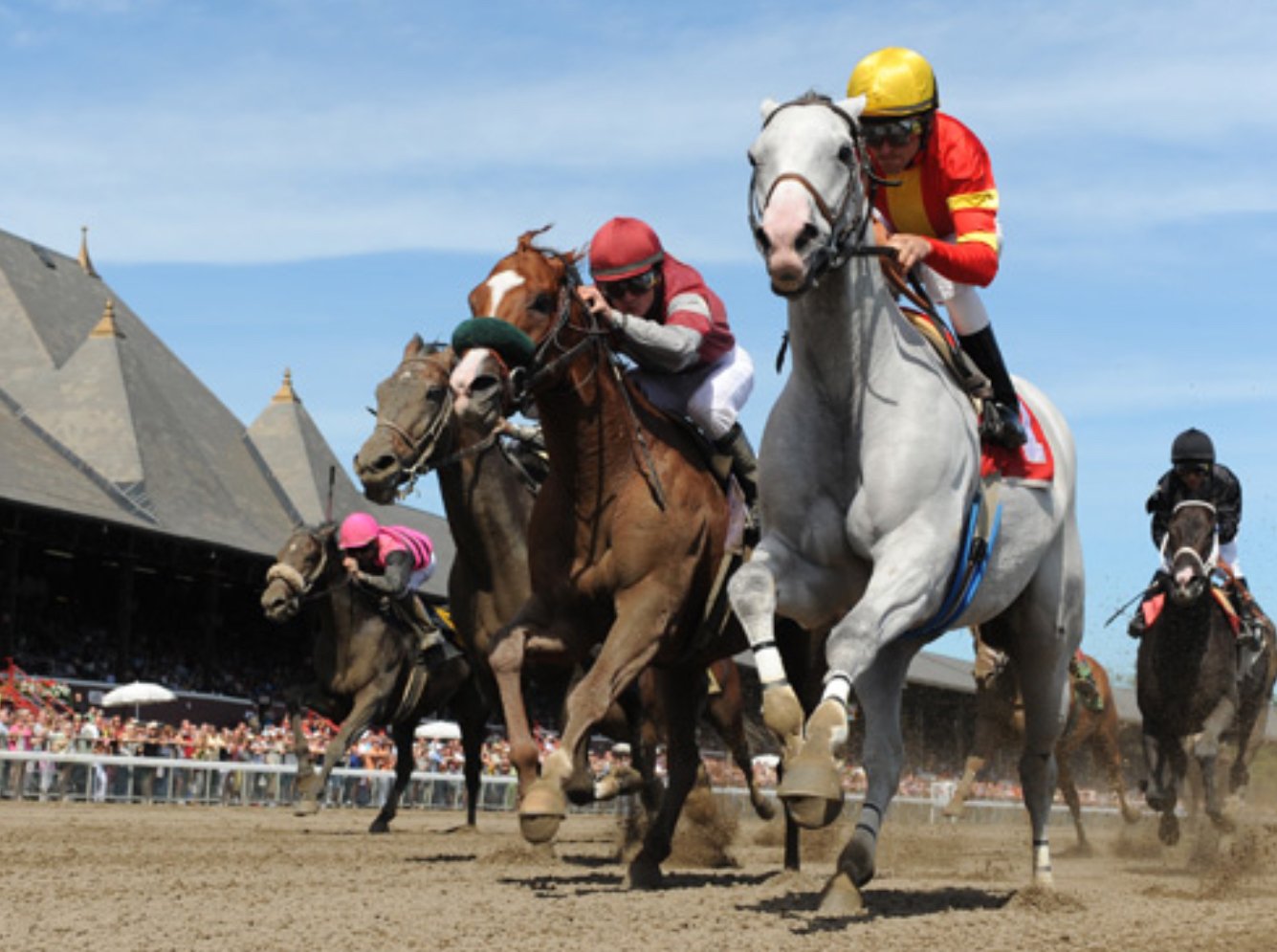
June 4–8, 2025. The air will thrum with ritual, the track will quake with hooves, and the American imagination will once again fix its gaze on a tradition older than most cities. This year, however, the Belmont Stakes—the prestigious final leg of the Triple Crown—is not being held at its traditional home in Elmont, New York, but has instead migrated north to the storied Saratoga Race Course. For the second consecutive year, history will be made on a track already soaked in it.

As the third and most grueling race in the triumvirate that begins with the Kentucky Derby and continues with the Preakness Stakes, the Belmont has always symbolized not just closure, but consequence. It is where champions are confirmed, where dreams collapse or crystalize under the weight of ten furlongs. But in 2025, its relocation to Saratoga—due to ongoing renovations at Belmont Park—has reawakened old spirits, reframed old rivalries, and lent this year’s Stakes a different kind of gravity: not just who wins, but where and why.

Kentucky’s Curtain Raiser: Of Roses and Reckonings

As always, the Kentucky Derby opened the season with flourish and fanfare. Run beneath twin spires at Churchill Downs, the first Saturday in May crowned Dappled Empire as victor—a three-year-old colt with New York lineage and an uncanny ability to finish with a second burst that seems conjured from nowhere. Ridden by veteran jockey Ramón Castillo and trained by the quietly formidable Leticia Marrón, Dappled Empire delivered a decisive win that reframed this year’s Triple Crown narrative.

But beyond the win, the Derby spotlighted the new intersection of heritage and technology in Thoroughbred racing. Digital syndicates, AI-aided breeding analytics, and biometric data monitoring have all begun to shift how horses are trained, how odds are calculated, and how fans engage. The Derby’s paddock wasn’t just filled with gamblers and breeders—it was crowded with data scientists, crypto investors, and first-time spectators lured in by influencer campaigns and app-based fractional ownership.

And yet, despite all the digital trimmings, the Derby prevailed in doing what it has always done: amplify desire. A blanket of roses, a photo-finish, a contender whose gait could make angels blush. In Dappled Empire, fans saw not just a horse—but the ghost of Secretariat, the memory of Affirmed, the lure of a potential Crown.

The Preakness as Middle Movement

Two weeks later at Pimlico, the Preakness Stakes opened with less pomp but greater pressure. The field was tight, and early predictions suggested Storm Signal—a tenacious bay trained in the hills of West Virginia—might pull off an upset. But in muddy conditions, Dappled Empire once again closed like a locomotive, passing Bravura Lane at the final stretch to win by half a length.

The victory established Dappled Empire as a legitimate Triple Crown contender—and reignited a national obsession that had dulled slightly in the post-Justify years. As trainer Marrón said in her post-race interview: “We’re not chasing ghosts. We’re just building our own.” And that, perhaps, is what this year’s Triple Crown narrative most distinctly offers—a reclaiming of legacy without the burden of imitation.

The Preakness also served as a tonal shift. Less about spectacle and more about strategy. There, within Pimlico’s low-slung charm and Baltimore’s weathered grandeur, the racing community found a heartbeat of its own: less corporate, more communal. And yet, beneath that charm was high-stakes calculus. Should Dappled Empire run the Belmont at all? Should he rest? What if weather—or Saratoga itself—changed everything?

Saratoga: The Summer Cathedral

With Belmont Park still undergoing sweeping renovations to modernize its facilities, Saratoga Race Course has become the stand-in stage—but make no mistake, it is no understudy. Founded in 1863, Saratoga is the oldest organized sporting venue in the U.S., and it exudes a kind of sartorial classicism that the other Triple Crown legs only gesture toward. Here, elegance isn’t curated—it’s inherited.

The trees are older, the railings chipped in just the right way, and the crowd—a mix of racing diehards, regional elite, and seasonal wanderers—knows its turf. For fans of “the Spa,” as Saratoga is affectionately known, hosting the Belmont is not an inconvenience. It is consecration.

The distance this year is adjusted to 1 1/4 miles, a nod to the track’s size and an effort to maintain competitive parity. Purists lament the temporary shrinkage from the traditional 1 1/2 miles—the so-called “Test of the Champion”—but the tension remains. If anything, the shorter track invites tighter finishes, more daring strategy, and a sharper focus on gate speed and positioning.

And this year, with Dappled Empire in contention, the stakes feel even higher. Saratoga will host not just a race, but a trial by legacy—the colt attempting to etch his name alongside only thirteen others who have won all three legs of the Crown.

The Culture Around the Crown

What makes the Belmont Stakes so compelling isn’t just the horses—it’s the culture that clings to the rail. Here, fashion matters as much as form. Saratoga’s 2025 edition promises a cascade of linen suits, wide-brimmed hats, and champagne flutes held aloft beside betting slips. But there’s also a deeper transformation taking place: horse racing’s reinvention as a participatory economy.

Tech-savvy platforms like MyStable and RideEquity have democratized horse ownership, allowing fans to buy fractional shares of competing thoroughbreds. Augmented-reality overlays now let fans track their horses in real time from their seats. For the Belmont at Saratoga, even museum-style pop-ups are planned—showcasing the art, archives, and rare silks of past champions.

And then there’s the betting. No longer confined to teller windows and mutuel tickets, wagering has gone digital—with real-time odds, in-race bets, and AI-generated projections delivered straight to mobile. For purists, this is sacrilege. For everyone else, it’s a bridge to engagement.

Yet amid this tech rush, the heart of the Stakes remains stubbornly analog: a horse, a rider, a track, a moment.

The Horses to Watch

As we near race day, Dappled Empire remains the center of gravity. But challengers are circling. Bravura Lane, the Preakness runner-up, has shown durability over longer distances. Las Noches, a sleek filly trained out of Lexington, skipped the first two legs and is expected to make a surprise push, bringing fresh legs and a calculated edge. Iron Vow, with bloodlines that trace back to Curlin, remains the sentimental favorite for East Coast bettors.

Much will depend on the post draw, weather conditions, and how well Saratoga’s dirt holds up to back-to-back days of elite racing. But in the end, as always, the Belmont will be won by a combination of courage, conservation, and timing.

More Than a Race: The Spectacle of Belmont Week

The Belmont Stakes doesn’t exist in a vacuum—it unfurls over five days of pageantry, parties, and local pride. From June 4 to June 8, Saratoga will swell. Hotel rooms have been booked since March. Restaurants will hum. The town’s historic Broadway Avenue will pulse with storefront banners and Belmont-themed cocktails. And every tourist who steps off the Amtrak from New York will be met not just by fanfare, but by a sense of living history.

Highlights of the week include:

  • The Belmont Racing Festival, featuring undercard races, live jazz, and heritage exhibits.
  • Legends of the Crown, a retrospective honoring Triple Crown winners with appearances from former jockeys and trainers.
  • Belmont After Dark, a nightlife series combining equestrian chic with upstate sophistication—think Gatsby meets barn party.

And perhaps most moving of all: Opening Day at Dawn, where spectators can watch early morning workouts in misty silence. Here, away from the betting boards and big hats, the sport becomes what it was always meant to be: quiet, beautiful, elemental.

The Final Turn: What the 2025 Belmont Stakes Means

In the end, Belmont 2025 is not just about whether Dappled Empire can win. It is about what it means to win here. At Saratoga. In a time of shifting terrains—economic, cultural, physical. It is about how tradition can evolve without erasure. How the old world and the new might gallop in tandem, not opposition.

In that regard, Belmont 2025 represents the new architecture of American sport—not just a contest of speed and sinew, but of memory, meaning, and moment.

And when the gates open on June 8, when the bell rings and the field breaks, it will not be simply a race to the finish.

It will be a race to belong. In the books. In the lore. In the story that—since 1867—has never stopped galloping.


Related Articles
Modern data center facility with a solar-panel-clad exterior, bright green administrative offices, and secure perimeter fencing, showcasing sustainable digital infrastructure and renewable energy integration

Lombardy’s Data Center Boom: Balancing Digital Ambition with Environmental Responsible

Lombardy has emerged as Italy’s primary hub for new digital infrastructures, particularly data centers—vast complexes […]

In a highly anticipated reunion after 24 years, Adidas Originals and Coca-Cola have joined forces once again to celebrate the FIFA World Cup 2026™. The collaboration revives their iconic 2002 partnership from the Japan-South Korea tournament, now reimagined for the biggest global sporting event of 2026, co-hosted by the United States, Canada, and Mexico. Set to launch on June 6, 2026, this collection masterfully blends Adidas' streetwear heritage with Coca-Cola's timeless branding, creating a vibrant fusion of football culture, nostalgia, and modern style. The drop arrives at a perfect moment. With the World Cup kicking off on June 11, 2026, fans worldwide are gearing up for a summer of football excitement. This collaboration isn't just merch—it's a cultural statement that merges two legendary brands under the banner of "Originals are the Real Thing," a clever twist on Coca-Cola's famous slogan. Historical Context: A Reunion 24 Years in the Making Adidas and Coca-Cola first collaborated during the 2002 FIFA World Cup, producing limited-edition pieces that captured the era's energy. That partnership helped define early 2000s football-streetwear crossover culture. Fast-forward to 2026, and the brands are back with fresh energy, leveraging Adidas' deep FIFA ties (as an official partner) and Coca-Cola's long-standing sponsorship of the tournament. The 2026 edition promises to be historic as the first 48-team World Cup, spanning three countries and generating unprecedented global hype. This collab taps into that momentum, offering fans wearable pieces that celebrate both brands' legacies while looking forward to the future of football fashion. Collection Overview and Design Philosophy The Adidas Originals x Coca-Cola collection fuses 2000s street style with classic sporting aesthetics. Expect bold reds, creams, whites, and silver accents inspired by Coca-Cola's iconic packaging—think classic script logos, droplet detailing, and can-inspired motifs. The lineup spans footwear, apparel, and accessories, divided into two visual directions: one logo-heavy and graphic-forward, the other drawing from vintage advertising aesthetics. Designs pay homage to Coca-Cola's visual language while staying true to Adidas Originals' archival roots. High-quality materials, attention to detail, and versatile silhouettes make these pieces suitable for both match-day wear and everyday street style. The campaign, featuring young football star Lamine Yamal and a diverse cast in everyday scenes building anticipation for the tournament, reinforces themes of originality and shared cultural moments. Footwear Highlights Footwear takes center stage in this collaboration, with reimagined takes on iconic 2000s Adidas silhouettes: Samba and Superstar Models: These classics get Coca-Cola treatment with white/cream/red colorways and prominent script branding. The Samba blends street heritage with football roots, while the Superstar II features weathered bases and bold side panels. Expected pricing around $110–$130. Adistar Control 5: A standout with droplet detailing mimicking condensation on a cold Coke can. This model brings performance-inspired design into lifestyle territory. Predator Sala: Indoor/hybrid style with silver-and-red accents, nodding to predatory precision on the pitch and Coca-Cola's bold energy. Climacool 1: Revived with breathable tech and Coke-inspired graphics, perfect for warm summer days. Megaride F50: A highlight paying tribute to the iconic Coca-Cola glass bottle, with unique contours and refreshing design cues. Each pair incorporates thoughtful details like embroidered logos, custom insoles, and packaging that mimics vintage Coke crates or cans. These shoes are built for durability and comfort, appealing to sneakerheads, football fans, and casual wearers alike. Apparel and Accessories Beyond kicks, the collection offers a full lifestyle range: Track Tops and Jerseys: Standout jerseys fuse retro Coca-Cola advertising from different eras into cohesive football designs. Track jackets feature signature three stripes alongside Coke branding, in vibrant reds and classic whites. Shorts and T-Shirts: Relaxed fits with graphic prints, ideal for casual wear or layering. Expect motivational football motifs blended with refreshing beverage references. Accessories: A bright red airliner bag stands out as a functional statement piece. Additional items may include caps, socks, and tote bags carrying the collaborative spirit. The apparel emphasizes comfort with premium cotton blends, mesh panels for breathability, and oversized silhouettes popular in contemporary streetwear. Unisex sizing and inclusive fits make the collection accessible to a broad audience. Cultural Impact and Fan Appeal This collaboration resonates on multiple levels. For football fans, it represents national pride and global unity ahead of the 2026 tournament. Sneaker enthusiasts will appreciate the nostalgic 2000s revival mixed with modern execution. Streetwear collectors see it as a prime example of how heritage brands can innovate through partnerships. In an era where sports and fashion increasingly intersect, Adidas and Coca-Cola deliver pieces that transcend the pitch. Wear them to watch matches at home, attend watch parties, or hit the streets in any host city—New York, Los Angeles, Toronto, or beyond. The designs are versatile enough for gym sessions, festivals, or daily commutes. The timing aligns perfectly with rising interest in football in North America, boosted by the co-hosting nations. Young talents like Lamine Yamal in the campaign help bridge generational gaps, attracting newer fans while satisfying longtime supporters. Where to Buy and Release Details The collection launches globally on June 6, 2026, via: Adidas CONFIRMED app (for early access and raffles) Adidas.com Select retailers and flagship stores worldwide Some regions may see staggered drops, with Japan and other markets getting early access. Prices are expected to range from $50–$150 depending on the item, making it relatively accessible compared to ultra-limited drops. Pro Tips for Copping: Enable notifications on the CONFIRMED app. Check local stock at Adidas stores in major cities. Monitor resale platforms post-drop for exclusive colorways, but be wary of markups. Size up slightly for oversized apparel fits. Given the World Cup hype, popular items like the Sambas and jerseys are likely to sell out quickly. International shipping is available, but factor in potential customs delays. Styling Suggestions Match Day Look: Pair a collaborative jersey with classic black shorts and Samba sneakers for effortless fan style. Streetwear Rotation: Layer a track top over a graphic tee with wide-leg pants and the Megaride F50 for a bold urban ensemble. Casual Summer: White Superstar with denim shorts and the airliner bag for a refreshing, vacation-ready vibe. These pieces mix seamlessly with existing Adidas or neutral wardrobes, maximizing versatility. Broader Context in 2026 Fashion and Sports The Adidas x Coca-Cola drop is part of a larger wave of high-profile collaborations tied to the World Cup. Adidas continues its dominance in football kit design, while Coca-Cola leverages its sponsorship with collectibles, bottles, and experiential activations like the Trophy Tour. In the sneaker industry, this collab exemplifies the ongoing trend of lifestyle reinterpretations of performance silhouettes. It also highlights how global brands use major events to drive cultural conversations around unity, originality, and joy—core values for both companies. Sustainability notes (based on Adidas' broader initiatives) suggest some pieces may incorporate recycled materials, aligning with modern consumer expectations. Looking Forward: Legacy and Excitement As the countdown to kickoff continues, this collection serves as the perfect prelude to an unforgettable summer of football. Whether you're a die-hard supporter, a fashion-forward collector, or someone seeking motivation through style, the Adidas Originals x Coca-Cola FIFA World Cup 2026 lineup delivers. Expect potential restocks, special event exclusives in host cities, and continued campaign content featuring more athletes. This isn't just clothing—it's a ticket to participate in the global celebration of the beautiful game. Mark your calendars for June 6, 2026. Refresh your wardrobe, lace up those Sambas, and get ready to cheer on your team in style. The "Real Thing" meets the Originals in what promises to be one of the most talked-about releases of the year. This collaboration captures the essence of football's universal appeal: bringing people together through shared passion, iconic brands, and unforgettable moments. As the world prepares for 2026's expanded tournament, Adidas and Coca-Cola remind us that some partnerships are truly timeless.

Adidas Originals x Coca-Cola Collection: FIFA World Cup 2026

In a highly anticipated reunion after 24 years, Adidas Originals and Coca-Cola have joined forces […]

Loewe shoulder bag crafted in brown and black leather with minimalist lion face detailing and a matching fur tail charm

180 Years Unfolded: The Full Story Behind Loewe’s New Campaign

The year was 1846. Queen Victoria was on the British throne and the telephone, the […]