DRIFT

a world game, redefined

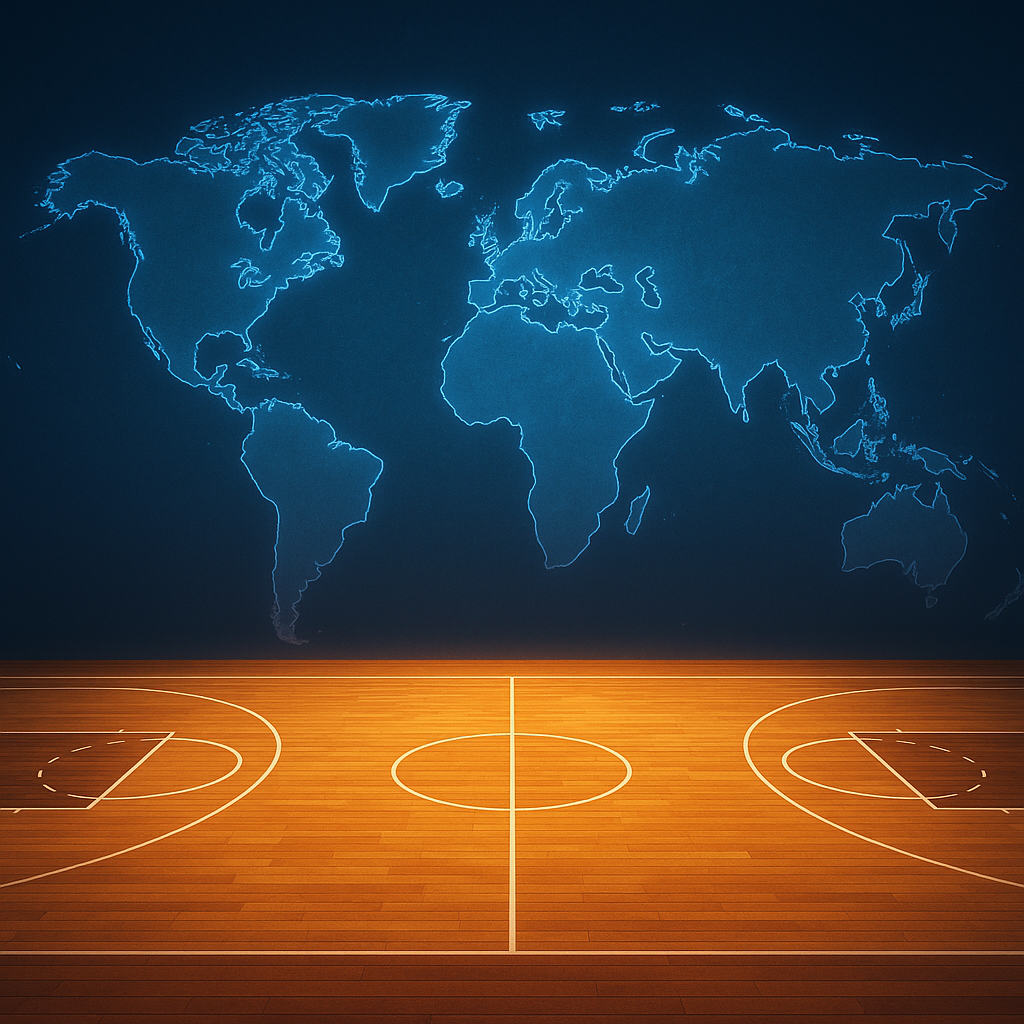
Before the first basket was scored on opening night, the NBA had already made history. The 2025–26 season tipped off with 135 players born outside the United States, the highest number ever recorded in league history. Those players represent 43 different countries, reflecting not just a league, but a living map of global basketball influenceThis year, Canada leads all nations with 23 players, followed by France with 19 and Australia with 13. Every single NBA team now features at least one player from outside the U.S., a testament to how far basketball’s global reach has extended.

The Atlanta Hawks, once known for their American-heavy rosters, have tied an all-time record with 10 international players, symbolizing the cosmopolitan reality of the modern league.

Even more remarkable: the last seven consecutive MVP awards have been earned by international stars—Giannis Antetokounmpo (Greece), Nikola Jokić (Serbia), and Joel Embiid (Cameroon)—marking an era of dominance from beyond U.S. borders.

the global roots of a modern league

Basketball was born in a Springfield gym in 1891. But today, it belongs to the world.

The NBA’s global ascent didn’t happen overnight. From the pioneering days of Dirk Nowitzki and Yao Ming to the cultural impact of Manu Ginóbili, Tony Parker, and Pau Gasol, international players have steadily woven their identities into the NBA’s narrative.

Yet the tipping point has only recently arrived. Social media, international broadcasting, and grassroots academies have accelerated the sport’s diffusion. The league’s development programs in Africa, Europe, Asia, and Latin America—including Basketball Without Borders and NBA Academies—have created direct pathways to the league.

Today’s international players arrive not as curiosities, but as fully formed professionals with global fan bases of their own. Luka Dončić entered the NBA as a European champion. Victor Wembanyama was already a phenomenon before he ever wore a Spurs jersey. Shai Gilgeous-Alexander carries an entire Canadian generation’s hope with him.

This new wave doesn’t just expand the league’s geography—it redefines its culture.

why the nba’s diversity matters

The surge of foreign-born talent has reshaped the way teams operate. General managers now look beyond U.S. colleges toward leagues like the NBL in Australia, the EuroLeague, and Liga ACB in Spain. Analytics departments mine FIBA data with the same precision once reserved for NCAA play.

For fans, it means a league that feels more like a global festival of styles—European ball movement meeting American athleticism, African power meeting Asian precision.

Culturally, this diversity deepens the NBA’s reach. Every country with an NBA player becomes a micro-market. Every international MVP boosts global ratings. Jerseys sell in dozens of languages, and social media highlights cross borders in seconds.

The modern NBA no longer sells a single nation’s dream—it sells the world’s.

the european frontier

Just as international talent reshapes the league from within, the NBA is reportedly planning a transformation from without: a European league under the NBA umbrella.

According to Commissioner Adam Silver, discussions are underway to launch a Europe-based professional league by 2027 or 2028, possibly in partnership with FIBA. Cities like London, Paris, Berlin, Madrid, and Milan have been floated as potential homes for inaugural franchises.

If realized, NBA Europe would represent the league’s boldest expansion since its foundation. Analysts expect an initial lineup of around 16 teams, mixing existing European basketball institutions with newly created franchises built under the NBA model.

While the details are fluid, the goal is clear—turn the NBA into a truly transcontinental ecosystem, where the next generation of stars could rise without ever crossing the Atlantic.

resistance and opportunity

Not everyone in Europe is thrilled. Executives from the EuroLeague—the continent’s premier competition—have warned that a competing NBA-backed league could fragment the market and undermine local traditions. European basketball thrives on regional rivalries, promotion and relegation systems, and deep-rooted fan cultures that differ from the NBA’s franchise model.

Yet there’s an undeniable allure in joining basketball’s most visible brand. For sponsors, broadcasters, and cities hungry for global attention, NBA Europe offers both visibility and validation. For players, it could mean a new bridge to the world’s most competitive stage—without having to relocate permanently to North America.

The logistical hurdles remain steep—travel schedules, arena standards, and television windows—but the symbolic momentum feels unstoppable. As Silver said earlier this year, “The world has come to the NBA. Now, maybe it’s time the NBA goes to the world.”

building a global empire

Behind the expansion lies a broader strategy. The NBA’s revenue growth increasingly depends on international media rights, merchandise, and digital partnerships. Markets like France, Spain, and the U.K. have already shown massive growth in viewership, while Asian audiences continue to power social engagement metrics.

If the league succeeds in establishing a European division, it could mirror the model of global football—an interlinked ecosystem where leagues coexist, players circulate freely, and local markets retain their own flavor under a universal brand identity.

The NBA, in this sense, isn’t just expanding—it’s evolving into an institution akin to FIFA or UEFA, positioning basketball as the next global language of sport.

occur

What began with 135 international players is much more than a statistic—it’s a statement. The NBA is no longer an American export. It’s an international mixture, pulsing with languages, styles, and dreams that transcend borders.

When the first tip-off of the 2025 season echoed through arenas in Milwaukee, Los Angeles, and Boston, it also reverberated in Toronto, Paris, Melbourne, and Lagos. The sound was familiar, but the meaning had changed.

The NBA has become the world’s court—a stage where the game doesn’t just belong to anyone; it belongs to everyone.

Related Articles

Modern data center facility with a solar-panel-clad exterior, bright green administrative offices, and secure perimeter fencing, showcasing sustainable digital infrastructure and renewable energy integration

Lombardy’s Data Center Boom: Balancing Digital Ambition with Environmental Responsible

Lombardy has emerged as Italy’s primary hub for new digital infrastructures, particularly data centers—vast complexes […]

In a highly anticipated reunion after 24 years, Adidas Originals and Coca-Cola have joined forces once again to celebrate the FIFA World Cup 2026™. The collaboration revives their iconic 2002 partnership from the Japan-South Korea tournament, now reimagined for the biggest global sporting event of 2026, co-hosted by the United States, Canada, and Mexico. Set to launch on June 6, 2026, this collection masterfully blends Adidas' streetwear heritage with Coca-Cola's timeless branding, creating a vibrant fusion of football culture, nostalgia, and modern style. The drop arrives at a perfect moment. With the World Cup kicking off on June 11, 2026, fans worldwide are gearing up for a summer of football excitement. This collaboration isn't just merch—it's a cultural statement that merges two legendary brands under the banner of "Originals are the Real Thing," a clever twist on Coca-Cola's famous slogan. Historical Context: A Reunion 24 Years in the Making Adidas and Coca-Cola first collaborated during the 2002 FIFA World Cup, producing limited-edition pieces that captured the era's energy. That partnership helped define early 2000s football-streetwear crossover culture. Fast-forward to 2026, and the brands are back with fresh energy, leveraging Adidas' deep FIFA ties (as an official partner) and Coca-Cola's long-standing sponsorship of the tournament. The 2026 edition promises to be historic as the first 48-team World Cup, spanning three countries and generating unprecedented global hype. This collab taps into that momentum, offering fans wearable pieces that celebrate both brands' legacies while looking forward to the future of football fashion. Collection Overview and Design Philosophy The Adidas Originals x Coca-Cola collection fuses 2000s street style with classic sporting aesthetics. Expect bold reds, creams, whites, and silver accents inspired by Coca-Cola's iconic packaging—think classic script logos, droplet detailing, and can-inspired motifs. The lineup spans footwear, apparel, and accessories, divided into two visual directions: one logo-heavy and graphic-forward, the other drawing from vintage advertising aesthetics. Designs pay homage to Coca-Cola's visual language while staying true to Adidas Originals' archival roots. High-quality materials, attention to detail, and versatile silhouettes make these pieces suitable for both match-day wear and everyday street style. The campaign, featuring young football star Lamine Yamal and a diverse cast in everyday scenes building anticipation for the tournament, reinforces themes of originality and shared cultural moments. Footwear Highlights Footwear takes center stage in this collaboration, with reimagined takes on iconic 2000s Adidas silhouettes: Samba and Superstar Models: These classics get Coca-Cola treatment with white/cream/red colorways and prominent script branding. The Samba blends street heritage with football roots, while the Superstar II features weathered bases and bold side panels. Expected pricing around $110–$130. Adistar Control 5: A standout with droplet detailing mimicking condensation on a cold Coke can. This model brings performance-inspired design into lifestyle territory. Predator Sala: Indoor/hybrid style with silver-and-red accents, nodding to predatory precision on the pitch and Coca-Cola's bold energy. Climacool 1: Revived with breathable tech and Coke-inspired graphics, perfect for warm summer days. Megaride F50: A highlight paying tribute to the iconic Coca-Cola glass bottle, with unique contours and refreshing design cues. Each pair incorporates thoughtful details like embroidered logos, custom insoles, and packaging that mimics vintage Coke crates or cans. These shoes are built for durability and comfort, appealing to sneakerheads, football fans, and casual wearers alike. Apparel and Accessories Beyond kicks, the collection offers a full lifestyle range: Track Tops and Jerseys: Standout jerseys fuse retro Coca-Cola advertising from different eras into cohesive football designs. Track jackets feature signature three stripes alongside Coke branding, in vibrant reds and classic whites. Shorts and T-Shirts: Relaxed fits with graphic prints, ideal for casual wear or layering. Expect motivational football motifs blended with refreshing beverage references. Accessories: A bright red airliner bag stands out as a functional statement piece. Additional items may include caps, socks, and tote bags carrying the collaborative spirit. The apparel emphasizes comfort with premium cotton blends, mesh panels for breathability, and oversized silhouettes popular in contemporary streetwear. Unisex sizing and inclusive fits make the collection accessible to a broad audience. Cultural Impact and Fan Appeal This collaboration resonates on multiple levels. For football fans, it represents national pride and global unity ahead of the 2026 tournament. Sneaker enthusiasts will appreciate the nostalgic 2000s revival mixed with modern execution. Streetwear collectors see it as a prime example of how heritage brands can innovate through partnerships. In an era where sports and fashion increasingly intersect, Adidas and Coca-Cola deliver pieces that transcend the pitch. Wear them to watch matches at home, attend watch parties, or hit the streets in any host city—New York, Los Angeles, Toronto, or beyond. The designs are versatile enough for gym sessions, festivals, or daily commutes. The timing aligns perfectly with rising interest in football in North America, boosted by the co-hosting nations. Young talents like Lamine Yamal in the campaign help bridge generational gaps, attracting newer fans while satisfying longtime supporters. Where to Buy and Release Details The collection launches globally on June 6, 2026, via: Adidas CONFIRMED app (for early access and raffles) Adidas.com Select retailers and flagship stores worldwide Some regions may see staggered drops, with Japan and other markets getting early access. Prices are expected to range from $50–$150 depending on the item, making it relatively accessible compared to ultra-limited drops. Pro Tips for Copping: Enable notifications on the CONFIRMED app. Check local stock at Adidas stores in major cities. Monitor resale platforms post-drop for exclusive colorways, but be wary of markups. Size up slightly for oversized apparel fits. Given the World Cup hype, popular items like the Sambas and jerseys are likely to sell out quickly. International shipping is available, but factor in potential customs delays. Styling Suggestions Match Day Look: Pair a collaborative jersey with classic black shorts and Samba sneakers for effortless fan style. Streetwear Rotation: Layer a track top over a graphic tee with wide-leg pants and the Megaride F50 for a bold urban ensemble. Casual Summer: White Superstar with denim shorts and the airliner bag for a refreshing, vacation-ready vibe. These pieces mix seamlessly with existing Adidas or neutral wardrobes, maximizing versatility. Broader Context in 2026 Fashion and Sports The Adidas x Coca-Cola drop is part of a larger wave of high-profile collaborations tied to the World Cup. Adidas continues its dominance in football kit design, while Coca-Cola leverages its sponsorship with collectibles, bottles, and experiential activations like the Trophy Tour. In the sneaker industry, this collab exemplifies the ongoing trend of lifestyle reinterpretations of performance silhouettes. It also highlights how global brands use major events to drive cultural conversations around unity, originality, and joy—core values for both companies. Sustainability notes (based on Adidas' broader initiatives) suggest some pieces may incorporate recycled materials, aligning with modern consumer expectations. Looking Forward: Legacy and Excitement As the countdown to kickoff continues, this collection serves as the perfect prelude to an unforgettable summer of football. Whether you're a die-hard supporter, a fashion-forward collector, or someone seeking motivation through style, the Adidas Originals x Coca-Cola FIFA World Cup 2026 lineup delivers. Expect potential restocks, special event exclusives in host cities, and continued campaign content featuring more athletes. This isn't just clothing—it's a ticket to participate in the global celebration of the beautiful game. Mark your calendars for June 6, 2026. Refresh your wardrobe, lace up those Sambas, and get ready to cheer on your team in style. The "Real Thing" meets the Originals in what promises to be one of the most talked-about releases of the year. This collaboration captures the essence of football's universal appeal: bringing people together through shared passion, iconic brands, and unforgettable moments. As the world prepares for 2026's expanded tournament, Adidas and Coca-Cola remind us that some partnerships are truly timeless.

Adidas Originals x Coca-Cola Collection: FIFA World Cup 2026

In a highly anticipated reunion after 24 years, Adidas Originals and Coca-Cola have joined forces […]

Loewe shoulder bag crafted in brown and black leather with minimalist lion face detailing and a matching fur tail charm

180 Years Unfolded: The Full Story Behind Loewe’s New Campaign

The year was 1846. Queen Victoria was on the British throne and the telephone, the […]