Lombardy’s Data Center Boom: Balancing Digital Ambition with Environmental Responsible

June 3, 2026
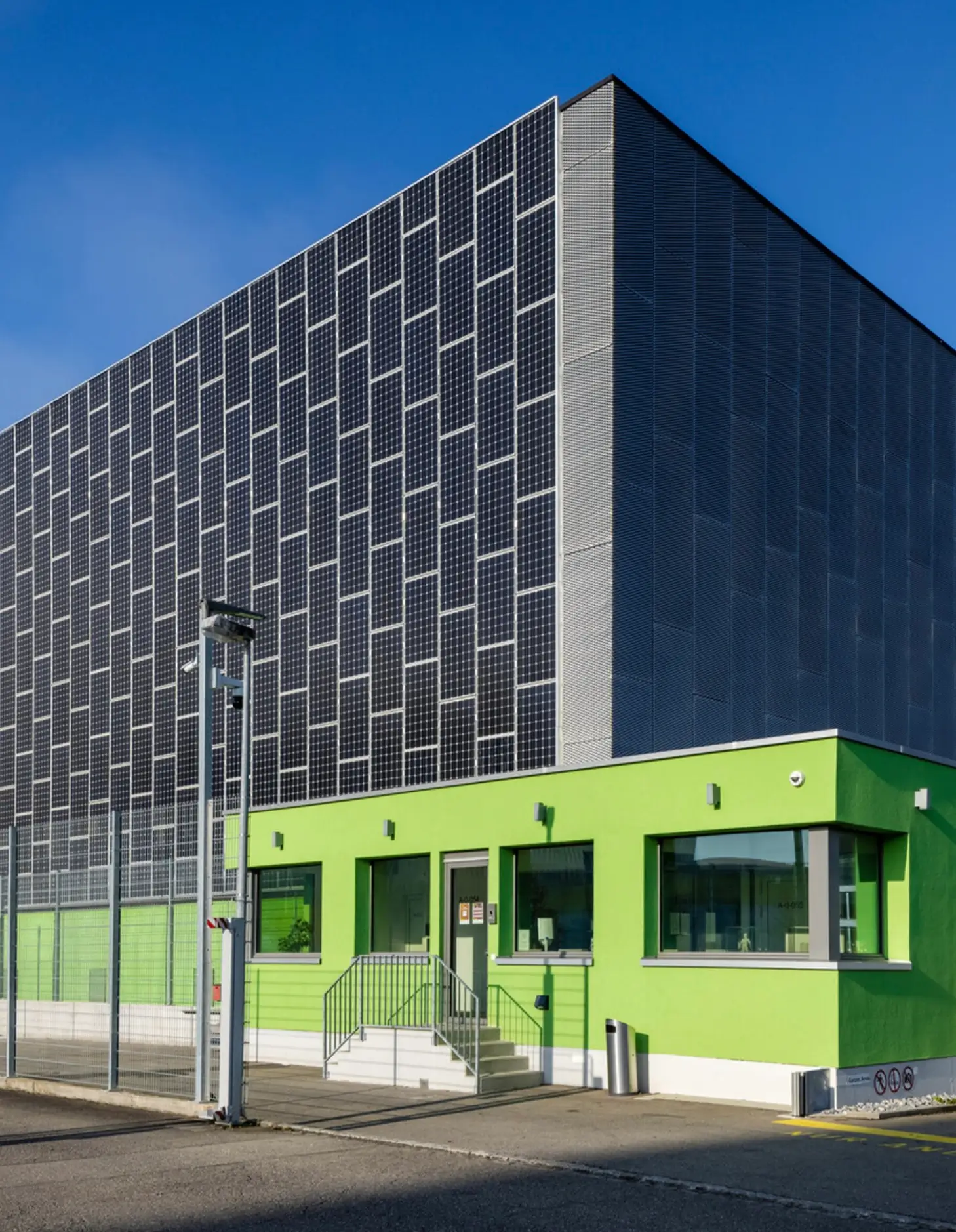
Lombardy has emerged as Italy’s primary hub for new digital infrastructures, particularly data centers—vast complexes of physical servers that store, process, and distribute enormous amounts of data. These facilities, present in the region for years, are now expanding rapidly in number, scale, and energy demands. This mirrors trends in the United States, where earlier development has already reshaped territorial structures and, in some cases, demographic patterns.
A prime example is Ashburn, Virginia, dubbed “Data Center Alley.” Once a quiet area, it now hosts over 100 data centers, handling a massive share of global internet traffic. The Washington Post and other reports describe how technical buildings have integrated into residential zones, altering the local landscape, increasing noise and traffic, and redefining the balance between inhabited spaces and digital infrastructure. Residents report higher energy costs and quality-of-life concerns, while the area benefits economically from jobs and tax revenue.
Lombardy, with 63% of national authorization requests for data centers, faces similar dynamics. The region has approved Italy’s first dedicated law on data processing centers (notably Draft Law No. 150 in 2026), aiming to manage growth consciously. This legislation addresses environmental impacts that were previously handled vaguely, setting boundaries while embracing technological progress.
Lombardy, Italy, has imposed a hefty 200% tax on data centers in agricultural zones, aiming to curb environmental impact and promote the use of abandoned industrial areas instead. This initiative responds to concerns over the substantial energy demands and land use associated…
— Brew Debate Cafe (@BrewDebate) May 29, 2026
stir
Data centers, especially those powering generative AI (systems for answering questions, translating texts, or recognizing images), demand far more resources than traditional corporate servers. Their computing power is exponentially higher, leading to substantial energy and water use.
According to BBC reports referenced in discussions, a single data center can consume 11 to 19 million liters of water daily—equivalent to the needs of a city of 40,000 people. A University of California Riverside study projects that by 2027, global AI demand alone could require 4.2 to 6.6 billion cubic meters of water annually, nearly half the UK’s total consumption.
Water cools servers to prevent overheating. Higher data processing volumes mean greater heat and thus more cooling needs. This “invisible” consumption has only recently drawn public scrutiny as AI adoption surges.
Lombardy’s law prohibits future data centers from using public aqueduct water for cooling, pushing operators toward alternatives. These include:
- Closed-loop cooling: Coolant recirculates without significant loss. Some advanced systems are nearly non-evaporative.
- Direct liquid cooling: Fluid contacts chips directly via integrated racks.
- Immersion cooling: Servers submerge in non-conductive dielectric liquids, offering radical efficiency gains but higher upfront costs.
These technologies aim to reduce water use dramatically—sometimes by 70-90% compared to traditional evaporative methods—while allowing innovation to continue. Trade-offs exist: liquid cooling can sometimes increase electricity demands for other system components, highlighting the water-energy nexus.
challenge
Space constraints compound water and energy issues. Data center expansion in Lombardy could occupy around 120 hectares—over 160 football fields. In a densely populated, agriculturally significant region already facing land pressure, this “sacrifice” raises alarms.
The new law introduces economic disincentives: builders on agricultural or green land face significantly higher contributions—up to 100-200% surcharges—compared to standard rates. This “penalty” encourages redevelopment of disused industrial or contaminated (brownfield) sites, which qualify for simplified procedures.
Municipalities must map and publicly report disused areas, existing data centers, projects under construction, and expansions. This promotes transparency and better urban planning. It aligns with broader Italian and EU efforts to curb soil consumption, though implementation challenges remain, as some projects still target greenfield sites.
@businessinsider #AI #datacenters are popping up everywhere. Here’s what it’s like living next to one. #serverfarms ♬ original sound – Business Insider
different
A key strength of Lombardy’s approach is recognizing that data centers vary widely. Traditional corporate facilities consume far less energy and water than hyperscale AI clusters. Conflating them leads to misleading public debates and poor policy.
The law establishes a hierarchy with stricter oversight for high-impact facilities based on energy capacity. This nuanced regulation helps target interventions effectively. It draws from EU Energy Efficiency Directive reporting requirements, which mandate disclosure of energy and water metrics for larger centers.
National developments complement this. In early 2026, Italy introduced a single authorization process for data centers via Law Decree No. 21/2026, streamlining permitting while maintaining environmental safeguards. This affects regional rules, requiring alignment.
benefit
Data centers generate massive waste heat, typically vented into the atmosphere—a lost opportunity. Lombardy’s law encourages (and in some cases may require) integration with urban district heating networks. Capturing this heat could reduce reliance on gas and other fuels, providing community benefits.
This reflects a mature perspective: innovation should not be rejected but channeled to minimize net costs. Data centers bring economic upsides—jobs, tax revenue, digital competitiveness, and support for Industry 4.0 in Lombardy’s manufacturing heartland.
Yet, challenges persist. Power demand strains grids; AI facilities can match the consumption of tens or hundreds of thousands of households. In the US, projections suggest data centers could claim significant shares of national electricity by the late 2020s. Similar pressures loom in Europe.
Noise, traffic, and visual impacts on communities mirror Ashburn’s experience. Local resistance has grown in various Italian and European contexts when projects overlook stakeholder input.
scope
Lombardy’s pioneering law positions it as a leader in Italy, though national harmonization is underway. Other regions and countries grapple with similar issues. Ireland paused new connections until sustainability measures were met; various US localities debate moratoria or stricter zoning.
Technological solutions offer hope. AI-optimized cooling, advanced materials, and renewable integration can improve efficiency. Some operators pursue “water-positive” goals through recycling and offsets. Waste heat reuse and brownfield redevelopment exemplify circular economy principles.
However, efficiency gains often lag behind demand growth. AI’s rapid evolution drives insatiable computing needs. Society must weigh benefits—faster innovation, better services, economic growth—against costs: resource strain, potential biodiversity loss, and higher energy prices for residents.
fin
Lombardy’s framework attempts balance: discouraging high-impact greenfield builds, promoting efficient technologies, favoring remediation sites, and capturing byproducts like heat. It acknowledges that digital transformation carries a price—one we all pay through resources, landscapes, and bills.
Success depends on enforcement, technological adoption, and ongoing dialogue. Municipal mapping, transparent reporting, and service conferences for large projects foster accountability. Coordination with national single-authorization rules will be crucial to avoid conflicts.
As AI and cloud computing expand, data centers will become even more integral. The question is not whether they will grow, but how. Lombardy’s law signals a shift from unchecked expansion to regulated integration—embracing change without ignoring consequences.
Residents, policymakers, and industry must collide. Investments in grid modernization, renewable energy, and R&D for low-impact cooling are essential. Public education on trade-offs can build trust.
In the end, digital infrastructure is the backbone of the modern economy and society. By addressing its footprint proactively, Lombardy—and Italy—can lead Europe toward sustainable digitalization. The coming years will test either this conscious approach delivers both technological leadership and environmental stewardship. The price is real, but so are the opportunities—if managed wisely.
Related Articles

France Just Banned Social Media for Kids Under 15, and the Fight Over Anonymity Is Only Getting Started
France becomes the first EU nation to bar under 15s from social platforms, and critics […]