Beyond the Spotlight: Tracee Ellis Ross’s Design Debut – Emmanuelle Khanh

April 19, 2026
a frame
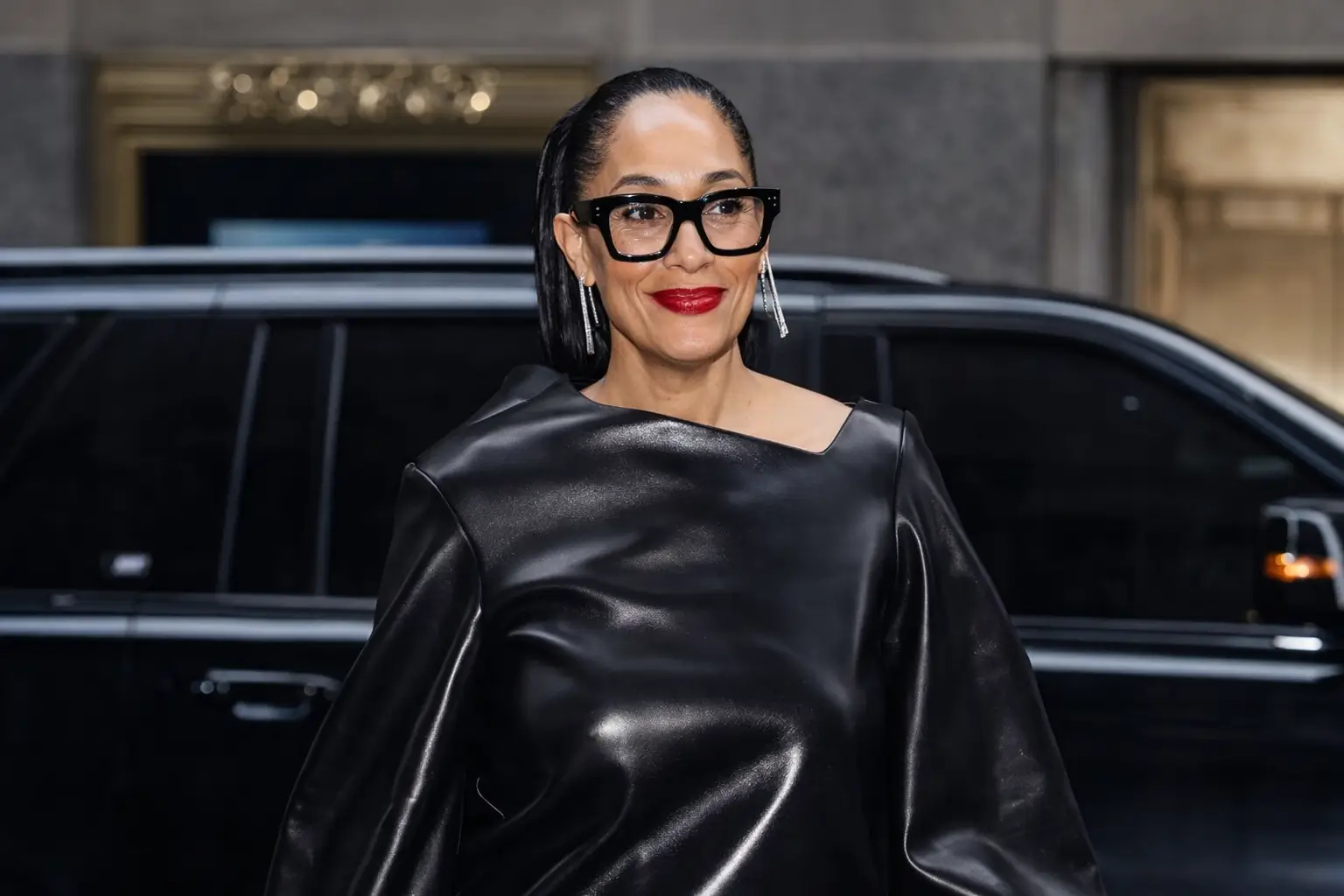
When Tracee Ellis Ross steps into view, the instinct isn’t to register outfit, then accessory—it’s to read the frame first. Not as ornament, but as architecture. Her eyewear has long operated as the opening clause of her image: bold, declarative, structurally precise. Sunglasses, in her language, are not punctuation at the end of a look—they are the syntax that determines how everything else will be understood.
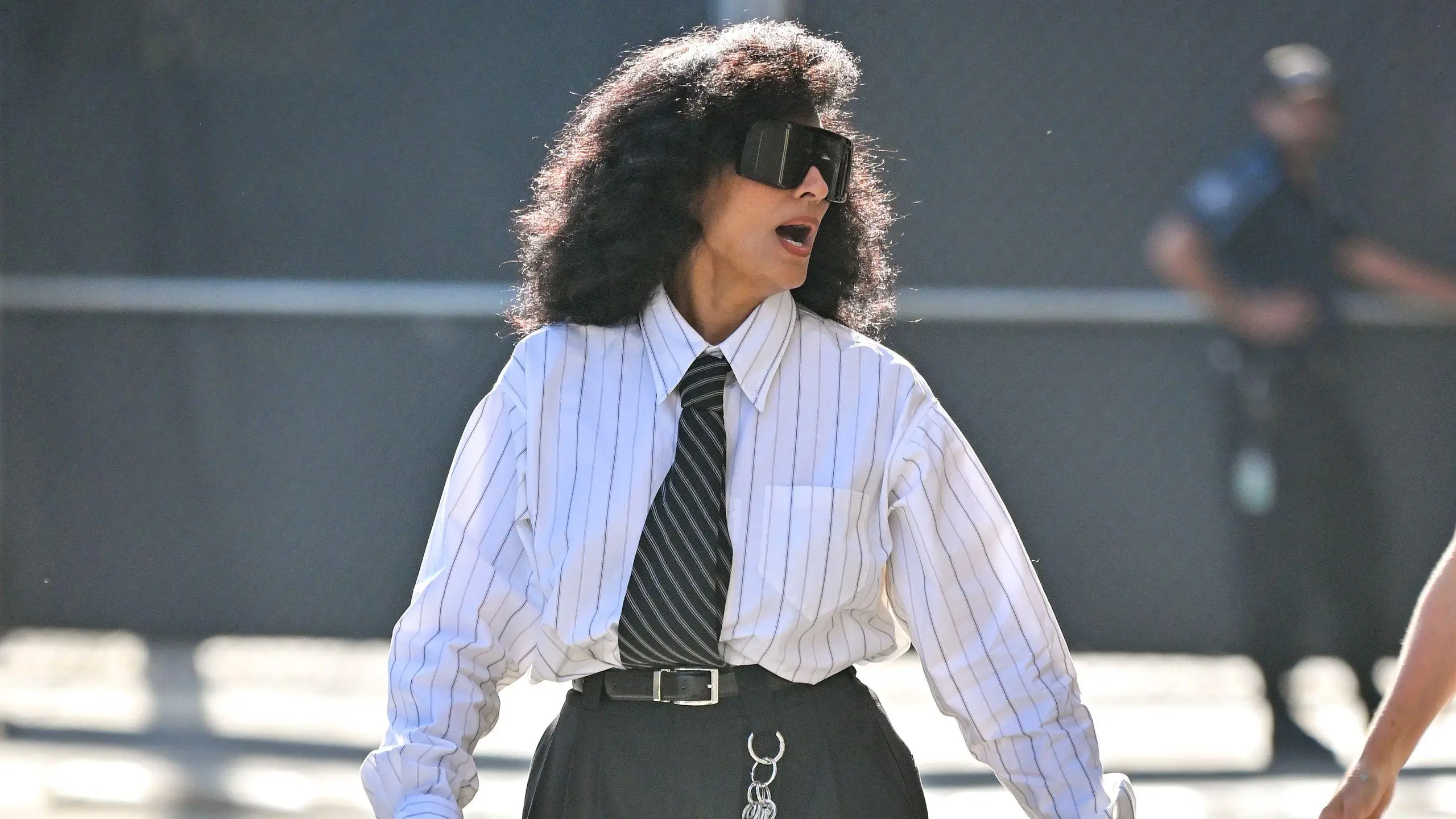
This has been consistent across contexts. Red carpets, daytime press, off-duty moments—her frames never feel incidental. They’re edited, selected, placed with the same intentionality as casting or lighting in a film. The result is a recognizable visual grammar: large silhouettes, sculptural edges, tonal clarity. A refusal to disappear.
With her debut connection alongside Emmanuelle Khanh, Ross formalizes what has always been implicit. She moves from wearer to author—from someone fluent in the language of eyewear to someone shaping its next dialect. The collection doesn’t introduce a new persona. It codifies an existing one.
View this post on Instagram
Partnerships in fashion can often feel transactional—visibility exchanged for validation. This one doesn’t. It reads as alignment.
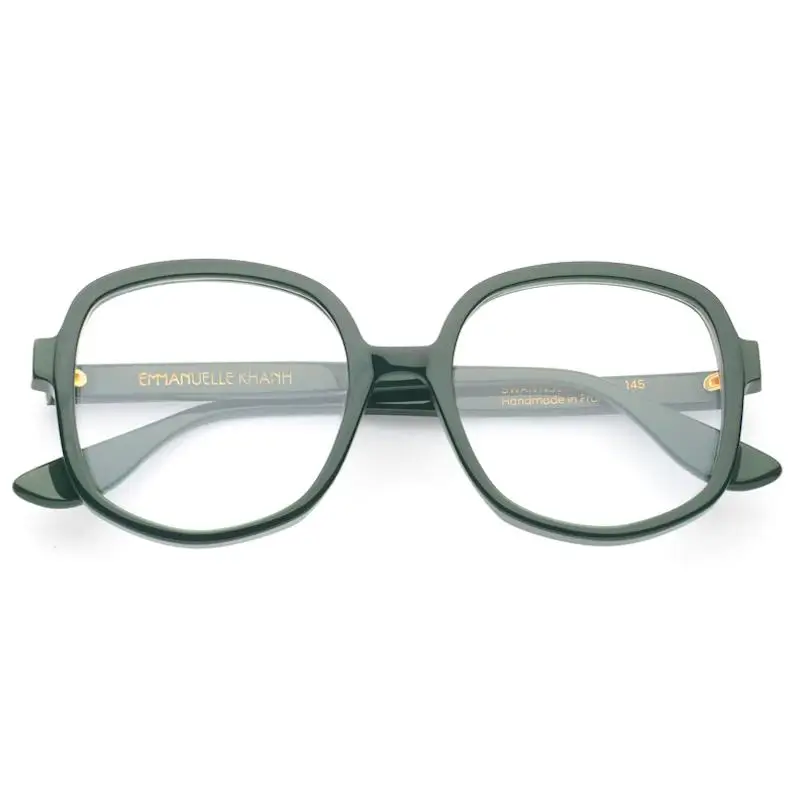
Emmanuelle Khanh, founded in the 1960s, built its reputation on a kind of assertive femininity that refused subtlety. Khanh herself designed for women who occupied space—professionally, socially, visually. Oversized frames, tailored silhouettes, an insistence on presence. The house has always treated eyewear not as utility, but as identity.
That philosophy mirrors Ross’s own approach to dressing. Her style has never relied on understatement. It operates through clarity—of shape, of proportion, of intention. The meeting point between Ross and Khanh is not aesthetic coincidence; it’s ideological overlap.
The revival of the Khanh brand in recent years adds another layer. Heritage here is not static—it’s being reinterpreted. Ross enters at a moment when the archive is open, not sealed. Her contribution doesn’t disrupt the lineage; it extends it forward.
In that sense, the convergence feels less like a debut and more like a continuation—one that happens to introduce a new author into an existing narrative.
idea
At the core of the collection are two silhouettes: Freedom and Truth. The naming is direct, almost disarmingly so. No abstraction, no coded language. Just two words that function as both description and declaration.
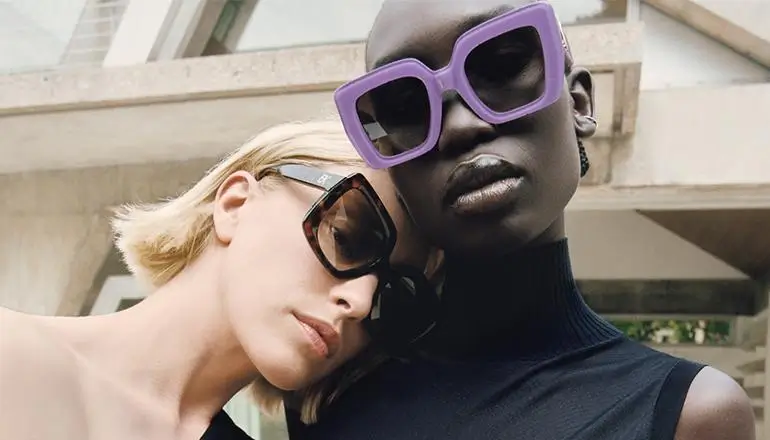
Freedom is the more expansive of the pair. A mask-like silhouette, oversized to the point of confrontation, it occupies the face rather than sitting on it. The lines are continuous, the coverage deliberate. It draws from a lineage that includes 1970s futurism and the visual aggression of punk—references that share a commitment to visibility as power.
There’s a protective quality to the frame, but it isn’t defensive. It reads as control. To wear something that large is to decide how much of yourself is seen and how. The lens becomes both filter and barrier—an interface between the individual and the world.
Truth, by contrast, operates through refinement. It takes the aviator—a shape so culturally saturated it risks invisibility—and recalibrates it. The proportions are tightened, the edges sharpened, the overall form made more intentional. It’s optical-ready, designed not just for statement but for integration into daily life.
The palette across both silhouettes is restrained: matte black, tortoiseshell, brushed metallics. This neutrality is strategic. It allows the forms themselves to carry the weight. There’s no need for color to assert presence when the structure already does.
Together, Freedom and Truth establish a dual system. One expansive, one precise. One that announces, one that calibrates. Both rooted in the same premise: that eyewear is not an accessory—it is authorship.
struct
The production of the collection spans France and Italy—a dialogue between design and execution that mirrors the conceptual balance of the pieces themselves.
Paris provides the conceptual framework: proportion, silhouette, historical reference. Italy contributes the technical realization: material precision, lens clarity, structural integrity. This cross-border process is not unusual in luxury eyewear, but here it feels particularly aligned with the intent of the collection.
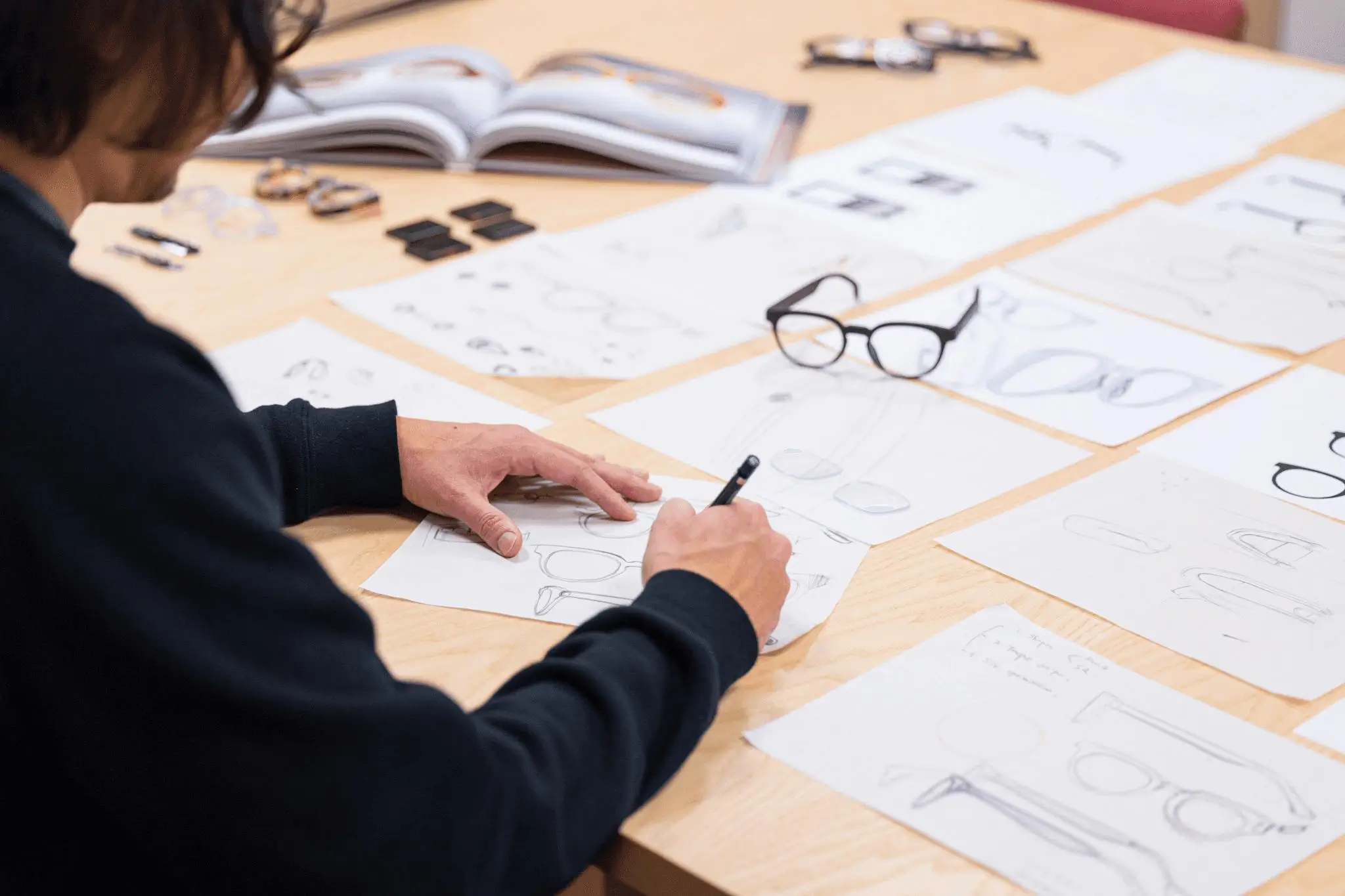
There is a sense of calibration in the final product. Nothing appears overworked or ornamental. The hinges, the curvature of the lenses, the weight distribution across the face—all of it feels considered. These are frames designed not just to be seen, but to be worn repeatedly without losing their impact.
The absence of overt branding is also notable. Logos are not foregrounded. Recognition comes through form rather than mark. It’s a choice that places emphasis back on design—on the object itself rather than the label attached to it.
scope
One of the most significant shifts this collection proposes is positional. It reorders the hierarchy of getting dressed.
In conventional styling logic, eyewear arrives at the end. It completes the look, adds polish, sometimes introduces contrast. Ross reverses that sequence. In her system, the frame is the origin point—the element around which everything else is constructed.
This is not just a stylistic preference; it’s a philosophical stance. To begin with eyewear is to begin with perspective—literally and figuratively. It asks the wearer to consider how they want to see and be seen before deciding how to present themselves more broadly.
Freedom and Truth are designed to initiate that process. They set tone. They establish boundary. They create a visual anchor that other elements must respond to rather than override.
This inversion has implications beyond fashion. It suggests a mode of self-presentation that prioritizes intention over accumulation. Fewer pieces, more clarity. Less layering, more definition.
rare
The release strategy of the collection mirrors its conceptual clarity. Quantities are limited. Distribution is controlled. There is no attempt to saturate the market.
Availability is confined to Emmanuelle Khanh’s own channels and select locations of The Webster—Los Angeles, Montecito, Palm Springs, SoHo, South Beach. Each of these locations carries its own cultural weight, functioning as nodes within a network of fashion-aware consumers.
The Webster, in particular, operates less like a traditional retailer and more like an editorial platform. Its selections are curated with a point of view, arranged to tell a story rather than simply fill racks. Placing the collection within this environment reinforces its positioning as considered rather than commercial.
Scarcity, in this context, does not read as artificial hype. It reads as discipline. A refusal to overextend. A commitment to maintaining the integrity of the object by controlling its circulation.
In a market defined by constant drops and rapid turnover, that restraint feels almost countercultural.
discip
The landscape of celebrity-driven fashion is expansive. Musicians, actors, influencers—many have entered the space, often with broad product ranges and aggressive scaling strategies.
Ross’s approach diverges from this template in two key ways: scope and specificity.
Instead of launching across categories, she focuses narrowly on eyewear. Instead of building volume, she builds depth. This choice immediately alters the perception of the project. It suggests that the collection is not a brand extension, but a concentrated expression.
Comparisons are inevitable. Rihanna has built a multi-category empire through Savage X Fenty, combining accessibility with spectacle. Pharrell Williams operates across collaborations, including work with Chanel, often bringing playfulness and cross-cultural references into established houses.
Ross occupies a different lane. Her work is quieter, more contained. It does not aim for ubiquity. It aims for coherence.
That coherence is what grants the collection credibility. It feels aligned with her existing image rather than attempting to redefine it. There is no dissonance between the product and the person behind it.
view
The collection arrives at a moment when fashion is negotiating its relationship with identity. Questions of authorship, visibility, and authenticity are not peripheral—they are central.
Social media has accelerated the circulation of image, but it has also flattened it. Distinction becomes harder to maintain when everything is instantly reproducible. In this context, objects that carry a clear, singular point of view gain additional value.
Freedom and Truth function within this environment as tools for differentiation. They are not neutral. They ask to be noticed. But they do so without relying on novelty for its own sake. Their impact comes from proportion, from line, from the confidence of their execution.
There is also a generational aspect to their reception. Younger consumers, raised within systems of constant visual input, are increasingly attuned to authenticity—however that is defined. They respond to projects that feel lived rather than manufactured.
Ross’s long-standing relationship with eyewear positions her well within this shift. The collection is not an introduction; it is a continuation of a visible narrative. That continuity is what allows it to resonate.
wear
No object in fashion is complete until it is worn. The frames in this collection are designed with that in mind. They are not prescriptive; they are interpretive.
Freedom, for instance, can be read as armor in one context and as expression in another. Its scale allows it to shift meaning depending on how it is styled—paired with minimal clothing for emphasis, or integrated into a more layered look as a counterpoint.
Truth offers a different kind of flexibility. Its familiarity makes it adaptable, but its refinements ensure it does not disappear. It can operate in professional settings, in casual environments, in transitional spaces between the two.
This adaptability is crucial. It ensures that the collection does not remain static. It evolves with the wearer, absorbing different contexts and returning them in altered form.
In this sense, the frames are not just objects—they are instruments. Tools for constructing and reconstructing identity across situations.
praxis
Whether this collab expands into a broader line or remains a focused capsule is, at this stage, an open question. What is clear is that it establishes a foundation.
Ross has demonstrated that her engagement with fashion can extend beyond styling into design without losing coherence. She has identified a category that aligns with her existing visual language and developed within it with precision.
If future projects follow this model—specific, intentional, grounded in lived experience—they could contribute to a different understanding of what celebrity design can be. Not expansive by default, but selective. Not driven by scale, but by clarity.
clue
At its most distilled, this collection is about perspective. Not just in the literal sense of lenses, but in the broader sense of how one positions oneself within a visual culture.
Freedom and Truth offer two modes of seeing and being seen. One expansive, one precise. One that commands, one that calibrates. Both grounded in the same premise: that visibility is not passive. It is constructed.
Tracee Ellis Ross has long understood this. Her move into design does not introduce a new idea—it formalizes an existing one. It takes something that has been practiced informally and gives it structure, material, distribution.
In doing so, she doesn’t just contribute to the eyewear category. She reframes it. Quietly, deliberately, and with a clarity that resists dilution.
The frames come first. The rest follows.
Related Articles

Rose Byrne and Mary Bronstein Are Doing It Again, and This Time They Brought Jenna Ortega
A coach and her prodigy are about to become the most dangerous relationship in a […]