Rick Adelman: A Legacy of Leadership, Innovation, and Shh Excellence

June 5, 2026
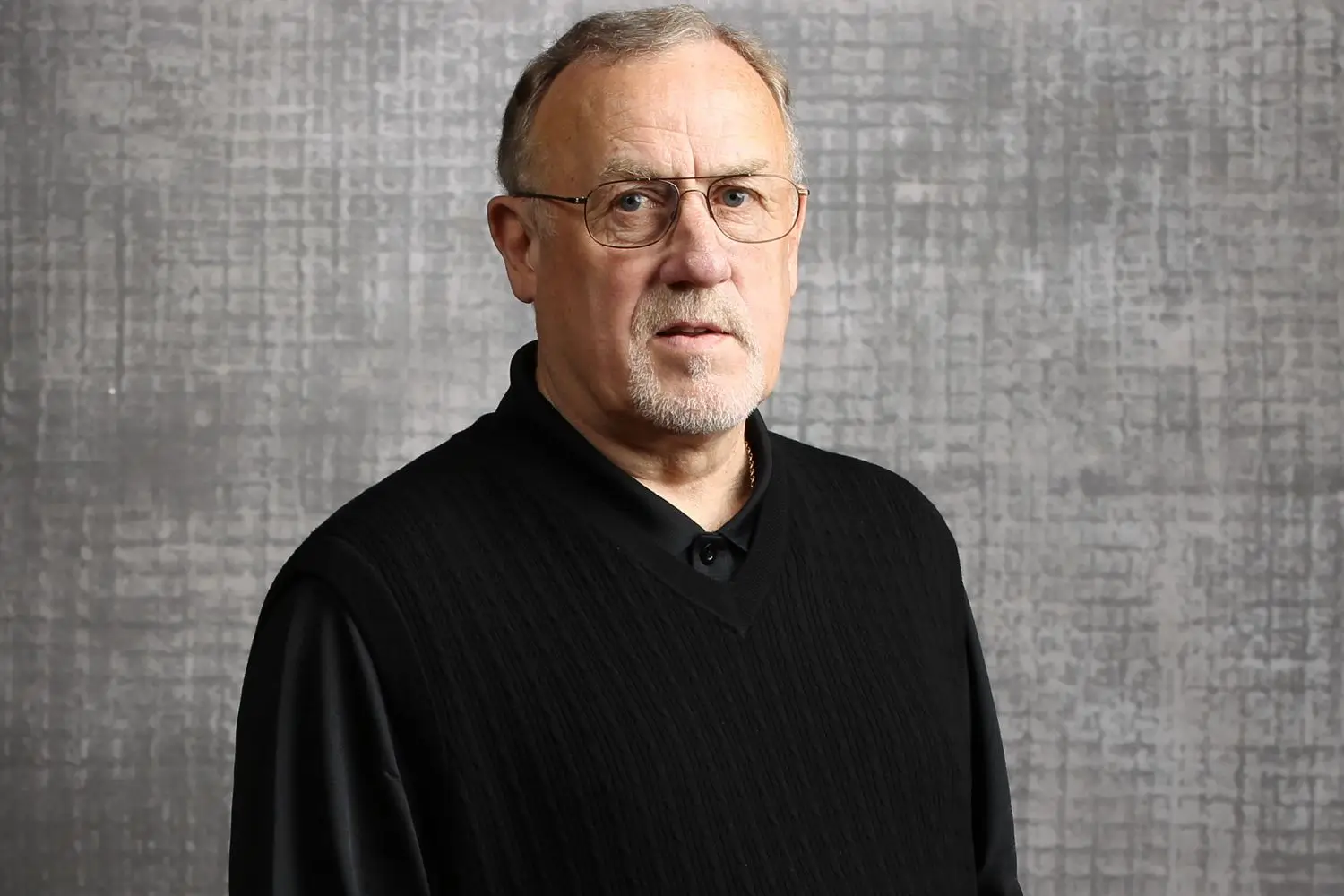
On June 1, 2026, the basketball world lost one of its most enduring and influential figures. Richard Leonard Adelman, born June 16, 1946, in Lynwood, California, passed away at the age of 79. His death marks the end of a remarkable journey that spanned playing in the NBA, building championship-contending teams as a coach, and embodying the values of humility, intelligence, and player development that define greatness in the sport.
Adelman’s career was not one of flash or self-promotion but of consistent excellence, tactical brilliance, and deep human connection. He amassed 1,042 regular-season wins as an NBA head coach—10th all-time—over 23 seasons with the Portland Trail Blazers, Golden State Warriors, Sacramento Kings, Houston Rockets, and Minnesota Timberwolves. His teams reached the playoffs 16 times, including two NBA Finals appearances with Portland. He was inducted into the Naismith Memorial Basketball Hall of Fame in 2021 and received the Chuck Daly Lifetime Achievement Award in 2023. Yet those numbers only scratch the surface of a man whose impression transcended statistics.
“We’re not going to see another coach as good as he is in Sacramento. I know in my lifetime I won’t.”
Jerry Reynolds joined The Drive Guys to reflect on the life & career of Rick Adelman 💜https://t.co/1QFSnT3Zc2
— Sactown Sports 1140 (@Sactown1140) June 5, 2026
stir
Born to Gladys (née Olsen) and Leonard Joseph “L.J.” Adelman, teachers and farmers originally from North Dakota, Rick grew up in a modest environment that instilled discipline and work ethic. He starred at Pius X High School in Downey, California, before excelling at Loyola University (now Loyola Marymount University) in Los Angeles. His collegiate success led to being selected in the seventh round of the 1968 NBA Draft by the San Diego Rockets.
As a 6-foot-1 point guard, Adelman played seven NBA seasons (1968–1975) for five teams: the Rockets, Portland Trail Blazers, Chicago Bulls, New Orleans Jazz, and Kansas City-Omaha Kings. He was a steady, unselfish player who averaged 7.7 points and 3.5 assists per game, primarily as a reserve. His best seasons came in Portland (1970–72), where he started and contributed to a young franchise. Though not a superstar, his playing days gave him invaluable insight into the game’s rhythms, the pressures on role players, and the importance of team chemistry—lessons he would later impart as a coach.
After retiring at age 28, Adelman initially eyed lower-level coaching. He began at Chemeketa Community College in Salem, Oregon, before joining the Portland Trail Blazers as an assistant coach in 1983 under Jack Ramsay. This move proved pivotal.
flow
Adelman became head coach of the Trail Blazers midway through the 1988–89 season. In his first full season (1989–90), he orchestrated a 59-win campaign and led the team, featuring Clyde Drexler, Terry Porter, Buck Williams, and Jerome Kersey, to the NBA Finals. They fell to the Detroit Pistons in five games, but the run established Adelman as a rising star.
Two years later, in 1991–92, the Blazers returned to the Finals with a more polished roster, pushing Michael Jordan’s Chicago Bulls to six games. That series featured memorable moments, including Portland’s heartbreaking Game 6 loss. Adelman’s teams were known for fluid, motion-based offenses that emphasized ball movement, spacing, and player versatility—principles that influenced modern NBA schemes.
Over six full seasons as Portland’s head coach, Adelman compiled a 291–154 record (.654 winning percentage) and made the playoffs every year. His innovative strategies and calm demeanor earned respect league-wide. Though he was fired after a dip in show in 1994, his Portland tenure remains one of the franchise’s golden eras.
show
After a brief, less successful stint with the Golden State Warriors (66–98 record over two seasons), Adelman found his longest and perhaps most creatively fulfilling home in Sacramento. From 1998 to 2006, he transformed the Kings into perennial contenders. With stars like Chris Webber, Vlade Divac, Peja Stojaković, Mike Bibby, and Doug Christie, Adelman’s “beautiful game” offense—high-motion, passing-oriented, and positionless—produced some of the most aesthetically pleasing basketball of the era.
The 2001–02 Kings won 61 games and reached the Western Conference Finals, losing in seven games to the Los Angeles Lakers in a series still debated for officiating controversies. Adelman’s eight seasons in Sacramento yielded a 395–229 record, with playoff appearances every year—a remarkable stretch of sustained success for the franchise.
Players praised his ability to communicate, adapt schemes to individual strengths, and foster a family-like atmosphere. Webber, in particular, flourished under Adelman, crediting him with elevating his game through trust and tactical freedom.
endure
In 2007, Adelman took over the Houston Rockets, leading them to a franchise-record 22-game winning streak in 2007–08 (fourth-longest in NBA history) and deep playoff runs featuring Yao Ming and Tracy McGrady. He coached there for four seasons (193–135 record).
His final stop was Minnesota (2011–2014), where he mentored young talent including Ricky Rubio and Kevin Love amid rebuilding efforts. Though wins were harder to come by, his player development focus remained evident.
Throughout his career, Adelman was a three-time NBA All-Star Game head coach and compiled an overall 1,042–749 record (.582). He emphasized fundamentals, defensive versatility, and offensive creativity without rigid dogma—always prioritizing players’ growth and well-being.
fam
Adelman’s professional success was matched by a rich personal life. He was married to Mary Kay for 56 years. Together they raised six children: Kathy, R.J., Laura, David, Caitlin, and Patrick. They also took custody of two more after a family tragedy. At the time of his passing, he had numerous grandchildren.
Tragically, eldest son R.J. died in a 2018 auto-pedestrian accident at age 44 after working in NBA front offices. Son David Adelman is currently head coach of the Denver Nuggets, continuing the family legacy. In retirement, Rick and Mary Kay moved to Portland to be closer to family.
Those who knew him described a humble, thoughtful, funny, and caring man who valued relationships over accolades. He was as comfortable mentoring at community levels as he was in NBA arenas.
impression
Inducted in 2021, Adelman’s enshrinement speech reflected his gratitude and understated style. He credited mentors, players, and family while expressing surprise at the honor. His induction celebrated not just wins but his role in evolving NBA offenses toward the pace-and-space, read-and-react systems dominant today.
Adelman never won an NBA title, but his influence is evident in the careers of countless players and coaches he touched. From Drexler to Webber to Yao, he maximized talent through empowerment rather than micromanagement. His teams were tough, intelligent, and fun to watch—hallmarks of basketball at its best.
The basketball community’s response to his passing has been overwhelming. Tributes from the NBA, NBCA, former players, and franchises highlight his decency and brilliance. As Commissioner Silver noted, Adelman was “an even better person” than a coach—a rare compliment in a high-stakes profession.
fin
Rick Adelman’s story is one of improbable ascent: from seventh-round draft pick to Hall of Fame coach; from community college sidelines to NBA Finals; from quiet competitor to revered mentor. In an era of increasing specialization and spotlight, he represented basketball’s soul—team-first, strategically sharp, and deeply human.
His nearly 30-year coaching run, over 1,000 wins, multiple deep playoff journeys, and Hall of Fame induction form a towering résumé. Yet his true legacy lives in the players who became better men under his guidance, the coaches who adopted his principles, and the fans who remember those exciting, well-coached teams with fondness.
As the NBA and basketball world mourn, they also celebrate. Rick Adelman leaves behind a blueprint for success rooted in innovation, respect, and love for the game. His family, friends, and the broader basketball community will carry forward his example.
In the words of those who played for him and the commissioner who honored him, Rick Adelman was the consummate professional and a gentleman of the highest order. Basketball is better for his contributions, and his memory will endure whenever fluid offense, intelligent defense, and genuine leadership are on display.
Related Articles

Rose Byrne and Mary Bronstein Are Doing It Again, and This Time They Brought Jenna Ortega
A coach and her prodigy are about to become the most dangerous relationship in a […]