DRIFT AUDIO
Listen to this story
Choose a voice, then press play.
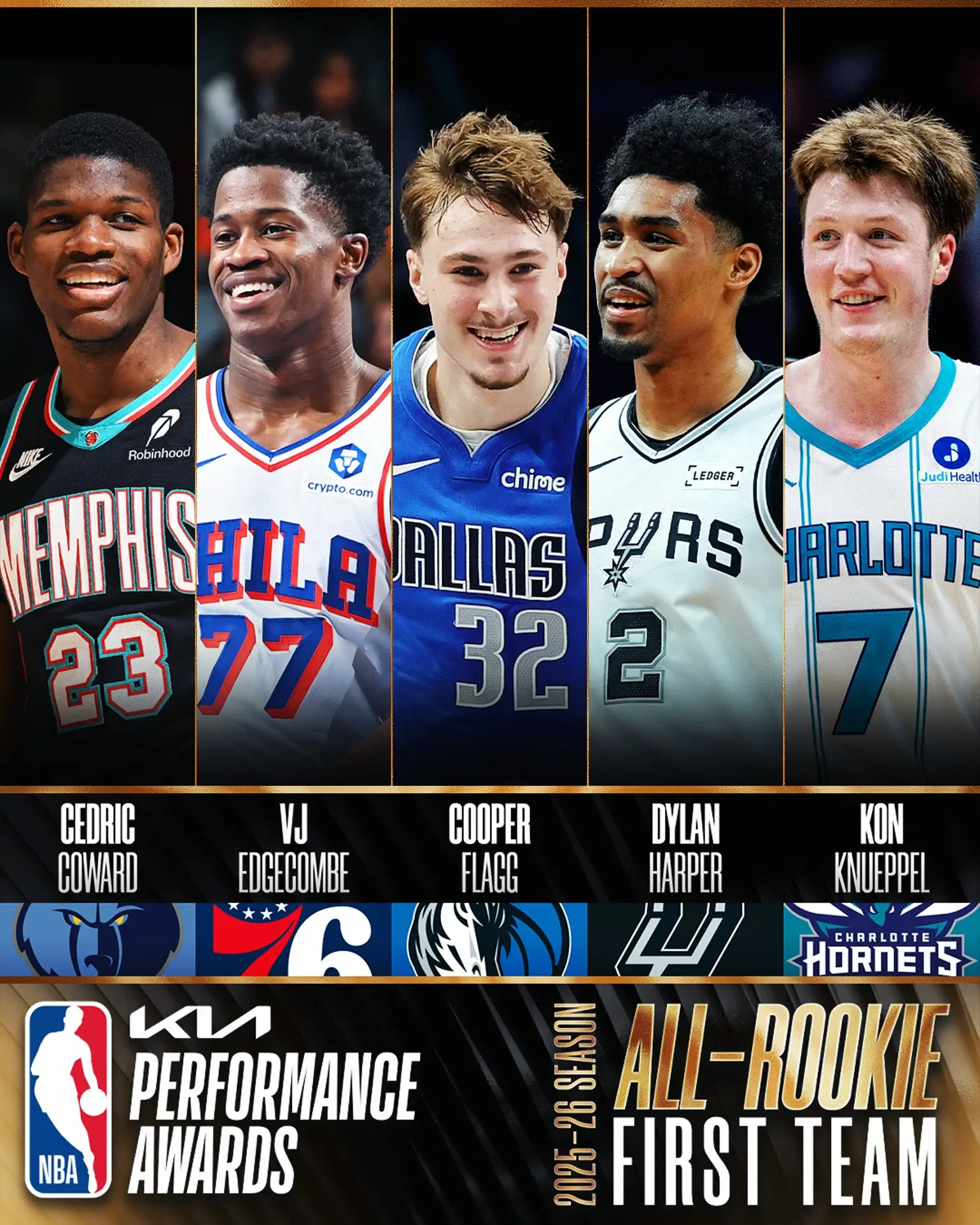
The 2025-26 NBA season delivered one of the deepest and most talented rookie classes in recent memory. Headlined by Cooper Flagg’s sensational Rookie of the Year campaign, the class featured immediate contributors who stepped into starting roles, delivered star-level production, and helped reshape several franchises. On May 20, 2026, the NBA announced the Kia All-Rookie teams, recognizing the top performers from this standout group.
first
Cooper Flagg (Dallas Mavericks) The No. 1 overall pick out of Duke lived up to — and in many ways exceeded — the massive hype. Flagg averaged 21.0 points, 6.7 rebounds, 4.5 assists, 1.2 steals, and 0.9 blocks in 33.5 minutes per game across 70 contests. He shot 46.8% from the field.
Flagg became the youngest player ever to score 50 points in an NBA game (51 vs. Orlando) and followed it with a 45-point outing. He was the first rookie since Michael Jordan to lead his team in total points, rebounds, assists, and steals. Despite playing for a rebuilding Mavericks squad that struggled without key veterans, Flagg carried the load, earning unanimous First Team honors and the Kia Rookie of the Year award over his former Duke teammate Kon Knueppel.
At 6’9″ with elite versatility, Flagg’s two-way impact — blending scoring bursts, playmaking vision, and defensive instincts — marked him as a future superstar. His season wasn’t just impressive for a rookie; it was franchise-altering.
Kon Knueppel (Charlotte Hornets) Flagg’s Duke running mate landed with the Hornets at No. 4 overall and immediately became a cornerstone. Knueppel posted 18.5 points, 5.3 rebounds, and 3.4 assists while shooting 47.5% from the field and a scorching 42.5% on 7.9 three-point attempts per game. He played all 81 games, logging heavy minutes at 31.5 per night.
Knueppel led the league in total three-pointers made at times and delivered consistent 20+ point outbursts, including stretches of four straight games with 20+. His efficiency, size (6’6″), and shooting gravity made him a perfect modern wing. He finished second in Rookie of the Year voting and earned unanimous First Team selection alongside Flagg. The Hornets’ future looks brighter with this sharpshooting forward leading the charge.
VJ Edgecombe (Philadelphia 76ers) Selected third overall out of Baylor, Edgecombe brought explosive athleticism and two-way versatility to Philadelphia. He averaged 16.0 points, 5.6 rebounds, 4.2 assists, and 1.4 steals in 35.0 minutes across 75 games, shooting 43.8% from the field and 35.4% from three.
Edgecombe’s highlight-reel dunks and defensive versatility (often guarding multiple positions) made him a fan favorite. He was a finalist for Rookie of the Year and earned unanimous First Team honors. For a Sixers team navigating the post-Embiid era transition, his production as a high-minute contributor was invaluable. At 6’4″ with elite burst, Edgecombe profiles as a long-term star guard/wing hybrid.
Dylan Harper (San Antonio Spurs) The No. 2 pick out of Rutgers joined Victor Wembanyama in San Antonio and provided steady, high-IQ playmaking. Harper averaged 11.8 points, 3.4 rebounds, and 3.9 assists in 22.6 minutes per game across 69 contests, shooting an efficient 50.5% from the field.
Though his scoring was lower-volume than some peers, Harper’s poise, vision, and ability to run the second unit shone through. He earned strong consideration for Sixth Man of the Year votes in addition to All-Rookie honors. His fit alongside Wembanyama suggests a bright future for the Spurs’ backcourt.
Cedric Coward (Memphis Grizzlies) The biggest surprise of the class, Coward (drafted 11th overall, acquired by Memphis) emerged as a steal. He averaged 13.6 points, 5.9 rebounds, and 2.8 assists in 25.8 minutes across 62 games, shooting 47.1% from the field.
Coward’s scoring outbursts and rebounding tenacity provided a major boost to the Grizzlies. His emergence as a versatile forward/guard helped stabilize the roster. Making the First Team as a mid-lottery pick underscored the depth of this draft class.
These five earned spots on the First Team through a voting process by 100 media members, with Flagg, Knueppel, and Edgecombe receiving unanimous recognition.
second
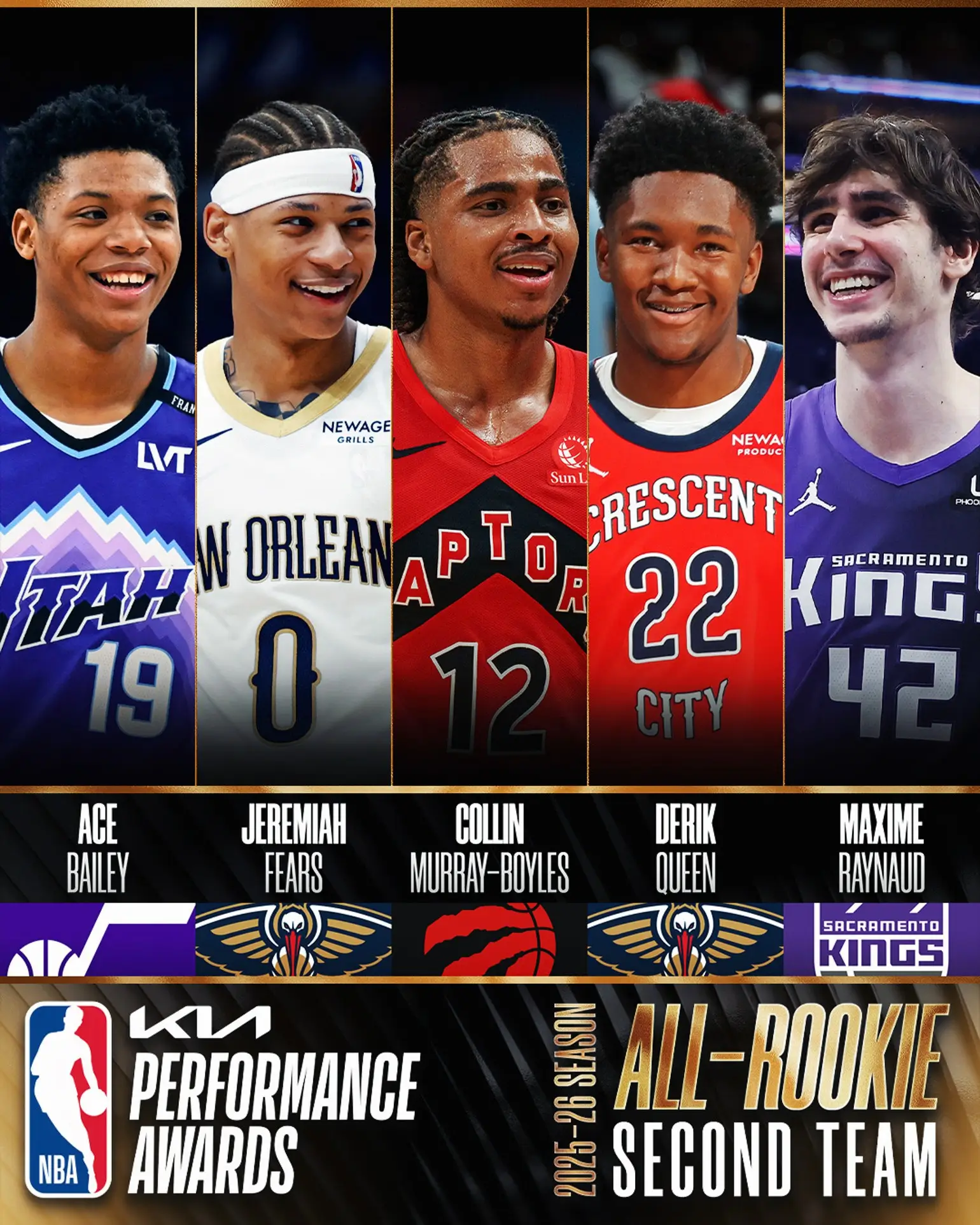
Ace Bailey (Utah Jazz) — The No. 5 pick flashed scoring potential and athleticism in a tough situation for the rebuilding Jazz.
Jeremiah Fears (New Orleans Pelicans) — Drafted 7th overall, Fears brought energy and playmaking to the Pelicans’ backcourt alongside Derik Queen.
Collin Murray-Boyles (Toronto Raptors) — The No. 9 pick out of South Carolina provided interior presence and hustle for the Raptors.
Derik Queen (New Orleans Pelicans) — A skilled big man who complemented Fears nicely in New Orleans’ young core.
Maxime Raynaud (Sacramento Kings) — The French big (drafted in the mid-first round) added size, skill, and international flair for the Kings.
This group rounded out a remarkably deep class where even Second Teamers contributed meaningfully.
how
The 2025 draft produced immediate impact across positions. Top picks like Flagg, Harper, Edgecombe, and Knueppel joined contending or playoff-adjacent teams and delivered. Late lottery steals like Coward and solid contributors like Raynaud and Murray-Boyles highlighted the talent depth.
Rookies logged heavy minutes, started games, and influenced playoff races or play-in pushes. Advanced metrics showed strong efficiency and win contributions, especially from Flagg and Knueppel. The class’s shooting (led by Knueppel’s volume threes), athleticism (Edgecombe), and size/skill combos bode well for the league’s future.
Franchises like Dallas, Charlotte, Philadelphia, San Antonio, and Memphis gained foundational pieces. The Pelicans doubled up with two Second Teamers, showing smart drafting.
fin
As the 2025-26 season transitions to playoffs and beyond, these rookies will gain experience. Flagg’s trajectory points to MVP conversations soon. Knueppel could become an All-Star sharpshooter. Edgecombe’s defense and scoring will anchor Philadelphia. Harper and Coward represent high-floor, high-ceiling development stories.
This class joins legendary groups like 1984 (Jordan, Olajuwon) or 2003 (LeBron, Wade) in immediate impression and long-term promise. The Kia All-Rookie honors celebrate not just individual excellence but a collective renaissance for incoming talent.
In a league trending younger and more positionless, the 2025-26 rookies have set a high bar. Fans should expect even greater performances in Year 2 as these young stars continue evolving.
Related Articles
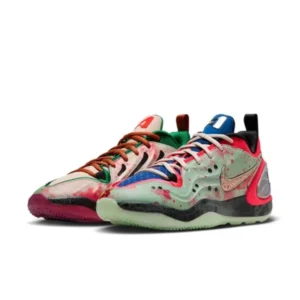
Nike A’Two “Potion No. 22” Gives A’ja Wilson a Mismatched Horror Double Bill
Two shoes, two monsters: A’ja Wilson’s Halloween A’Two splits blood splatter and honeycomb across a […]