DRIFT AUDIO
Listen to this story
Choose a voice, then press play.
In the scintillating yet often ruthless world of high fashion, few stories capture the drama of creative independence quite like that of Giambattista Valli. For years, the Roman-born designer has stood as a beacon of Italian elegance within the pithy of Paris Fashion Week. His romantic, feminine silhouettes, masterful use of volume, and exquisite craftsmanship have earned him a devoted following among celebrities, royalty, and discerning clients. Yet the industry was left stunned when Valli was forced to cancel his shows for two consecutive seasons at Paris Fashion Week, a move widely attributed to severe economic difficulties.
Now, in a remarkable turn of events, Valli has regained full control of his eponymous Maison. As reported by veteran Italian journalist Fabiana Giacomotti in Il Foglio, the designer reacquired his brand for the symbolic price of just one single euro. This headline-grabbing figure, however, masks a far more complex financial restructuring that has given the house a fighting chance at a sustainable future. This is not merely a business transaction — it is a story of resilience, patronage, family influence, and the evolving economics of haute couture in the 21st century.
View this post on Instagram
stir
At the center of this narrative is Artémis, the Pinault family’s private investment vehicle, which also controls the luxury conglomerate Kering. According to Giacomotti’s reporting, Artémis returned the brand to Valli for €1. The real value of the deal lay in the cancellation of a substantial debt burden that had ballooned to more than €44 million. This figure is particularly striking when contrasted with the brand’s turnover, which, according to the latest available balance sheet from 2018, stood at under €20 million.
Without this debt waiver, any repurchase by Valli would have immediately pushed the company into bankruptcy. Instead, François-Henri Pinault’s decision effectively reset the financial slate. Prior to the deal, Valli held only a 4% stake in his own company. Post-transaction, he now owns 100% of the Maison, free from the crushing liabilities that had accumulated during years of ambitious expansion under external ownership.
This “generosity” — as some in the industry have described it — has been linked by observers to the influence of Salma Hayek, Pinault’s wife and a longtime admirer and friend of Valli. Hayek has frequently worn the designer’s creations on red carpets and has been a vocal supporter of his work. While personal relationships in fashion are common, they rarely translate into such decisive financial interventions at this level.
The move allows Valli to return to the calendar with a more focused, sustainable model. Rather than chasing aggressive commercial growth that once strained resources, the house will reportedly scale back to emphasize its core strength: haute couture and high-end ready-to-wear, produced with the meticulous craftsmanship that first defined the brand.
grad
Born in 1968, Valli studied at the Istituto Europeo di Design (IED) in Rome before moving to London’s Central Saint Martins. His early career was marked by prestigious apprenticeships: he worked at Capucci, then Fendi, followed by Krizia in Milan. In 2000, he was appointed creative director of Ungaro, where he revitalized the house with his signature romanticism and sensual femininity.
In 2005, Valli took the bold step of launching his own label in Paris. Backed initially by Italian manufacturing partners — first Gilmar (of the Gerani family) and later Mariella Burani — the brand gained rapid recognition for its dreamy dresses, floral embroideries, and architectural volumes that flattered the female form without sacrificing modernity.
The year 2010 proved pivotal. When Mariella Burani faced its own financial crisis, Valli became independent for the first time. In 2011, he presented his debut haute couture collection and was officially admitted to the Chambre Syndicale de la Haute Couture, cementing his status among the elite of Parisian fashion alongside names like Chanel, Dior, and Givenchy.
Valli’s aesthetic — often described as “couture for the modern romantic” — resonated strongly with international clients. His designs have graced the likes of Zendaya, Rihanna, Beyoncé, and members of European royalty. The brand expanded thoughtfully, with notable commercial collaborations, including a highly successful 2019 partnership with H&M that brought his vision to a broader audience.
scope
The relationship with Artémis began in 2017 when the Pinault investment arm acquired a 30% stake. At the time, it appeared to be a strategic bet on a rising star. Valli was already a respected name in couture and seemed poised for broader commercial success. Over the following years, Artémis steadily increased its ownership, eventually reaching 84.78% by June of the year of the divestment.
Under this partnership, the brand pursued more aggressive growth. There were attempts to build a stronger ready-to-wear business, expand accessories, and increase view. Yet the luxury sector’s challenges — rising production costs, shifting consumer habits post-pandemic, and the enormous expenses of maintaining a Paris Fashion Week presence — began to weigh heavily.
By the time Luca De Meo joined Kering with a mandate to streamline operations, Valli’s house had become one of several “non-core” assets. The group was undergoing a significant transformation: selling off the Kering Beauté division, postponing the Valentino acquisition, adjusting real estate strategies, selling its Puma stake to Anta Sports, and downsizing Alexander McQueen.
Valli’s divestment fits squarely into this broader “pruning” strategy. It is not an isolated event but part of a wider industry recalibration. Just days earlier, LVMH had divested Marc Jacobs after freeing Stella McCartney, signaling that even the largest conglomerates are becoming more selective about which houses they nurture.
indie
Operating a fashion house today is extraordinarily expensive. Haute couture, in particular, is a loss-leader for most brands — a showcase of artistry that generates prestige but rarely direct profit. The costs of ateliers, skilled artisans (many of whom are aging with few successors), runway productions, and global marketing have skyrocketed.
Valli’s debt accumulation reflected these structural realities. When external investors push for scale, the pressure to expand collections, open stores, and chase wholesale accounts can quickly outpace revenue, especially for a house that remains relatively niche compared to giants like Dior or Saint Laurent.
The one-euro deal, combined with the massive debt forgiveness, represents a rare “hard reset.” It echoes other famous cases in fashion history where designers regained control of their names after turbulent corporate periods — though few have done so under such symbolically favorable terms.
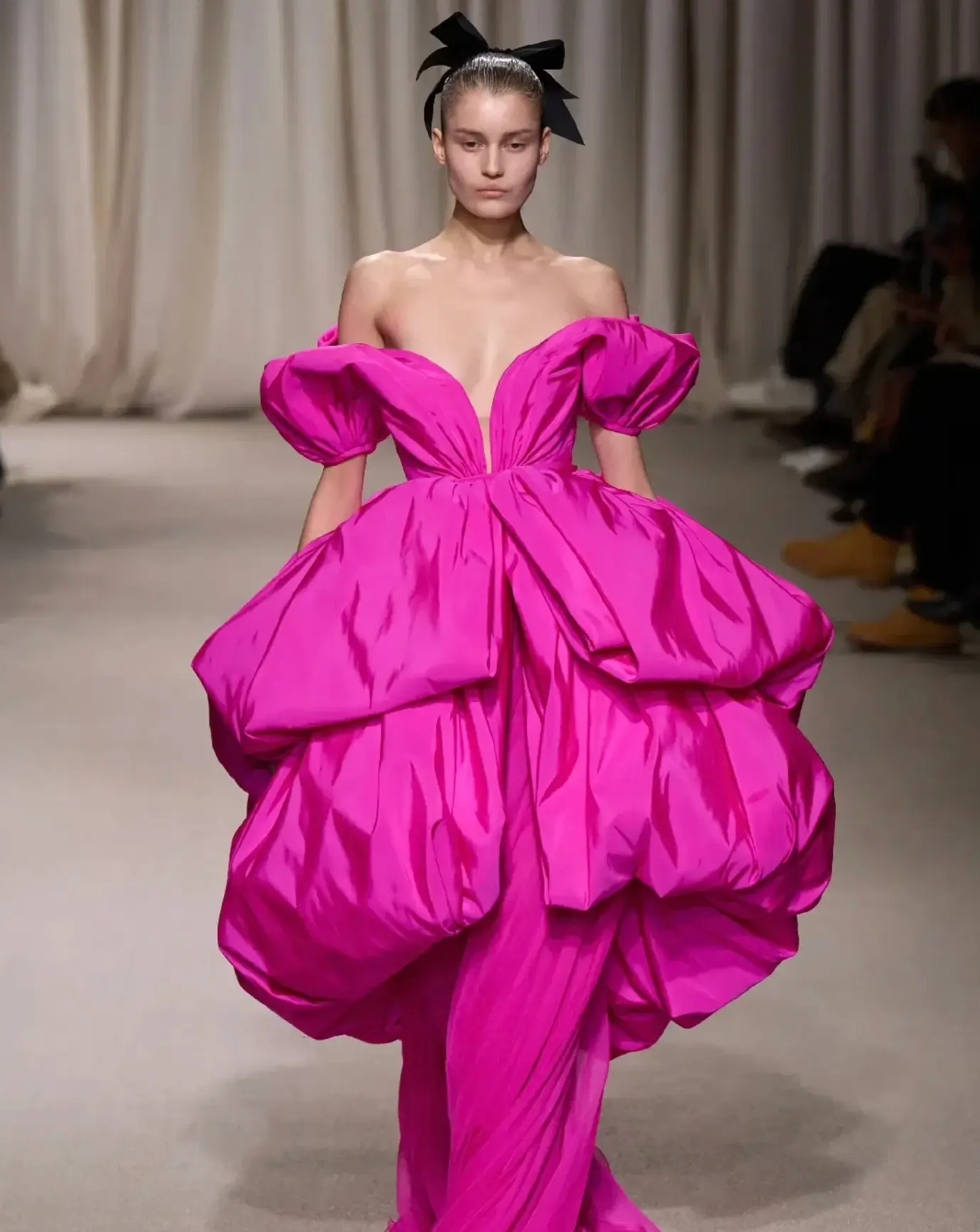
@giolannes walking for Giambattista Valli in Paris 🤍 @tola ♬ som original – bryanrei10
forward
With full ownership restored, Valli has signaled a return to his roots. The focus will shift toward a smaller, more controlled operation. Haute couture will remain the soul of the house, presented with the intimacy and artistry that first defined it. Ready-to-wear will be selective, emphasizing quality over quantity.
This downsizing may prove wise in an era where consumers increasingly value authenticity and craftsmanship over relentless expansion. Valli’s client base — loyal, high-net-worth individuals who appreciate his feminine, optimistic vision — is likely to respond positively to a more exclusive approach.
The designer’s return to the Paris schedule is eagerly anticipated. Industry insiders hope his comeback will not only revive his personal narrative but also highlight the challenges faced by independent voices in a conglomerate-dominated landscape.
intent
Giambattista Valli’s story is ultimately one of perseverance. From his early days in Rome to the heights of Paris, through corporate partnerships and financial hardship, he has maintained a clear creative identity. The one-euro repurchase is more than a business footnote — it is a testament to the enduring power of personal relationships in fashion and the possibility of renewal even after apparent setbacks.
As the designer prepares for his next chapter, the industry watches with optimism. In an age of relentless consolidation, Valli’s regained independence stands as a reminder that sometimes, the most beautiful creations emerge not from endless resources, but from focused passion and creative freedom.
For Italian fashion in Paris, this is more than good news — it is a reaffirmation that talent and view can still find a path forward, even after the most difficult seasons.
Related Articles
The Nautica “Made in USA” Tee Collection: A Triumphant Return to American Craft
In an era where fast fashion often dominates and global supply chains stretch across continents, […]