DRIFT

In the dark annals of British horror cinema, few films have left as deep a wound as 28 Days Later (2002), the nerve-shattering infection thriller that revitalized the zombie genre with raw urgency, bleak realism, and thematic intelligence. Directed by Danny Boyle and written by Alex Garland, the film’s shaky-cam aesthetic and socio-political edge carved a new template for apocalyptic storytelling. Its spiritual follow-up, 28 Weeks Later (2007), expanded the scale but departed from Boyle and Garland’s direct creative involvement.

Now, nearly three decades after the initial outbreak of the rage virus, the original visionaries return to the chaos they birthed with 28 Years Later — a new, dread-soaked entry that promises not only to complete the trilogy but to reimagine its world entirely. With Boyle again at the helm and Garland penning a screenplay that fuses biological terror with philosophical despair, 28 Years Later is shaping up to be one of the most anticipated horror films of the decade.

Revisiting the Outbreak: A Franchise Built on Fear and Reflection

From the moment Cillian Murphy’s Jim stumbled out of a hospital into an empty London in 2002, 28 Days Later made it clear this wasn’t traditional zombie fare. The infected were not undead; they were fast, furious, and terrifyingly human. The virus didn’t reanimate corpses — it amplified rage. And the real horror wasn’t always the infected, but the humans who survived.

That core theme continues in 28 Years Later, where the rage virus has long since reshaped what remains of civilization. This third chapter exists not as a nostalgic return, but as an evolution. It asks: What does a society look like not immediately after collapse, but after decades of infection, survival, isolation, and adaptation?

The answer, as rendered through Boyle’s kinetic lens and Garland’s psychological storytelling, is grim, mutated, and mesmerizing.

The Setting: Isolation, Quarantine, and False Safety

The premise of 28 Years Later finds a group of survivors on a remote island, connected to the British mainland by a single causeway — a narrow, heavily fortified lifeline that separates them from the infected lands beyond. Life on the island is harsh but structured, governed by routine, rationing, and reinforced denial. The rage virus may still rage on the mainland, but here, life goes on in stasis.

That is, until one survivor decides to leave.

Tasked with a covert mission — one that has been kept vague in early press material — the protagonist crosses the causeway and reenters the mainland, plunging back into a world where nature, humanity, and the infected have all evolved in grotesque and surprising ways.

What follows is a journey of terror, transformation, and revelation, where nothing is as it was — and no one is who they seem.

Themes: Mutation, Memory, and Moral Collapse

At its core, 28 Years Later is about mutation — not only of the virus, but of culture, morality, and even identity.

Garland, known for his cerebral scripts (Ex Machina, Annihilation), uses the post-viral landscape as a metaphor for how trauma calcifies. The characters who survived the original outbreak — or were born into its ruins — are not just hardened by experience, they are shaped by myth, misinformation, and adaptive cruelty.

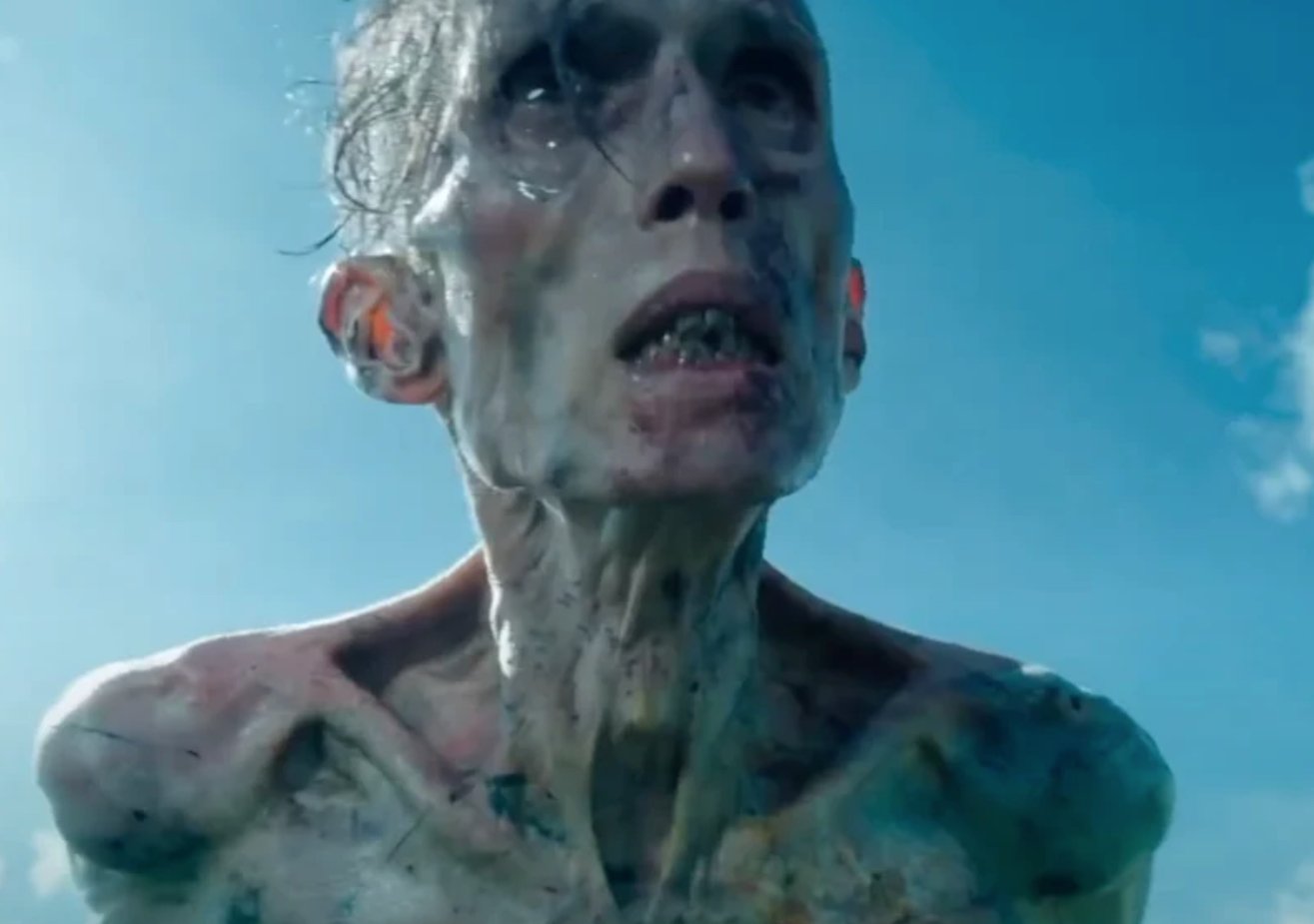
Infected creatures, too, are no longer mindless vessels of rage. In early footage teased during CinemaCon, one infected individual was shown pausing — hesitating — before attacking, suggesting neurological degradation or something more horrifying: awareness. Whether this is an evolution of the virus or a fluke remains to be seen, but it signals a departure from the purely feral violence of earlier entries.

Meanwhile, the film explores generational contrast. Those who remember the old world live with a kind of mourning, while younger survivors — raised in isolation — see infection not as tragedy but as nature. Some even worship it.

This shift underscores Garland’s interest in belief systems and how humans construct meaning amid chaos. In 28 Years Later, survivors cling to ritual, propaganda, and cultish ideologies to navigate a world where biology and morality have equally broken down.

Boyle’s Direction: A Return to Grit

Danny Boyle’s return is not just a creative reunion — it’s a reassertion of tone. The director’s signature kinetic style, handheld camera work, and dissonant soundscapes are once again on full display.

Where 28 Days Later used grainy DV footage and minimalist dread, 28 Years Later goes widescreen and panoramic — but not for beauty. The new cinematography frames ruined cityscapes with operatic despair: collapsed highways overgrown with ivy, motionless streets lit by firelight, and abandoned military zones buzzing with static.

The horror, Boyle has emphasized, isn’t in jump scares but in recognition. A haunting scene set in a repurposed cathedral-turned-commune calls back to the sanctuary in the first film. But here, the clergy are gone. The pews are filled with half-feral children, and the altar holds not a cross, but a map covered in blood-red markers. The iconography is familiar, the function unrecognizable.

Casting & Performances

While casting details remain tightly under wraps, several names have been whispered in early reports, including the return of 28 Days Later star Naomie Harris as Selena. Whether she reprises her role or appears in another form is unclear, but fans are eager for emotional continuity.

Newcomers rumored to appear include:

  • Damson Idris, potentially playing the island emissary whose mission drives the plot.
  • Jessie Buckley, cast as a hardened survivalist whose family has adapted to life among the infected.
  • Ciarán Hinds, possibly portraying a former scientist whose research into rage has taken a twisted turn.

With Boyle at the helm, performances are expected to carry a documentary-like intensity. Expect long takes, minimal exposition, and actors asked to inhabit their roles rather than perform them.

Music & Atmosphere

John Murphy, who composed the haunting scores for the first two films, returns with an updated version of “In the House, In a Heartbeat” — the piece that underscored Jim’s rampage in 28 Days Later. In this film, it plays over a quiet montage of infected figures lying dormant in the rain, as if dead — until one opens its eyes.

The soundtrack blends analog synths with distorted field recordings, creating an atmosphere of both urgency and disassociation. The audio design draws attention to silence — howling winds through broken glass, insect chirps in long-abandoned suburbs — punctuated by visceral, bone-cracking violence when horror erupts.

Anticipation, Influence & Industry Impression

28 Years Later isn’t just a horror film. It’s a statement. At a time when post-apocalyptic stories are abundant — from The Last of Us to Dune: Messiah — Boyle and Garland are reminding audiences what this genre can do when grounded in humanity, ideology, and visceral realism.

Its release will almost certainly spark discourse on:

  • Biopolitics and the ethical boundaries of containment
  • The cyclical nature of fear and control
  • Ecological revenge and viral evolution
  • Survivalism vs. civilization
  • Intergenerational trauma and adaptation

The film’s release is set for October 2025, with previews hitting major festivals in Venice and Toronto beforehand. Expect viral marketing campaigns, cryptic teasers, and possibly even AR integrations through social platforms that simulate infection zones or offer limited character POV missions.

Final Thoughts: Why 28 Still Matters

28 Years Later isn’t just a sequel — it’s a reckoning. It returns to a world shaped by rage, yes, but also by grief, adaptation, and the stubbornness of life. Where 28 Days Later introduced infection as metaphor, and 28 Weeks Later expanded its geopolitical scope, 28 Years Later questions what kind of world — and what kind of people — remain when the outbreak never truly ends.

With Boyle’s immersive direction and Garland’s philosophical bite, this third entry will likely do more than terrify audiences. It will challenge them, unsettle them, and leave them wondering not just what it means to survive, but what it means to still be human.

In the world of 28 Years Later, the real contagion may no longer be rage — but memory.

Related Articles
In a highly anticipated reunion after 24 years, Adidas Originals and Coca-Cola have joined forces once again to celebrate the FIFA World Cup 2026™. The collaboration revives their iconic 2002 partnership from the Japan-South Korea tournament, now reimagined for the biggest global sporting event of 2026, co-hosted by the United States, Canada, and Mexico. Set to launch on June 6, 2026, this collection masterfully blends Adidas' streetwear heritage with Coca-Cola's timeless branding, creating a vibrant fusion of football culture, nostalgia, and modern style. The drop arrives at a perfect moment. With the World Cup kicking off on June 11, 2026, fans worldwide are gearing up for a summer of football excitement. This collaboration isn't just merch—it's a cultural statement that merges two legendary brands under the banner of "Originals are the Real Thing," a clever twist on Coca-Cola's famous slogan. Historical Context: A Reunion 24 Years in the Making Adidas and Coca-Cola first collaborated during the 2002 FIFA World Cup, producing limited-edition pieces that captured the era's energy. That partnership helped define early 2000s football-streetwear crossover culture. Fast-forward to 2026, and the brands are back with fresh energy, leveraging Adidas' deep FIFA ties (as an official partner) and Coca-Cola's long-standing sponsorship of the tournament. The 2026 edition promises to be historic as the first 48-team World Cup, spanning three countries and generating unprecedented global hype. This collab taps into that momentum, offering fans wearable pieces that celebrate both brands' legacies while looking forward to the future of football fashion. Collection Overview and Design Philosophy The Adidas Originals x Coca-Cola collection fuses 2000s street style with classic sporting aesthetics. Expect bold reds, creams, whites, and silver accents inspired by Coca-Cola's iconic packaging—think classic script logos, droplet detailing, and can-inspired motifs. The lineup spans footwear, apparel, and accessories, divided into two visual directions: one logo-heavy and graphic-forward, the other drawing from vintage advertising aesthetics. Designs pay homage to Coca-Cola's visual language while staying true to Adidas Originals' archival roots. High-quality materials, attention to detail, and versatile silhouettes make these pieces suitable for both match-day wear and everyday street style. The campaign, featuring young football star Lamine Yamal and a diverse cast in everyday scenes building anticipation for the tournament, reinforces themes of originality and shared cultural moments. Footwear Highlights Footwear takes center stage in this collaboration, with reimagined takes on iconic 2000s Adidas silhouettes: Samba and Superstar Models: These classics get Coca-Cola treatment with white/cream/red colorways and prominent script branding. The Samba blends street heritage with football roots, while the Superstar II features weathered bases and bold side panels. Expected pricing around $110–$130. Adistar Control 5: A standout with droplet detailing mimicking condensation on a cold Coke can. This model brings performance-inspired design into lifestyle territory. Predator Sala: Indoor/hybrid style with silver-and-red accents, nodding to predatory precision on the pitch and Coca-Cola's bold energy. Climacool 1: Revived with breathable tech and Coke-inspired graphics, perfect for warm summer days. Megaride F50: A highlight paying tribute to the iconic Coca-Cola glass bottle, with unique contours and refreshing design cues. Each pair incorporates thoughtful details like embroidered logos, custom insoles, and packaging that mimics vintage Coke crates or cans. These shoes are built for durability and comfort, appealing to sneakerheads, football fans, and casual wearers alike. Apparel and Accessories Beyond kicks, the collection offers a full lifestyle range: Track Tops and Jerseys: Standout jerseys fuse retro Coca-Cola advertising from different eras into cohesive football designs. Track jackets feature signature three stripes alongside Coke branding, in vibrant reds and classic whites. Shorts and T-Shirts: Relaxed fits with graphic prints, ideal for casual wear or layering. Expect motivational football motifs blended with refreshing beverage references. Accessories: A bright red airliner bag stands out as a functional statement piece. Additional items may include caps, socks, and tote bags carrying the collaborative spirit. The apparel emphasizes comfort with premium cotton blends, mesh panels for breathability, and oversized silhouettes popular in contemporary streetwear. Unisex sizing and inclusive fits make the collection accessible to a broad audience. Cultural Impact and Fan Appeal This collaboration resonates on multiple levels. For football fans, it represents national pride and global unity ahead of the 2026 tournament. Sneaker enthusiasts will appreciate the nostalgic 2000s revival mixed with modern execution. Streetwear collectors see it as a prime example of how heritage brands can innovate through partnerships. In an era where sports and fashion increasingly intersect, Adidas and Coca-Cola deliver pieces that transcend the pitch. Wear them to watch matches at home, attend watch parties, or hit the streets in any host city—New York, Los Angeles, Toronto, or beyond. The designs are versatile enough for gym sessions, festivals, or daily commutes. The timing aligns perfectly with rising interest in football in North America, boosted by the co-hosting nations. Young talents like Lamine Yamal in the campaign help bridge generational gaps, attracting newer fans while satisfying longtime supporters. Where to Buy and Release Details The collection launches globally on June 6, 2026, via: Adidas CONFIRMED app (for early access and raffles) Adidas.com Select retailers and flagship stores worldwide Some regions may see staggered drops, with Japan and other markets getting early access. Prices are expected to range from $50–$150 depending on the item, making it relatively accessible compared to ultra-limited drops. Pro Tips for Copping: Enable notifications on the CONFIRMED app. Check local stock at Adidas stores in major cities. Monitor resale platforms post-drop for exclusive colorways, but be wary of markups. Size up slightly for oversized apparel fits. Given the World Cup hype, popular items like the Sambas and jerseys are likely to sell out quickly. International shipping is available, but factor in potential customs delays. Styling Suggestions Match Day Look: Pair a collaborative jersey with classic black shorts and Samba sneakers for effortless fan style. Streetwear Rotation: Layer a track top over a graphic tee with wide-leg pants and the Megaride F50 for a bold urban ensemble. Casual Summer: White Superstar with denim shorts and the airliner bag for a refreshing, vacation-ready vibe. These pieces mix seamlessly with existing Adidas or neutral wardrobes, maximizing versatility. Broader Context in 2026 Fashion and Sports The Adidas x Coca-Cola drop is part of a larger wave of high-profile collaborations tied to the World Cup. Adidas continues its dominance in football kit design, while Coca-Cola leverages its sponsorship with collectibles, bottles, and experiential activations like the Trophy Tour. In the sneaker industry, this collab exemplifies the ongoing trend of lifestyle reinterpretations of performance silhouettes. It also highlights how global brands use major events to drive cultural conversations around unity, originality, and joy—core values for both companies. Sustainability notes (based on Adidas' broader initiatives) suggest some pieces may incorporate recycled materials, aligning with modern consumer expectations. Looking Forward: Legacy and Excitement As the countdown to kickoff continues, this collection serves as the perfect prelude to an unforgettable summer of football. Whether you're a die-hard supporter, a fashion-forward collector, or someone seeking motivation through style, the Adidas Originals x Coca-Cola FIFA World Cup 2026 lineup delivers. Expect potential restocks, special event exclusives in host cities, and continued campaign content featuring more athletes. This isn't just clothing—it's a ticket to participate in the global celebration of the beautiful game. Mark your calendars for June 6, 2026. Refresh your wardrobe, lace up those Sambas, and get ready to cheer on your team in style. The "Real Thing" meets the Originals in what promises to be one of the most talked-about releases of the year. This collaboration captures the essence of football's universal appeal: bringing people together through shared passion, iconic brands, and unforgettable moments. As the world prepares for 2026's expanded tournament, Adidas and Coca-Cola remind us that some partnerships are truly timeless.

Adidas Originals x Coca-Cola Collection: FIFA World Cup 2026

In a highly anticipated reunion after 24 years, Adidas Originals and Coca-Cola have joined forces […]

Loewe shoulder bag crafted in brown and black leather with minimalist lion face detailing and a matching fur tail charm

180 Years Unfolded: The Full Story Behind Loewe’s New Campaign

The year was 1846. Queen Victoria was on the British throne and the telephone, the […]

Interior view of H.Lorenzo’s new West Hollywood flagship illuminated in vivid green lighting, featuring sculptural metal display structures, minimalist furnishings, and an immersive futuristic retail environment

H.Lorenzo Opens a New Flagship in West Hollywood, Uniting Four Decades of Avant-Garde Fashion Under One Roof

For more than four decades, H.Lorenzo has occupied a singular and irreplaceable position within the […]