Inside Nike’s Three City Relay for Getting World Cup Stars the Exact Boot They Need, Overnight

July 17, 2026
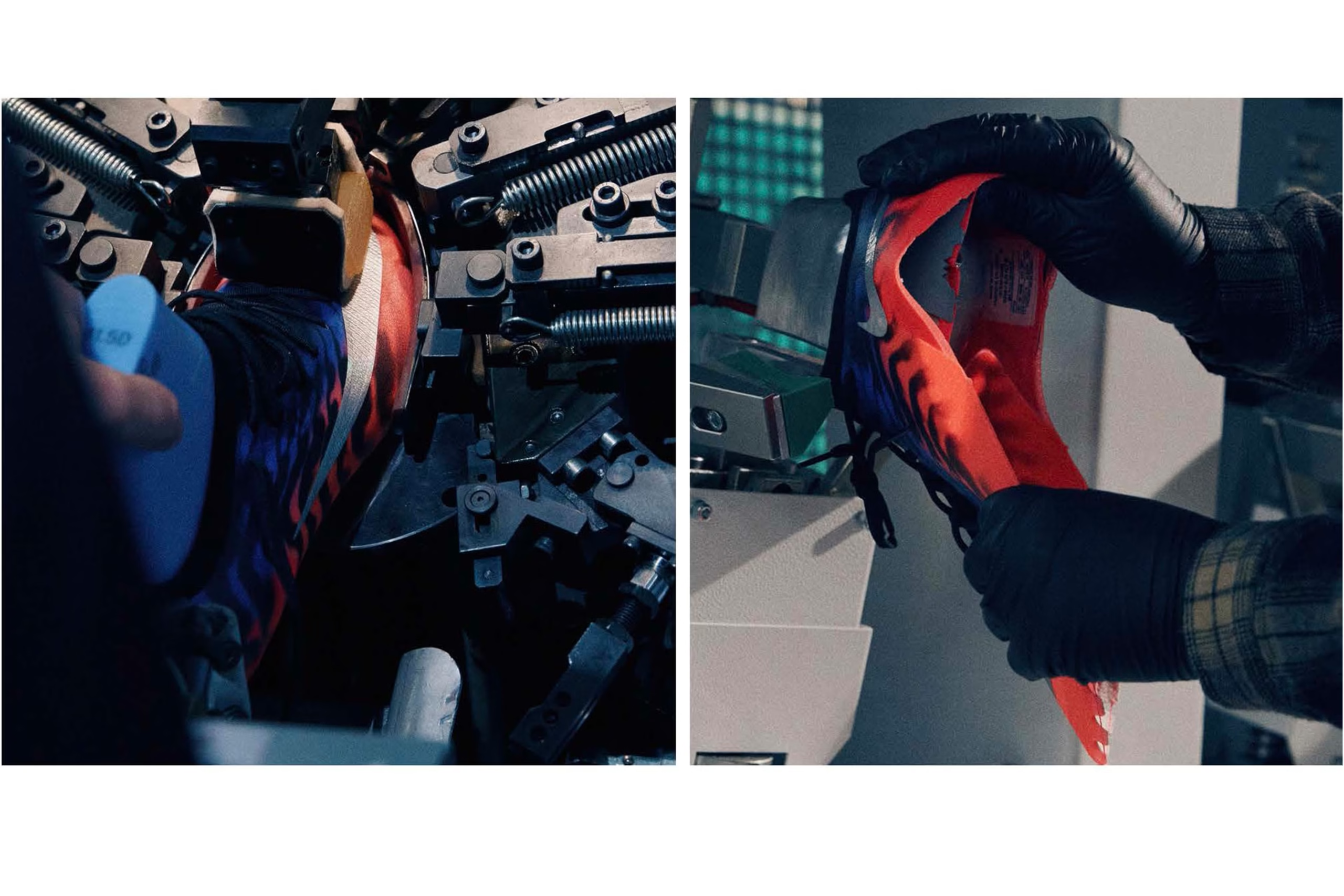
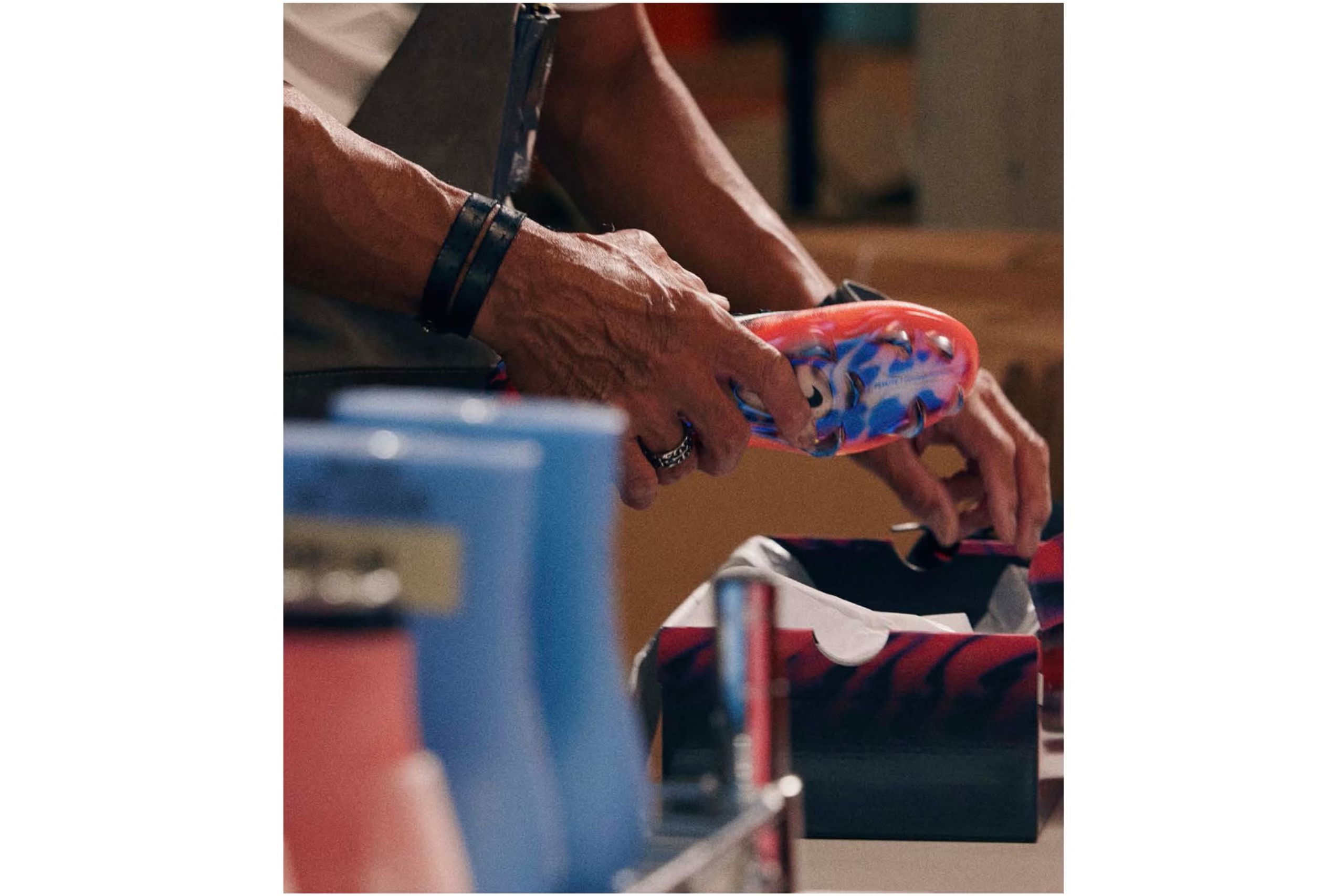
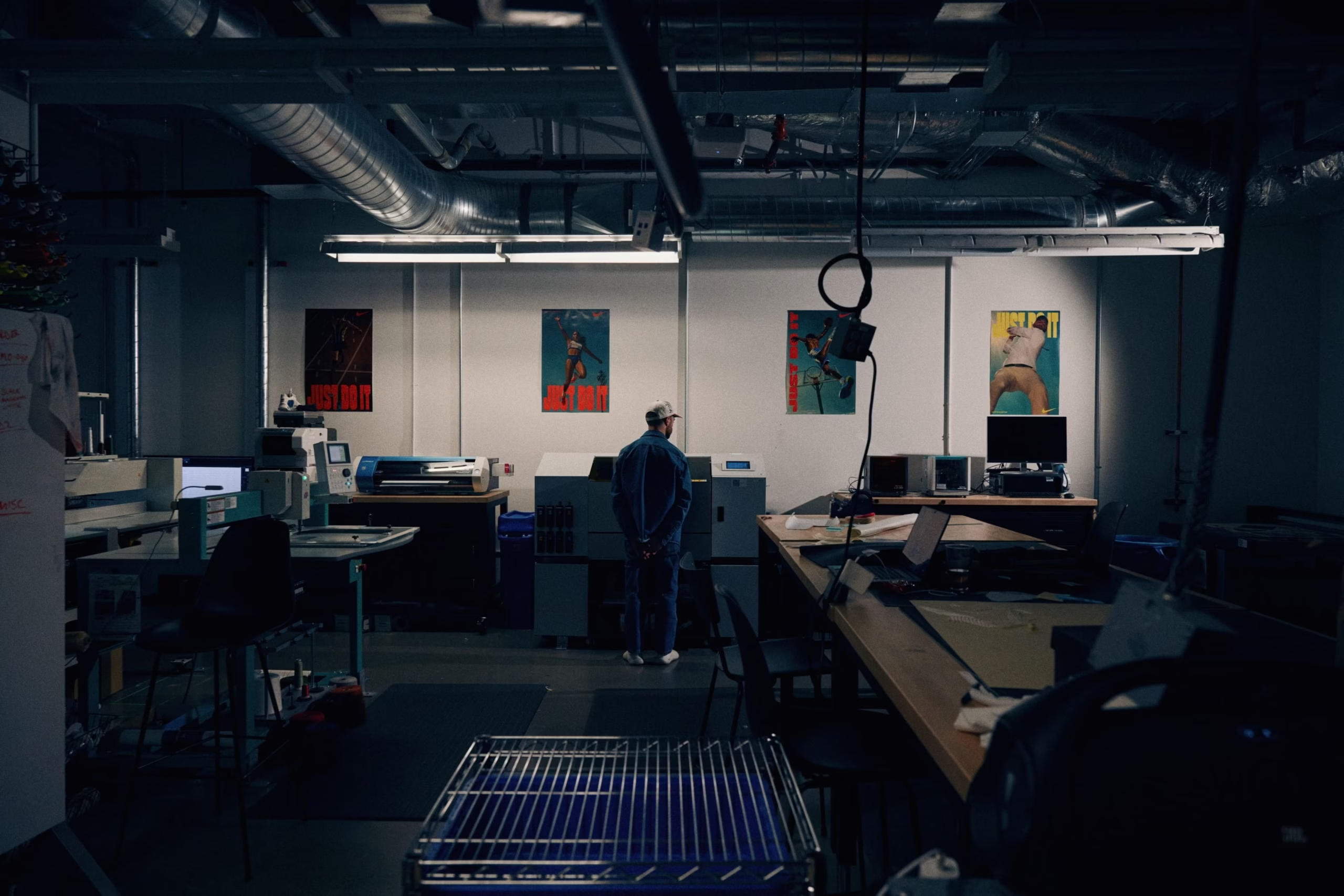
A three hub system spanning Beaverton, New York, and Mexico City kept Nike’s biggest football names in game ready boots through a 39 day tournament, one custom request at a time.
recall
- A Sprint Built for a Marathon Tournament
- Why Three Cities
- What Counts as a Custom Request
- The Montebelluna Foundation
- Turning Requests Into Boots Under Pressure
- A System Built to Disappear When the Tournament Ends
Kylian Mbappe does not need a coach to explain positioning to him. France’s captain built his career on getting to the right space before anyone else realizes it is open, then finishing before a defender can recover. Nike spent this World Cup trying to apply that same instinct to a much less glamorous problem: how does a company get a hand stitched boot component from a specialist in Italy to a locker room in Atlanta or Guadalajara with enough time to spare that a player never has to think about it. It is a logistics question dressed up as a product question, and for a tournament that ran nearly six weeks across three countries, getting it wrong even once would have been noticeable.
The answer, according to Nike, involved standing up what it has described internally as a boot shop system, a working arrangement across three of the company’s own facilities that operated for the length of the tournament as a kind of relay team. Rather than routing every custom request for every roster back through a single factory floor, Nike split the work across its Philip H. Knight Campus in Beaverton, Oregon, its headquarters presence in New York City, and its offices in Mexico City, each handling a piece of the pipeline depending on where players, matches, and specific requests happened to land. Nike has said the combined effort helped deliver more than 600 specialty boots to players over the course of the summer tournament, a volume that would have been difficult to manage from any single location given how compressed the schedule was between matches.
View this post on Instagram
It is easy to read a number like 600 and assume it describes mass production. It describes almost the opposite. Every one of those pairs traces back to an individual player’s specific ask, whether that was a tincture adjustment ahead of a knockout match, a personal milestone marked in stitching, or a fit correction after a few matches of wear revealed something the original spec sheet had not accounted for. The system exists because elite footballers do not wear a boot the way a retail customer does. They wear it the way a surgeon wears a glove, and small deviations get noticed immediately.
why
The Beaverton campus is where Nike’s football product and innovation teams live day to day, home to the engineers who originally spec out silhouettes like the Mercurial Vapor 17 and Mercurial Superfly 11 before either boot ever reaches a player’s foot. Keeping a boot shop function there means requests that require deeper technical judgment, plate geometry, stud pattern changes, structural tweaks around the forefoot, can be routed to the same people who built the boot’s underlying architecture in the first place, without losing time translating specs across time zones.
New York carries a different kind of weight. It is Nike’s largest hub outside Beaverton, close to a dense concentration of media, retail, and cultural activity, and it sat inside the host footprint for this tournament alongside NJ/NY as a match region. Nike used the city for consumer facing moments this year as well, including a temporary SoHo store built around football culture and a planned return to its former 21 Mercer address for a Mercurial focused pop-up. A boot shop presence in the same city meant custom work could move quickly for any player or team passing through the New York and New Jersey match window without waiting on cross country shipping.
Mexico City’s inclusion follows the tournament itself. Mexico co-hosted alongside the United States and Canada and opened the competition at Estadio Azteca, which meant an entire opening stretch of matches, and the travel, training, and last minute equipment needs that come with them, ran through Mexico before the tournament ever crossed north. Having a functioning boot shop already in place in Mexico City meant Nike did not have to improvise a solution once matches started; the infrastructure was there for the opening whistle.
request
The public facing version of this system is easiest to see through what individual players ended up wearing. Nike gave Mbappe a personalized pair of Mercurial Superfly 11 boots that marked his record setting France goal tally with a small numeral worked into the lateral heel, alongside a French tricolor detail near the heel collar, a request tied directly to a milestone that only became relevant once he had actually broken the record mid tournament. That is not the kind of request a brand can plan a year in advance. It has to be built, approved, and delivered inside a live news cycle.
Cristiano Ronaldo’s boots followed a similar logic for a different milestone. After he became the first player to score in six separate World Cup tournaments, Nike produced a limited gold finished Mercurial for him, complete with his CR7 branding and signature on the heel and a translucent graphic on the soleplate. Vinicius Junior received his own version of the same treatment, a Scorpion themed Mercurial Vapor 17 built for the knockout stage and shared exclusively with Mbappe as a pair of stars given matching but individualized colorways. None of these were available at retail, and none of them existed as finished products before the moments that inspired them occurred.
Not every request tied to Nike’s most decorated athletes and not every request is about a milestone at all. A significant share of what a boot shop handles during a tournament is far less visible: swapping a stud configuration after a player mentions the pitch feels different than expected, adjusting an insole after the first two matches of a long tournament start to reveal pressure points a lab fitting could not fully predict, or simply rebuilding a damaged pair overnight so a starter has an identical backup ready before the next match. That kind of work rarely makes a highlight reel, but it is the majority of what a boot shop actually does.
base
None of this happens without the manufacturing base Nike has built over three decades in Italy. The company’s Montebelluna workspace, along with a companion facility in nearby Diamant, is where the current generation Mercurial boots are physically assembled, a process Nike says runs through 35 individual manufacturing steps and takes roughly three hours from pre-assembly through final build for a single pair. Nike first arrived in the Montebelluna region in 1996, drawn by an area long regarded as one of the world’s centers of boot manufacturing, and the company has leaned on that regional expertise for old world craftsmanship ever since, using hands as often as machines even as the boots themselves have grown more technologically involved. Inside Montebelluna’s sample room, a wall of roughly 300 custom foot lasts represents more than 200 players Nike has outfitted over the years, from Cristiano Ronaldo to Mbappe, each last built to an individual athlete’s exact measurements.
Camilo Andrade, Nike’s Global VP and GM of Football, has described the company’s approach in blunt terms: everything in how the boots are designed, manufactured, launched, and adjusted exists to serve the athlete first. That framing matters here because it explains why a company with Nike’s scale still routes elite football boots through hand assembly rather than pure automation. A last built from a player’s own foot scan, refined through repeated wear testing and direct feedback, is not something a standard production line can replicate at the level of fit these athletes require. The boot shop network built for this tournament is essentially an extension of that same philosophy applied to speed: if the Montebelluna model proves a boot can be built by hand to fit one specific athlete, then a compressed version of that same capability, positioned in the right cities at the right time, can respond to whatever that athlete needs mid tournament.
The distinction between what happens in Montebelluna and what happens inside a tournament boot shop is mostly a matter of timeline rather than technique. A new Mercurial silhouette takes close to two years to move from initial concept through the kind of global testing and materials work that eventually produces a retail ready boot, involving development, engineering, testing, materials, and innovation teams spread across multiple countries. A tournament boot shop compresses a narrow slice of that same process, typically a single component change or personalization rather than a full silhouette, into a window measured in hours rather than months, using people who already understand the base boot intimately because they helped build it in the first place.
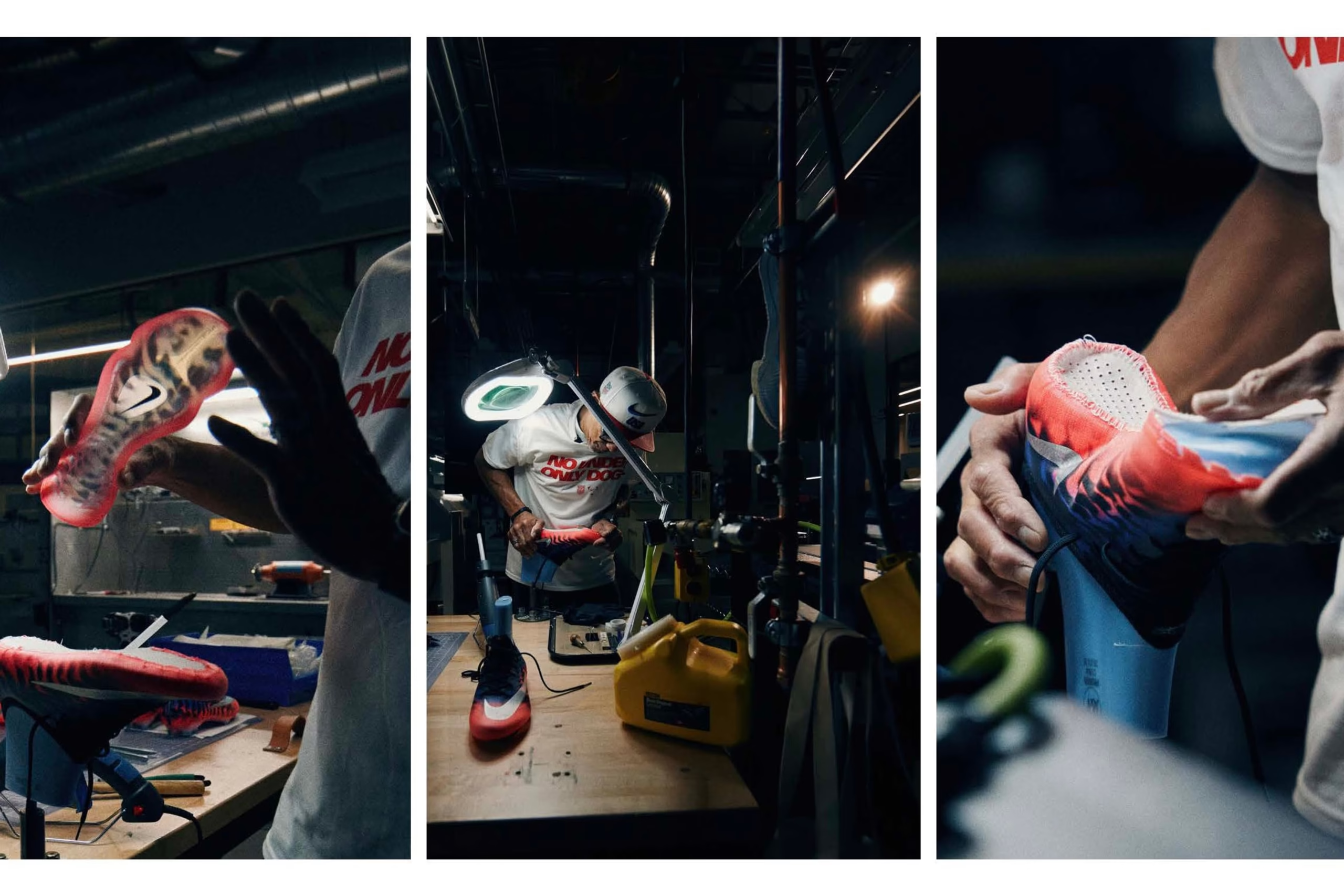
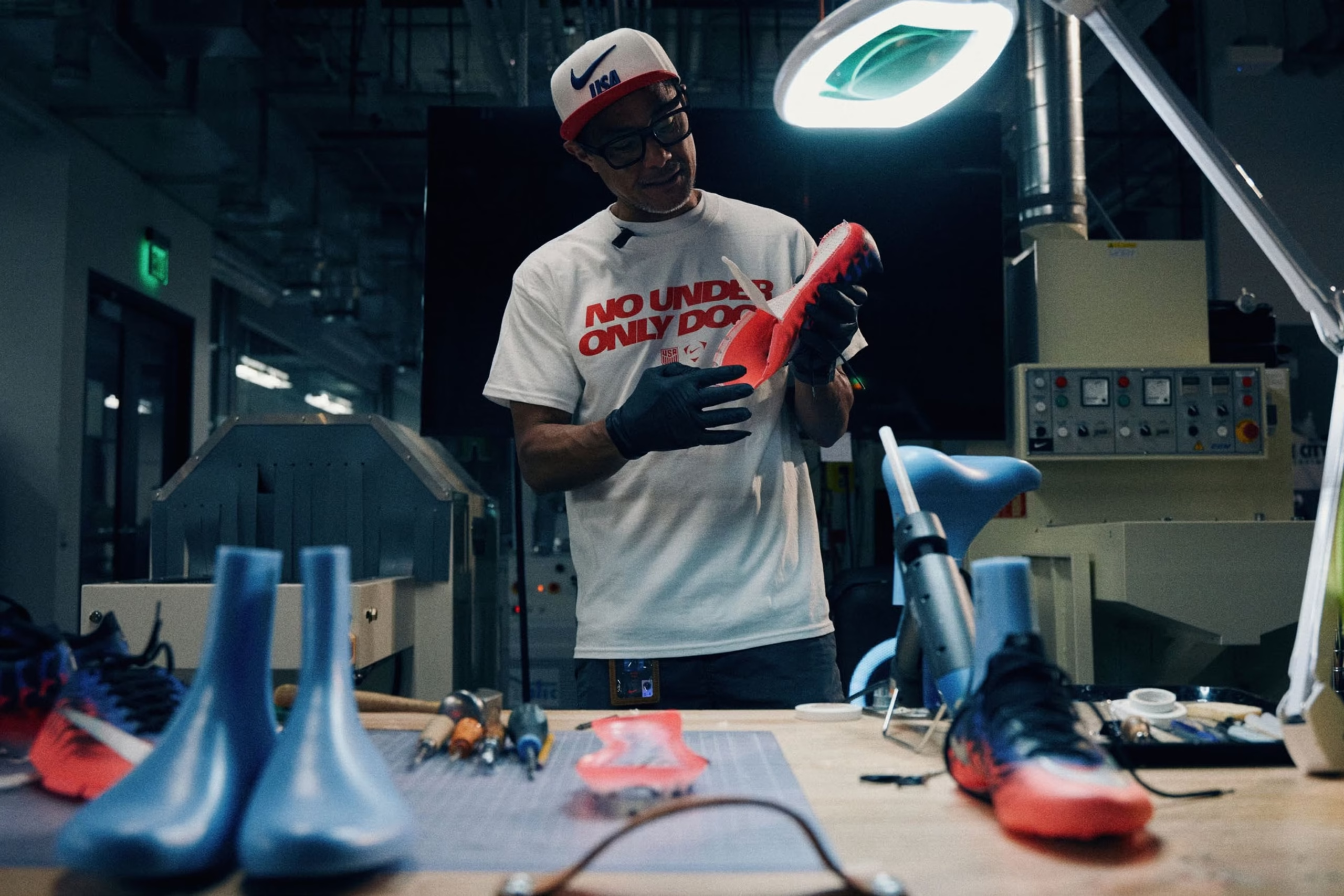
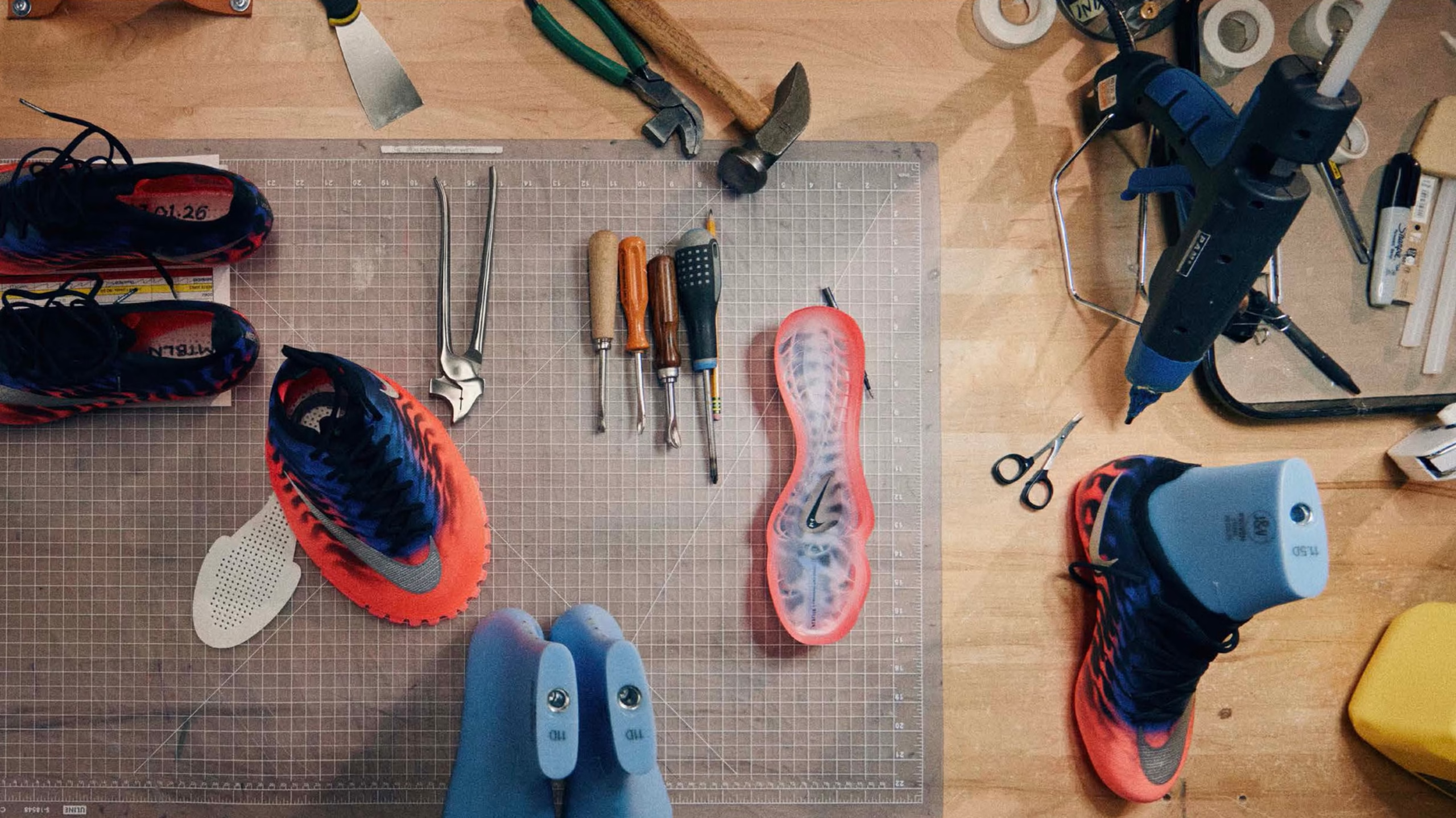
Hand-finishing custom football boots inside Nike’s Bowerman Footwear Lab.
challenge
Inside Montebelluna itself, the people doing the physical work describe the job in terms that sound closer to a craft trade than an athletic goods factory. Michele Galasso, a lead footwear product developer on the Mercurial Vapor line, has talked about wanting this generation of the boot remembered for its authenticity rather than change for its own sake, refining what the silhouette already stood for through discipline rather than reinvention. Fabio Marniga, who oversees footwear product creation and partner management for Nike in Italy, has framed Montebelluna’s identity as a constant search for a boot that looks right and performs right at the same time, executed in what he calls a distinctly Italian, craft driven way.
That same tension between speed and precision shows up in how Nike’s engineers talk about solving problems inside a live tournament window. Michele Tosello, a senior product development engineer, has described the hardest moments as the ones where competing performance demands collide directly, solving foot entry without sacrificing lockdown, or engineering an upper’s structure so it bonds cleanly around a plate’s bite line, testing and refining until a boot feels light and genuinely game ready. A tournament boot shop compresses that same problem solving process into hours instead of the two year development cycle a new Mercurial normally goes through before it reaches a shelf.
sys
Unlike a retail launch, a boot shop network is not designed to have a life after the event that justified it. Once the tournament concludes, the specific coordination between Beaverton, New York, and Mexico City built for this moment stands down, and Nike’s broader football product pipeline returns to its normal cadence of planned releases, signature packs, and seasonal drops. What stays behind is harder to see: the relationships between individual athletes and the specific people who built their boots by hand, the data gathered from hundreds of in tournament adjustments that will likely inform how the next Mercurial generation gets engineered, and a template Nike can presumably reuse the next time a global tournament demands the same kind of speed.
For the players themselves, the system’s success is measured by its invisibility. A boot shop working correctly means a player never has to talk about his equipment in a post match interview, because the only thing that changed between one match and the next was exactly what he asked for, delivered before he had to ask twice.
Related Articles
Inside The GRAMMY Museum’s New Wing Where Pop’s Biggest Nights Live Forever
A ruby minidress. An upcycled belt buckle skirt. A tube top that once belonged to […]