A 1.2 Million Pound Machine Is Making Grown Men Cry, and Nobody Warned the Midwest

July 22, 2026
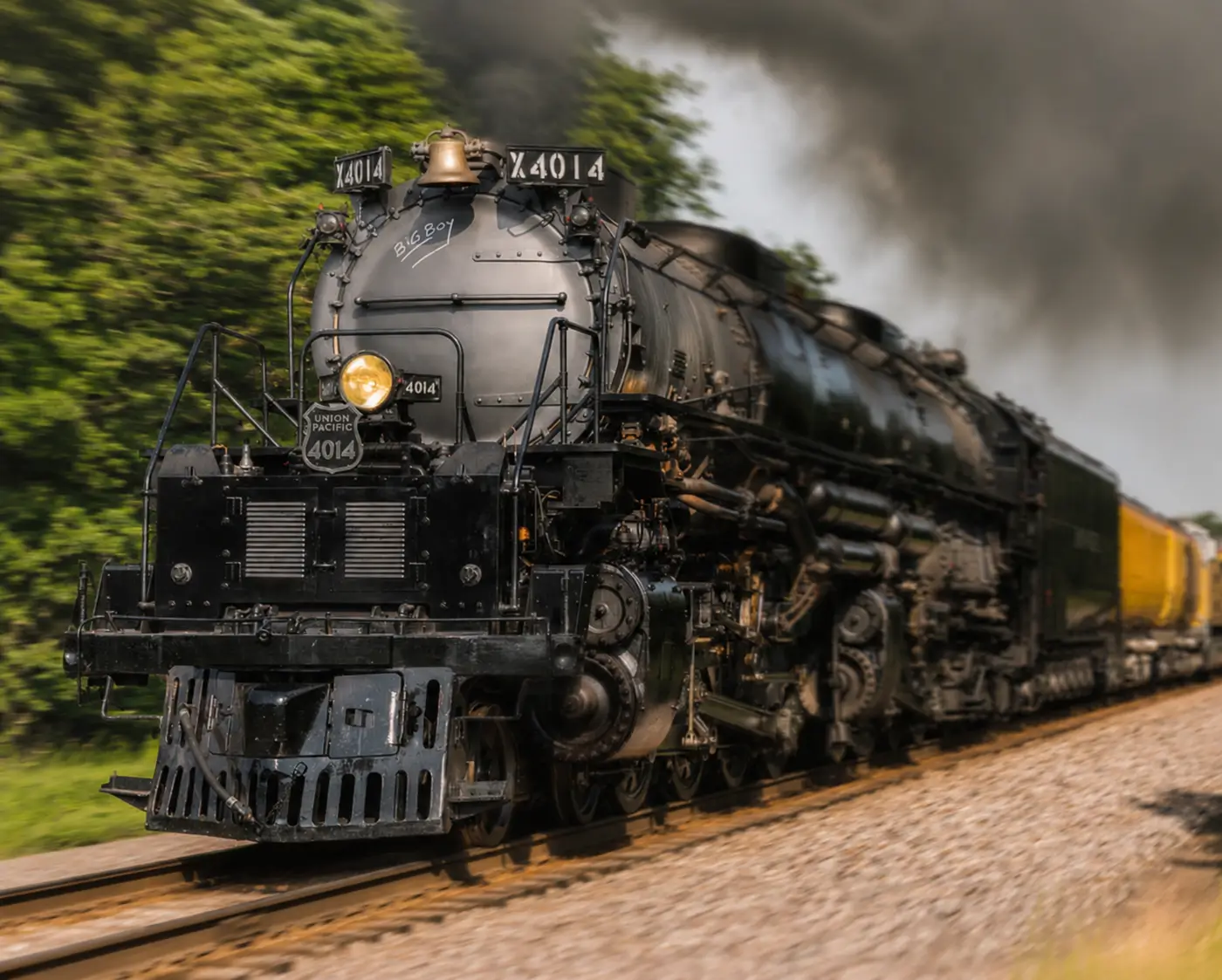
Union Pacific’s Big Boy No. 4014 is deep into a coast to coast tour, and its sheer size is doing something to people that a normal train just does not do.
Every few weeks, a new video makes the rounds of a crowd standing at a rail crossing somewhere in the middle of the country, phones up, waiting for something that most of them have never actually heard coming before. Then it arrives. Not just a train, but 132 feet of black steel moving under its own steam, exhaling in that low, chest deep way that no diesel engine has ever managed to fake. People do not just watch it pass. They react to it, audibly, the way a stadium reacts to a home run, and more than a few of them have admitted afterward, a little sheepishly, that they got emotional watching a piece of 1940s industrial equipment roll by at walking pace.
As Big Boy #UP4014 continues west to Kansas City, we say farewell to the Abraham Lincoln commemorative locomotive #UP1616, as our Heritage Fleet of passenger cars returns home. But not before one final photo opportunity in front of the Missouri State Capitol in Jefferson City!… pic.twitter.com/mIrDjiQojB
— Union Pacific (@UnionPacific) July 21, 2026
That machine is Union Pacific’s No. 4014, better known by its nickname, Big Boy, and it happens to be the largest operating steam locomotive left on Earth. At roughly 1.2 million pounds, it is not just big in the vague, marketing sense that gets slapped on anything oversized. It is the specific, engineered kind of big that required its own class of locomotive to exist in the first place, and it is currently making its way across the eastern half of the United States as the centerpiece of a tour built around the country’s 250th anniversary.
What makes the reaction to it interesting is how disproportionate it is to what a train, in the abstract, is supposed to make anyone feel. Nobody cries at an Amtrak regional pulling into a station. But Big Boy is loud in a way that registers physically before it registers view, a low frequency rumble that people describe feeling in their sternum before they ever see the locomotive itself arrive around the bend, and by the time it does come into view, trailing steam and moving with a kind of unhurried, deliberate weight, the size differential between it and everything else on the tracks that day has already done most of the emotional work.
Part of what is happening here is gen. Steam railroading effectively ended in the United States by the early 1960s, which means almost nobody alive today grew up around it as ordinary infrastructure. For most people standing at these crossings, a working steam locomotive exists only in old photographs, museum displays, or a handful of tourist railways running much smaller equipment at a fraction of the scale. Big Boy is not a scaled down recreation or a themed attraction built to resemble the real thing. It is the actual machine, running under its own power, at a size that modern rail equipment does not bother trying to match anymore because there is simply no operational reason to build anything that large again. People are not just watching a big train. They are watching something that, by any reasonable expectation, should not still exist, let alone be capable of moving.
why
Big Boy locomotives were never built for spectacle. Union Pacific commissioned 25 of them from the American Locomotive Company between 1941 and 1944, purpose built to haul heavy freight over the steep grades of the Wasatch Mountains between Utah and Wyoming during a period when the country needed as much industrial capacity moving as it could manage. Their defining feature is a 4 8 8 4 wheel arrangement, an articulated design that lets the front set of driving wheels pivot independently from the rear, which is part of how an engine this size manages to take corners at all. They worked hard for two decades and were retired by 1961, at which point the diesel era had made an engine this expensive to run and maintain largely obsolete.
No. 4014 spent decades on static display before Union Pacific pulled it out, restored it, and returned it to operating condition in 2019, timed to the 150th anniversary of the transcontinental railroad. Of the 25 Big Boys originally built, eight survive today, and 4014 is the only one still capable of running under its own power, which is what makes its current tour something closer to a live history exhibit than a routine railroad promotion. There is no substitute for it. If 4014 is not on the tracks somewhere, there is no other operating example of this machine anywhere in the world to see instead.
Restoring a locomotive like this is not a weekend project. Union Pacific maintains its own steam shop in Cheyenne specifically to keep 4014 and its smaller stablemate, No. 844, the fastest surviving steam locomotive, running and serviceable, a commitment that has effectively made the railroad the sole caretaker of operational Big Boy technology anywhere on the planet. Every boiler inspection, every part replacement, has to account for the fact that no factory has manufactured components for this specific engine class since the 1940s, which means Union Pacific’s own shop crews are frequently fabricating replacement parts from scratch, working off original engineering drawings rather than off the shelf equipment.
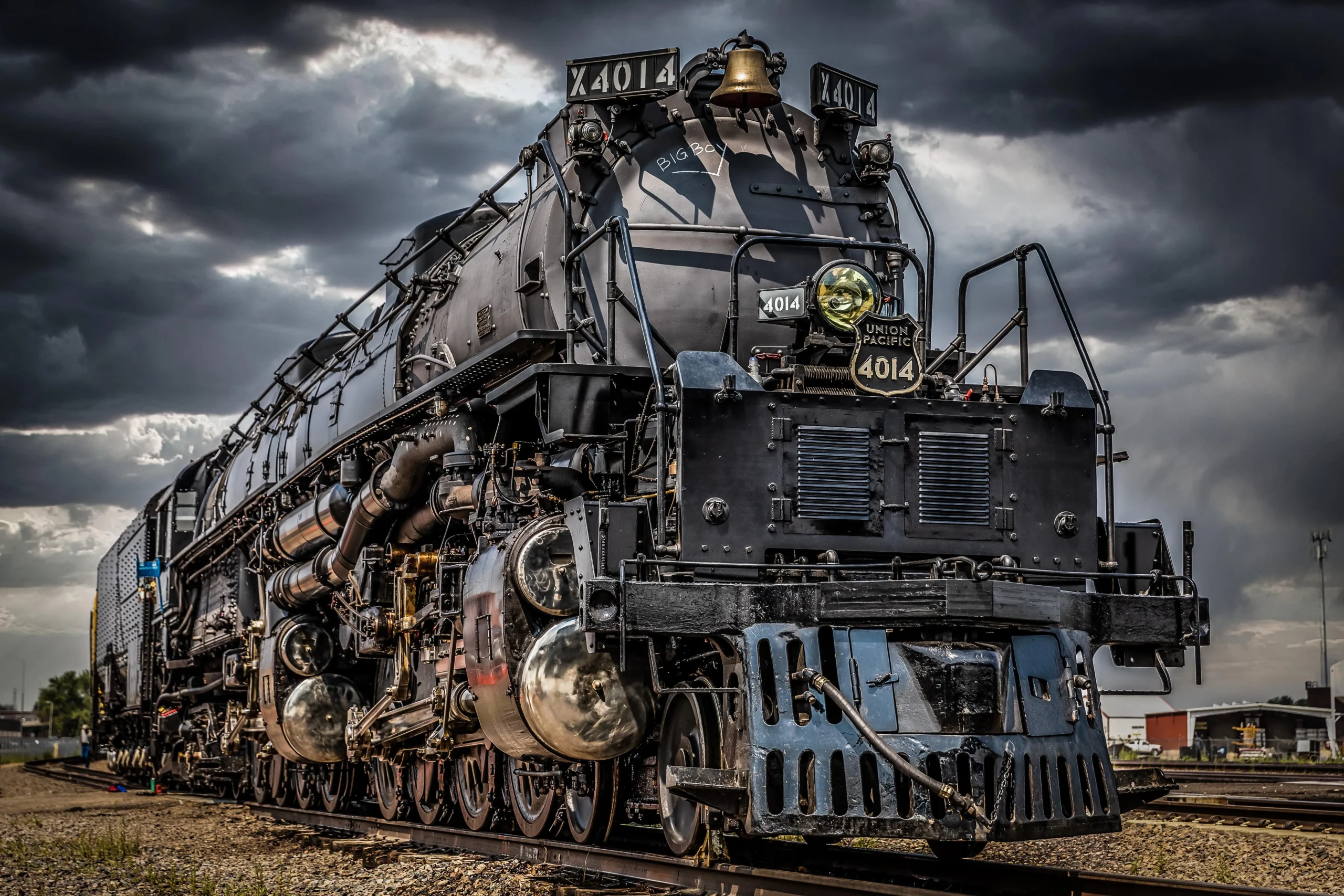
Union Pacific Big Boy No. 4014 beneath dramatic storm clouds.
stance
The 2026 tour is being run in two legs, and it is explicitly framed by Union Pacific as a coast to coast trip, tying the schedule to America’s 250th anniversary. The western leg ran from late March through late April, taking the locomotive from its home base in Cheyenne, Wyoming out to California, including a stop at Sacramento’s historic Milepost Zero, the spot where the Central Pacific Railroad began construction on the original transcontinental line back in 1863.
The eastern leg, which resumed in late May, is the more ambitious half of the two, and it is the one currently underway. For the first time since the 1940s, a Big Boy is running east of the Mississippi, operating in part over Norfolk Southern’s network under a partnership between the two railroads. The route has taken 4014 through more than 50 whistle-stops across ten states, including its first ever visits to Indiana, Ohio, New York, and Pennsylvania, with major multi-day display events staged in Omaha, West Chicago, Buffalo, Scranton, Philadelphia over the Fourth of July, and Altoona. As of this week, the tour has already passed through St. Louis, with a stop in Jefferson City, Missouri earlier this week and Kansas City following close behind, as the locomotive works its way back toward Cheyenne to close out the eastern leg by late July.
Almost none of this involves passengers. With one exception, a sold out excursion through the Poconos in June, the tour is built around brief public display days and short whistle-stops, typically running 15 to 30 minutes, where the locomotive pauses just long enough for a crowd to gather, take it in, and watch it pull away again. That structure is part of why the crowds have skewed so large relative to what you would expect for a static display. There is no ticket required to stand at a crossing, and word of a scheduled stop tends to travel fast in the towns along the route, many of which have not seen a steam locomotive of this scale pass through in living memory.
fin
There is a business story running shh underneath the anniversary frame, and it is not incidental to why this particular tour looks the way it does. In July 2025, Union Pacific and Norfolk Southern announced an 85 billion dollar merger plan aimed at creating a single coast to coast freight network linking the Atlantic and Pacific for the first time under one company. That proposal is currently under federal review, with a revised application submitted at the end of April and a decision from regulators not expected until 2027, and it has drawn scrutiny from competition concerns given how much of the country’s freight rail network the combined company would control.
Big Boy running for the first time ever over Norfolk Southern track, timed to a year when the two companies are trying to convince regulators and the public that a merger between them makes sense, is not a coincidence anyone involved has tried especially hard to hide. It is a goodwill tour in the most literal sense, built to put a beloved, century old piece of American industrial history in front of as many people as possible at exactly the moment the two railroads most need people rooting for them. Whether or not that context changes how anyone feels standing at a crossing while 1.2 million pounds of steel rolls past is a separate question, and judging by the reaction so far, it does not seem to be slowing anybody down from showing up.
Related Articles

France Just Banned Social Media for Kids Under 15, and the Fight Over Anonymity Is Only Getting Started
France becomes the first EU nation to bar under 15s from social platforms, and critics […]