
DRIFT AUDIO
Listen to this story
Choose a voice, then press play.
XLARGE marks its 35th anniversary with a five piece capsule remade through RHC Ron Herman’s lens, arriving across Japan on August 15.
Twenty six years ago, XLARGE was still the kind of brand that got explained through who walked into the store rather than what hung on the racks. Mike D of the Beastie Boys had a hand in picking product for the original Vermont Avenue shop in 1991, and the gorilla logo that came out of that storefront went on to outlast most of the trends it stood next to. On August 15, that same brand crosses paths with a very different kind of California export: RHC Ron Herman, the Japan grown offshoot of a Melrose Avenue institution, for a five piece capsule that swaps skate graphics for something closer to workwear built to last a decade.
The timing is not incidental. 2026 marks XLARGE’s 35th year, and the brand chose to spend part of that anniversary handing its house material over to a partner known less for streetwear theatrics and more for restraint. The result is a small collection, five pieces total, priced and cut like something meant to be worn on repeat rather than photographed once and shelved.
stir
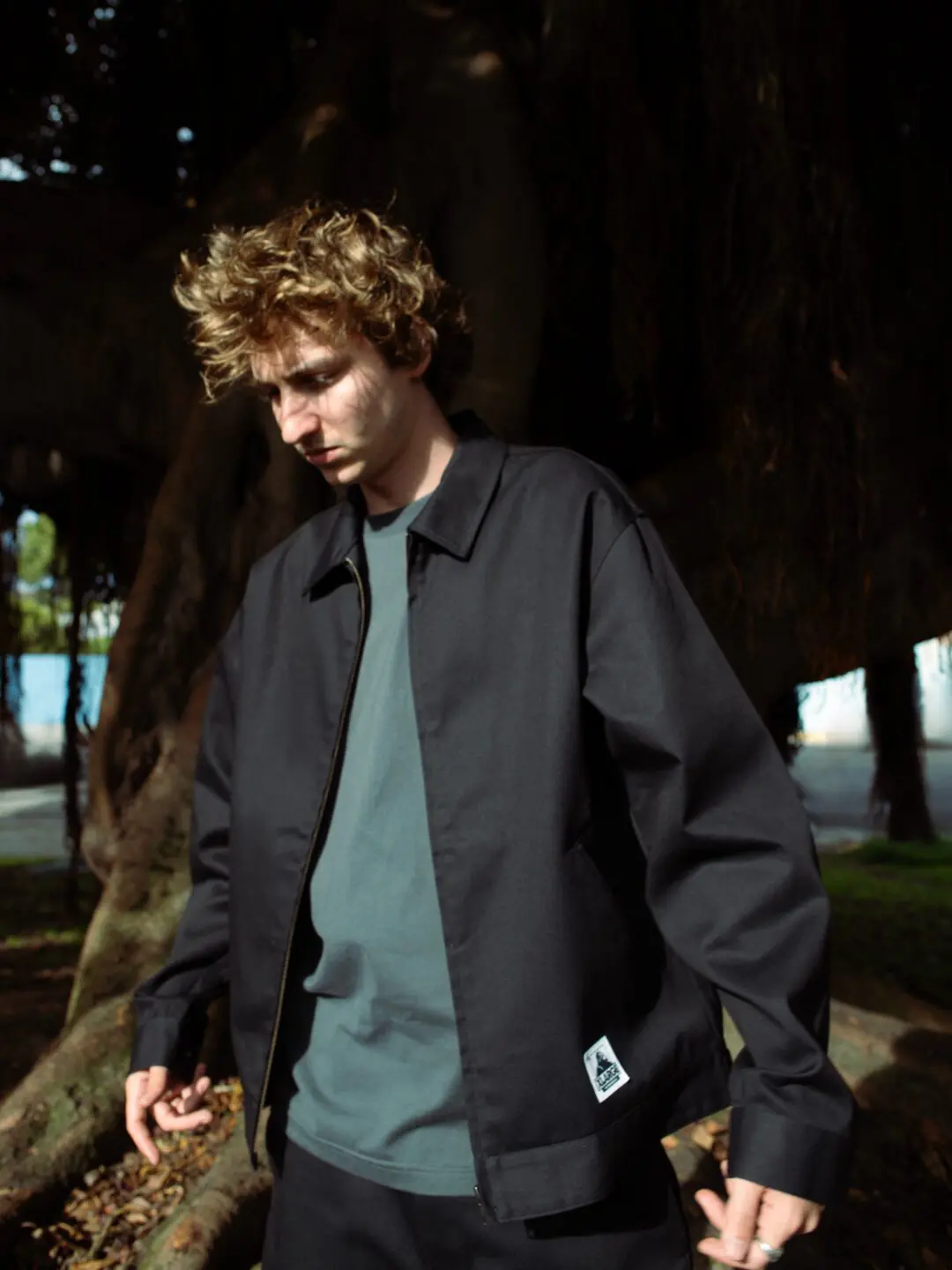
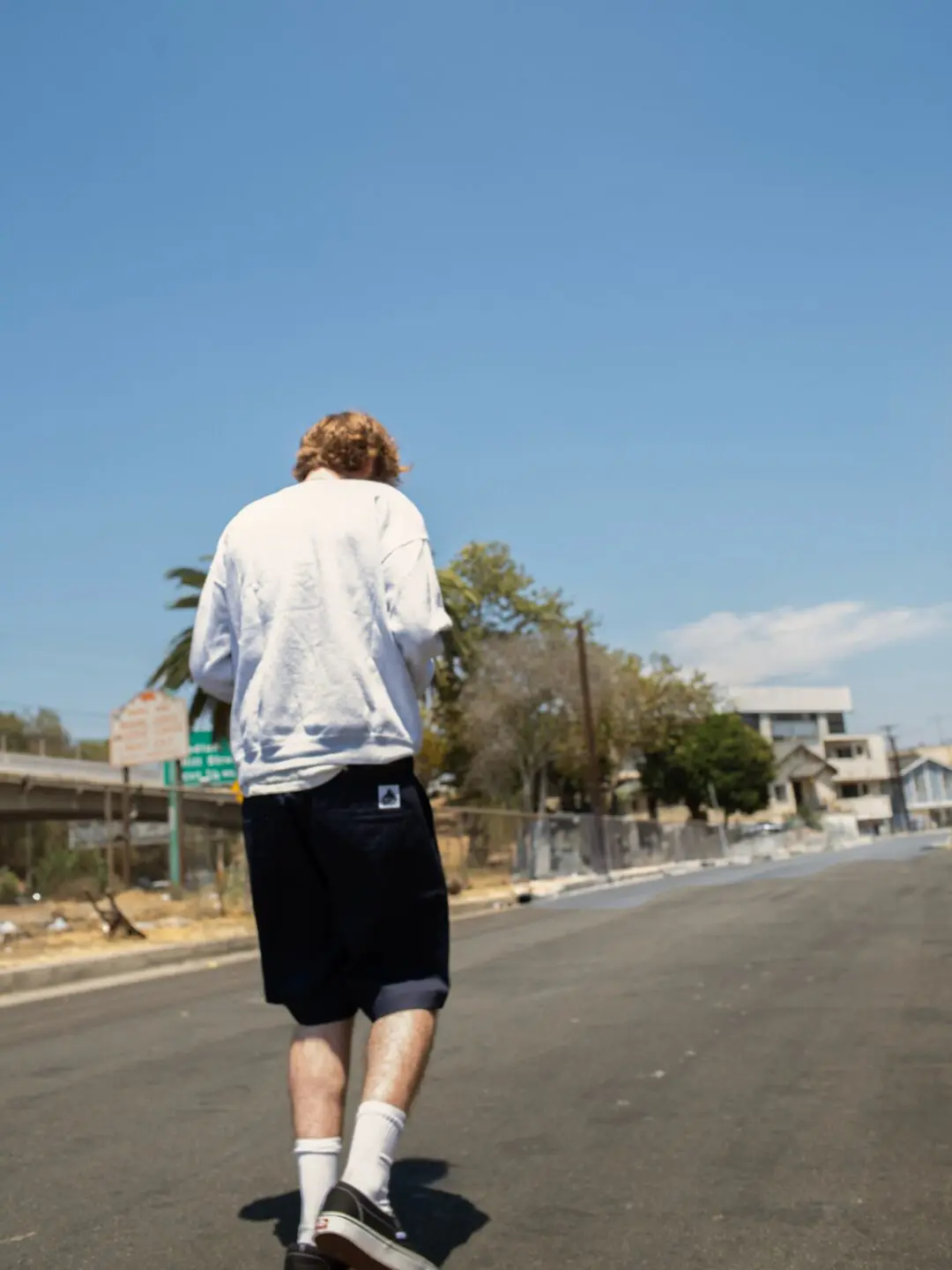
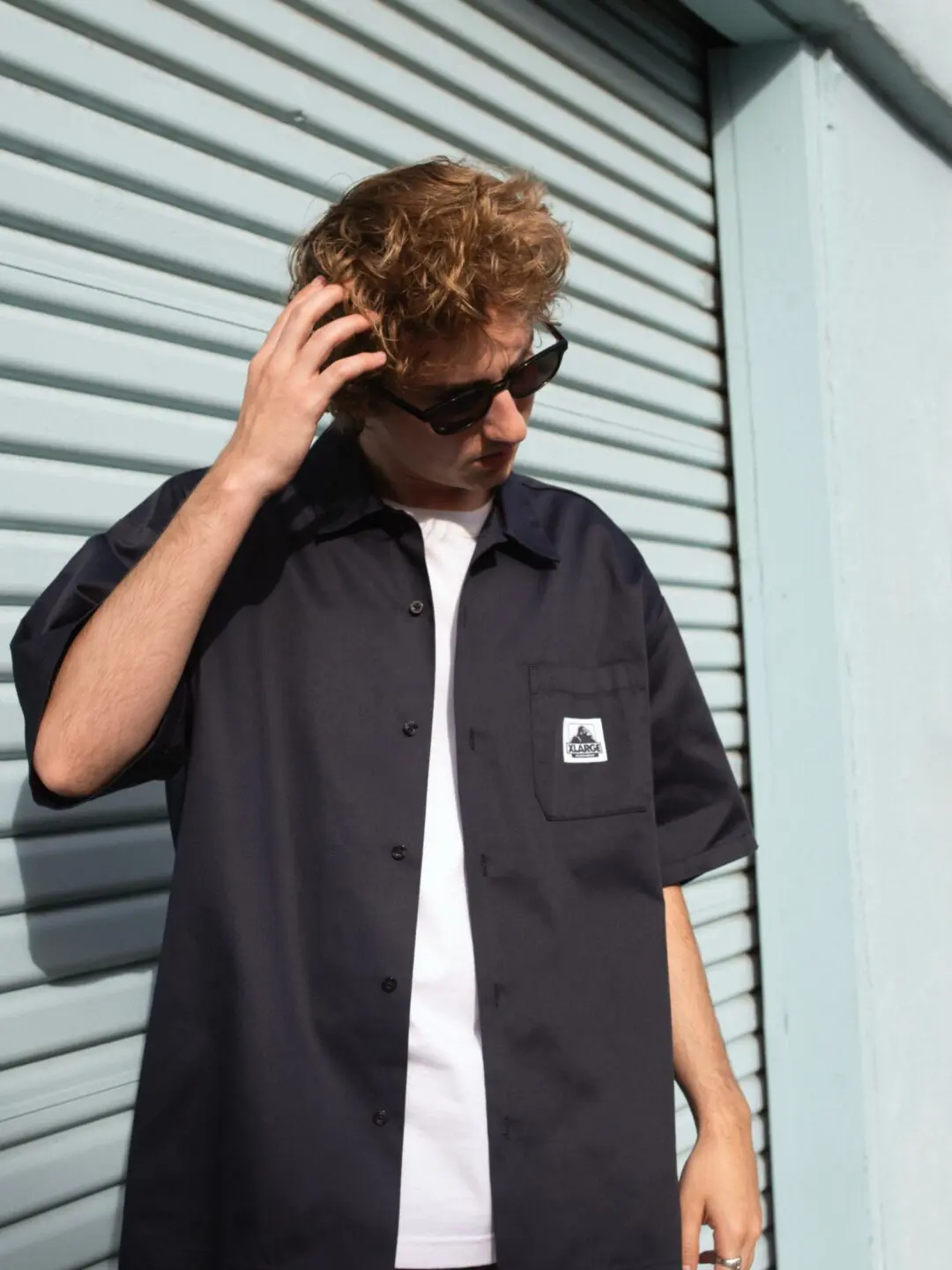
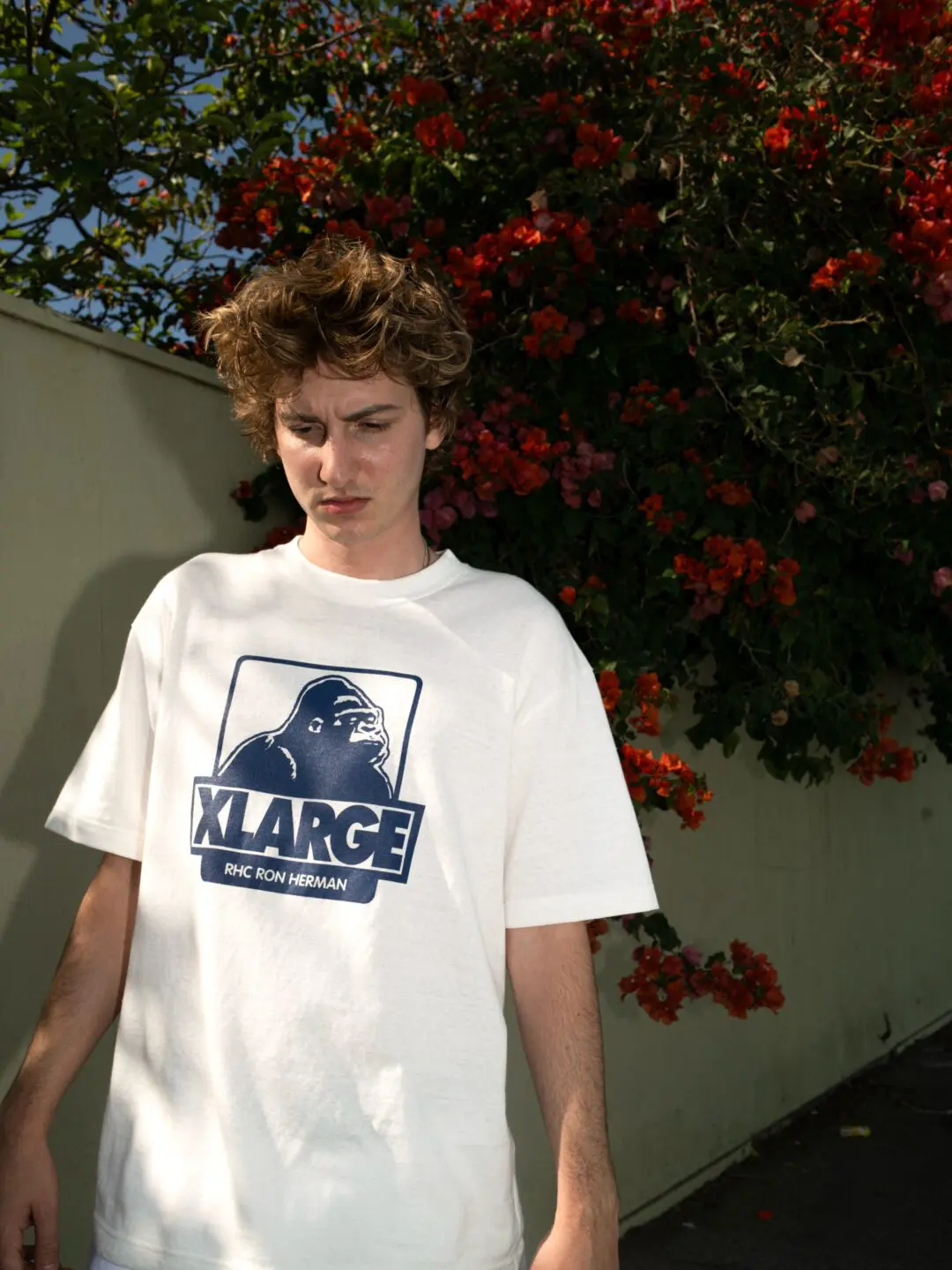
The lineup is short by design. A twill jacket leads it at 20,900 yen, followed by a short sleeve twill work shirt at 17,600 yen, twill pants also at 17,600 yen, twill shorts at 14,300 yen, and a double name OG logo tee at 12,100 yen, the lattermost cut from a softer Japan made fabric distinct from the rest of the range. The jacket, shirt, pants, and shorts run in white, navy, and black, sized S through XL for the tops and 30 to 36 inch waists for the bottoms. The tee comes in white only.
What ties the pieces together is the material rather than any single silhouette. The collection is built around what XLARGE calls its own house fabric, described on the brand’s official product notice as a recycled blend T/C twill, a cotton and polyester mix chosen for wrinkle resistance and easy care without losing a clean surface texture or breathability. That is a deliberately unglamorous set of priorities for a streetwear label, and it reads as the whole point. XLARGE’s own language around the release describes the goal as taking that original material and running it through RHC’s filter to land on daily wear that works across gen, workwear roughness smoothed down just enough to wear anywhere.
View this post on Instagram
narr
XLARGE did not start as a fashion brand chasing a look. It started as two Rhode Island School of Design graduates, Eli Bonerz and Adam Silverman, deciding to sell workwear inside a boutique setting on Vermont Avenue in East Hollywood back in November 1991. By the brand’s own account, Bonerz set the store’s premise as selling blue collar uniforms inside a fashion context, an idea that read as strange at the time and eventually became a template that half of streetwear would borrow from. The gorilla motif that anchored the earliest tees stood for Original Gorilla, shortened to the OG logo that still shows up on nearly every XLARGE release, this collaboration included.
The brand’s early years ran parallel to a specific strand of Los Angeles culture, skateboarding and music sitting closer to its DNA than the graffiti and hip hop lineage that shaped comparable East Coast labels. Mike D’s involvement gave the shop instant credibility inside that world, and by the mid 1990s XLARGE had spun off X-Girl, its womenswear counterpart, with Sonic Youth’s Kim Gordon serving as brand director and Sofia Coppola shooting some of its earliest campaign photography. That period also produced one of streetwear’s first true brand partnerships, a tie-up with the label X-FUCT, at a moment when the entire category was small enough that its handful of players all knew each other personally.
None of that early history shows up loudly in the RHC capsule, but it is the reason a 35 year old brand still gets treated as a founding voice rather than a legacy act coasting on nostalgia. XLARGE marked its 25th anniversary in 2016 with a history book, True OG Streetwear, built from interviews with the original founders and archival photography documenting the brand’s first quarter century, a project that doubled as a statement of intent about how seriously the label takes its own record. The brand has since leaned hard into Japan for much of its recent growth, running a steady stream of collaborations through its Japanese arm this year alone, with partners spanning Dickies, Champion, New Era, LIXTICK, and Honda, plus a joint capsule with X-girl tied to the Summer Sonic festival, before RHC Ron Herman joined the list in August.
What has carried the brand across three and a half decades is less any single design signature and more a willingness to keep treating workwear as raw material rather than a finished aesthetic. The RHC capsule extends that same instinct into a new decade, handing the house fabric to a partner built around a completely different sales pitch and trusting the result to still read as unmistakably XLARGE.
stance
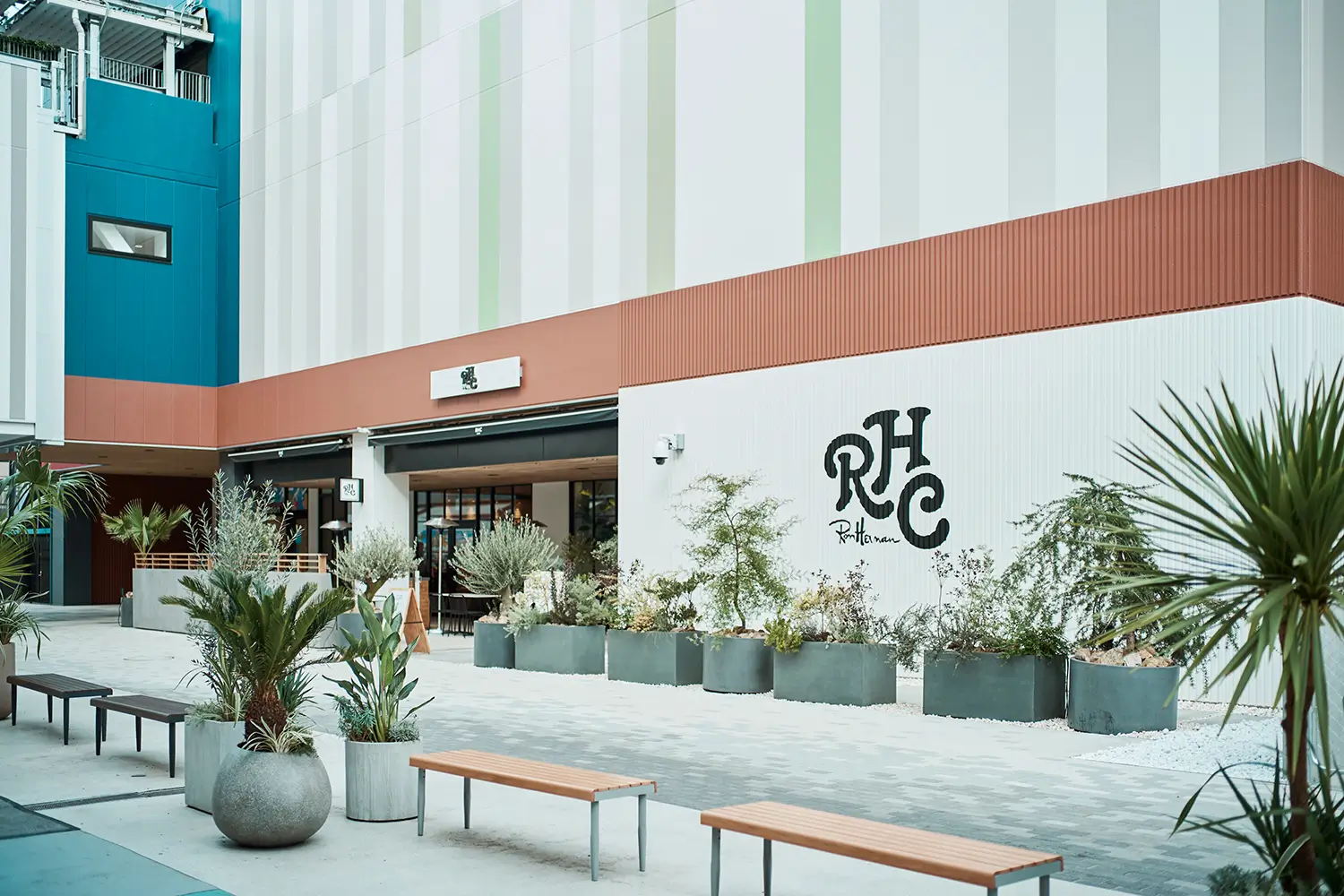
RHC Ron Herman is not simply a Japanese branch of the American Ron Herman stores. It is a distinct concept, built as an in house label and retail format that first opened in 2013 inside Yokohama’s MARK IS Minato Mirai shopping complex, according to the brand’s own history page. Where a standard Ron Herman store in Japan carries a mix of imported labels curated in the spirit of the original Melrose Avenue shop, the RHC format leans harder into furniture, fine art, and lifestyle goods alongside apparel, built around the idea of bringing a version of relaxed California living into a Japanese retail space.
The roots of that whole ecosystem trace back to Ron Herman himself, who took over his uncle Fred Segal’s Melrose Avenue store in the 1970s and spent decades building it into one of Los Angeles retail’s defining names, a run that lasted more than 45 years before the original Melrose location closed its doors in December 2023. Herman got his start when Fred Segal offered him a job shortly after he graduated from the University of California, Berkeley in 1971, and he rose through the company quickly enough to become its president while Segal’s shop in shop concept, stacking curated boutiques from denim to designer shoes under one roof, was still a novelty on Melrose Avenue.
The Japan side of the business followed a separate path entirely. Sazaby League, the Japanese conglomerate also known for distributing brands like Canada Goose and Wolford, opened the first Ron Herman store in Japan in 2009 with help from Koki Mine, and eventually acquired the global rights to the entire Ron Herman operation in 2019, after Herman himself stepped back from day to day involvement and sold the business outright at the end of that year. What started as a licensing arrangement has since grown into a network that now spans well over a dozen Ron Herman locations and a separate string of RHC branded shops across the country, each one interpreting the original California ethos through its own regional lens. Herman has spoken with WWD about the arrangement using an oyster and pearl comparison, crediting himself only with the initial spark while giving the Japanese team full credit for everything the brand became afterward, and he has said the connection still feels personal to him even with no formal role left in the business.
The X-LARGE collaboration collection blends relaxed California streetwear with min workwear influences, featuring oversized sil, understated branding, and day essentials photographed in sunlit outdoor settings.
tread
The XLARGE capsule is not landing everywhere Ron Herman operates. XLARGE’s own release notice lists eight RHC Ron Herman locations carrying the collection: Minato Mirai, Osaka, Shichirigahama, Toyosu, Kawasaki, Nagoya, Kumamoto, and Funabashi. A separate set of five Ron Herman “R” stores rounds out the retail footprint, covering Sendagaya, Futako-Tamagawa, Tsujido, Kyoto, and Fukuoka, alongside the Ron Herman online store for shoppers outside those regions.
What the notice is equally clear about is where the collection will not appear. XLARGE specifically flags that the capsule will not be available through its own directly operated stores or through calif, its e-commerce platform, making RHC Ron Herman and its sister Ron Herman “R” shops the only channels carrying the release, online or in person. That kind of exclusive is standard practice for Japan market capsules built around a single retail partner, but it does mean shoppers outside Japan or without access to the Ron Herman online store are effectively locked out at launch, at least through official channels.
hint
This is not the first time RHC Ron Herman has handed its retail platform over to a workwear leaning collaborator. Earlier in 2025, the retailer worked with Japanese technical outerwear maker Goldwin on an all black digital camouflage capsule built from a lightweight synthetic shell, a release that leaned into a more technical register than the XLARGE drop does. Placed side by side, the two collaborations suggest a retailer comfortable stretching between highly engineered performance fabric and something closer to plainspoken cotton twill, so long as the finished product still fits the loose, unhurried version of California style that RHC Ron Herman has spent over a decade building in Japan.
For XLARGE, the release lands at a moment when the brand’s Japanese operations are running at a steady clip, with new arrivals and partner drops appearing on its official site on a near weekly basis through the middle of 2026. What separates this particular capsule from the rest of that calendar is the anniversary framing attached to it and the choice of partner, a retailer whose own identity was built on curation rather than logo driven hype. It also says something about how both brands see their own longevity. XLARGE built its name on selling clothes meant to survive the trend cycle that produced them, and RHC Ron Herman has spent more than a decade proving that a California import can put down deep enough roots in Japan to start shaping the culture it borrowed from, rather than simply reselling it. Five pieces, three colorways, one recycled twill, and a release date now locked to August 15 at eight RHC Ron Herman stores and five Ron Herman “R” locations across Japan.
n
From the DRIFT archive: The North Face Women’s Nuptse Short Jacket: A Modern Icon