DRIFT AUDIO
Listen to this story
Choose a voice, then press play.
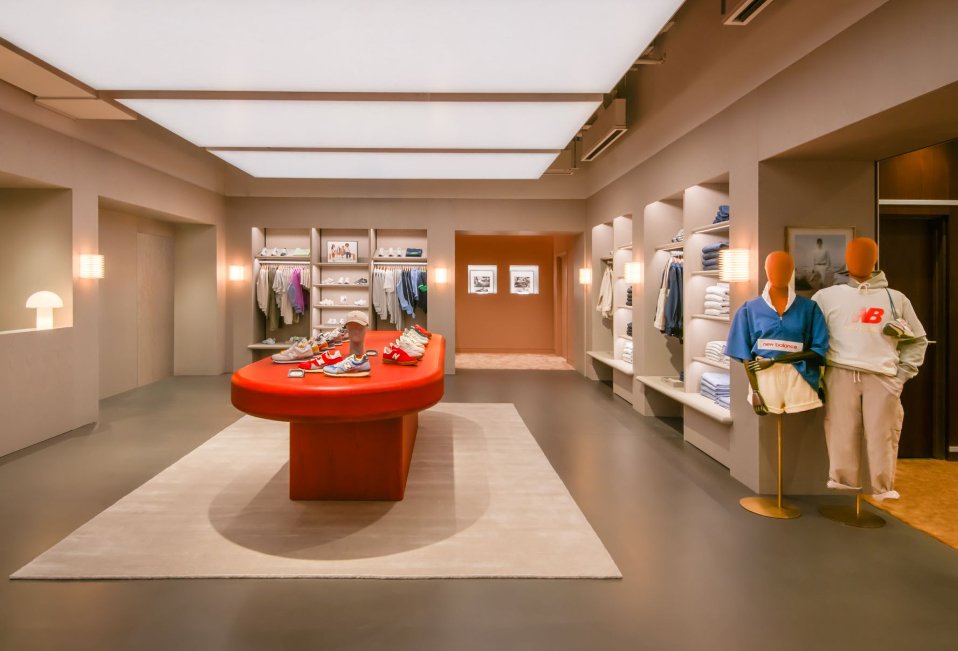
In an era where brand experiences often veer into the overly performative or reductively digital, the new New Balance flagship store in London, designed by Universal Design Studio, offers a rare balance between functionality, community, and aesthetic restraint. Situated in the heart of Soho, the 12,570-square-foot retail space signals more than a new retail location—it acts as a physical manifesto for the American shoe giant’s increasingly confident European identity. Executed with a level of architectural intention rarely seen in athletic retail, the flagship is both a declaration of design seriousness and a sincere invitation for runners, creatives, and curious pedestrians alike.
This editorial explores the store not merely as a commercial space, but as a holistic experience: a reflection of London’s kinetic rhythm, a statement about the role of physical retail in a digital world, and a case study in Universal Design Studio’s thoughtful manipulation of material and pace.
Site as Statement: The Cultural Geography of Soho
Located at 287-291 Oxford Street, bordering Soho and Marylebone, the flagship makes deliberate use of London’s cultural crossroads. It’s no accident New Balance chose this site—Soho has long been synonymous with subcultural currents, from punk and queer nightlife to underground fashion. By setting up shop here, New Balance tactically distances itself from generic high street retail. It wants to be seen not just as a seller of performance sneakers but as a vital participant in the contemporary cultural landscape.
This desire to inhabit cultural relevance is underscored by the architectural decisions. The store does not shout or clamor for attention. There is no neon, no intrusive digital display vomiting promotions onto the street. Instead, Universal Design Studio favors discretion: the exterior is pared back, the color palette subdued, the signage quietly assertive. It understands that the new luxury is modesty, that in a city of noise, calmness cuts through best.
Designing in Tempo: Materials, Tension, and Texture
Universal Design Studio—an architectural firm known for its work with Ace Hotel, Stella McCartney, and The Science Museum—approached the project not as a showroom but as an evolving environment. Their design choices reveal a deep understanding of cadence, layering materials that speak to movement, energy, and pause.
Polished concrete and brushed aluminum reference the urban terrain of the city’s sidewalks and running tracks. Bleached oak and natural stone inject warmth without nostalgia. Modular steel racks appear industrial yet adaptable. Throughout, there’s a visual tension between utility and comfort—tactile surfaces that ask to be touched, architectural lines that gently guide rather than dictate movement.
This language of materials is not aesthetic fluff; it mirrors the ethos of New Balance itself. Here is a brand that makes shoes you don’t just wear for performance but for longevity and intention. The store extends that mission into the spatial realm: each material has a function and rhythm, nothing is arbitrary. It’s a welcome departure from overdesigned, influencer-bait spaces that prioritize spectacle over substance.
A Space for Runners, Not Shoppers
What truly sets this store apart is how it redefines the role of a retail environment. It’s not simply a venue for displaying product but a meeting point for a dispersed community. In the rear of the store is a dedicated space for the brand’s Run Club—a movable and transformable zone equipped with lockers, benches, and digital tools that support runners pre- and post-run. The space is imbued with hospitality, acting almost like a boutique hotel lobby or co-working retreat.
Universal Design Studio’s co-founder, Hannah Carter Owers, has said that the store was designed with “ambience” over “activation” in mind. That distinction is crucial. Rather than inundate visitors with brand messaging or QR codes at every turn, the flagship draws people in with the promise of ease, support, and respect for their time. The experience is more akin to stepping into a modern library or design studio than a commercial shoe store.
Even the layout supports this ethos. Products are not aggressively spotlighted but thoughtfully arranged in curated sequences, allowing customers to wander, linger, or ignore altogether. There’s an understanding that the modern consumer wants to discover rather than be sold to. A running shoe becomes not just an object to purchase but a node in a larger narrative about wellbeing, design, and urban life.
Bridging Performance and Streetwear
New Balance’s cultural resurgence in the past decade—spurred by collaborations with Aimé Leon Dore, JJJJound, and Joe Freshgoods—has positioned it as the thinking person’s sneaker brand. It’s luxury without braggadocio, fashion without abandonment of function. The London flagship doesn’t just reflect this identity—it constructs it, brick by steel beam.
In one wing of the store, archival pieces are displayed alongside new performance footwear. This juxtaposition reframes the brand’s legacy as an ongoing story rather than a nostalgic throwback. A 990v3 from the early 2000s sits next to a 2025 FuelCell SuperComp Elite, not in competition but in conversation. The message is clear: innovation is iterative, not disruptive.
Moreover, the layout of the store accommodates both demographics without privileging one over the other. Whether you’re a dad in search of 990s or a 23-year-old creative chasing the latest Teddy Santis drop, the environment offers equal dignity. This democracy of space is a hallmark of Universal Design Studio’s work: everyone, from marathoner to flâneur, is welcome.
Digital Silence and the Return to Physicality
One of the most remarkable aspects of the New Balance London flagship is what’s not there. In contrast to many contemporary retail spaces, there is no aggressive integration of AR mirrors, social media booths, or NFT-linked QR codes. The digital here is present but quiet: functional screens for checking stock, seamless payment integration, background audio systems curated to the time of day.
This restraint may seem like a missed opportunity to some, but it speaks to a deeper understanding of retail’s changing nature. In an age of endless scroll and digital fatigue, the analog becomes precious. Universal Design Studio recognizes that what people crave isn’t tech novelty but human rhythm. The tactile nature of suede, the squeak of rubber on concrete, the hush of well-designed acoustics—these are the true luxuries.
The flagship becomes a refuge from overstimulation. Even the lighting is designed to mimic natural daylight, shifting in warmth as the day progresses. The result is a sense of intimacy that elevates the mundane act of shoe-shopping into a meditative experience.
The Architecture of Pace and Purpose
Perhaps the most impressive achievement of the space is its architecture of pace. It slows you down. From the long, corridor-like entryway that gradually expands into the main showroom, to the rhythmic placement of furniture that invites pause, there is a choreography at play. It reflects the ethos of running itself—not just speed, but consistency, breath, and attention.
Even the sculptural installations within the store are geared toward this philosophy. A central bench designed by London-based Max Lamb serves not just as furniture but as spatial punctuation—a moment to sit, observe, recalibrate. It is reminiscent of a trail lookout or urban pause point, anchoring the visitor not just physically, but emotionally.
The modularity of the interior design further supports this flexibility. Fixtures can be rearranged depending on the season, the launch, or the time of day. This adaptability mirrors New Balance’s own design DNA: shoes built for various terrains, lifestyles, and levels of commitment.
Retail as Civic Architecture
At its core, the New Balance London flagship offers a new template for what retail spaces can be: not temples of consumption, but civic architecture. This is a space that hosts, listens, and reflects rather than commands. It integrates into the city rather than disrupts it. It contributes something essential to the urban experience—a pace of engagement that feels contemporary, conscious, and credible.
Universal Design Studio has long specialized in architecture that encourages interaction without enforcing it, and the flagship is their philosophy at full scale. In their hands, retail becomes a medium not of display but of care.
Impression: Toward a More Intentional Retail Future
The opening of the New Balance flagship in London marks a pivot for the brand—not toward trendiness, but toward timeless relevance. It’s a step beyond marketing into meaning-making, and a bet on the endurance of physical experience in a digital world.
As retail continues to grapple with the question of presence—how to be meaningful when everything can be bought online—this store offers a powerful answer: you give people a place that reflects how they want to feel, not just what they want to buy. You create a rhythm they want to return to.
In doing so, New Balance and Universal Design Studio have created something quietly radical. Not a billboard of hype, but a container for humanity. A pace. A presence. A place to begin again.
Related Articles
A Moccasin Apron On A Run
1890A. Truffle Salt is U18909VF, 22 October, 10:00. Pink Granite was 8 October. Cow Print 16 September. Dark Night 6 August. Snakeskin 1 July. ¥29,150.