DRIFT AUDIO
Listen to this story
Choose a voice, then press play.
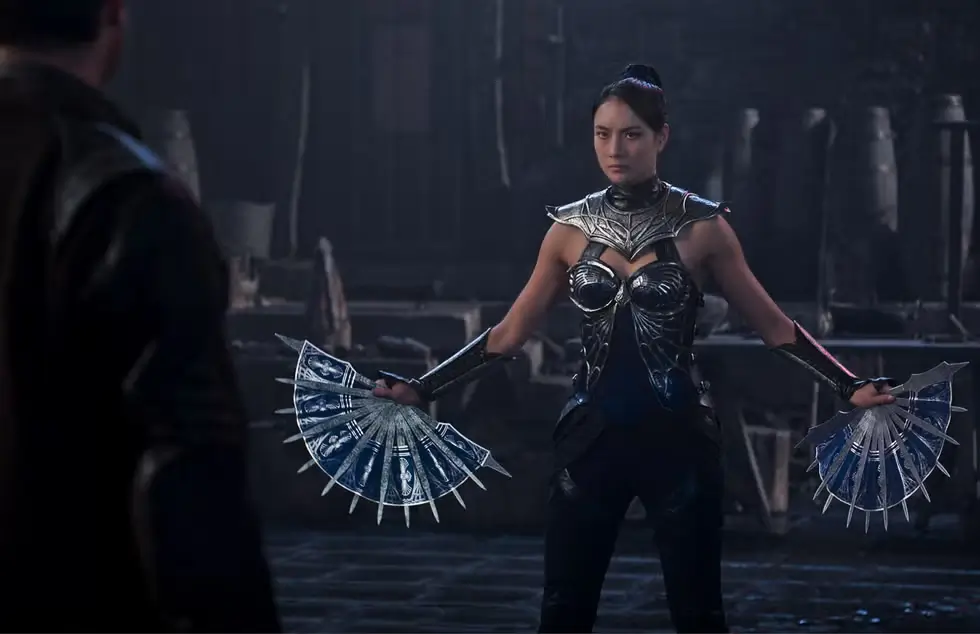
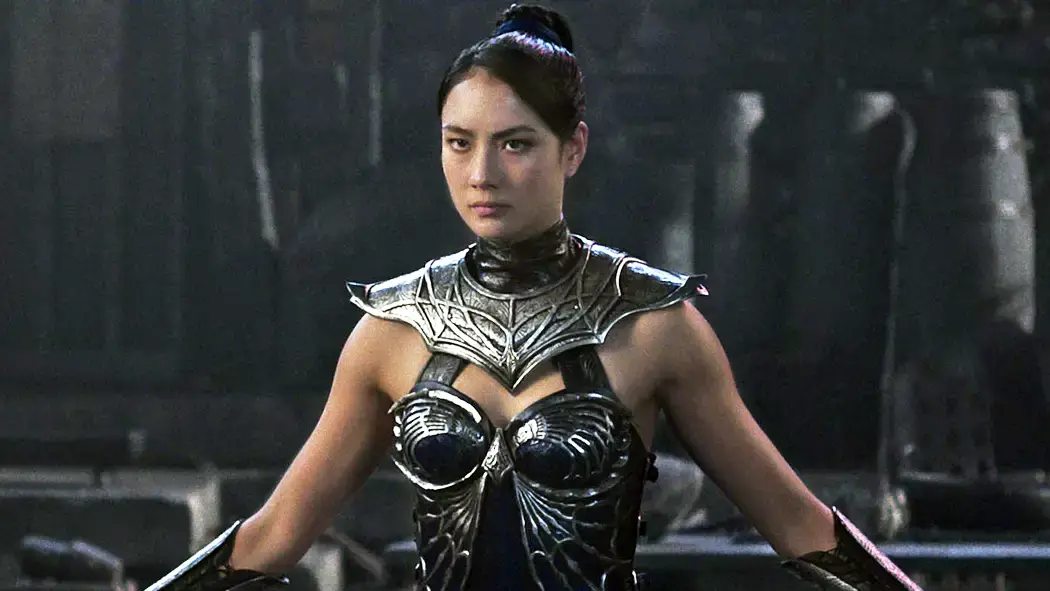
In the high-stakes world of Mortal Kombat II (2026), directed by Simon McQuoid and written by Jeremy Slater, Adeline Rudolph steps into the iconic role of Princess Kitana, the steel fan-wielding warrior princess from Edenia. Kitana, a fan-favorite since her 1993 video game debut, aids Earthrealm’s greatest fighters in the interdimensional tournament against Outworld’s forces. In this sequel to the 2021 Mortal Kombat reboot, Kitana emerges as a co-protagonist alongside Karl Urban’s Johnny Cage, with her storyline deeply interwoven into the narrative’s themes of legacy, destiny, conflict, and moral choice.
Rudolph’s portrayal has been widely praised as one of the most game-accurate live-action versions yet—commanding, elegant, stoic yet vulnerable, with brutal fight choreography and emotional depth that makes her the “pulse” of the story for many viewers.
View this post on Instagram
stir
Adeline Rudolph was born on February 10, 1995, in Hong Kong to a Korean-German family. She attended the German-Swiss International School, gaining a worldly perspective, before studying political science at University College London (UCL). While at university, she signed with Next Model Management and modeled in Europe, Hong Kong, and Korea, appearing in campaigns for Marie Claire Beauty and Elle Beauty.
Modeling provided discipline, presence, and comfort in front of the camera, but acting called to her. Her only prior acting experience was playing the Scarecrow in a school production of The Wizard of Oz. After graduation, on a U.S. work visa sponsored by her modeling agency, she took acting classes, found an agent, and booked her first major role quickly.
She debuted as Agatha Night in Netflix’s Chilling Adventures of Sabrina (2018–2020), a mean-girl witch, where she worked with future Mortal Kombat II co-star Tati Gabrielle (who plays Jade). Subsequent roles included Minerva Marble in Riverdale (2021), Billie Wesker in the Netflix Resident Evil series (2022), and parts in Hellboy: The Crooked Man and Creepers. Her career often leans into dark fantasy, supernatural, and horror genres, suiting Kitana’s rich, Shakespearean backstory of hidden heritage, loyalty, and rebellion.
She was cast as Kitana in 2023. The news excited fans, though some initial online skepticism existed about her fit. By the film’s May 2026 release, early reactions overwhelmingly celebrated her as a “perfect” casting—visual striking, energetically deadly, and emotionally resonant.
flow
Rudolph approached Kitana with deep respect and rigorous preparation. While preparing for her green card interview in Germany, she learned she’d booked the role and immediately flew to Australia for stunt training.
She immersed herself in Mortal Kombat lore—games, backstories, relationships, and history. She studied Kitana’s origins as the princess of Edenia, her complex ties to Outworld, her mother Sindel, and her moral compass.
This research informed how she translated game elements into the script. Director Simon McQuoid and the writers reworked Kitana’s arc for the film, emphasizing emotional grounding amid conflict and destiny. Rudolph connected closely to build the character from the ground up while staying faithful to the source.
Physically, the challenge was immense. Rudolph lacked a formal martial arts background. She doubled down with intensive training in Wushu, Kung Fu, Tai Chi, and fan weaponry. Days involved drilling choreography, tension in movements, and authenticity. She credited stunt doubles and the department for making fights feel real and fluid.
One month of daily fight training pushed her limits. She had some prior Taekwondo experience, but Mortal Kombat II thrust her into the deep end. The steel fans—Kitana’s signature weapons—required precision and grace under pressure.
She emphasized infusing Kitana with relatability and humanity. Kitana is deadly and skilled, but also empathetic, vulnerable, and torn by legacy. Rudolph wanted truthfulness and honesty rather than mimicry, avoiding gimmicks.
Her real-life twin sister, Caroline, added an interesting parallel to Kitana’s canon ties (like her clone sister Mileena, whom Rudolph has expressed interest in exploring further).
adversity
The role presented multifaceted challenges:
- Physical Demands: Intense stunt work, long training hours, and maintaining peak condition while filming action sequences.
- Fan Expectations: Portraying a beloved character with decades of history. Rudolph felt pressure but focused on honesty and collaboration.
- Emotional Depth: Balancing stoicism with vulnerability. Kitana’s arc involves moral tests, relationships (especially with Jade), and personal growth in a brutal tournament.
- Logistical: Sudden shift from green card prep to Australia training; balancing prior projects and visa realities.
- Imposter Syndrome: Early in her career, she navigated doubts, especially after fearing an audition wasn’t strong enough.
Despite these, the ensemble cast— including returning Mortal Kombat actors and new additions like Martyn Ford as Shao Kahn—provided support. Her prior connection with Tati Gabrielle enhanced the Kitana-Jade sisterhood on screen.
show
Critics and fans highlight Rudolph’s Kitana as stoic yet powerful, with visible emotional layers. Fight scenes are brutal and intricate; her presence commands the screen. Many call it the best live-action Kitana, surpassing earlier portrayals like Talisa Soto’s in 1995.
The film reworks elements of her story, making her central rather than supportive. This shift allows deeper exploration of identity, loyalty, and rebellion, resonating with audiences.
Trends in her performance include blending elegance with ferocity—graceful fan work contrasting raw power—and grounding fantasy in human emotion. This fits broader 2020s trends in genre films: strong, complex female leads with agency, emotional arcs, and physical prowess (think The Witcher, Dune, or other video game adaptations).
extent
Rudolph’s trajectory exemplifies the model-to-actress pipeline, common in Hollywood (e.g., Cara Delevingne, Zendaya). Her modeling honed poise and view storytelling, translating well to Kitana’s regal yet warrior ethos.
She thrives in IP-driven projects—Sabrina, Riverdale, Resident Evil, now Mortal Kombat—capitalizing on built-in audiences while showcasing range. Her roles often involve strong, multifaceted women in fantastical settings.
- Mortal Kombat II marks a potential blockbuster breakthrough. Success could lead to expanded franchise roles, including Mileena dynamics or spin-offs. It also highlights diversity in casting: Rudolph’s mixed heritage brings authenticity to a character from fantastical realms.
Industry trends favor video game adaptations with deeper lore respect, practical/action-heavy stunts, and emotional stakes. Rudolph’s preparation sets a standard for actor commitment in such projects.
Post-Mortal Kombat II, she continues building a versatile career, potentially in more action, drama, or international productions, leveraging her Hong Kong roots and global upbringing.
grace
Adeline Rudolph’s Kitana embodies the evolve of the character—from game icon to cinematic force. Her dedication to lore, physical transformation, and emotion of truth elevates the performance.
From the DRIFT archive: Timberland x Spike Lee: “Advice of an Icon” and the Enduring Story of the Yellow Boot
Related Articles

Under Rue de Castiglione, Liaigre Gives Hôtel Costes a Spa With No Hard Corners
A 20-meter lap pool, eight treatment rooms and not one sharp angle: Studio Liaigre’s spa […]