DRIFT AUDIO
Listen to this story
Choose a voice, then press play.
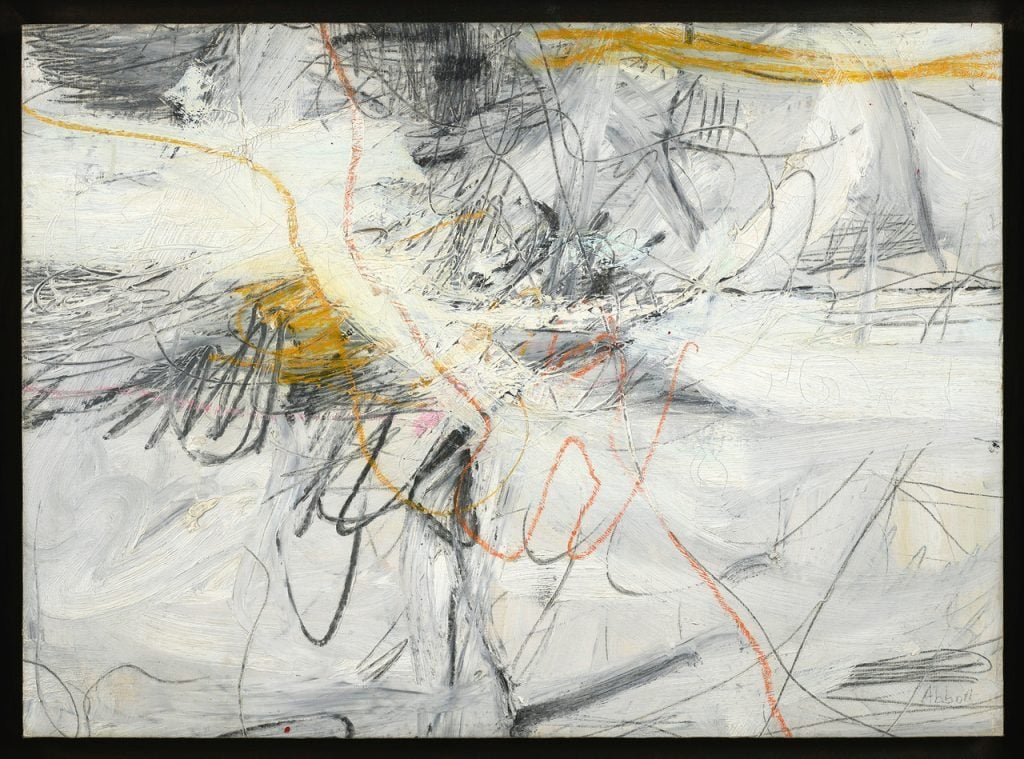
Mary Abbott’s “Ariel Wind” (circa 1951) is a stunning example of the post-war Abstract Expressionist movement, which saw artists exploring bold new approaches to painting. Abbott, one of the few women prominently featured in the movement, channeled an intense emotional energy into her works, resulting in a vivid and dynamic visual language.
In “Ariel Wind”, Abbott’s signature use of sweeping, gestural brushstrokes evokes a sense of powerful, yet elusive, motion. The composition is a dance between control and freedom, where colors seem to flow across the canvas, interacting and clashing to produce an effect reminiscent of wind swirling through an open space. Abbott’s engagement with nature and her ability to distill it into a poetic abstraction is evident here, with the work capturing the ephemeral essence of air and movement.
This painting not only underscores Abbott’s unique position as a female artist breaking ground in a male-dominated art scene but also exemplifies her talent for merging visceral emotion with the spontaneity of action painting. Her work serves as a testament to the wider impact of women within Abstract Expressionism and their role in expanding the possibilities of modern art.