DRIFT AUDIO
Listen to this story
Choose a voice, then press play.
Two hundred and eleven exhibitors fill the Grand Palais from October 23, in the first Art Basel Paris led by Karim Crippa, its former head of communications.
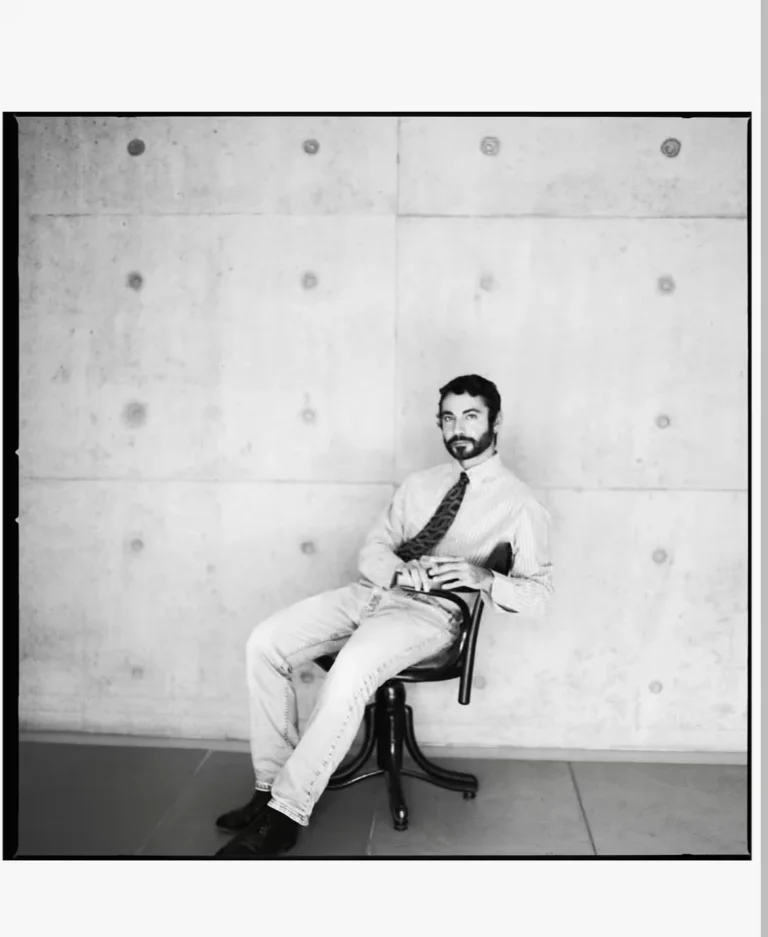
Karim Crippa spent four years telling the world what Art Basel Paris was. From the fair’s 2022 debut he ran communications for the Paris show while working as a senior editor across Art Basel’s global platform, which put the event’s public voice, from launch announcements to its sense of itself, squarely on his desk. On November 1, 2025, he stopped describing the fair and started running it, taking over from founding director Clément Delépine, who left for the Paris art center Lafayette Anticipations. The edition that opens at the Grand Palais on October 23 is the first one built on his watch.
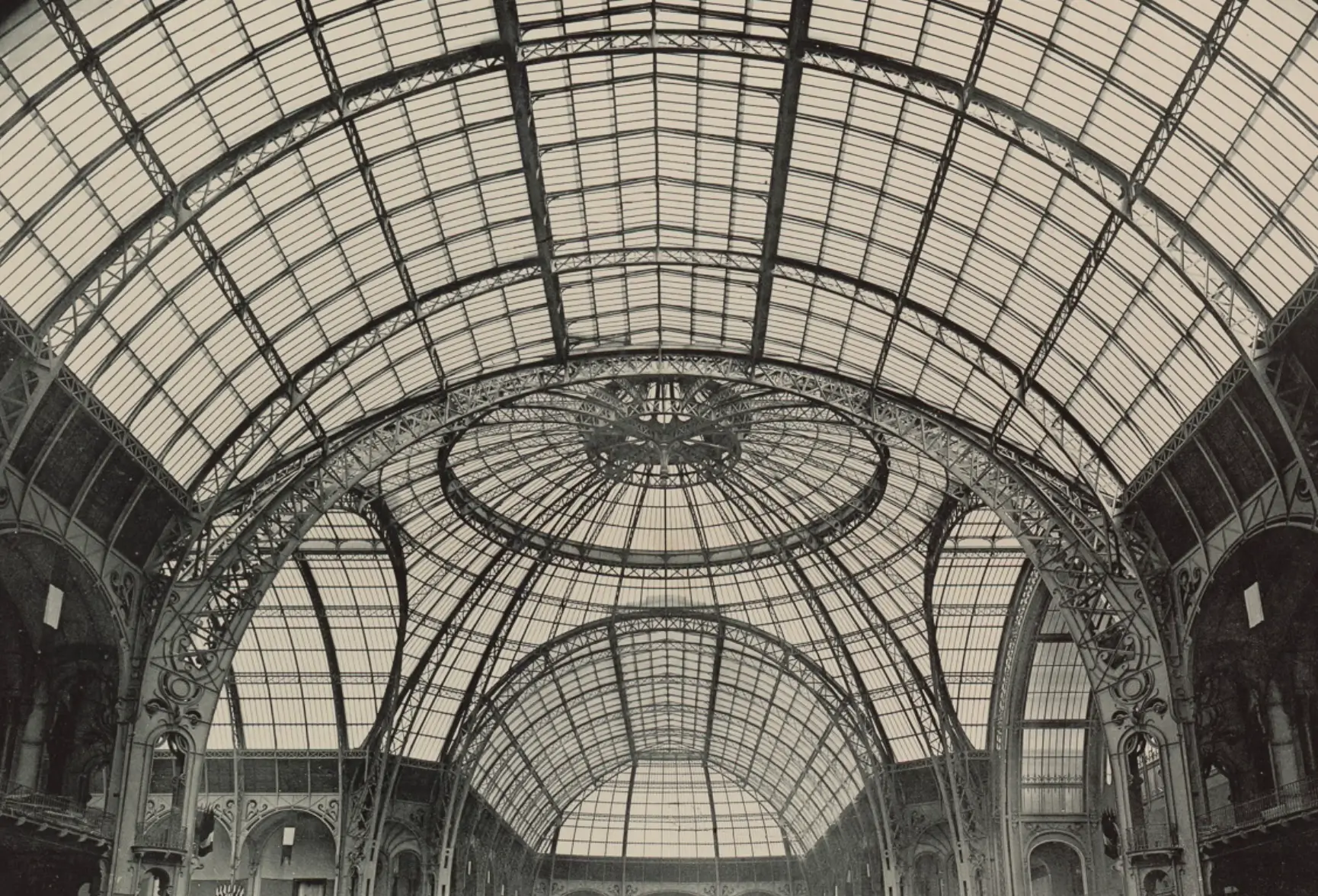
Signal. What happened: Art Basel Paris returns for its fifth edition, the first under director Karim Crippa, with 211 exhibitors from 41 countries and territories. Exact object: the Galeries (183 exhibitors), Emergence (16) and Premise (12) sectors at the Grand Palais, plus a free Public Program across nine Paris venues with Miu Miu as official partner. When and where: Grand Palais, Avenue Winston Churchill, Paris; an invitation-only Avant-Première on October 20, Preview Days on October 21 and 22, a public Vernissage on the afternoon of October 22, and public days from October 23 to 25, with day tickets at €47. Source: Art Basel’s Paris 2026 press dossier and its May 28 exhibitor announcement. Why it matters: the fair lands as France’s art market returns to growth after two years of decline and consolidates its position as the largest art market in the European Union.
Crippa is young for the job by blue-chip standards. Born in Zurich in 1991 and raised in Lausanne, he joined Art Basel in 2018 after stints at Thyssen-Bornemisza Art Contemporary in Vienna, Haus der Kunst in Munich and the Berlin gallery Duve. He does not run the show alone. Art Basel’s appointment announcement placed him alongside general manager Virginie Aubert and deputy director Maxime Hourdequin, who held the same deputy role at FIAC, with Crippa reporting to Vincenzo de Bellis, Art Basel’s chief artistic officer. His stated priority is continuity with a local accent. In the May exhibitor announcement he framed the job as strengthening “a platform shaped by the city, for the city,” and the 2026 lineup reads like a case for exactly that.
who
The main Galeries sector holds 183 exhibitors under the Grand Palais glass, and the top tier is familiar. Gagosian, Hauser & Wirth, David Zwirner, White Cube, Thaddaeus Ropac and Marian Goodman Gallery all return, alongside Paris mainstays including Templon, Chantal Crousel, Perrotin, Almine Rech, Mennour and Crèvecœur. Sixty-four of this year’s exhibitors operate spaces in France, a number Art Basel now places near the top of its own fact sheet.
What has changed is how the floor gets shared. A record 12 joint presentations pair 24 galleries, the highest count in the fair’s history. Jeffrey Deitch and Michael Rosenfeld Gallery reunite for a second time to set Beauford Delaney, who settled in Paris in 1953, beside new work by Alteronce Gumby. Tina Kim Gallery and Tokyo’s Take Ninagawa build a cross-generational booth around artists from Asia and its diasporas, from Pacita Abad and Kim Lim to Suki Seokyeong Kang. Berlin’s Lars Friedrich and Petrine, both recent graduates of the Emergence sector, make their first joint appearance in the main hall.
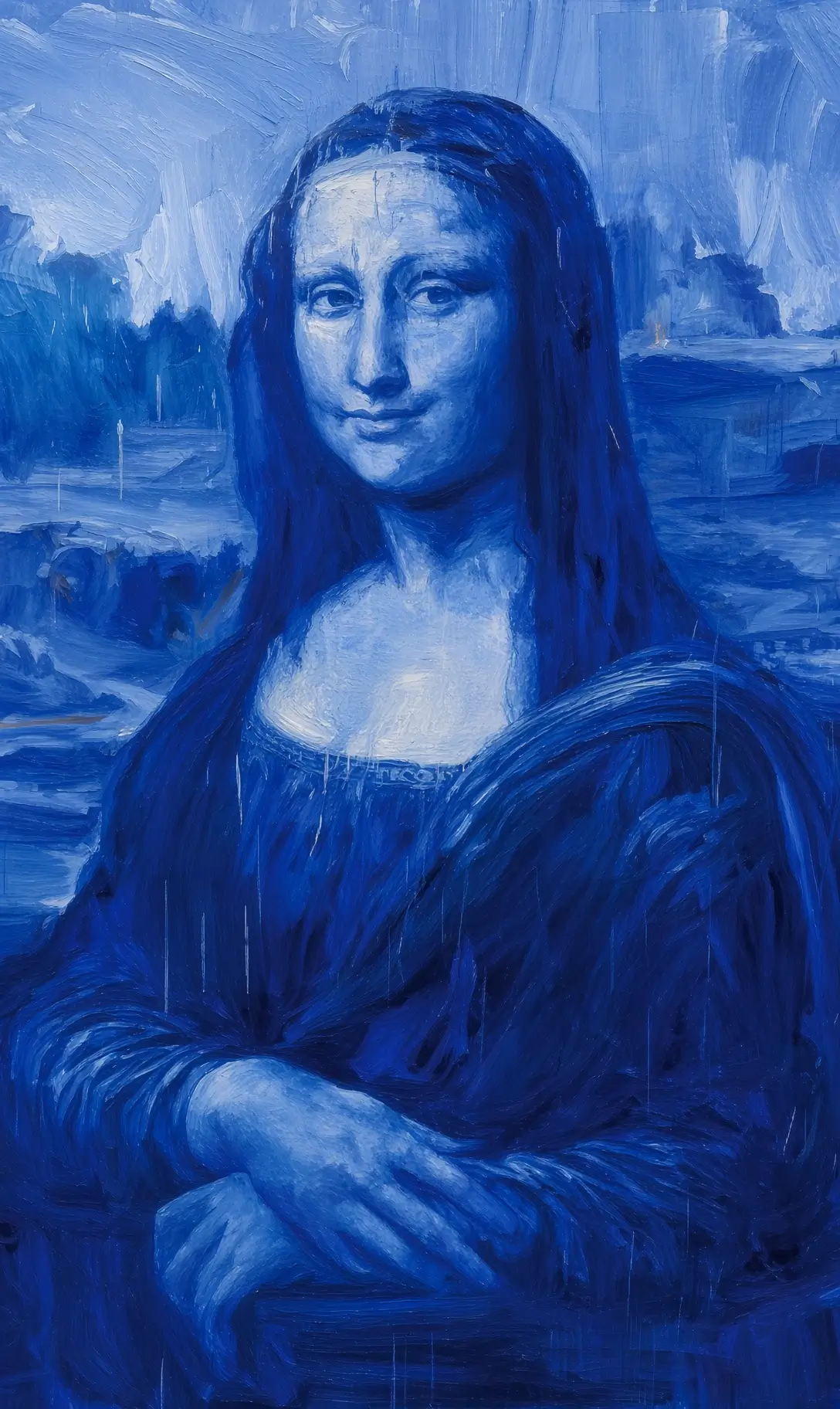
Among the 32 galleries making their Art Basel Paris debut, Zurich’s Larkin Erdmann arrives with the heaviest historical load: Man Ray’s photograph Violon d’Ingres, Marcel Duchamp’s moustached Mona Lisa, L.H.O.O.Q., and On Kawara’s date painting NOV 7, 1977, which has sat in a single collection since 1978. Elsewhere in the hall, Berlin’s Galerie Isabella Bortolozzi shows fourteen photographs by Nobel laureate Annie Ernaux and Marc Marie, the images behind their 2005 book L’Usage de la photo. London’s Pilar Corrias gives its booth to Christina Quarles, including a monumental triptych whose panels will be reconfigured each day of the fair.
The booth most likely to connect with what is happening outside the building belongs to Hauser & Wirth, which builds its presentation around Louise Bourgeois as the Bibliothèque nationale de France opens a Bourgeois exhibition on October 20. A Jenny Holzer Redaction Painting on the same stand points across the river to the artist’s survey at the Musée d’Orsay.
View this post on Instagram
show
The younger end of the fair sits upstairs. Emergence runs 16 solo booths along the balconies above the central nave, and twelve of them belong to first-time participants. Lo Brutto Stahl, with spaces in Paris and Basel, shows Clémentine Adou’s sculptures built from dismantled umbrella frames and cardboard forms borrowed from Parisian shop displays. Seoul’s P21 brings Haneyl Choi’s Sleepwalking, four mixed-media sculptures drawn from the artist’s own sleepwalking and teeth grinding, timed to a solo show of the same name at Art Sonje Center. Zurich’s Oskar Weiss gives Lorenza Longhi a floor-covering silkscreen work and a gift bag with a spy camera hidden inside.
The sector also works as a pipeline. Six galleries that previously showed in Emergence now hold places in Galeries, among them Petrine, with spaces in Paris and Düsseldorf, and The Pill, which runs spaces in Istanbul and Paris.
Premise, the fair’s sector for research-led historical projects, gets the most visible upgrade. It moves into the Salon Seine, a room of roughly 900 square meters, which makes space for three more presentations than last year and brings the total to twelve, nine of them from galleries new to Art Basel Paris. The roster leans toward reputations still being rebuilt. London’s Amanda Wilkinson Gallery shows Derek Jarman’s tar paintings from his Black Paintings series of 1989 to 1991. Danysz Gallery brings rarely exhibited works by Futura, born Lenny McGurr, into a fair setting for the first time. São Paulo’s Almeida & Dale traces Tarsila do Amaral through her Pau Brasil and Anthropophagic phases, and Paris dealer Durazzo surfaces works on paper by Hilla Rebay, the artist and curator who conceived the Guggenheim’s founding collection. Galerie Zlotowski returns with early Vera Molnár, and New York’s Olney Gleason pulls previously unseen works from Robert Indiana’s own collection to revisit his Coenties Slip years beside Ellsworth Kelly.
Visitors will also notice a new way in: a fresh entrance on Square Jean Perrin, where Lionel Sabatté’s bronze birds perch on tall columns as part of the Public Program.
trope
For two days of the public run, the fair hands part of its hang to someone from outside the art world. Oh La La!, the rehang initiative Art Basel Paris created as its signature, asks participating galleries to bring new works onto their booths on Friday and Saturday, October 23 and 24. French journalist and filmmaker Loïc Prigent led the 2025 edition. This year the job goes to Philippine Leroy-Beaulieu, the French actress best known to English-speaking audiences as Sylvie Grateau, the formidable marketing boss of Netflix’s Emily in Paris.
Her theme is Myths and Legends. Art Basel’s brief to exhibitors steers away from illustrating familiar stories and toward metamorphosis, dreams, animals, rituals, the cosmos and archetypal figures such as the hero, the guardian and the double. Artists confirmed for the rehang include Nina Childress, Ossip Zadkine, Portia Zvavahera and Philippe Mayaux.
View this post on Instagram
The talks program changes address too. Conversations, Art Basel’s flagship series, moves into the Grand Palais auditorium for the first time, and its lineup leans on Paris institutions in transition. Louvre president Christophe Leribault, in post since February 2026, discusses the museum’s renovation program with journalist Claire Chazal, who also sits down with Centre Pompidou president Laurent Le Bon to talk about the institution’s future beyond its 2030 reopening. Artist sessions feature Ibrahim Mahama and Zanele Muholi, and Broadway producer Jordan Roth talks with critic Linda Yablonsky about an installation built from photographs of his former apartment. All panels are free.
exhib
The most photographed work of the week may not be inside the Grand Palais at all. On the Parvis des Droits de l’Homme, the terrace between the two wings of the Palais de Chaillot at the Trocadéro, three monumental bronzes by Tracey Emin face the Eiffel Tower across the Seine. Presented by White Cube with the Cité de l’architecture et du patrimoine, the group is the first Public Program project ever staged on the site.
The three figures read as a sequence. I lay here for you (2018) is a prone, elongated body pressed to the ground. I Followed You to the End (2024), a kneeling figure that anchored Emin’s 2025 exhibition at Palazzo Strozzi in Florence, rises with its legs parted. I Will Not Be Alone (2025) sits upright on a rock, its face veiled. Taken in order, they move from prone to kneeling to seated, an arc Art Basel describes as surrender giving way to resilience.>
The installation is free and runs from October 14 to November 1, with students from the École du Louvre on hand to talk visitors through the works each afternoon from October 20 to 25. Inside the fair, White Cube’s booth carries a related Emin painting, Waiting For A moment of You (2025), a reclining female figure that answers the bronzes outside, and the gallery’s Avenue Matignon space opens an Emin solo show on October 20, capping a year that also brought her retrospective at Tate Modern. The pairing with Hauser & Wirth’s Bourgeois booth carries its own logic, since Emin counted Bourgeois as a friend and collaborator before the older artist’s death in 2010.
extend
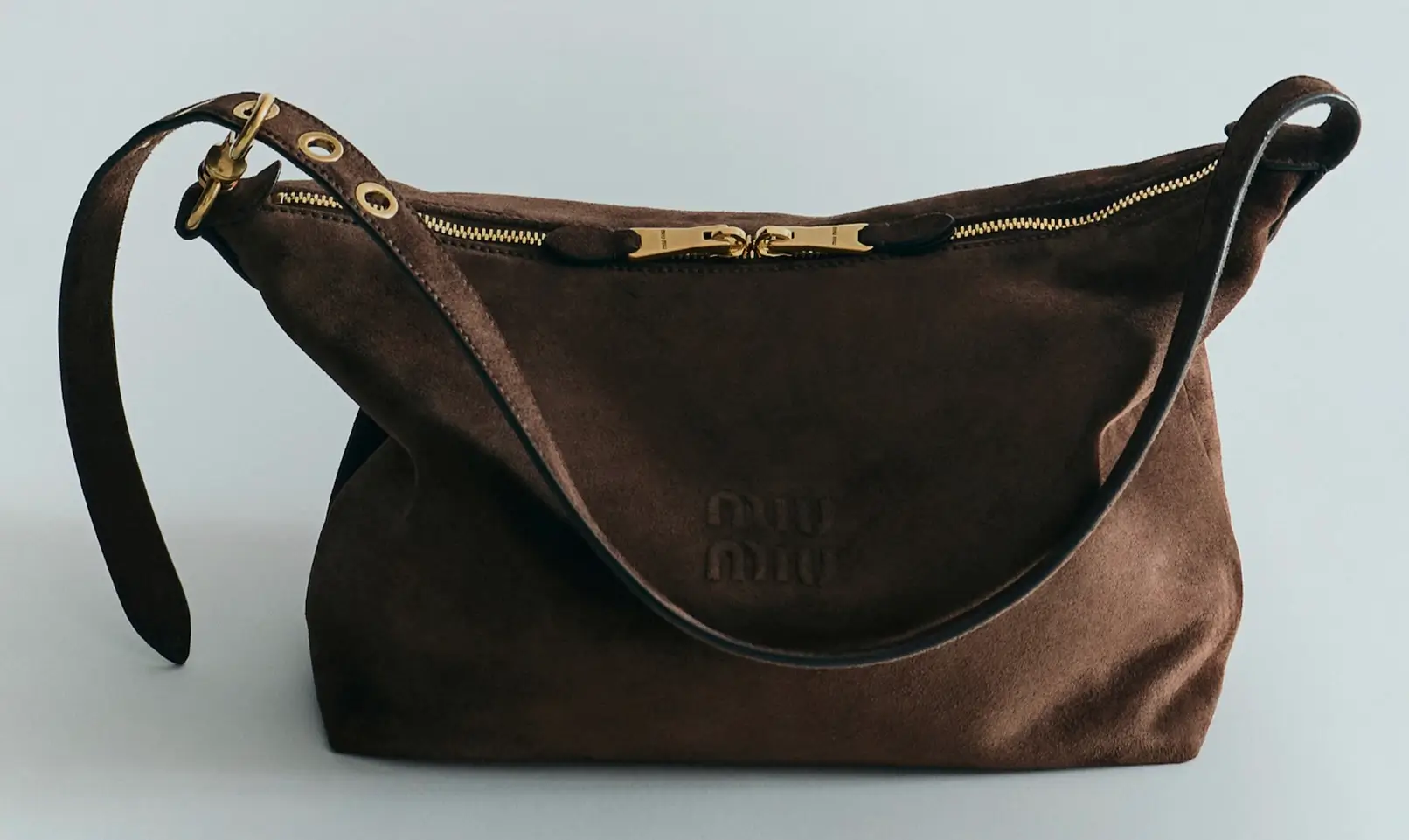
Beyond the Trocadéro, the Public Program spreads across nine venues, though this year Art Basel describes the expansion as concentrated around the Grand Palais itself. The largest commission again comes from Miu Miu, the program’s official partner, which invited filmmaker Alice Diop to stage her first exhibition, Geste de Consolation, at the Palais d’Iéna from October 21 to 25. Diop’s four-room route gathers Black women artists and writers she has described as women who “have healed me, who have nourished me,” opening with a Zanele Muholi photograph and closing on Simone Leigh’s bronze Sentinel (Mami Wata). The Diop commission is the house’s third for the fair, after Goshka Macuga’s Tales and Tellers in 2024 and Helen Marten’s 30 Blizzards in 2025.
Elsewhere, Kennedy Yanko installs new sculptures among the plaster casts of the Cité de l’architecture’s Galerie des moulages, on view through January 3, 2027. Kutluğ Ataman’s 40-screen video installation Küba fills the Chapelle des Petits-Augustins at the Beaux-Arts de Paris, and Cosima von Bonin’s soft sea creatures and dogs take over the Petit Palais. Almine Rech installs Robert Indiana’s Cor-Ten LOVE Wall at Place Clemenceau, and Avenue Winston Churchill turns into an outdoor gallery again, with works by Alicja Kwade, Carmen Herrera, Keita Miyazaki, Manfred Pernice, Niki de Saint Phalle, Simone Fattal and Yinka Shonibare, plus a Marcello Maloberti neon reading CIEL, hoisted about 20 meters above the street.
fin
The fair’s Paris story began with a displacement. In January 2022 the Grand Palais awarded its October slot to Art Basel’s parent company, MCH Group, ending FIAC’s long run in the building. The new event launched that autumn as Paris+ par Art Basel in the temporary Grand Palais Éphémère on the Champ de Mars, then took the Art Basel Paris name in 2024 when it moved into the renovated Grand Palais as the building’s first fair after three years of works.
The economics look friendlier now than they did at launch. The Art Basel and UBS Global Art Market Report 2026, authored by Clare McAndrew of Arts Economics, put global sales at $59.6 billion in 2025, up 4 percent. France did better. Sales there rose 9 percent to $4.5 billion after two years of decline, lifting the market back above its 2019 level. That gives France 8 percent of the global market, fourth behind the United States, the United Kingdom and China, and more than half of the European Union’s art trade by value. French dealers were among the more optimistic in Europe heading into 2026, with 46 percent expecting sales to improve.
Access is tiered. Preview days are invitation-only, the Vernissage on the afternoon of October 22 costs €120, and public days run from 11am to 7pm, with day tickets at €47, reduced entry at €30 and a Friday evening ticket at €40. For the first time, UBS also opens its UBS Salon to the public across the weekend. When the Grand Palais empties on the evening of October 25, the Emin bronzes at the Trocadéro will still have a week to run, staying on the Parvis until November 1.
Related Articles
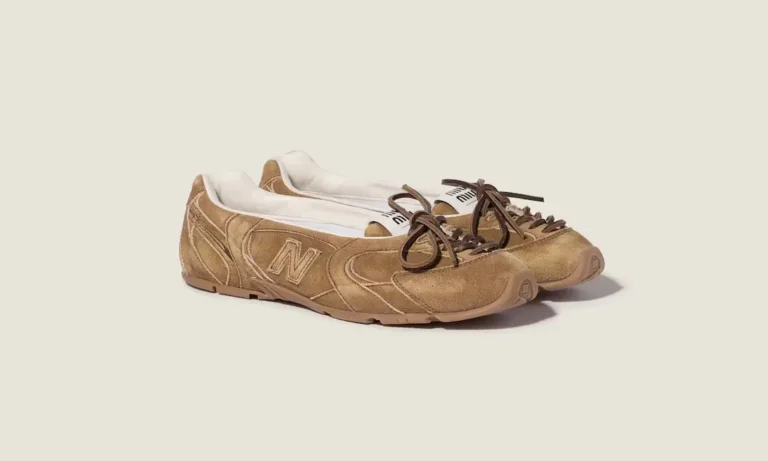
Miu Miu Cut The 530 SL Until It Read As A Ballet Last
White leather and cinnamon suede on the slim 530. Oblong opening. Delave and deco already […]