DRIFT AUDIO
Listen to this story
Choose a voice, then press play.
For three days in Harajuku, Ralph Lauren is putting the people who resell, repair and hoard old Polo at the center of its own anniversary.
Much of the merchandise at Ralph Lauren’s first festival will not be new. When PoloFest Tokyo opens at Jing in Harajuku on October 23, the middle of the room belongs to a vintage marketplace stocked by seventeen independent dealers, people who have built shops, followings and in a few cases entire reputations on Polo made years or decades ago. The brand is supplying the venue, an archive exhibition, a talk series and a coffee bar. The collectors are supplying most of what is for sale.
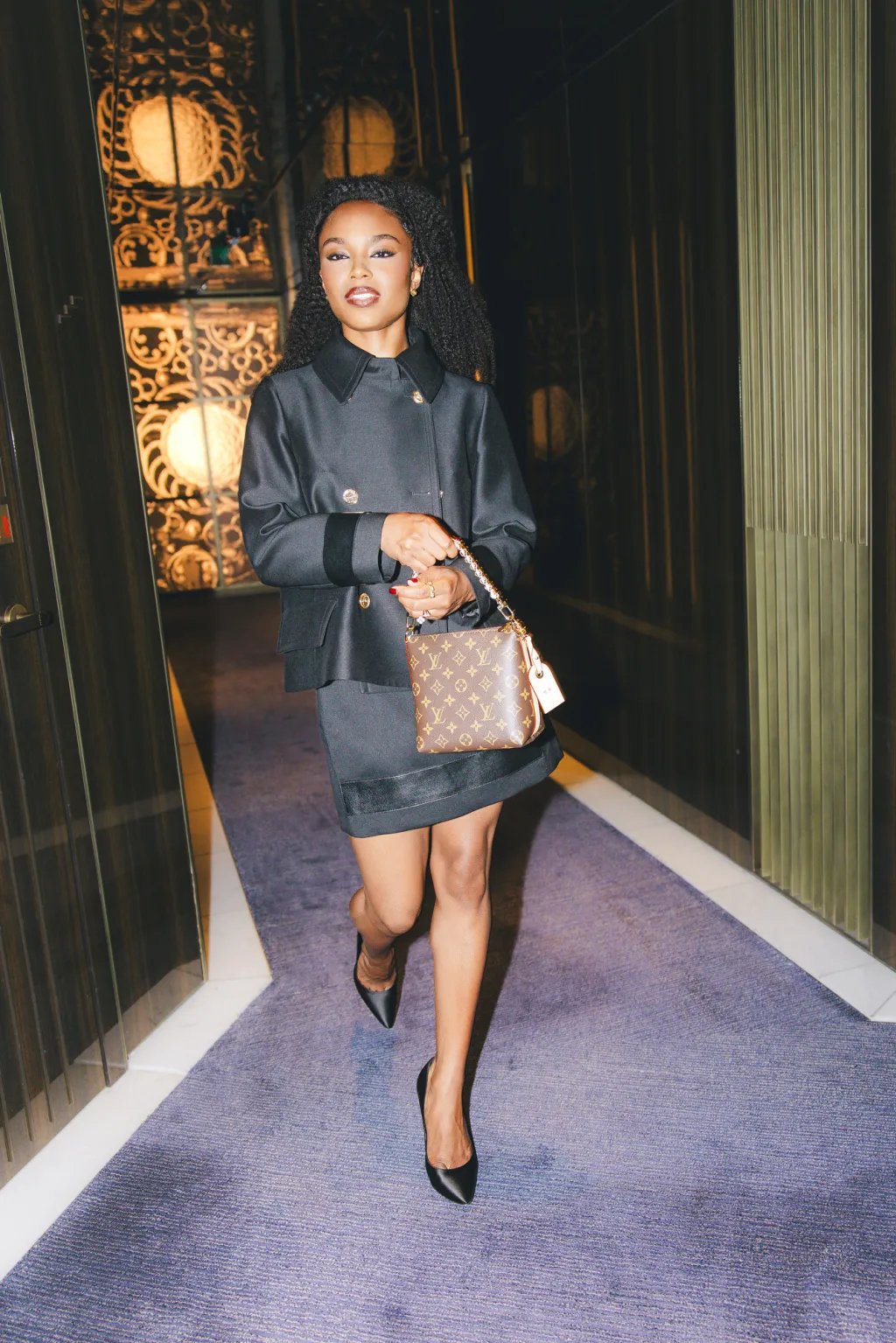
It is the opening move of Ralph Lauren’s 60th anniversary, which formally arrives in 2027, and the company is presenting it as the first in a run of PoloFest gatherings planned for other cities. Tokyo goes first for a reason the brand states plainly. Polo reached Japan in 1976, which makes this autumn the label’s 50th year in the market, and the company describes Japan as one of Polo’s most devoted and inventive communities.
Signal. What happened: Ralph Lauren announced PoloFest, a free three-day festival of Polo culture and the first global activation of its 60th anniversary. Exact object: an archival Polo exhibition, a speaker series, a vintage market with seventeen dealers from five countries, one-of-a-kind upcycled Polo pieces made by Japanese artisans, limited-edition collectibles and a Ralph’s Coffee outpost. When and where: October 23 to 25, 2026, at Jing (listed in Japanese materials as the Yodobashi J6 Building), Jingumae 6-35-6, Shibuya, Tokyo; admission is free, with tickets issued through Ralph Lauren’s LINE membership community and attendance capped. Source: Ralph Lauren Corporation’s September 30 press release and its official PoloFest Tokyo event page. Why it matters: a heritage house is giving independent resellers the center of its own anniversary, a sign that the secondary market for old Polo is now being treated as part of the brand rather than something happening around it.
why
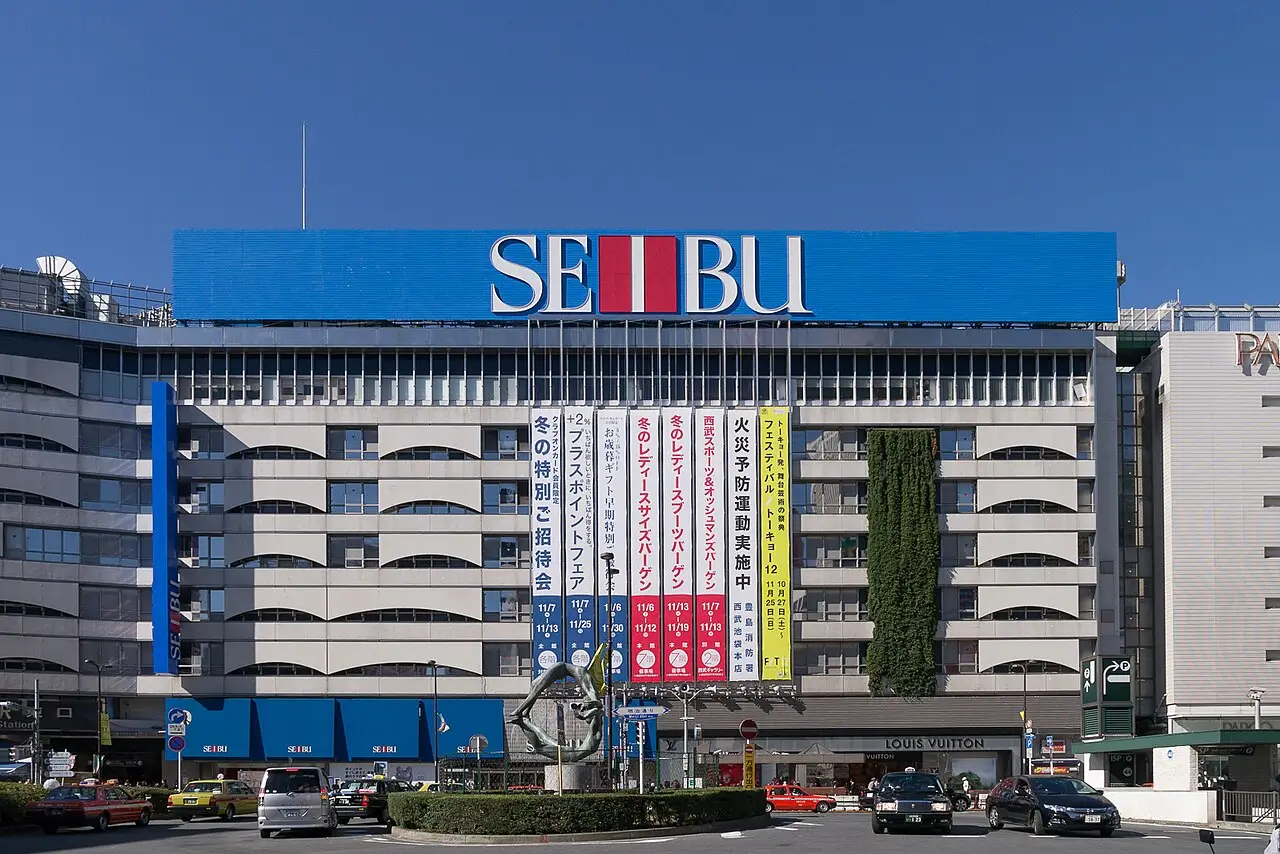
Polo’s Japanese story starts in a department store. In 1976 the label entered the country through a partnership with Seibu, which opened a Polo shop inside its Ikebukuro flagship, at the time one of the most adventurous retailers in Tokyo when it came to fashion and culture. Ralph Lauren’s own account of the launch includes a detail that now reads like a preview of everything that followed. A Polo fashion show at the Tokyo Prince Hotel marked the occasion, and one look paired English-inspired tailoring with hiking boots, an easy, sporting mix of the formal and the rugged that caught the attention of the editors and journalists in the room.
Half a century later, the relationship runs deeper than sales. Japanese enthusiasts have built their own reading of Polo, one that prizes collegiate references, English tailoring and classic Americana, and that places unusual value on clothes that show their age. Ralph Lauren’s event materials speak directly to that taste for garments that have been worn hard and repaired well, and the idea threads through the whole program, from the dealers’ racks to the artisans reworking old pieces into new ones.
The commercial side has its own long history. For roughly a quarter century the Japanese rights to Polo sat with Seibu under a master license, which Seibu in turn sublicensed to manufacturers and wholesalers across the country. A 2002 restructuring gave the American company a 50 percent stake in that license, with the apparel group Onward Kashiyama taking 45 percent and Seibu keeping 5 percent, part of a broader push by the company to manage its Japanese business more directly. PoloFest arrives at the end of that arc, with a brand that now speaks to Japanese customers itself, down to ticketing the festival through its own LINE account. Even the two press releases frame the moment differently: the English version presents PoloFest as the opening chapter of a 60th-anniversary celebration, while the Japanese release leads with the 50 years since Polo first landed in the country.
flow
The marketplace roster splits close to evenly between Japan and everywhere else. By Driftzine’s count, nine of the seventeen dealers are based in Japan, five in the United States and one each in Canada, the United Kingdom and Italy. Ralph Lauren says the market is organized around four core Polo sensibilities, with tailoring and haberdashery, outdoor workwear and graphic, sport-driven streetwear among the territories it names.
The Japanese contingent reads like a map of the country’s vintage scene. In Kōenji, Yoshihito Murayama runs Safari, which holds one of the largest vintage Polo archives in Japan, from Western-influenced hand knits to rare Polo Country outerwear. The shop takes its name from a 1989 travel journal Ricky Lauren wrote about her time in Africa, and Murayama owns an original copy. Kōenji is also home to Hideyuki Yumikura’s twin stores, Whistler and Chart, the first focused on trad clothing and the second on more casual goods, both known for densely stocked and carefully ordered floors.
Tez Saito, who once worked for Ralph Lauren, has spent about four decades assembling the collection behind Reflex, his Tokyo shop and a regular stop for overseas collectors. Ryunosuke Matsushita opened Big Apple Store in Yutenji only in 2024 and has already earned a following for an edit that runs from archival rarities to everyday staples, while Raiya Sato’s compact Tokyo shop, Nero, covers ground from rare knits to children’s clothing.
Outside central Tokyo, the list stretches across the Kantō region and down to Osaka. Kazutaka Yadomoto’s Vault Up, in the coastal city of Chigasaki, is especially strong on Polo Sport. Takahiro Arai’s Youth Vintage in Yokohama concentrates on made-in-USA pieces across Polo, Chaps and RLX. Daiki Takahashi’s Chunk Store in Ushiku carries a huge stock of men’s, women’s and children’s Ralph Lauren with an outdoor lean, and Tatsuro Sugihara’s Row in Osaka goes after bold 1980s and 1990s Polo, Polo Sport and Double RL, with a particular eye for graphics tied to skate culture.
The overseas dealers bring their own lore. Laird Mackintosh sells one of North America’s largest collections of vintage Polo tailoring through Thoroughbred New York, his store in Kingston, New York. A Calgary native, he worked in his hometown’s Polo store in the 1980s before a stage career that put him in the title role at the final Broadway performance of The Phantom of the Opera on April 16, 2023, when he stepped in for an ill Ben Crawford.
New York City sends three more names. Richard Colligan began selling at flea markets in the 1980s and opened Metropolis Vintage in Manhattan in 1990, where Polo gets a department of its own. Brian Procell and Jessica Gonsalves run Procell on the Bowery, mixing vintage streetwear, sportswear and designer pieces with some of the hardest Polo to find. Chandler Guttersen, who grew up on a cattle ranch in Colorado, founded Vintage Grace in 2021 and works out of a showroom in Nolita.
Julia Rabinowitsch, the Los Angeles collector and curator behind The Millennial Decorator on Substack and Instagram, rounds out the American group. In Canada, brothers Jesse and Drew Heifetz bring stock from F as in Frank, their shops in Vancouver and Toronto, which hold deep reserves of Polo Sport and Polo Country. London’s Albie Robert, whose Instagram account The Polo Archive documents coveted pieces going back to the 1960s, and Tartan Vintage of Florence, a husband-and-wife shop run by Cosimo Ciampolini and Valentina Fiaschi that began as a tribute to English tweed before widening into Westernwear and leather, complete the roster.
straddle
Around the market, Ralph Lauren is building out a full three-day program. An immersive exhibition of rare and iconic archival Polo traces the exchange between the brand and Japan over five decades. A speaker series will explore the worlds that feed the brand’s imagery and the individuals who shape its community, though the complete lineup has not been published. Ralph Lauren says additional speakers and special guests will be announced in the weeks before the doors open.
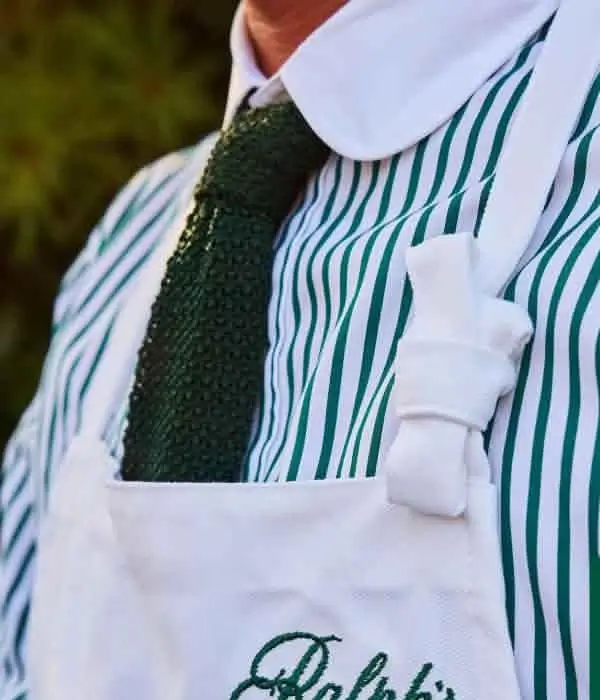
The most distinctive things on sale will come from local hands. Ralph Lauren is offering one-of-a-kind upcycled Polo pieces reworked by Japanese artisans versed in the country’s traditions of mending and reinvention. Neither the English nor the Japanese release names the artisans or the techniques they use. The broader tradition is easy to place, though. Japan’s long practice of patching and reinforcing cloth, from sashiko stitching to the layered textiles known as boro, has become a reference point for designers well beyond the country.
Limited-edition collectibles will sit alongside those pieces, and a Ralph’s Coffee outpost will keep visitors fed, carrying over the café concept the company already runs in cities around the world. The six strands of the program, exhibition, market, artisans, talks, collectibles and coffee, are all listed on the event page, which also notes that attendance will be carefully limited throughout the festival.
scope
PoloFest is the most public version of a strategy Ralph Lauren has been running for years. The company that began with a line of neckties in 1967 has sold vintage through Double RL since that label launched in 1993, and in October 2024 it introduced Ralph Lauren Vintage, a program of pre-owned pieces from its own current and retired labels, sourced and certified by in-house design and vintage specialists and released in monthly drops online and in select stores, priced from $150 to $3,500. Those drops have pulled from current and retired labels alike, from Ralph Lauren Western and Ralph Lauren Black Label to Polo Sport. A pre-owned edit on the company’s site came first, in 2021, though it mixed in other brands rather than sticking to Ralph Lauren’s own.
Japan has seen a rehearsal of the idea before. In 2022, when the Polo shirt turned 50, Ralph Lauren staged polo-shirt pop-ups in Tokyo, Osaka and Nagoya that put vintage examples from around the world on sale next to new stock, an unusual sight given that it was the brand, not a secondhand shop, doing the selling. PoloFest takes that a step further by inviting the secondhand shops themselves. Vintage Polo, particularly Polo Sport graphics and Polo Country outerwear, already trades in a busy secondary market of its own, and much of that demand comes from shoppers who found the label through resale rather than at retail.
David Lauren, the company’s vice chairman and chief branding and innovation officer, framed the festival as a gathering of generations who share a culture and a know rather than a single wardrobe. Speaking to WWD about the Tokyo launch, he said, “Ralph Lauren has never just been about a shirt or a piece of clothing.” The marketplace is where that claim gets tested, with independent dealers pricing the brand’s back catalog on the same floor where the brand tells its own story.
fin
Jing connects directly to Meiji-jingumae Station and sits roughly two minutes on foot from the east exit of JR Harajuku, a two-storey commercial building that has hosted retail, events and brand showrooms since it fully opened in January 2019. Ralph Lauren’s English release calls the venue Jing Harajuku while its Japanese release uses the building’s other name, the Yodobashi J6 Building. Both resolve to Jingumae 6-35-6, the address that Tokyo Art Beat’s venue listing gives for the Yodobashi J6 Building and the one printed on the PoloFest event page.
Admission is free, but the doors are not simply open. Tickets are being distributed through Ralph Lauren’s official LINE account in Japan, with application details issued there, and capacity will be controlled across all three days. The festival runs from Friday, October 23, through Sunday, October 25. After Tokyo, PoloFest is scheduled to travel, though Ralph Lauren has not yet named the next host city.
Related Articles
Victoria Beckham Brings Her Runway Codes to the Dinner Table
A shell-shaped butter dish in a green box, hammered cutlery and rippled glass: Victoria Beckham’s […]