DRIFT AUDIO
Listen to this story
Choose a voice, then press play.
recent
- A Crown Three Decades in the Making
- Inside the Gala: Old Friends, New Jokes, and a Trump Impersonator Onstage
- A Kennedy Center at War With Itself
- The Maher-Trump Cold War, Continued
- Where to Watch, and What the Win Really Means
stir
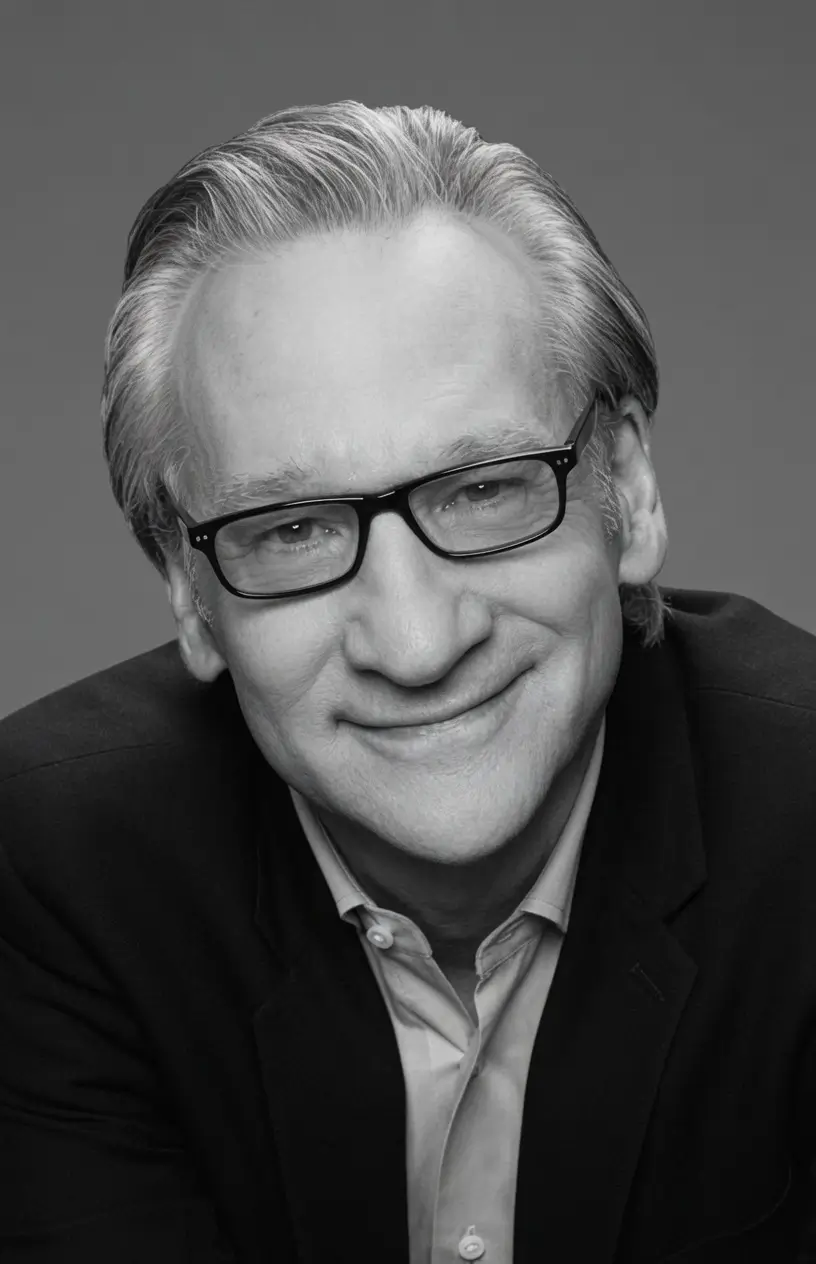
Bill Maher has spent more than thirty years getting paid to say the thing the room wasn’t ready to hear. On Sunday night, the room finally gave him a trophy for it. The comedian received the 27th Mark Twain Prize for American Humor at the Kennedy Center in Washington, D.C., joining a lineage of honorees that stretches back to Richard Pryor in 1998 and runs through Carol Burnett, Tina Fey, Jon Stewart, Dave Chappelle, Adam Sandler, Kevin Hart, and last year’s recipient, Conan O’Brien.
At 70, Maher becomes the second-oldest recipient in the prize’s history, behind only Burnett, who was honored at 80 in 2013, and on par with David Letterman, who picked up the same trophy at the same age in 2017. The physical object he’s taking home is a small piece of 19th-century sculpture: a bronze portrait bust of Samuel Clemens, cast in 1884 by Karl Gerhardt, the same likeness every Twain Prize winner since has carried off stage.
The prize itself, created by Bob Kaminsky, Peter Kaminsky, Mark Krantz, and John Schreiber, has run annually for nearly three decades as the closest thing American comedy has to a lifetime-achievement Oscar, and its guest list tends to double as a snapshot of whoever currently sits at the center of the cultural conversation. This year’s gala drew Stephen A. Smith and Arianna Huffington alongside the expected bench of stand-ups and late-night veterans, along with musician John Mellencamp, a lineup that underlines just how far Maher’s reach extends beyond comedy clubs and cable news alone.
The award itself is built around the idea that real American humor has teeth — that the best of it functions as social commentary first and entertainment second. It’s hard to think of a more literal embodiment of that premise currently working in television than Maher. He built his name on Politically Incorrect, the freewheeling panel show that ran on Comedy Central and then ABC from 1993 to 2002, before a remark he made about the September 11 hijackers cost him the ABC version of the show entirely. He didn’t soften after that. He spent the next twenty-plus years turning HBO’s Real Time into appointment viewing for an audience that wanted its politics served with an actual punchline, racking up 42 Emmy nominations along the way against a single win, in 2014, as an executive producer on the HBO docuseries Vice.
View this post on Instagram
In a statement released through the Kennedy Center ahead of the ceremony, Maher leaned into the absurdity of being honored at all for a career built on offending people: he joked that the prize is basically an Emmy, except this time he actually wins, and added that there’s something fitting about receiving an award named for a writer who’s been banned from as many school libraries as he has.
The path to that statement runs through a career that’s actually closer to a second act than a single straight line. After Politically Incorrect ended in 2002, Maher didn’t take a beat before launching Real Time on HBO that same year, and the format barely changed: a host’s monologue, a roundtable of mismatched guests, and a closing segment built to go viral before “viral” was a word anyone used for television clips. Over more than two decades on that show, he’s hosted sitting senators, sitting vice presidents, tech billionaires, and cable-news rivals at the same table, often in the same hour, betting that conflict plus comedy beats either one alone. Mediaite’s most recent media-influence rankings placed him among the most consequential figures still working in political media, crediting him with thriving as an independent voice in an industry increasingly built around algorithm-friendly creators rather than appointment-viewing hosts.
He’s also never been purely a talk-show animal. His 2008 documentary Religulous, directed by Borat’s Larry Charles, sent him traveling the world picking apart organized religion on camera, a project that drew real backlash and real box office in roughly equal measure. He’s published five bestselling books, including his most recent, What This Comedian Said Will Shock You, and in 2022 he added a more intimate format to his output with Club Random, a long-form interview podcast recorded at the bar of his own Los Angeles property, where the conversations run loose and largely unscripted in a way his television format never quite allows.
inside
The 27th Mark Twain Prize gala assembled exactly the kind of lineup you’d expect for a comedian who’s spent two decades hosting a Friday-night roundtable: Louis C.K., Whitney Cummings, Woody Harrelson, Arianna Huffington, Jay Leno, John Mellencamp, and Stephen A. Smith all turned up to roast and toast the guest of honor, with Grammy-winning producer Cheche Alara serving as music director for the evening.
Cummings opened the night with the sharpest material of the program, framing Maher’s decades-long on-air relationship with American politics as something closer to a toxic situationship and needling the Kennedy Center’s new political ownership with a joke about a future, sanitized “White Hamilton.” Harrelson, Maher’s longtime friend and business partner in a Los Angeles cannabis dispensary, took a gentler route, sticking to warm ribbing about their shared enterprise. Leno, who himself won the prize in 2014, worked blue on current events, joking on the red carpet that the institutional drama unfolding around the building was less a real fight than “high school with money,” and landing a stage line suggesting that whatever discomfort Maher’s selection caused the White House would look minor next to whoever gets picked the following year.
[IMAGE PLACEHOLDER: Wide shot of the Mark Twain Prize gala stage during the comedian tributes, June 28, 2026. Suggested alt text: “Comedians on stage during the 27th Mark Twain Prize gala honoring Bill Maher.” Sourcing note: licensed AP or Kennedy Center press photo required; no celebrity-likeness stock substitutes.]
The evening’s most pointed bit, though, wasn’t delivered by anyone actually on the bill. Moments into Maher’s acceptance, comedian and Trump impersonator Matt Friend strode onstage in character, loudly objecting that the honor was being wasted on a “low-ratings, lightweight” choice — a needling callback to insults the real president has lobbed at Maher in the past. Maher played along rather than swinging hard at the bit, telling the crowd that getting mocked from both directions simply comes with the job: if you don’t want to be the target of a joke, his logic went, stop being funny enough to write one about. It was a notably restrained needle from a comedian not famous for restraint, and by most accounts in the room, the rest of his speech mostly sidestepped a direct shot at the administration, choosing instead to talk about the craft of reading the room for forty years on live television.
huh
None of this happened in a politically neutral building. Since the start of his second term, President Trump has remade the Kennedy Center’s board with allies, installed himself as chairman, and pushed his name onto the venue’s facade — a move a federal judge ordered reversed in late May after a lawsuit brought by Kennedy Center board member Rep. Joyce Beatty. The ruling came barely a month before Maher’s ceremony, meaning the gala took place in a building whose ownership, branding, and even formal name were still actively being litigated. Trump’s overhaul of the center’s leadership began almost immediately after he returned to office in January 2025, when he moved to fire much of the existing leadership team and replace it with a board stacked in his favor — a shake-up that reshaped not just the building’s name but its programming priorities and its relationship with the artists who depend on the venue.
The institution Maher was being honored in is also, by multiple accounts, in genuine financial trouble: falling ticket sales, performer withdrawals, and a thinned-out staff have made it difficult for the center to run a full season under its new leadership. On the red carpet, Maher acknowledged the moment with characteristic bluntness, noting that the gala was likely the last major show the venue would host for roughly two years given the scale of the disruption around it.
That backdrop gave the entire night a strange double meaning. A prize built to honor someone willing to tell uncomfortable truths about American institutions was being handed out inside an American institution currently consumed by exactly the kind of power struggle that material is made of — and the irony wasn’t lost on anyone holding a microphone that night.
extent
Maher’s relationship with Trump has been a recurring subplot since well before either man’s current job. Trump filed a $5 million breach-of-contract suit against Maher in 2013 after a joke about Trump’s parentage on Jay Leno’s Tonight Show, a case Trump ultimately dropped without ever proving his claim.
That history resurfaced almost as soon as this year’s prize was announced. In March, after reports surfaced that Maher had been selected, White House press secretary Karoline Leavitt publicly dismissed the story as “fake news,” only for the Kennedy Center to confirm days later that the selection stood. Former Kennedy Center board member Cappy McGarr, who helped create the prize, told reporters at the time that Maher had been in the conversation for the honor for years, calling him an equal-opportunity satirist whose targets shift with whoever happens to be in office.
The two men’s last notable interaction had already soured by the time the prize was confirmed. Maher dined with Trump at the White House in 2025 and initially spoke warmly about the meeting; Trump later called the dinner “a total waste of time” and accused Maher of suffering from “Trump Derangement Syndrome.” Asked about the dynamic on the red carpet before Sunday’s ceremony, Maher said he’d rather keep talking to the president than have the relationship go cold entirely, arguing that open channels, even contentious ones, beat silence.
fin
Anyone who skipped the trip to D.C. won’t have to wait long. Netflix, which has held the exclusive broadcast rights to the Mark Twain Prize ceremony since 2024, is set to premiere the full gala on July 21 — meaning the jokes, the Friend cameo, and Maher’s speech will all eventually be available to stream in full rather than pieced together from red-carpet wires and recap coverage.
Strip away the surrounding political theater and the win itself tells a fairly simple story: an institution built to honor satire that holds power accountable handed its top prize to the longest-running political satirist currently on American television, at the exact moment that institution’s own politics became impossible to ignore. Whether or not Maher addressed the administration head-on from the podium, the optics did plenty of the talking on their own. For a comedian who built an entire career on the bet that nothing is too sacred to joke about, getting handed comedy’s most prestigious lifetime honor inside a building mid-identity-crisis might be the funniest premise his writers’ room never had to invent.
The Mark Twain Prize, the surrounding Kennedy Center drama, and the eventual Netflix special collectively form one of 2026’s stranger entertainment-and-politics crossovers — proof that even an awards ceremony built around a 19th-century novelist can’t escape the news cycle of 2026. Twain himself spent the back half of his career skewering American institutions from the inside while still being embraced, somewhat uneasily, by the establishment he mocked. More than a century later, the prize bearing his name just did the same thing to its own host venue, in real time, with a live audience and a Netflix crew capturing every second of it for release three weeks later.
For related context, see Conan O’Brien to Receive the Mark Twain Prize for American Humor.
From the DRIFT archive: Eddie Murphy to Receive the AFI Life Achievement Award in 2026 · Levi’s® Launches De La Soul T-Shirt Collection Inspired by Vintage Samples: A Cultural Revival Rooted in Hip-Hop History
Related Articles
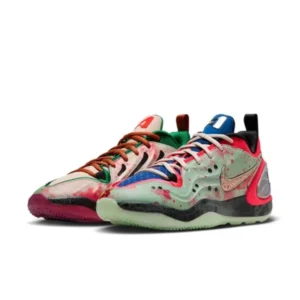
Nike A’Two “Potion No. 22” Gives A’ja Wilson a Mismatched Horror Double Bill
Two shoes, two monsters: A’ja Wilson’s Halloween A’Two splits blood splatter and honeycomb across a […]