DRIFT AUDIO
Listen to this story
Choose a voice, then press play.
Two of the most singular creative forces in their respective worlds collide this summer — and the result lands on July 4th.
In This Story
- The Partnership Nobody Saw Coming (But Everyone Needed)
- Toy Machine: Thirty Years of Controlled Chaos
- WIND AND SEA: Tokyo’s Most Restless Convincer
- Wind Dance: Reading the Collection
- Why This Collab Lands When It Does
- The Broader Moment: Skate and Streetwear’s Renewed Conversation
- How to Cop: Release Details
There’s a particular type of collide that only makes sense in retrospect — the kind where two brands feel so obviously aligned in energy and attitude that you wonder why it took this long. Toy Machine and WIND AND SEA are that kind of partnership. One is a California skate institution built on artistic provocation, surrealist graphics, and a long-running contempt for the polished machinery of mainstream skateboarding. The other is a Tokyo streetwear label that has spent its eight years in existence proving that the most interesting cultural conversation in fashion happens when you refuse to pick a lane.
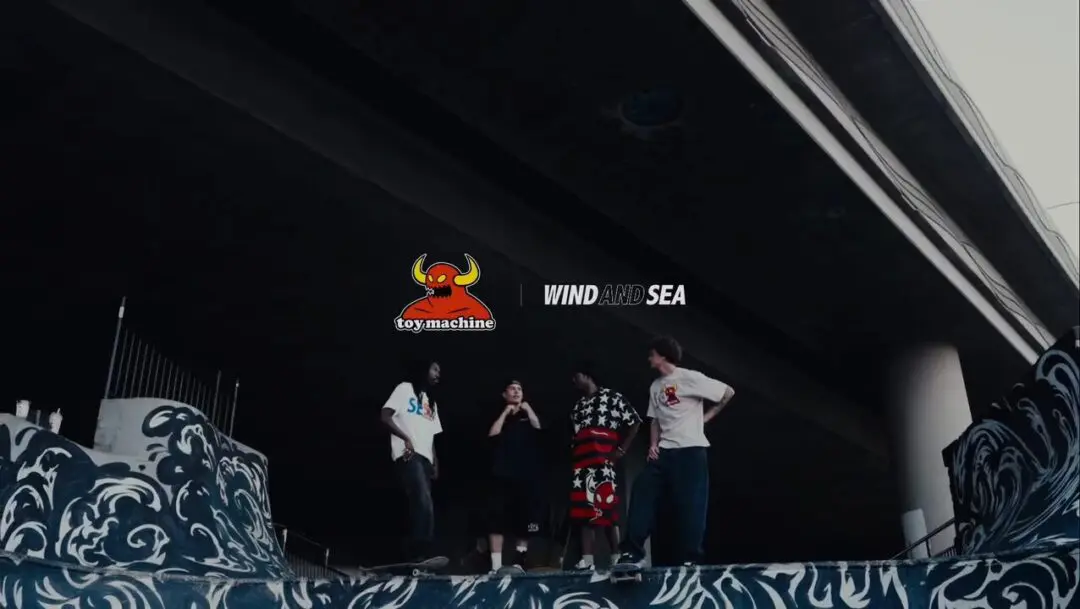
The “Wind Dance” collection, releasing July 4, 2026, is their 2026 Spring/Summer collaboration — and it might be the most natural pairing WIND AND SEA has announced all season. In a year that has seen the Japanese label collaborate with everyone from Mizuno to PlayStation to Toy Story (the Pixar one), a partnership with the actual Toy Machine — the bloodsucking skateboard company founded in 1993 by Ed Templeton — reads less like a stretch and more like an inevitability.
Japan has always held a particular reverence for American skateboarding’s more artistic, countercultural wing. The brands that Japan’s skate and street communities have historically gravitated toward aren’t the ones with the cleanest corporate partnerships and the biggest shoe deals — they’re the ones with the view vocabulary that makes you look twice. Toy Machine has always been that brand. And WIND AND SEA, built by stylist-turned-creative-director Takashi Kumagai on a foundation of 1990s American pop culture nostalgia and the restless energy of Tokyo’s street scene, was always going to end up here.
View this post on Instagram
stir
Ed Templeton founded Toy Machine in 1993 in Orange County, California, at a moment when skateboarding was trying to figure out what it wanted to be. The name itself came from a moment of indecision — Templeton couldn’t choose between “Toy Skateboards” and “Machine Skateboards,” and fellow professional skateboarder Ethan Fowler suggested combining them. It was a small creative accident that turned out to be the most fitting possible name for a brand built on exactly that kind of instinctive, unplanned decision-making.
From the start, what made Toy Machine different wasn’t just the skating — though the skating was exceptional, running through legends like Brian Anderson, Elissa Steamer, and later Leo Romero, Daniel Lutheran, and Blake Carpenter. It was the visual language. Templeton, himself a serious painter and photographer with gallery exhibitions to his name, designed the brand’s graphics with the same rigorous artistic attention he brought to his fine art practice. The result was a cast of recurring characters — the one-eyed Monster, the Transistor Sect, the Turtle Boy — that became some of the most recognizable iconography in skateboarding history, recognized far beyond the park or the street.
The Toy Machine Bloodsucking Skateboard Company, as it formally styles itself, has also built one of skateboarding’s most respected video catalogues. From Live! in 1994 through Welcome to Hell in 1996 — which featured a young Elissa Steamer and helped establish the brand as a cultural force — through Good and Evil, which won Transworld Skateboarding’s Video of the Year in 2004, the brand has consistently used film as an extension of its art practice rather than simply a marketing tool. The videos are conceptually driven, often dark, always sharp.
What has kept Toy Machine relevant across more than three decades when so many of its contemporaries have faded or been swallowed by corporate consolidation is a combination of that art practice and Templeton’s genuine, ongoing investment in the culture. The brand is housed under Tum Yeto distribution, a San Diego-based independent skate company structure that has kept it insulated from the pressures that dilute so many brands as they age. It doesn’t pivot to hype cycles. It doesn’t chase trends. It makes boards and clothes and films that reflect its own internal world — and that world has proved durable enough to keep pulling people in.
For Japan, this longevity reads as a marker of authenticity, which is the most valuable currency in the market WIND AND SEA operates in.
flow
WIND AND SEA was founded in 2018 by Takashi Kumagai, one of Tokyo’s most respected stylists, and in the eight years since it has moved at a pace that makes most streetwear labels look sluggish. The brand’s aesthetic is rooted in a specific vision of 1990s and early 2000s American popular culture — the city-pop-inflected beach energy, the heavy graphic traditions of American street sports, the casual confidence of West Coast style — refracted through Kumagai’s distinctly Japanese editorial eye.
What distinguishes WIND AND SEA from the many Japanese labels working in a similar reference field is the quality of its partnership choices and the way those partnerships tend to reveal something genuine about the brand’s actual cultural appetite rather than simply chasing a licensable IP. The PaRappa the Rapper collaboration, which dropped in February 2026, tapped deep into Heisei-era nostalgia with original artwork by the game’s illustrator Rodney Greenblat. The Dickies collab that opened the year brought utilitarian American workwear into dialogue with WIND AND SEA’s streetwear precision. The Mizuno partnership for Spring/Summer 2026 took a heritage sportswear logo and found new energy in it.
Each collaboration tells you something about where the brand’s head is — and when you map those references, an American skate brand from the early 1990s that runs on art practice and irreverence fits precisely into the matrix. WIND AND SEA has always been interested in the counterculture underneath American popular culture. Toy Machine is, in many ways, the purest expression of that counterculture in skate form.
The brand operates out of flagship stores in Tokyo and Osaka, with additional retail presence at Hankyu Umeda, and runs an active global online store. Its collaboration model typically involves lottery releases and limited quantities across those channels, creating the kind of controlled scarcity that keeps community energy focused without tipping into the cynical manipulation of the broader hype market.
read
The collection carries the title “Wind Dance” — a name that manages to sit across both brand worlds simultaneously. There’s the literal “wind” of WIND AND SEA’s beach and coastal identity, and the kinetic energy of skateboarding in motion, the body moving through air and against pavement. Dance, in the context of skateboarding, isn’t a metaphor — it’s the actual thing, the language of movement that every skater develops into something individual and irreducible.
The pairing of Toy Machine’s distinctive visual universe with WIND AND SEA’s sense of proportion and Japanese streetwear precision promises something neither brand would arrive at alone. Toy Machine’s graphics tend toward the deliberately surreal and unsettling — pop colors applied to creatures and symbols that carry a hint of menace beneath the playfulness. WIND AND SEA’s aesthetic tends toward something cleaner, more considered in its placement and balance, even when the reference material is chaotic. The tension between those two sensibilities is where the most interesting collaboration work happens.
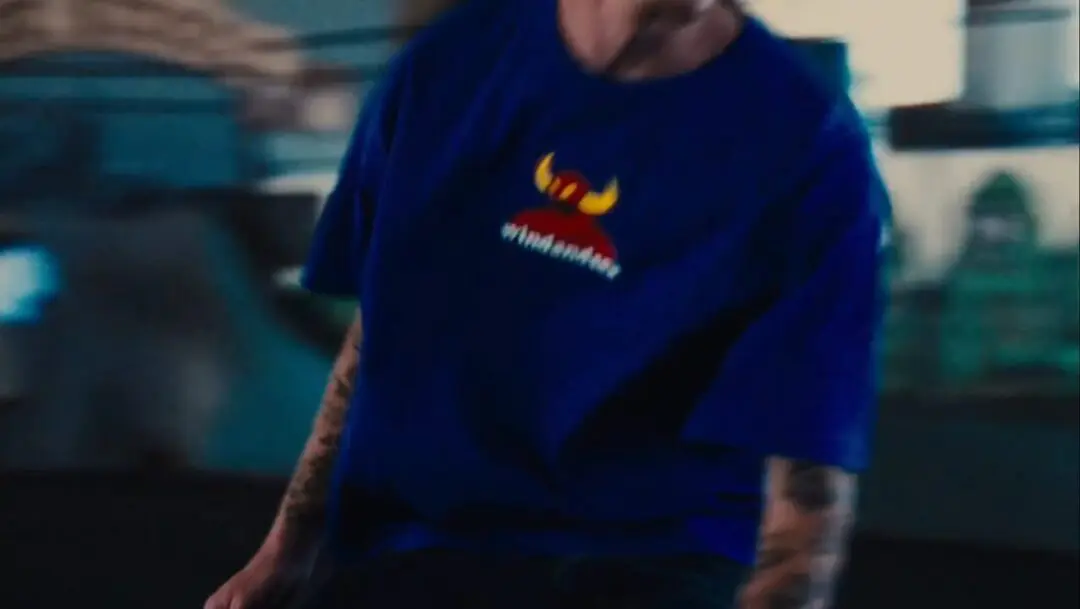
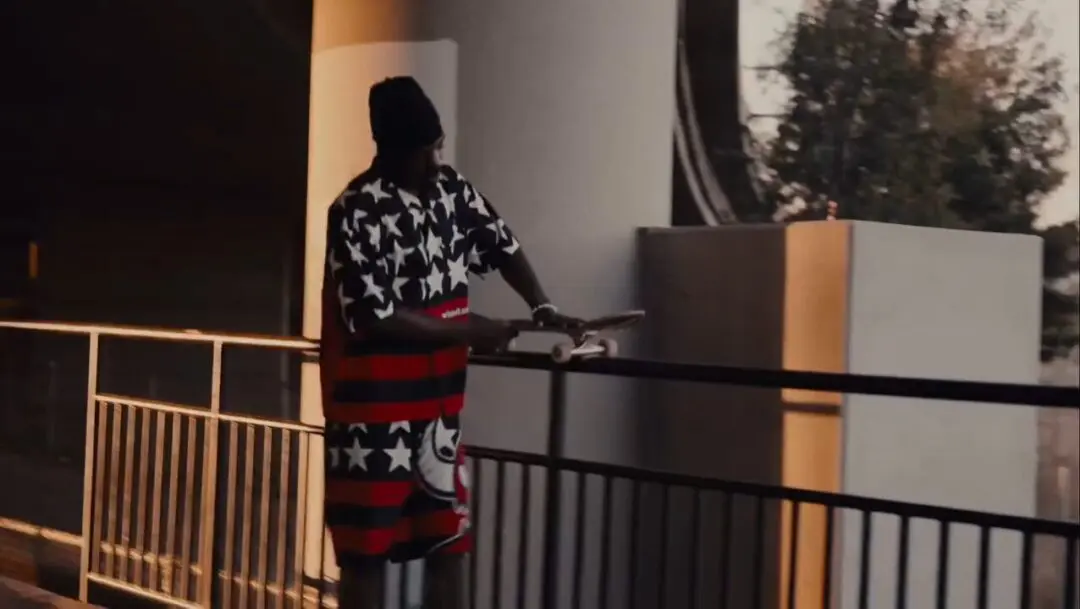
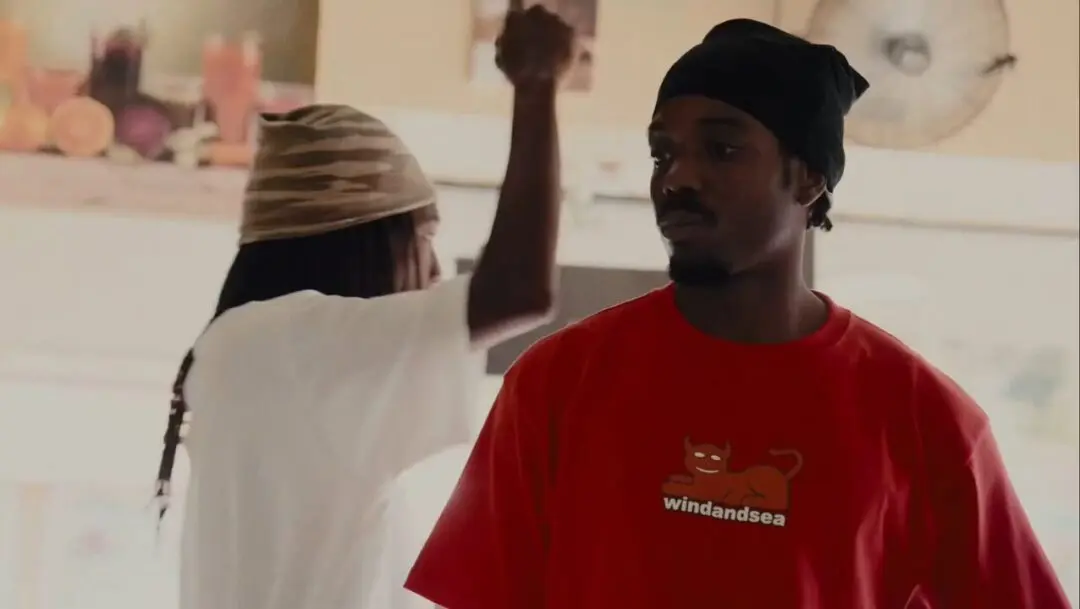
Expect the collection to put Toy Machine’s iconography — most likely iterations of the Monster, the Sect, or Templeton’s character work — into WIND AND SEA’s preferred silhouettes: heavyweight graphic tees, the kind of sweatshirt construction that holds its shape through repeated wear, outerwear pieces that function as seasonal staples rather than one-season novelties. If the brand’s established collide pattern holds, there will also be accessories and lifestyle goods that extend the visual vocabulary beyond apparel into the objects of day life.
The skateboard itself is almost certainly part of the lineup — WIND AND SEA has used the deck as a canvas across multiple collaborations this year, including the Toy Story Buzz Lightyear board that formed one of that collection’s signature pieces. A Toy Machine x WIND AND SEA deck, with Templeton’s graphic tradition applied through the collaborative visual lens the two brands have developed together, is the kind of object that belongs on a wall and a truck simultaneously.
why
The timing of the Wind Dance release isn’t incidental. July in Japan is the height of summer, the season when the coastal, beach-adjacent visual codes that define WIND AND SEA’s identity feel most alive. Summer in Japanese street culture is also when the market is most receptive to the kind of bold, graphic-heavy releases that can’t survive winter’s layering logic — the image needs to land on a T-shirt, clean and direct, or not at all.
For Toy Machine, summer is also the natural season. The brand’s California origins are most legible in the bright heat of summer, and its aesthetic — the vivid colors, the outdoor energy, the implicit relationship between a board and concrete and sun — reads at its best when the climate matches. A July 4th release date in particular carries an American resonance that adds another layer of meaning to a collaboration that is, at its core, about an American skate brand and a Japanese streetwear label finding a shared creative language.
There’s also a broader cultural moment at play. Skate culture’s influence on fashion has been a recurring cycle rather than a one-time crossing of the streams, and the current moment is another peak in that cycle. The difference now, compared to earlier waves of skate-into-fashion crossover, is that the most interesting work is happening at the level of genuine collaboration rather than simple licensing. Brands that actually understand each other’s histories and reference points, that bring something real to the partnership rather than just borrowing visual equity, are producing the work that the market responds to with real enthusiasm rather than algorithmic noise.
Toy Machine and WIND AND SEA both sit firmly in that category. Neither is trading on borrowed credibility. Both are bringing decades of accumulated creative authority to the table.
broad
It’s worth stepping back to appreciate what the global proliferation of WIND AND SEA’s collaboration reach in 2026 says about the Japanese label’s current position. In a single season, the brand has moved across Pixar animation, Heisei gaming nostalgia, American workwear, Japanese sportswear heritage, gaming platform culture, and now California skate art. That’s not scattershot — that’s a brand that knows exactly what it is and is using its collaborative reach to map its own cultural geography.
For Toy Machine, the WIND AND SEA partnership is an extension of what has been a careful, selective approach to the Japanese market. Japan has long been one of skateboarding’s most devoted secondary markets — a place where the cultural reverence for skate history runs deep enough that brands and riders who have faded from prominence in the US still carry significant weight in Tokyo and Osaka. Toy Machine’s status in Japan predates the current wave of skate-streetwear crossover, rooted in the kind of genuine fan culture that built up around the brand’s videos and graphics over decades.
This collision formalizes something that the market has already been expressing informally for years. And in doing so, it opens a conversation between two creative traditions — California skate art’s surrealism and provocation, and Tokyo streetwear’s precision and cultural synthesis — that is genuinely generative rather than merely commercially convenient.
From the DRIFT archive: Y-3 Sets the Tone for Its Spring/Summer 2026 Collection · Saint Laurent Unveils New Visuals For Its Spring 2026 Collection
Related Articles
WACKO MARIA Brings Its Leopard Lining to the Big Leagues
Black nylon outside, leopard fur inside: WACKO MARIA’s first Major League Baseball collection reached Japan […]