DRIFT AUDIO
Listen to this story
Choose a voice, then press play.
recall
- The Pitch: Neither Dumb Nor Smart
- Design: Retro-Futurism, Built to Be Touched
- Under the Hood: What’s Actually Inside
- The Sound of 1982, Rebuilt for 2026
- Pricing, Editions, and How to Get One
- Why This Matters Beyond the Phone Aisle
There’s a particular kind of fatigue that doesn’t have a name yet, but anyone holding a glass slab right now knows exactly what it feels like. It’s the low hum of always being reachable, always being watched by an algorithm that knows your sleep schedule better than your doctor does. Into that fatigue steps Commodore — yes, that Commodore, the company whose beige boxes taught a gen of bedroom coders how to think in BASIC — with a phone that flips closed with a snap and, by design, doesn’t particularly want you looking at it.
The Callback 8020 isn’t trying to be a dumbphone. It’s not trying to be a smartphone either. It’s something more deliberate: a device engineered around the idea that the best tech might be the kind that knows when to get out of your way.
stir
Commodore’s own lang or the Callback is “the not dumb dumbphone,” which sounds like a marketing department talking in circles until you actually parse what the device does. Under the flip lid sits Sailfish OS, a Linux-based, privacy-first platform built by Jolla — a Finnish outfit founded by Nokia veterans who know a thing or two about phones that survive a drop onto tile. Sailfish lets the Callback run the vast majority of Android apps through a compatibility layer, so WhatsApp, Signal, Telegram, Spotify, Google Maps, and Uber all function normally. What doesn’t function, by design and at the system level, is anything resembling a feed.
The https://t.co/i6Xw4WGDA7 factory in China got an inspection visitor today, as CEO/Head Chef Peri Fractic installed the first power switch to power up Commodore! #WeAreCommodore #C64 #Commodore64 #RetroGaming #RetroComputing pic.twitter.com/t4JlmB08R2
— Official Commodore® (@commodoreofcl) September 4, 2025
Instagram, TikTok, X, Snapchat, Threads, YouTube, Reddit, Discord, and Roblox are all blocked outright — not hidden behind a setting you can toggle in a weak moment, but stripped from the operating system and, per Commodore, blocked at the DNS level so a sideloaded workaround still can’t reach the servers it needs to function. There’s no browser to speak of, either, beyond narrowly scoped login windows for apps that require web-based authentication. You can scan a QR code. You cannot fall down a Wikipedia hole at 1am.
It’s a strange kind of confidence for a consumer electronics company to build a product that actively refuses to do things its competitors consider essential. But that refusal is the entire value proposition, and it’s one that’s found real commercial momentum lately, from the Light Phone’s min runs to Fairphone’s recent pivot toward repairable dumbphones. Commodore is wedging itself into that lane from a different angle, betting that nostalgia and function can coexist without either one apologizing for the other.
It also sits in a strange middle distance relative to the phones people already associate with flip-phone nostalgia. It isn’t chasing the folding-glass sophistication of Motorola’s revived Razr line, and it isn’t aiming for the stripped-back simplicity of HMD’s relaunched Nokia bricks either. The Callback occupies the gap between those two poles deliberately, positioning itself as a phone for people who want real apps and a real camera but have made peace with not wanting a browser, a feed, or an inbox along with them.
flow
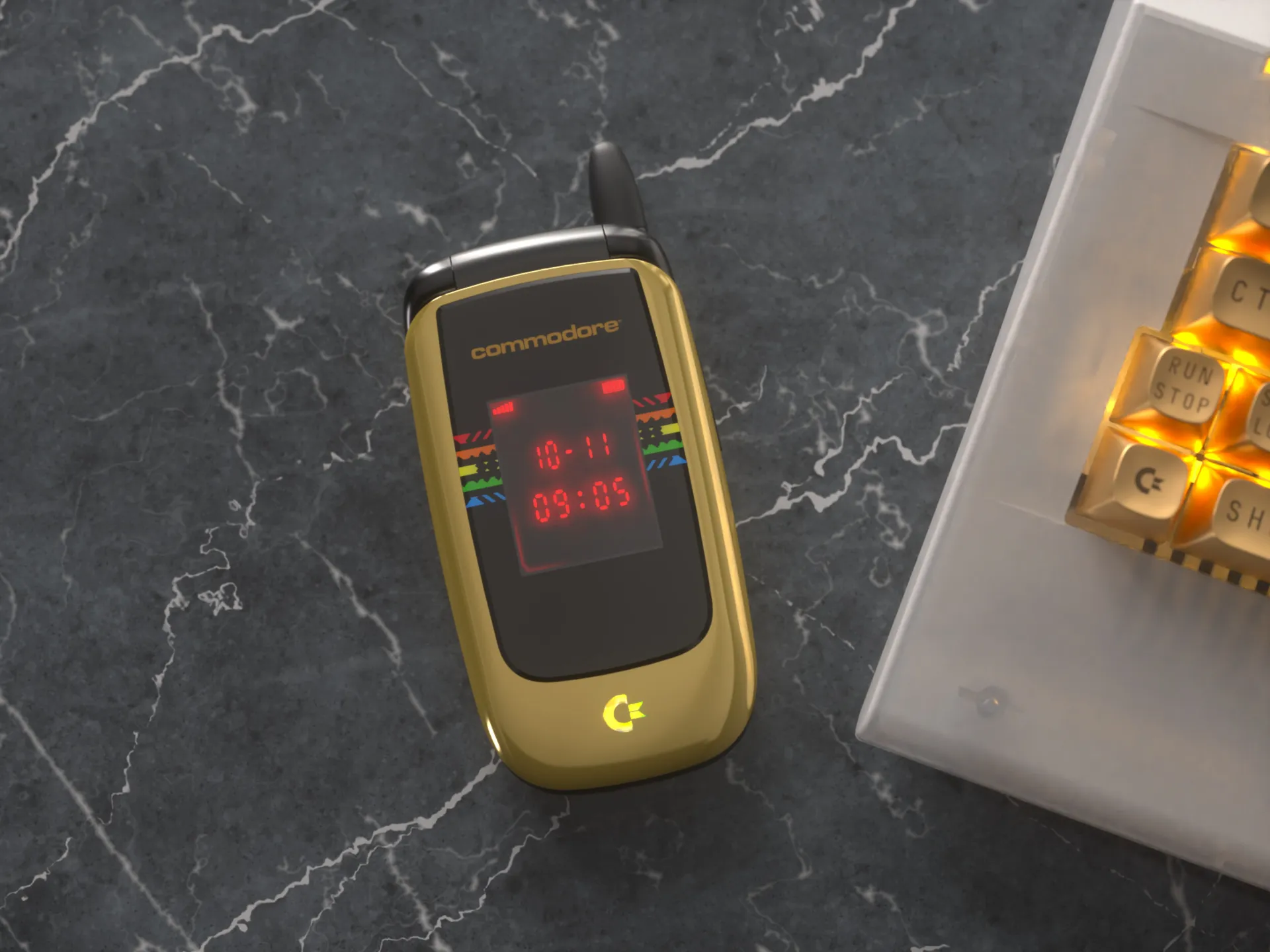
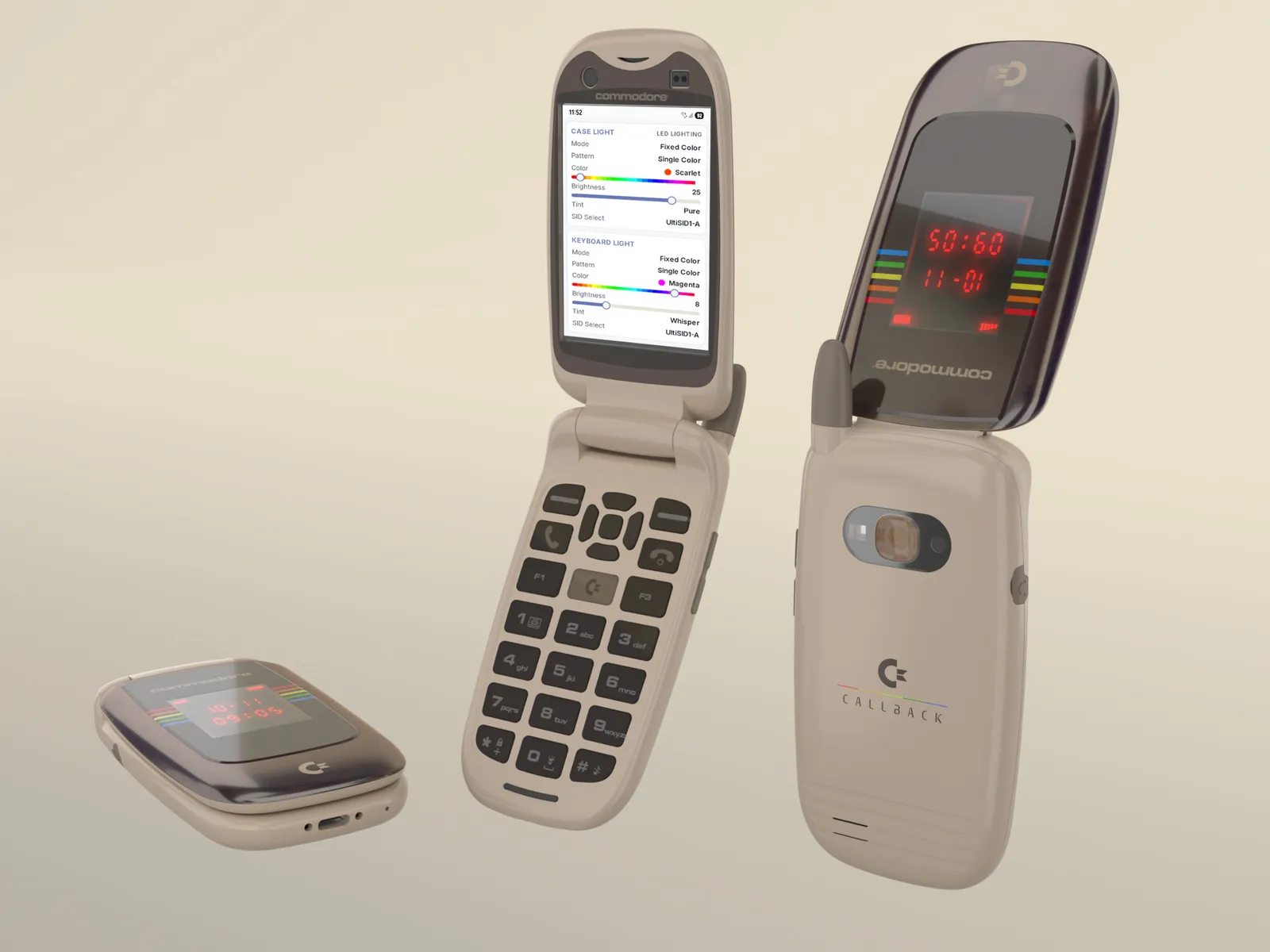
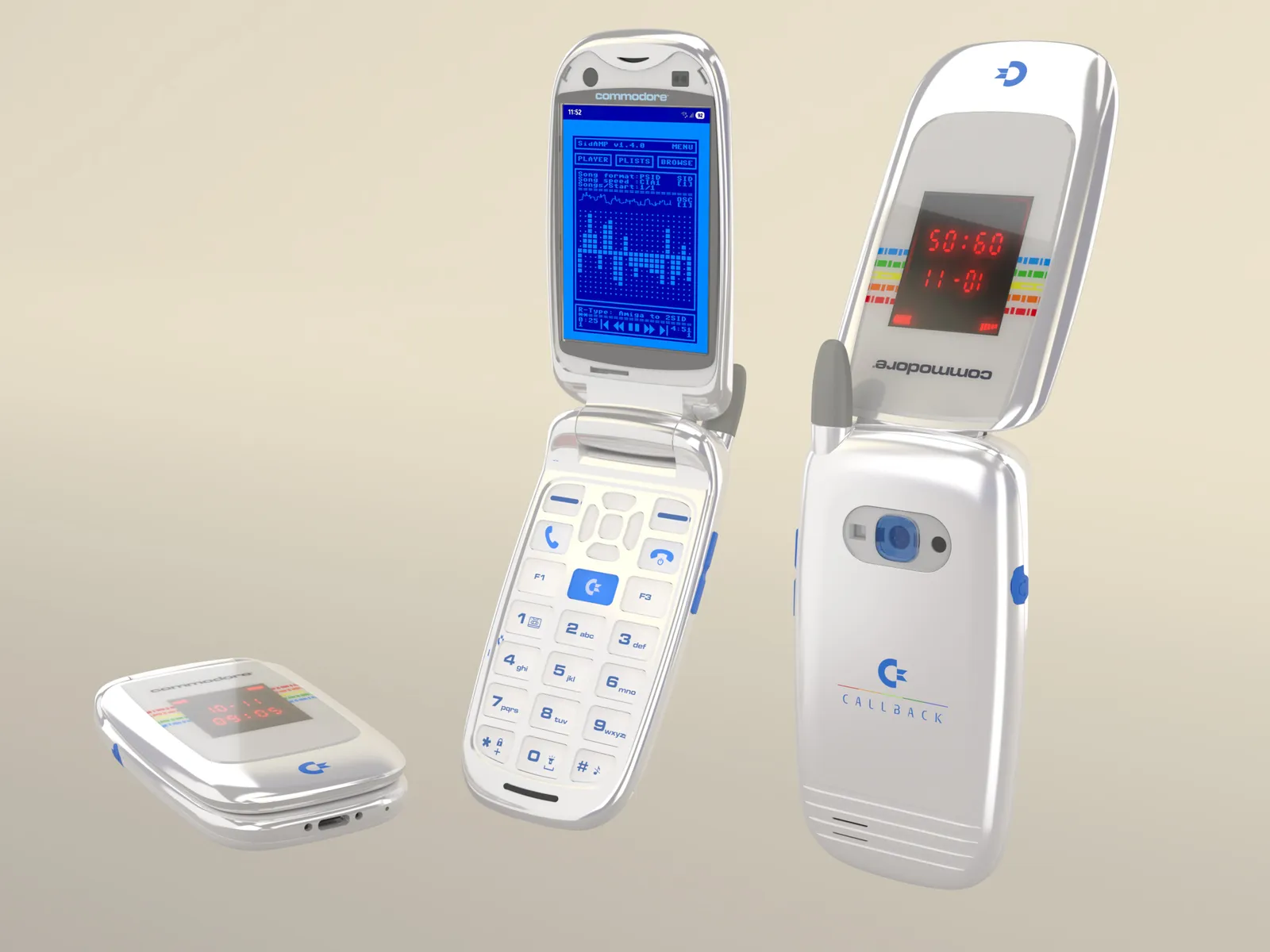
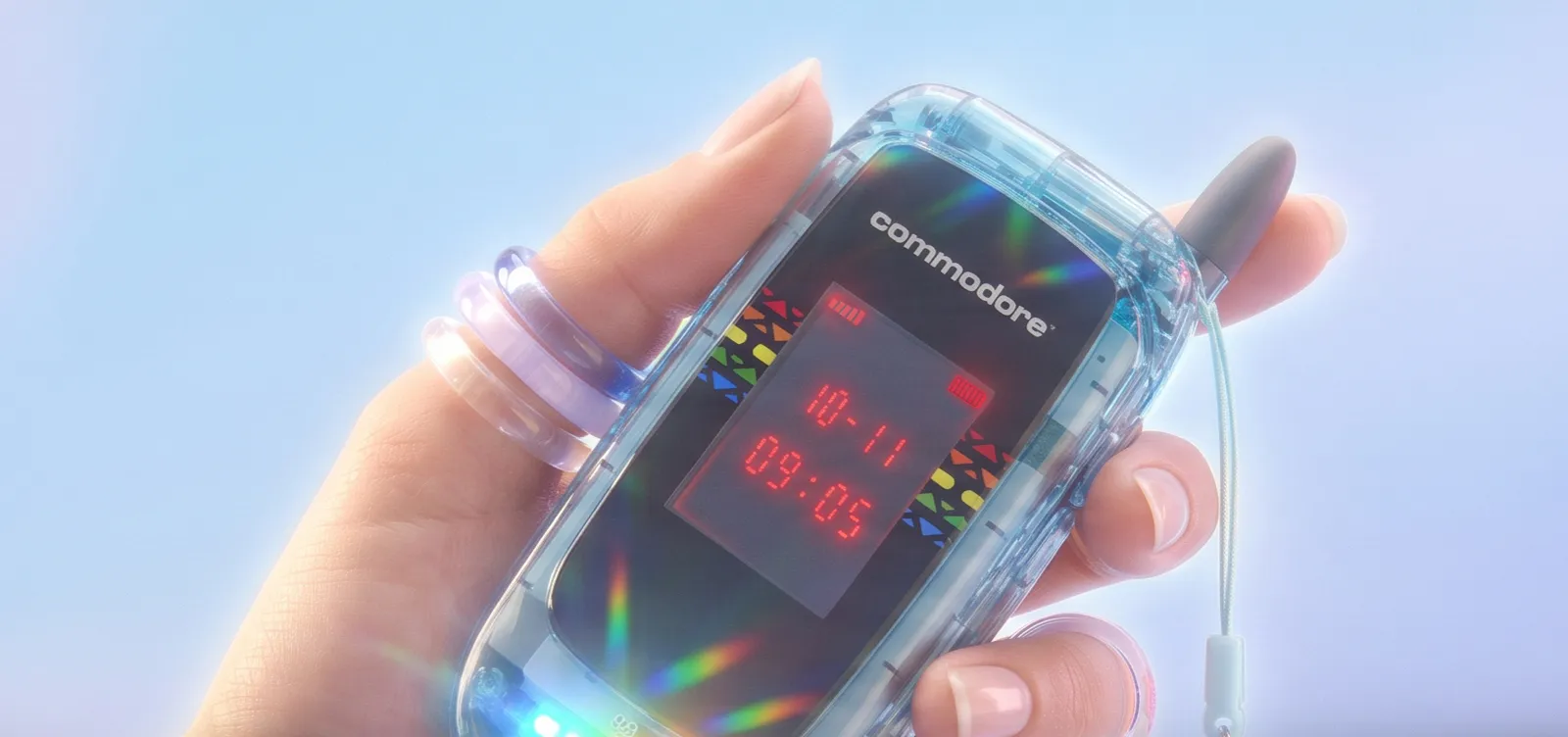
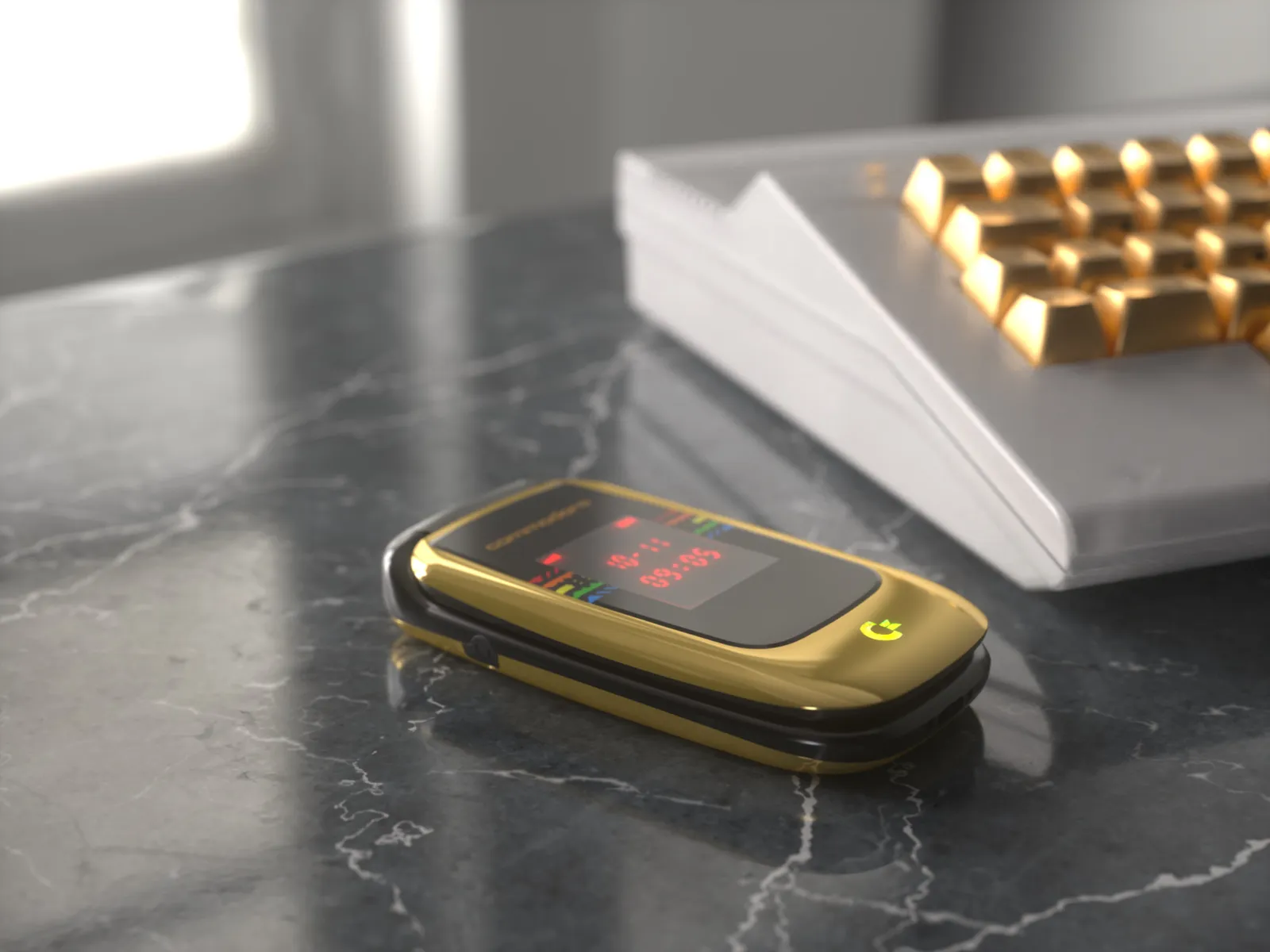
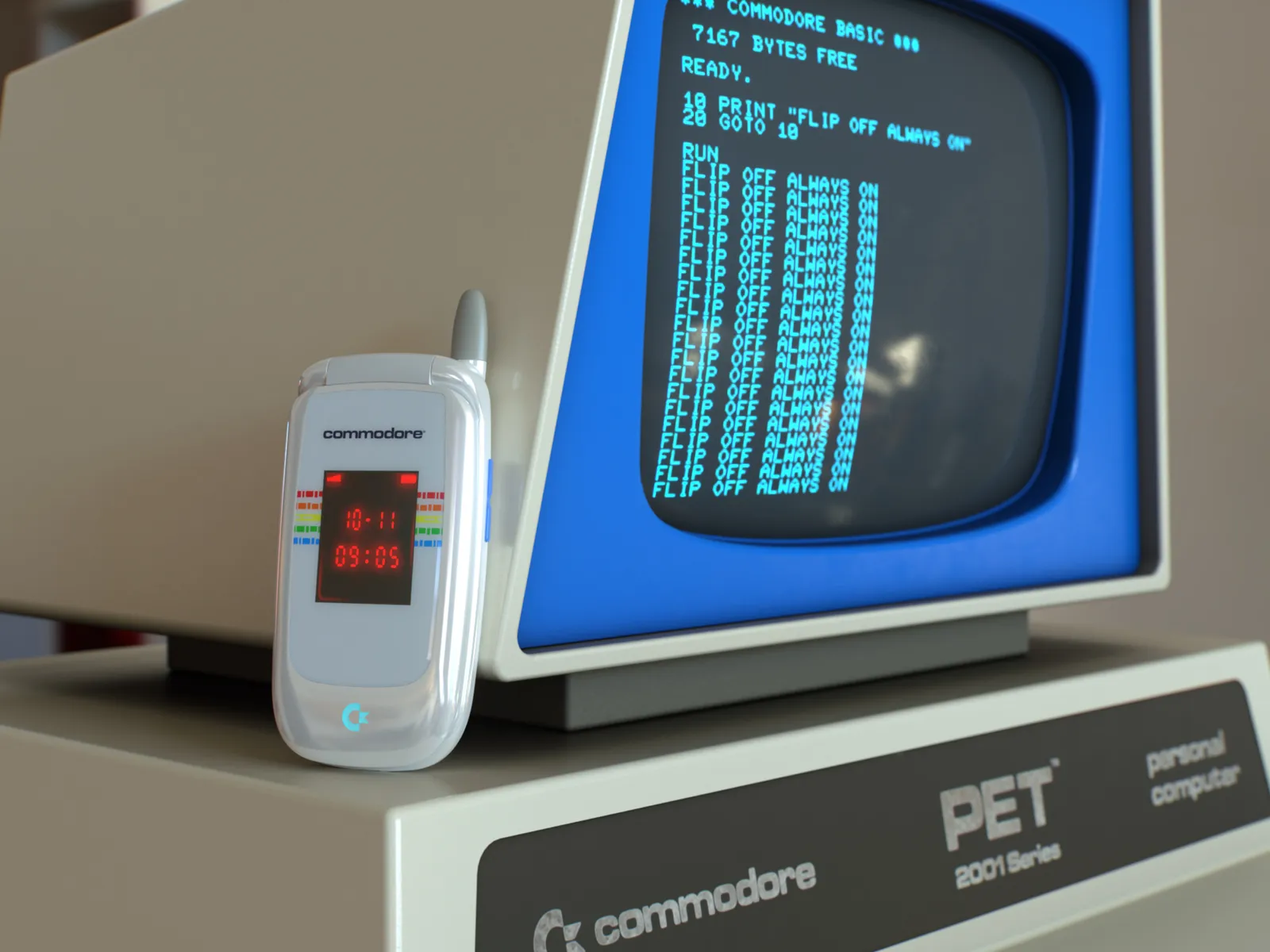
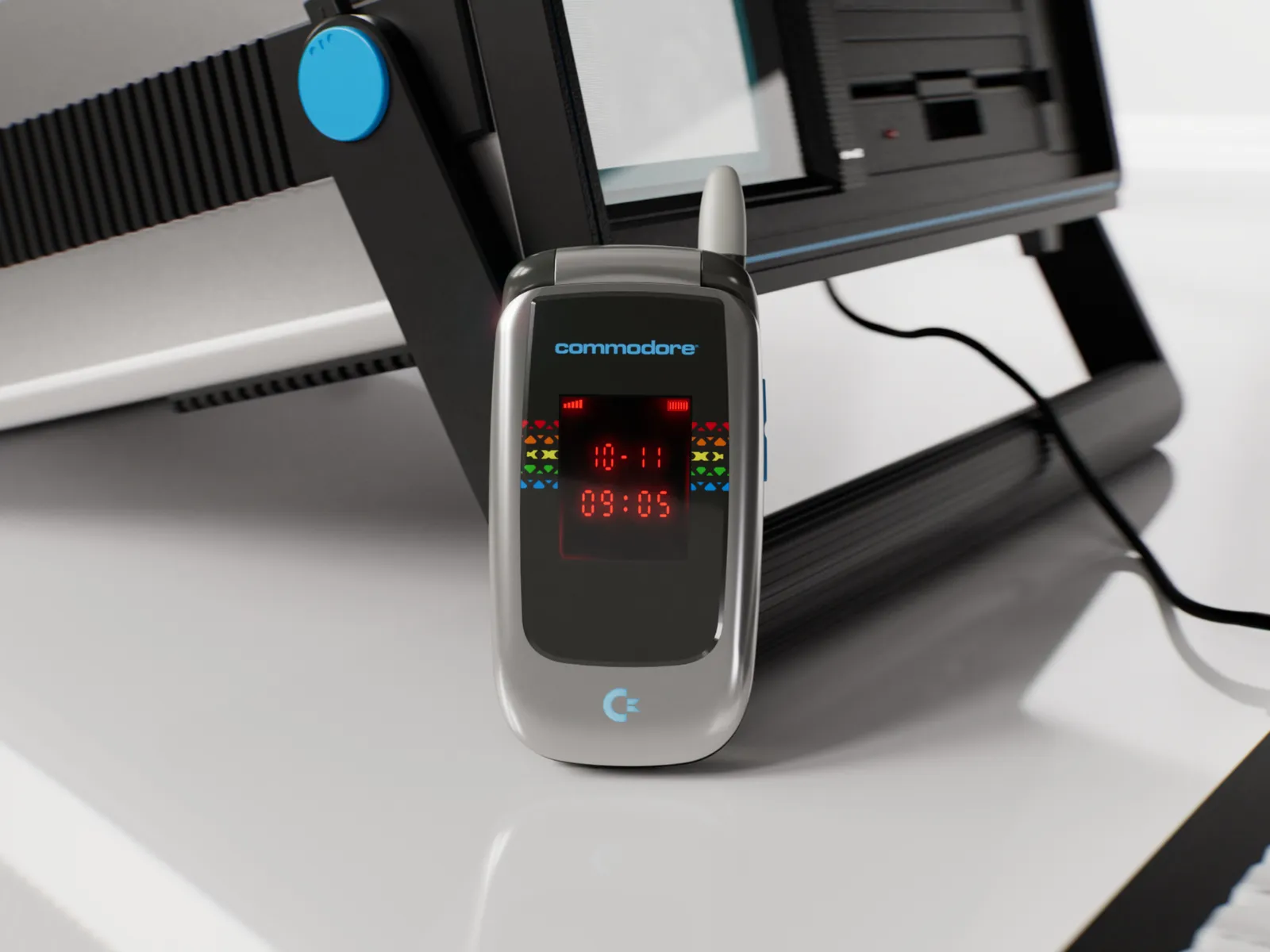
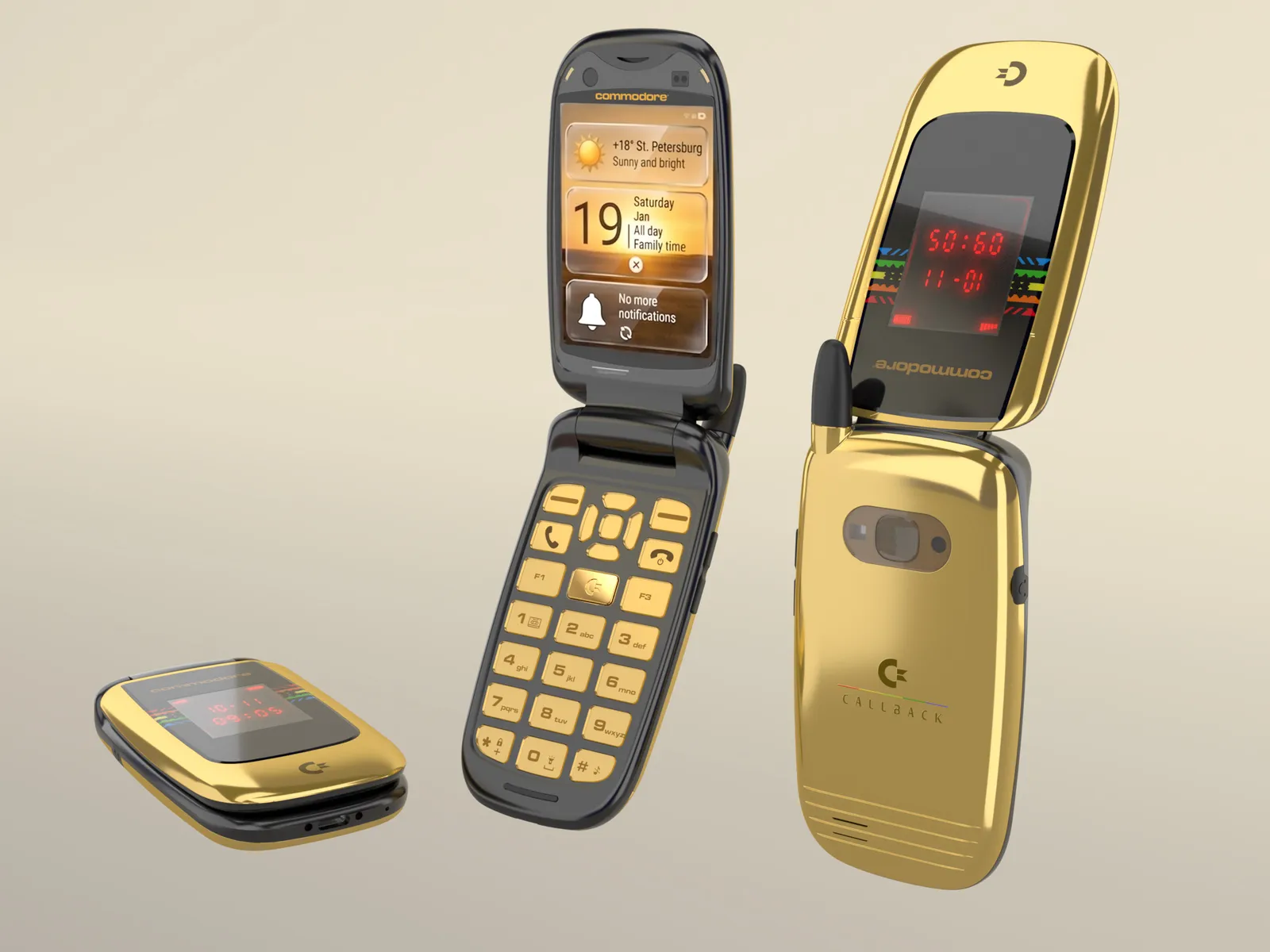
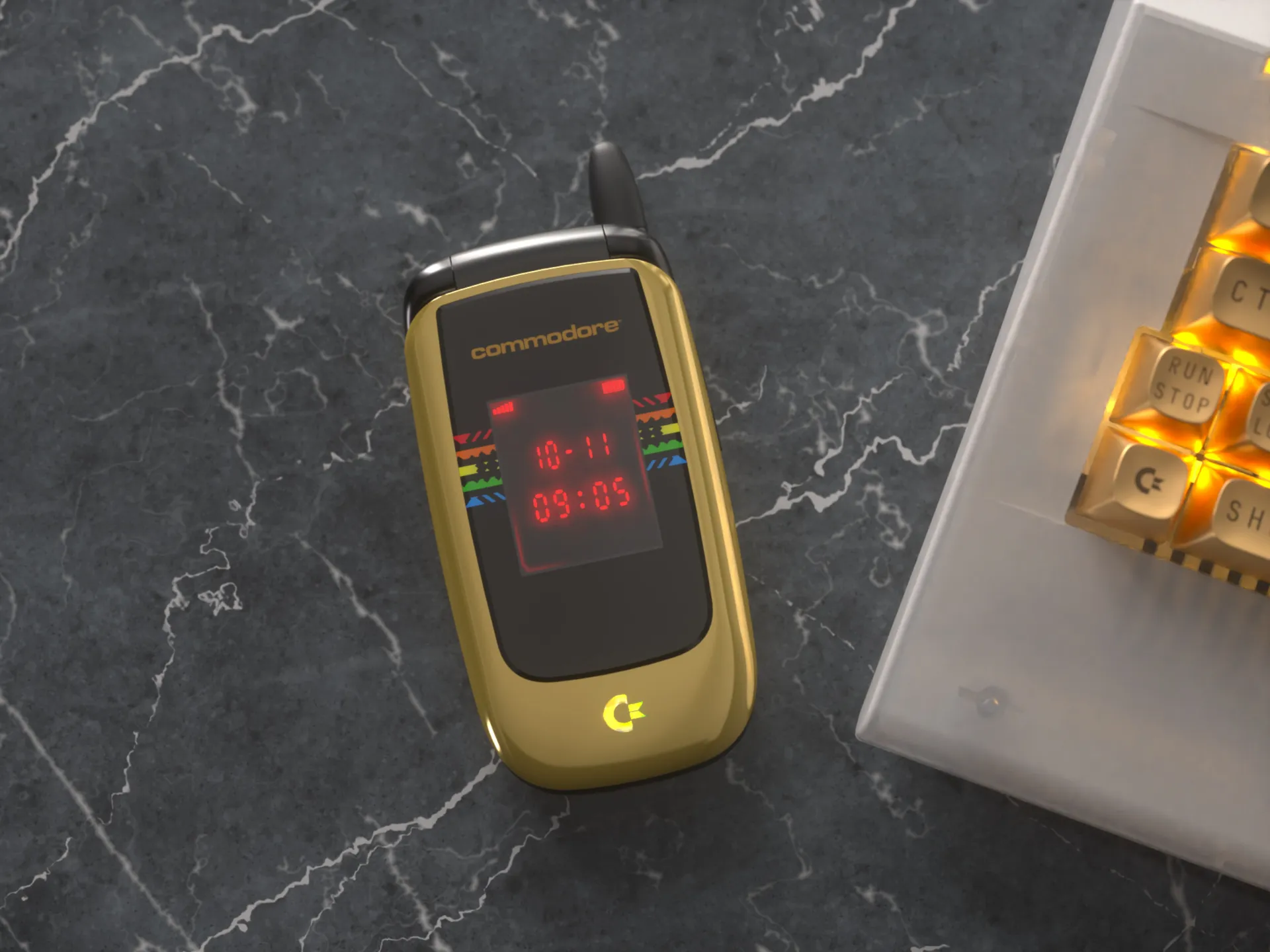
Where the Callback distinguishes itself from the broader anti-smartphone movement is in how unapologetically fun it looks. This isn’t austere min in matte gray. It’s a flip phone that wants to be seen, built around Y2K-era proportions and finished in five colorways that read more like shoe drops than telecom hardware: ProtoPET White, SX Silver, BASIC Beige, a translucent Starlight Edition, and a PVD-gold Founders Edition that ships with a 24-karat gold-plated “C=” key and a chevron presentation box.
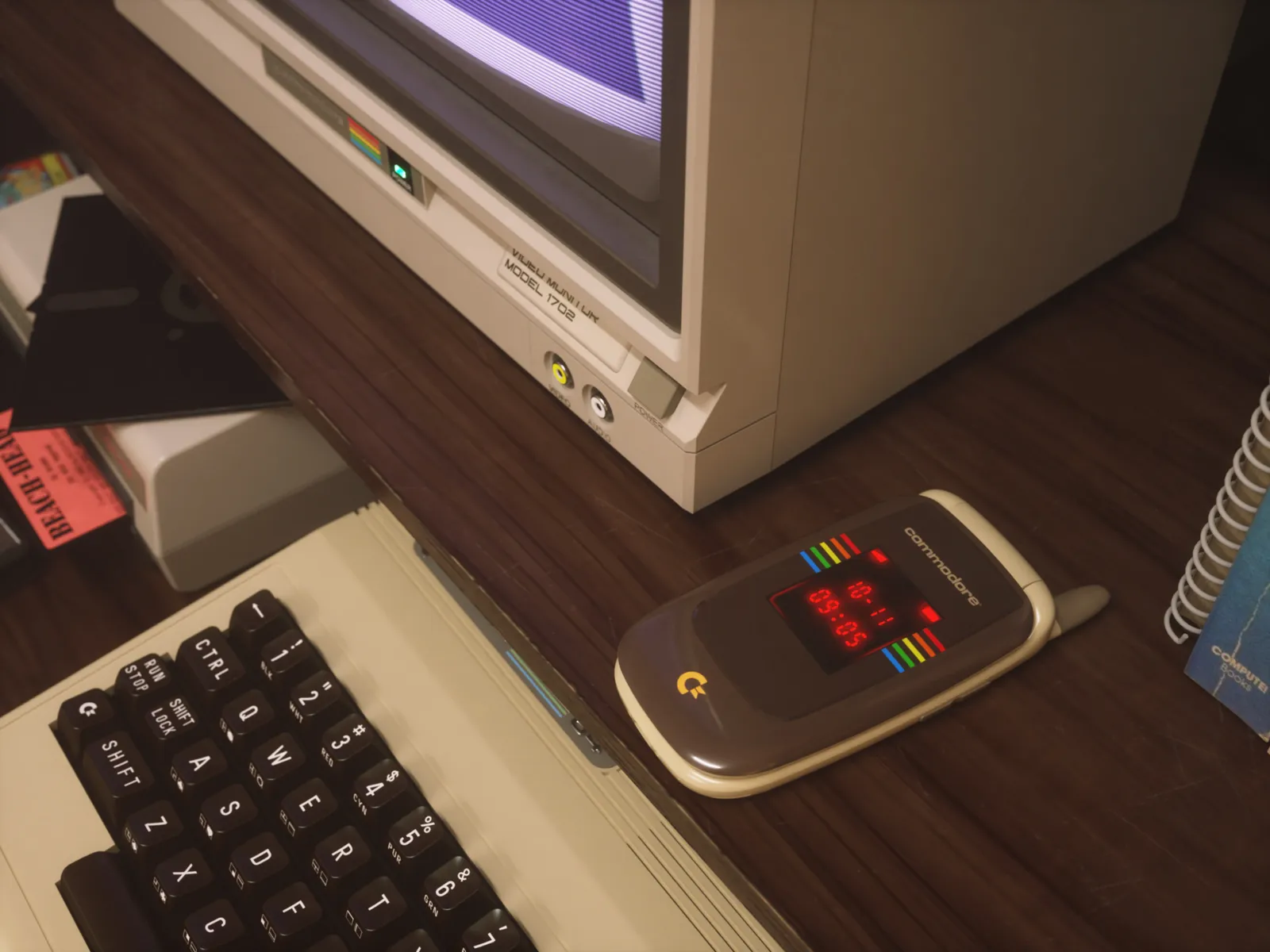
The exterior display is a small, chunky, segmented panel that nods directly to Commodore’s 1970s calculators — it shows time, battery, and signal, and nothing else. Notifications arrive instead through five dome LEDs set into the casing, a quietly clever bit of design that lets the phone communicate without ever asking you to look at a screen. Open it up and there’s a 3.25-inch IPS display that stays in touch-disabled mode by default, nudging you toward the keypad and T9 texting rather than tapping at glass like it’s 2024 again.
Commodore leaned hard into modularity, too. The 1550mAh battery is user-swappable, as are the back covers — translucent or solid “Snapback” packs that let owners customize the phone the way skaters customize decks, plus a clear “Hardback” protective case for anyone who wants the retro look with a bit more drop protection. It’s the kind of design thinking that treats hardware as something to be personalized and lived with, not something you slide into a case and forget about.
in
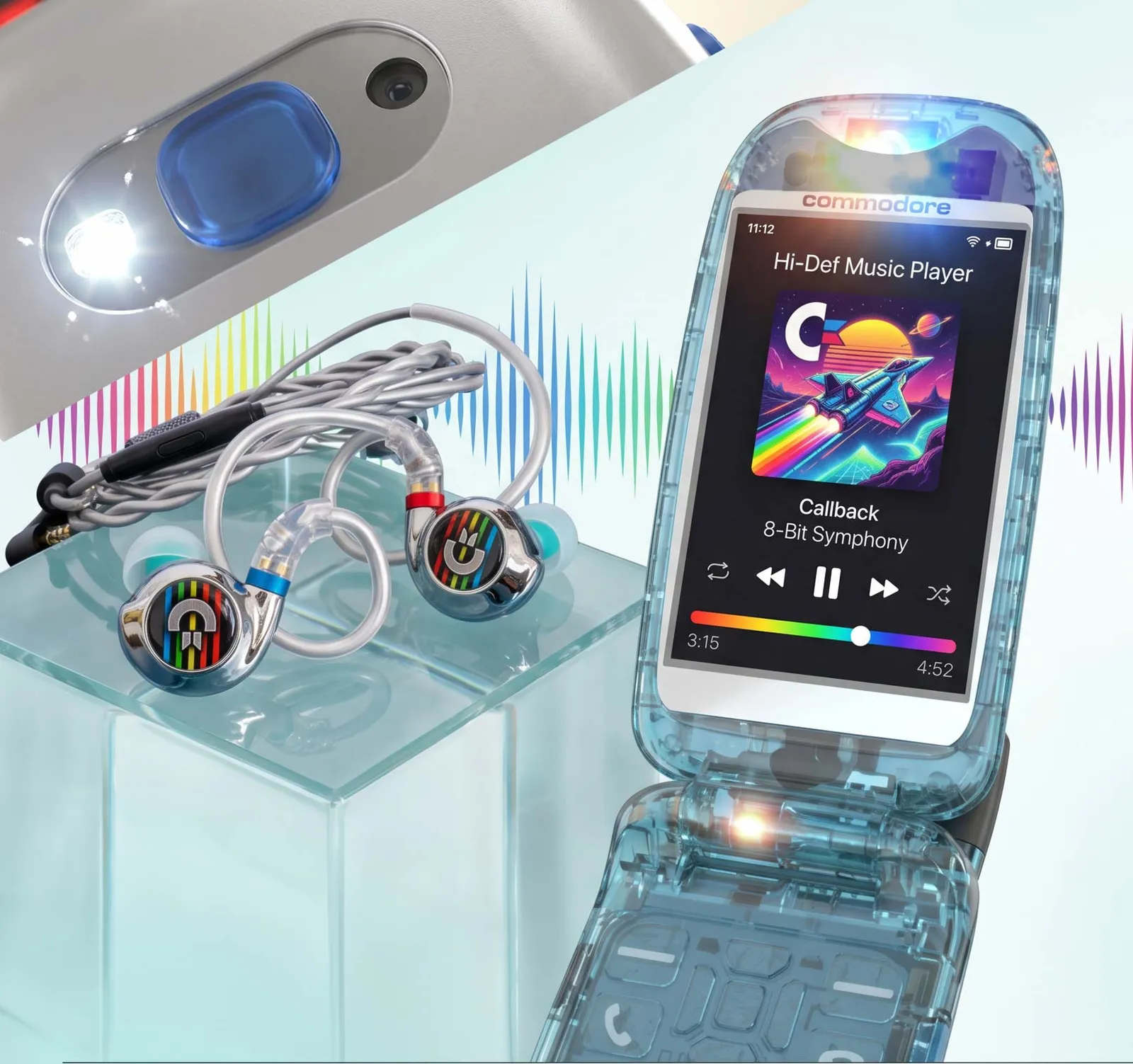
Strip away the nostalgia and the Callback 8020 is a modestly specced but purpose-built piece of hardware. It runs on a MediaTek Helio G81 chip with 4GB of RAM and 64GB of internal storage, backed by a bundled 32GB microSD card preloaded with music and expandable up to 256GB. There’s a 48-megapixel rear camera with flash, plus a front-facing camera with autofocus that activates when the phone is flipped open for selfies or video calls. Wi-Fi, Bluetooth, GPS, and a hotspot function are all present, and the phone charges over USB-C rather than relying on a proprietary cable that becomes obsolete in three years.
It supports physical SIM cards only — dual slots, no eSIM — and is rated IP44 for splash resistance, meaning it’ll survive light rain or a knocked-over drink but shouldn’t go anywhere near a pool. There’s also a privacy kill-switch, activated with a double tap, that takes the device fully off-grid in an instant.
What’s notably absent is anything resembling a corporate inbox. There’s no email client baked into the Callback’s app store, and Commodore is fairly blunt about why: the phone is built for the hours when you’re trying to leave work and its demands behind, not for checking Slack on a Tuesday night. Determined users can technically sideload an APK from a microSD card, but that’s a choice the company is clearly not interested in making easy.
huh
If there’s a part of the Callback that feels like it was designed by people who actually grew up with the Commodore 64 rather than a brand consultancy that researched it, it’s the audio. The phone’s ringtones pull directly from the SID sound chip — the same 8-bit synthesizer chip that gave Commodore 64 games their distinctive crunch — mixing officially licensed classic tunes with newly composed ones. There’s a full SID music player built in, alongside an onboard FM radio, audiophile-grade DAC chips, and support for lossless playback. Commodore even bundles a pair of wired in-ear monitors in the box, a small but pointed gesture toward people who still believe a wired connection sounds better than a Bluetooth one.
The gaming side leans into the same instinct. Rather than chase mobile gaming’s current obsession with live-service everything, the Callback comes preloaded with a curated set of classic Commodore 64 titles, plus an obligatory round of Snake — a small wink at the Nokia-era phones that made bored commutes bearable long before smartphones turned every spare moment into scroll time. If the C64 Ultimate was Commodore’s love letter to people who never sold their floppy disks, the Callback is the version of that letter you can put in your pocket.
There’s also a feature that’s almost too on-brand to be real: the Callback can wirelessly control a Commodore 64 Ultimate and its LEDs over the same Wi-Fi network, turning the phone into a kind of remote for the company’s other flagship nostalgia product. Even the unboxing plays the bit, with a mini spiral-bound user guide standing in for the printed manuals that used to ship with every piece of consumer electronics before manuals became PDFs nobody opens.
expect
Pre-orders for the Callback 8020 open on June 30 directly through commodore.net, with the standard editions — ProtoPET White, SX Silver, and BASIC Beige — priced at $499.99. The translucent Starlight Edition runs slightly higher, and the PVD-gold Founders Edition, complete with its 24-karat key and presentation box, tops out around $640. Every tier ships with the phone itself, a USB-C cable, the removable battery, the spiral-bound guide, and a set of sticker packs.
That pricing places the Callback below rivals like the Light Phone III while offering noticeably more functionality — swappable batteries, customizable shells, a real camera, and app compatibility well beyond what most minimalist phones attempt. Commodore says it’s targeting Q4 shipping for the initial run, with worldwide shipping included free for a limited time and a no-quibble refund available for anyone who cancels before their order ships.
Commodore CEO Peri Fractic has framed the Callback as the product of his own experience disconnecting after becoming a parent, describing it as the phone he wished had existed when he started that process and position it as flexible enough to function as an evening phone, a weekend phone, or a full-time replacement, depending on how much distance someone wants from their primary device.
why
It would be easy to file the Callback 8020 under novelty tech and move on, except that it’s arriving at a moment when the entire culture around phones is view shifting. Australia has already enacted under-16 social media restrictions, the UK has similar rules on the way, and a noticeable subset of adults — without any legislation forcing the issue — have started treating their relationship with their smartphone the way people once treated quitting smoking: publicly, deliberately, and with a fair amount of pride in the attempt.
What Commodore understands, maybe better than the wellness apps and screen-time dashboards that preceded it, is that willpower is a bad long-term strategy against a device engineered by some of the smartest product designers alive to be maximally compelling. The Callback’s answer isn’t to ask users to resist temptation through sheer discipline — it’s to remove the temptation at the hardware and software level, then make the resulting object desirable enough that giving up the smartphone doesn’t feel like a downgrade.
Related Articles

B&B Italia’s Outdoor Icons Face the Australian Sun
Jamie Green and Joseph Gardner set five B&B Italia outdoor designs against bright Australian summer light for Vogue Living's "Sun Seeker" story.