DRIFT AUDIO
Listen to this story
Choose a voice, then press play.
In This Story
- A Collab With No Real Artist Behind It
- What KPop Demon Hunters Actually Is, for the Uninitiated
- CASETiFY’s K-Pop Track Record, and Why This One’s Different
- What’s Likely in the Box
- Landing Inside an Already-Crowded Merch Universe
- The Japan Timing Isn’t an Accident
- Why a Phone Case Collab Is Worth Taking Seriously
stir
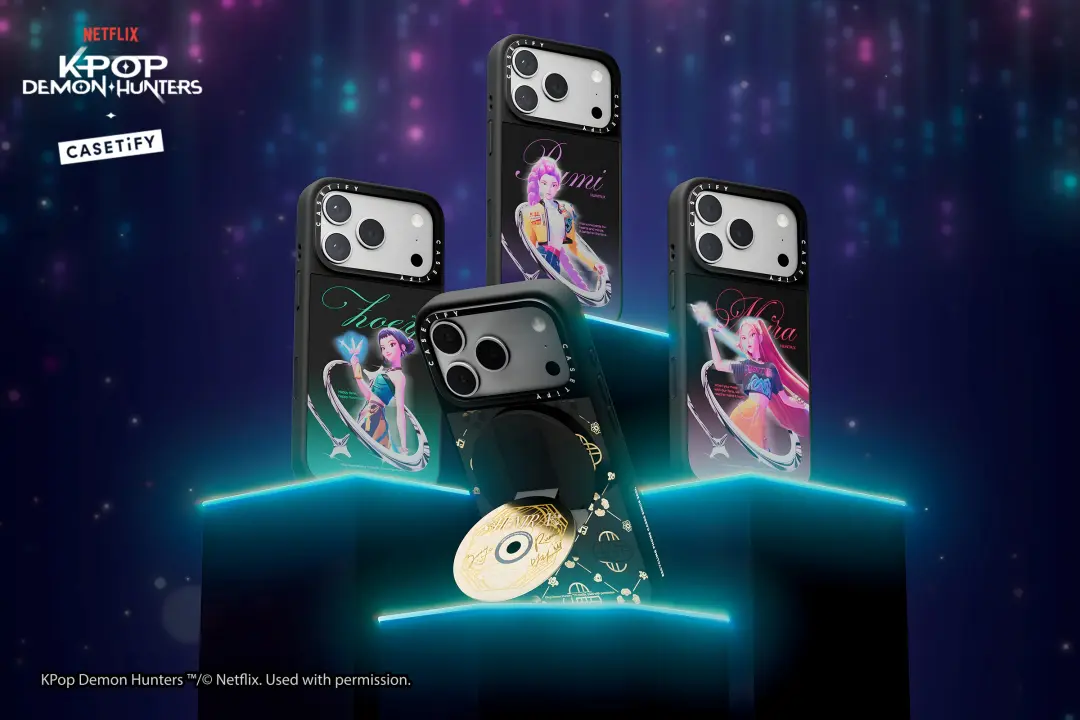
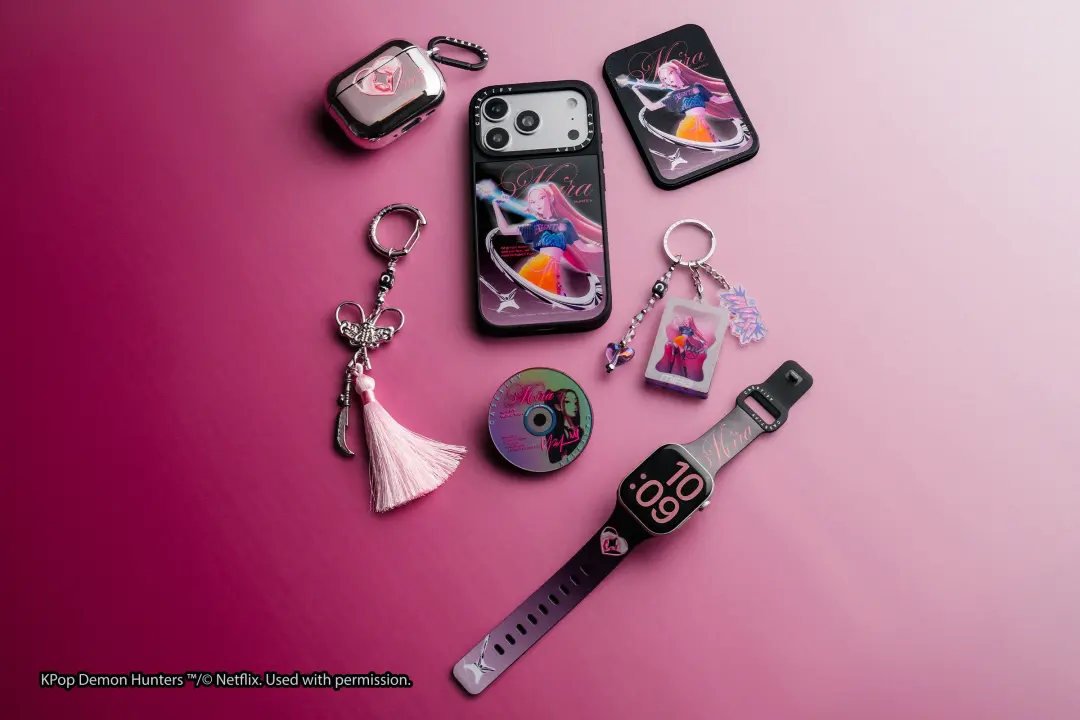
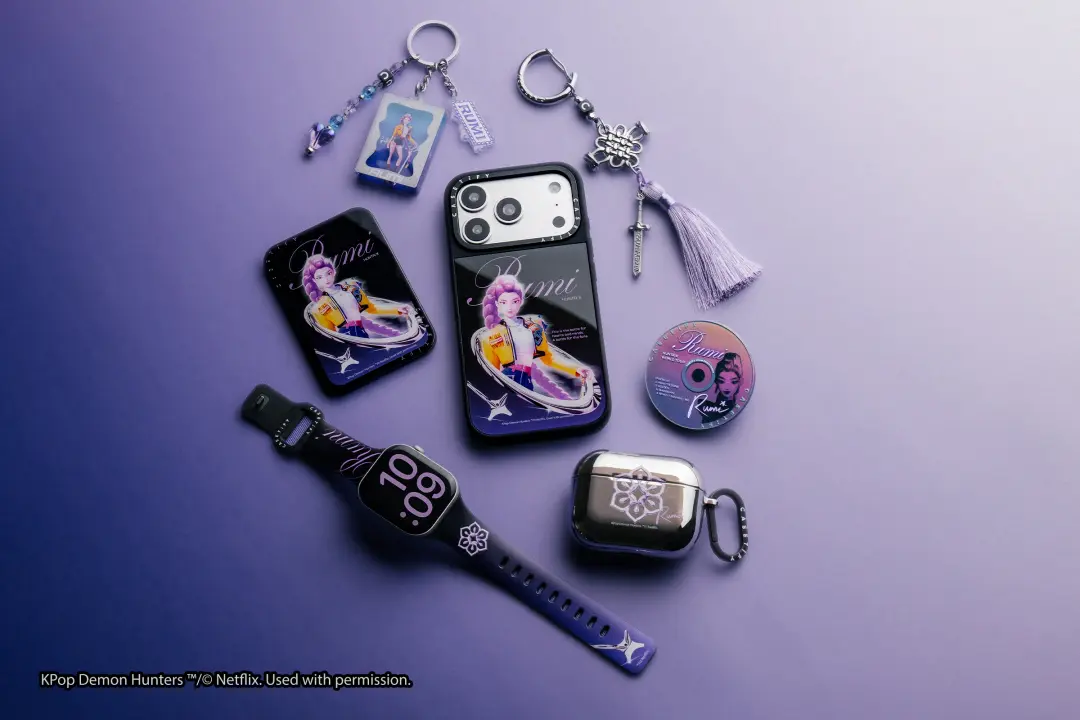
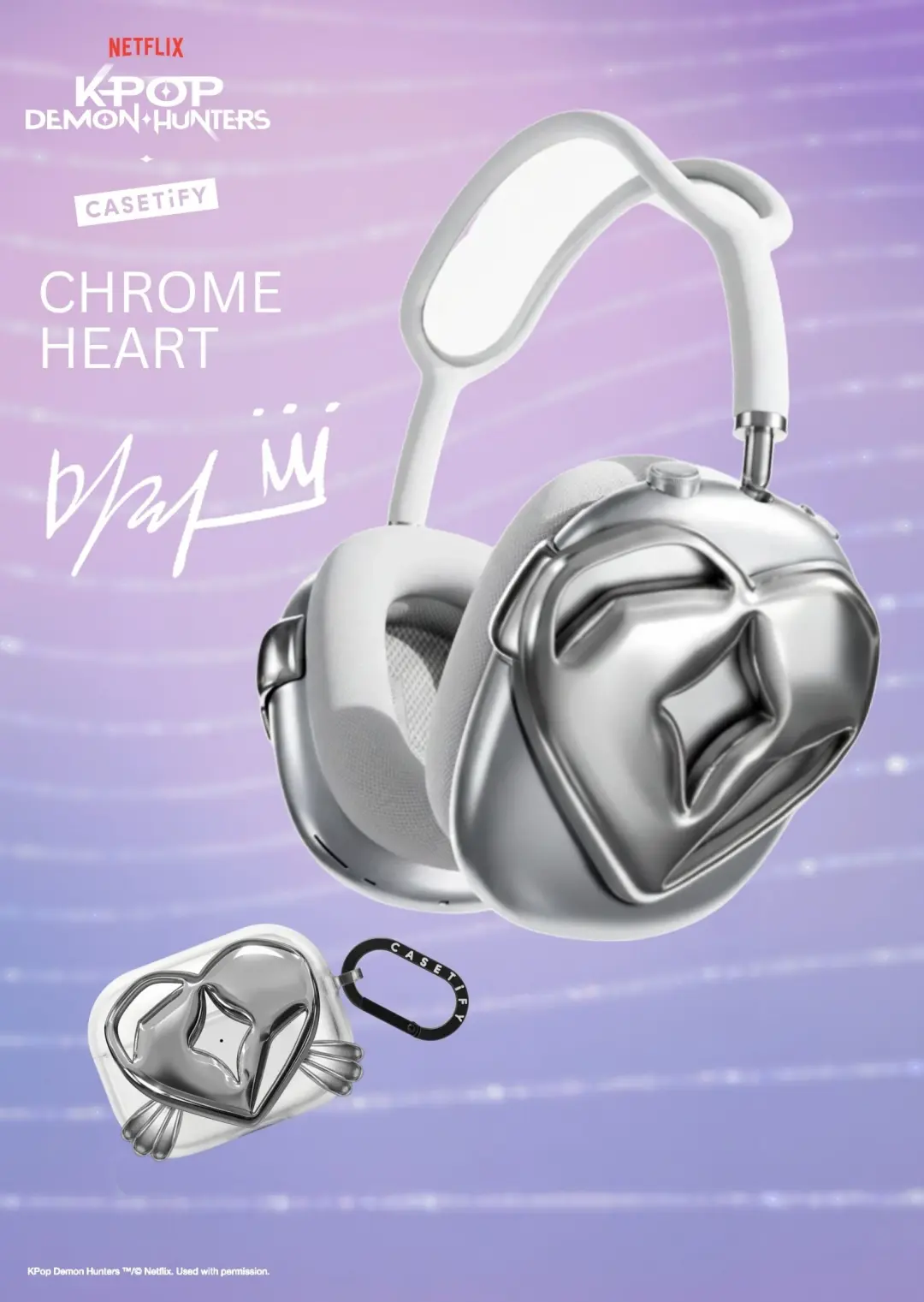
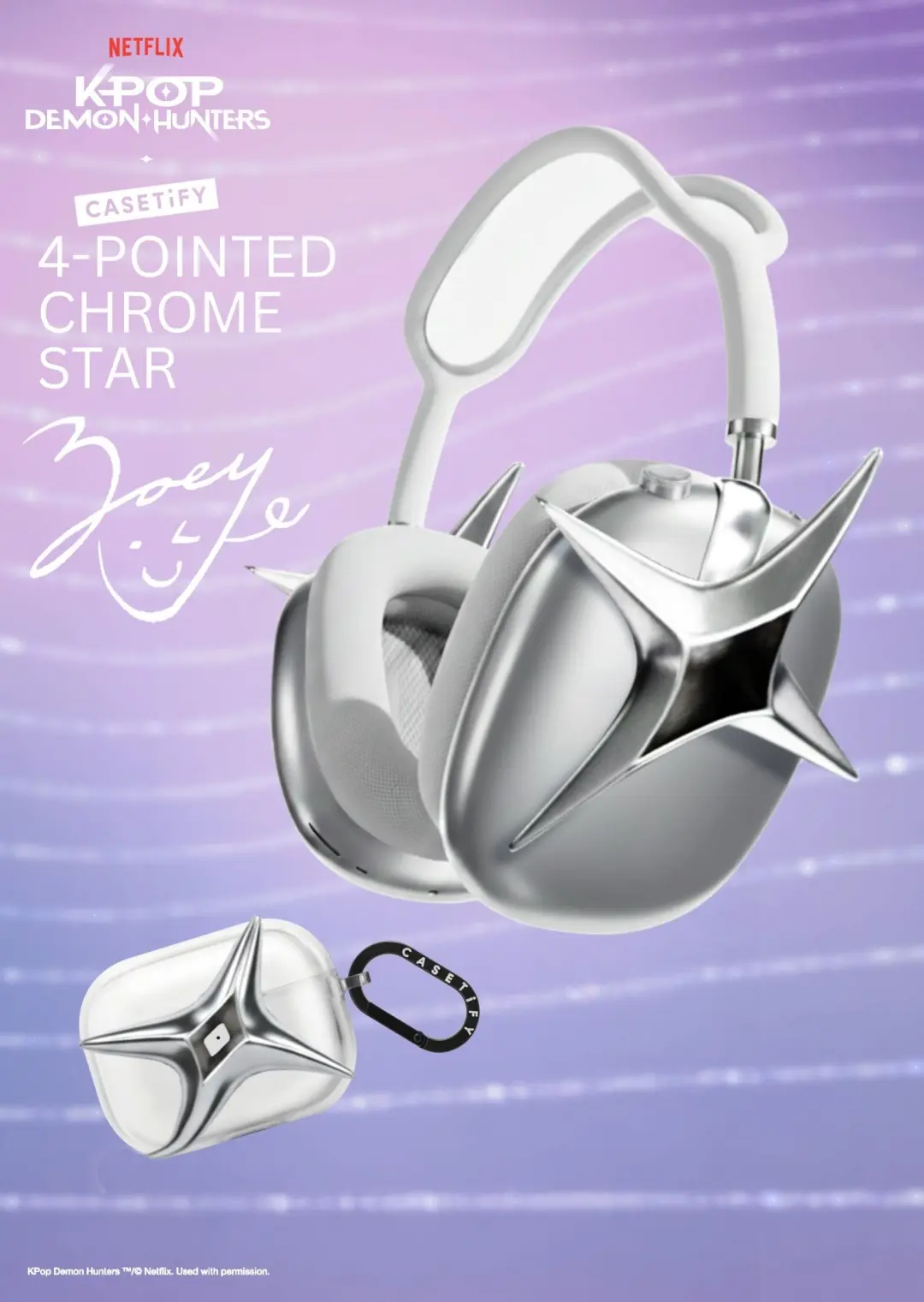
On June 30, CASETiFY launches its Japan release of a tech-accessory collection built around KPop Demon Hunters, the Netflix animated film whose girl group, HUNTR/X, and rival boy band, the Saja Boys, exist only as character designs rendered by Sony Pictures Animation. CASETiFY’s own teaser for the drop runs under the line “For the Fans. Superpowered and live,” which is a strange phrase to apply to a group that has never stood on a stage. That strangeness is exactly the point.
CASETiFY has done K-pop collaborations before — first with BTS in 2019, then with SM Entertainment’s aespa in 2022. Both were real, signed, touring acts with label deals, tour schedules, and actual phones to put actual cases on. HUNTR/X and the Saja Boys have none of that. They are fictional constructs whose “discography” exists because Netflix commissioned real songwriters and singers to record it, and whose fandom has organized itself around a film rather than a concert ticket. CASETiFY building a collection around them isn’t really a K-pop collaboration in the traditional sense — it’s a license deal with Sony Pictures Animation and Netflix dressed in the visual language of one.
View this post on Instagram
flow
For anyone who has somehow missed the cultural avalanche, KPop Demon Hunters is a 2025 animated musical from Sony Pictures Animation, directed by Maggie Kang and Chris Appelhans, that follows a K-pop girl group called HUNTR/X — Rumi, Mira, and Zoey — who secretly use their music to maintain a spiritual barrier protecting humanity from demons, while fending off a rival boy band, the Saja Boys, who turn out to be demons themselves. HUNTR/X’s design language draws visibly from real girl groups like 2NE1, Blackpink, Itzy, and Twice, while the Saja Boys pull from boy-band reference points including BTS, Tomorrow X Together, Stray Kids, Ateez, and Monsta X — the character Jinu in particular was shaped around EXO’s Kai and BTS-adjacent idol Cha Eun-woo as visual touchstones.
The film became Netflix’s most-watched original release of all time, passing 325 million views and more than half a billion hours streamed, and went on to win Best Animated Feature and Best Original Song at both the Golden Globes and the Academy Awards — the song “Golden” became the first K-pop track to win either prize. Its soundtrack put four songs simultaneously in the Billboard Hot 100’s top ten and outperformed real K-pop acts on Spotify’s US daily charts, with HUNTR/X and the Saja Boys becoming the highest-charting female and male K-pop groups in the platform’s US daily chart history — surpassing Blackpink and BTS, respectively, in a chart sense, despite neither group existing outside the film. A sequel is already locked in for 2029, alongside a planned television series and stage musical reportedly under discussion at Netflix.
The singers behind the characters are real, even if the characters aren’t: Ejae, Audrey Nuna, and Rei Ami provide HUNTR/X’s singing voices and were collectively honored at the 2026 Billboard Women in Music awards for the work, the first time the recognition has gone to a group rather than an individual artist. That blending of real vocal talent with fictional onscreen personas is part of what’s made the fandom around the film behave less like film fandom and more like idol-group fandom — stan accounts, bias debates over individual Saja Boys members, and the same intensity of devotion usually reserved for groups that actually tour. None of that fully explains why a fictional cartoon girl group can credibly headline a tech-accessory collab, but it explains why CASETiFY would want one.
scope
CASETiFY’s 2019 BTS collection — cases, AirPods covers, MacBook sleeves, phone slings — built its visual identity around the “Boy With Luv” music video and the group’s Persona era, pulling pastel graphics, ticket-stub motifs, and the BTS wordmark into a line that started at $25 and sold out fast enough to justify a brand revisiting the K-pop category three years later. It sold on the strength of an actual fanbase’s devotion to an actual band’s actual aesthetic choices, with no abstraction required between the merchandise and the artists it represented.
The 2022 aespa collaboration went further conceptually. Working with SM Entertainment for the first time, CASETiFY built the line around aespa’s “Next Level” and “Savage” eras and leaned hard into the group’s “metaverse” mythology, in which each of aespa’s four members has a digital avatar counterpart, complete with snake-print motifs referencing the SMCU villain Black Mamba. CASETiFY founder Wesley Ng described the project at the time as an opportunity to extend aespa’s own multidimensional concept through design — which gave CASETiFY a built-in excuse to treat the line between real and digital as part of the creative brief rather than a problem to work around, since aespa themselves were already playing in that exact space.
KPop Demon Hunters removes that ambiguity entirely. There’s no real person standing behind the artwork, no actual tour to promote, no real voice to protect from imitation — just IP, fully owned and licensed by Sony and Netflix, that happens to be styled as a K-pop act convincingly enough that fans have spent over a year treating HUNTR/X and the Saja Boys with the same intensity usually reserved for real idols. CASETiFY’s involvement is in some ways the cleanest version of this kind of collaboration the company has ever done — there’s no artist relationship to manage, no tour calendar to coordinate around, just a media property at the peak of its cultural reach and a brand that knows how to dress a phone for the occasion.
huh
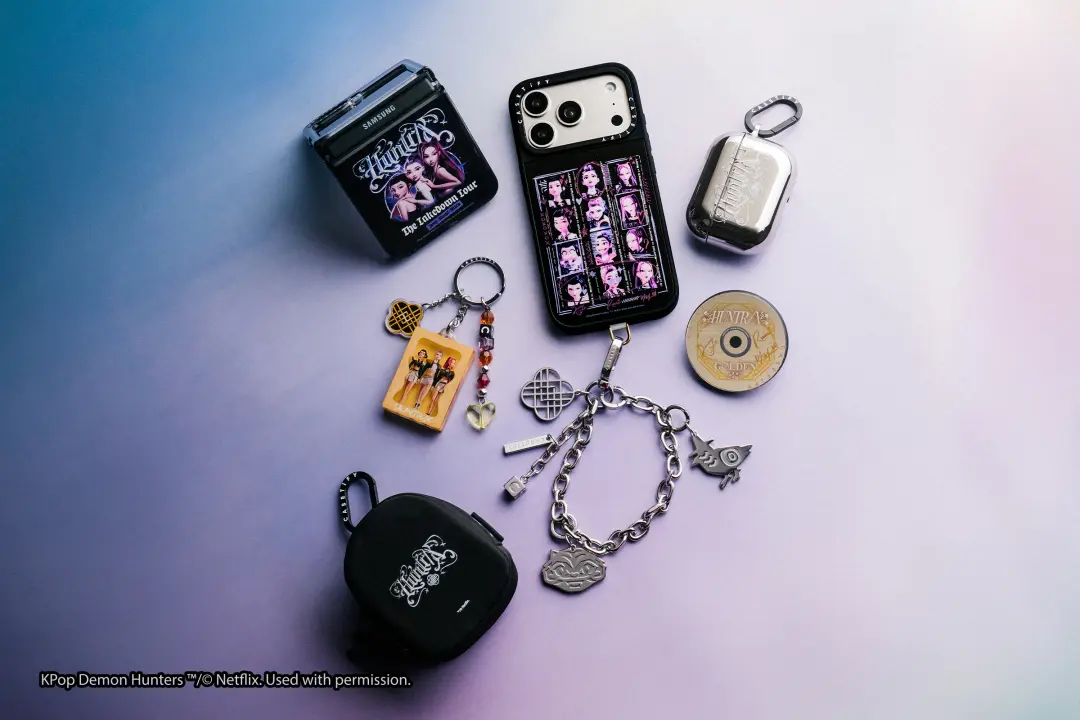
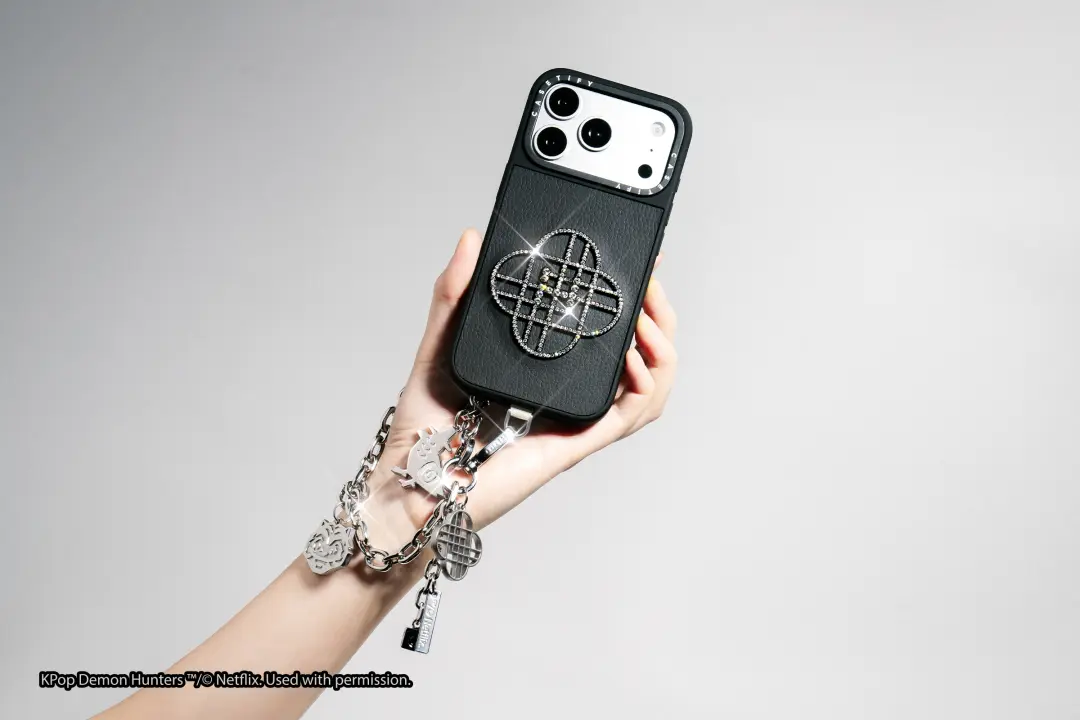
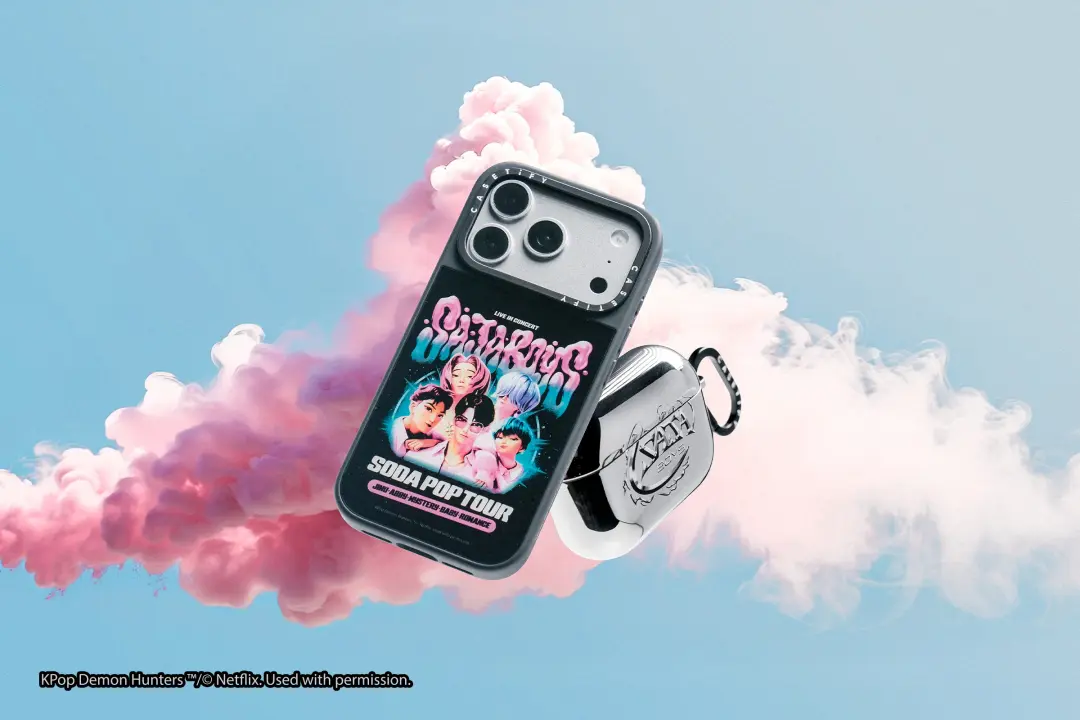
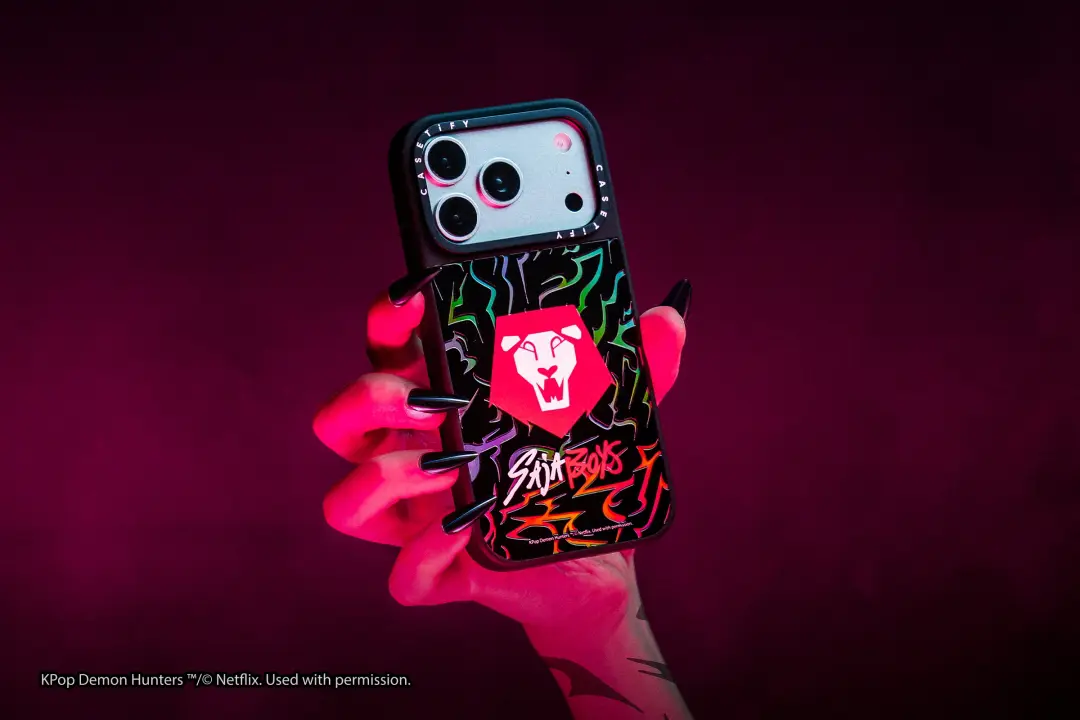
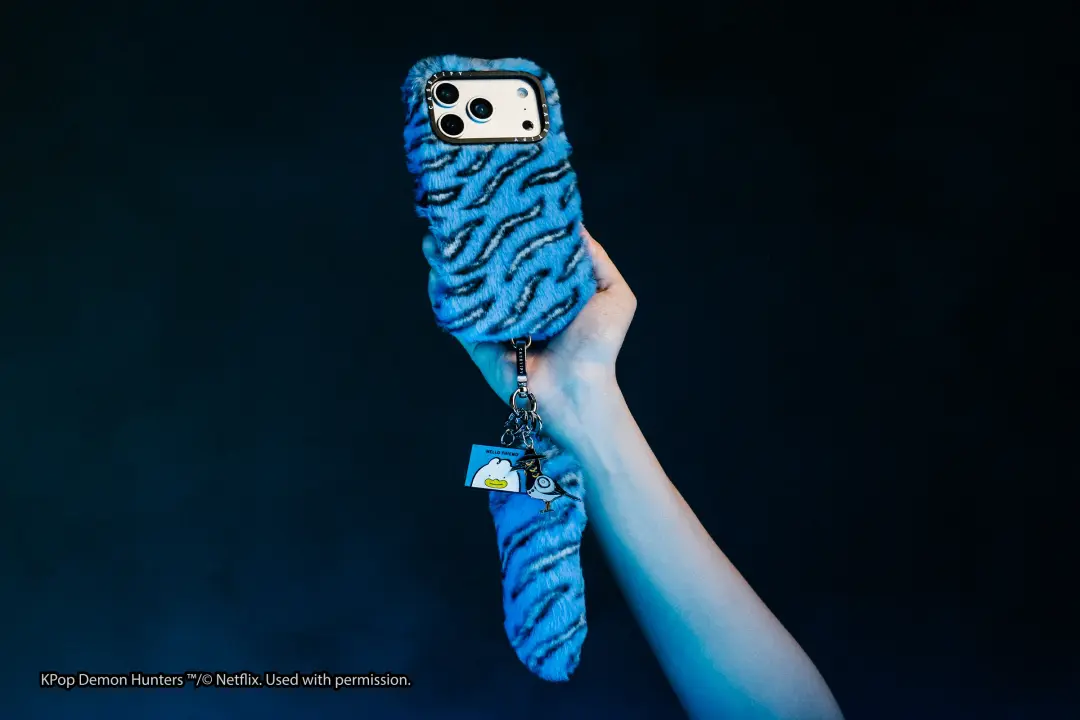
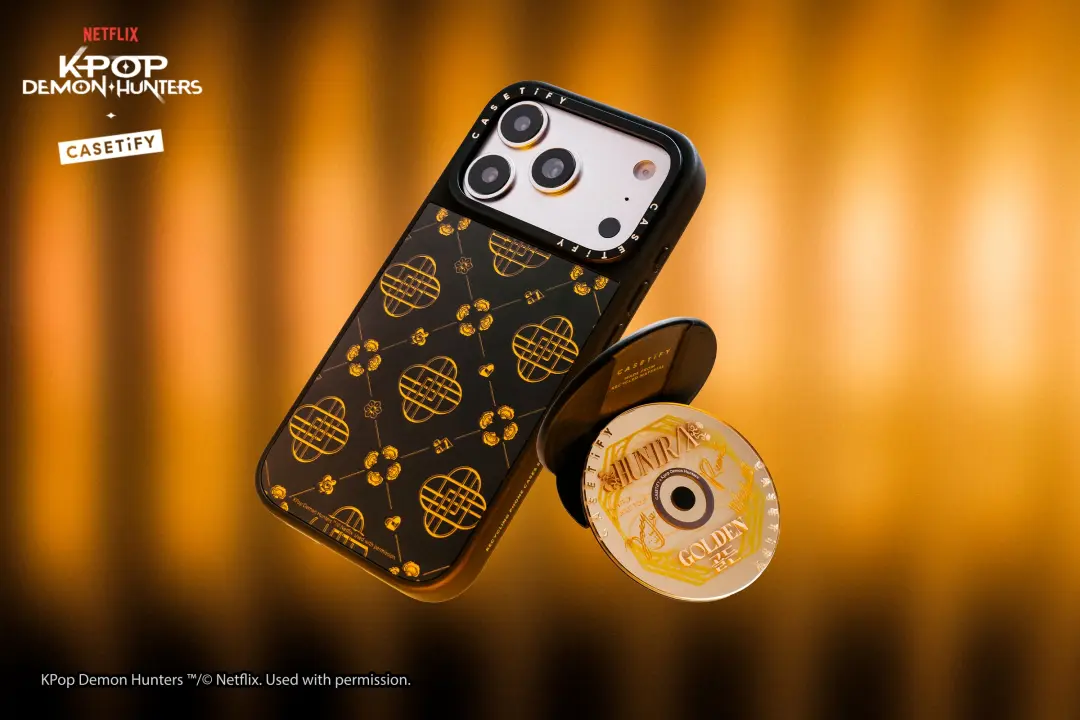
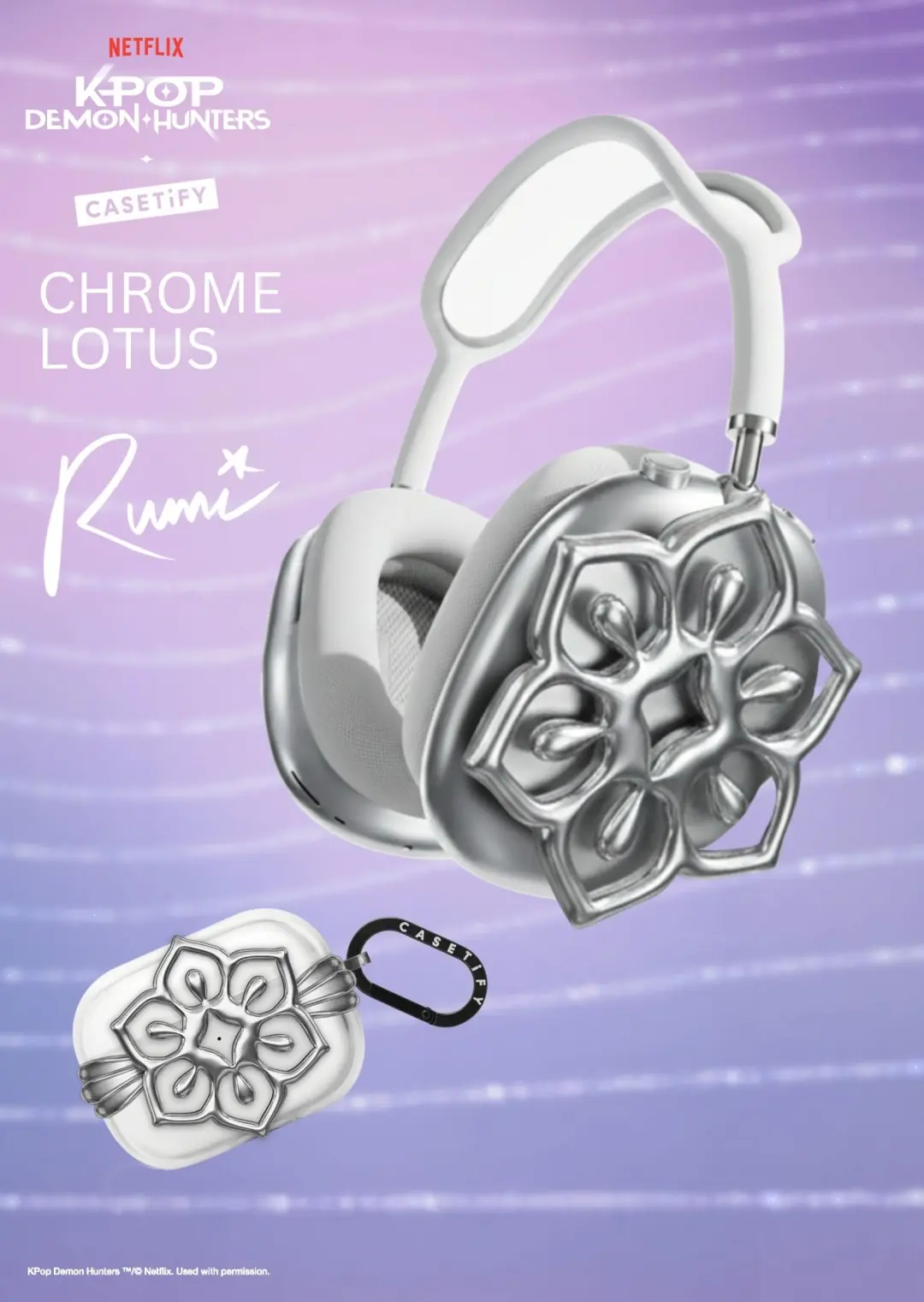
CASETiFY hasn’t published an itemized lineup for the Japan release at the time of writing, but the company’s collaboration format has been consistent across its K-pop releases to date: phone cases across its core case lines, AirPods case covers, MagSafe-compatible card holders and chargers, phone straps, and occasionally laptop sleeves, all built around character artwork, key motifs, and color palettes pulled from the source material rather than generic licensing slaps. Given that pattern, a KPop Demon Hunters collection built around HUNTR/X’s stage-performance imagery and the Saja Boys’ demon-idol aesthetic — likely alongside the franchise’s now-recognizable “Honmoon” branding and its tiger-and-magpie mascot pair, Derpy and Sussie — would track closely with what CASETiFY has shipped for prior collaborations of this kind.
What’s worth watching for specifically is whether the collection draws character lines the way the film itself does — separate case lines for HUNTR/X versus the Saja Boys, the way fan merchandise elsewhere in the KPop Demon Huntersecosystem has split along the same fault line — or whether it treats the whole cast as a single unified collection. Either approach has precedent in CASETiFY’s back catalog, and the choice says something about which fandom segment the brand is courting harder.
merch
CASETiFY is a late and fairly minor arrival to what has become one of the largest licensed-merchandise rollouts of the past two years. KPop Demon Hunters products already span American Girl dolls, Mattel collector dolls and action figures (including a now-sold-out “What It Sounds Like” three-pack that briefly became one of the property’s most sought-after pieces of merchandise), Hasbro’s Nerf weapon replicas modeled on the trio’s demon-hunting gear and a KPop Demon Hunters edition of Monopoly, Funko Pop figures including a glow-in-the-dark variant of sidekick creatures Derpy and Sussie, Jazwares Squishmallows, LEGO sets due later this year, a Penguin Random House comic and art-book line, Anua’s Korean skincare tie-in (sold in Ulta stores nationwide), Republic Records vinyl pressings, Cinnamon Toast Crunch cereal, Nongshim ramyun and shrimp crackers, and apparel from Gap, Old Navy, Target, Zara Kids, Bershka, and Hot Topic. Vans launched its own footwear collaboration with the franchise — its first ever, built around the Classic Slip-On, Old Skool, Old Skool V, and Sk8-Hi silhouettes — which is already sold in Japan through Vans’ own stores.
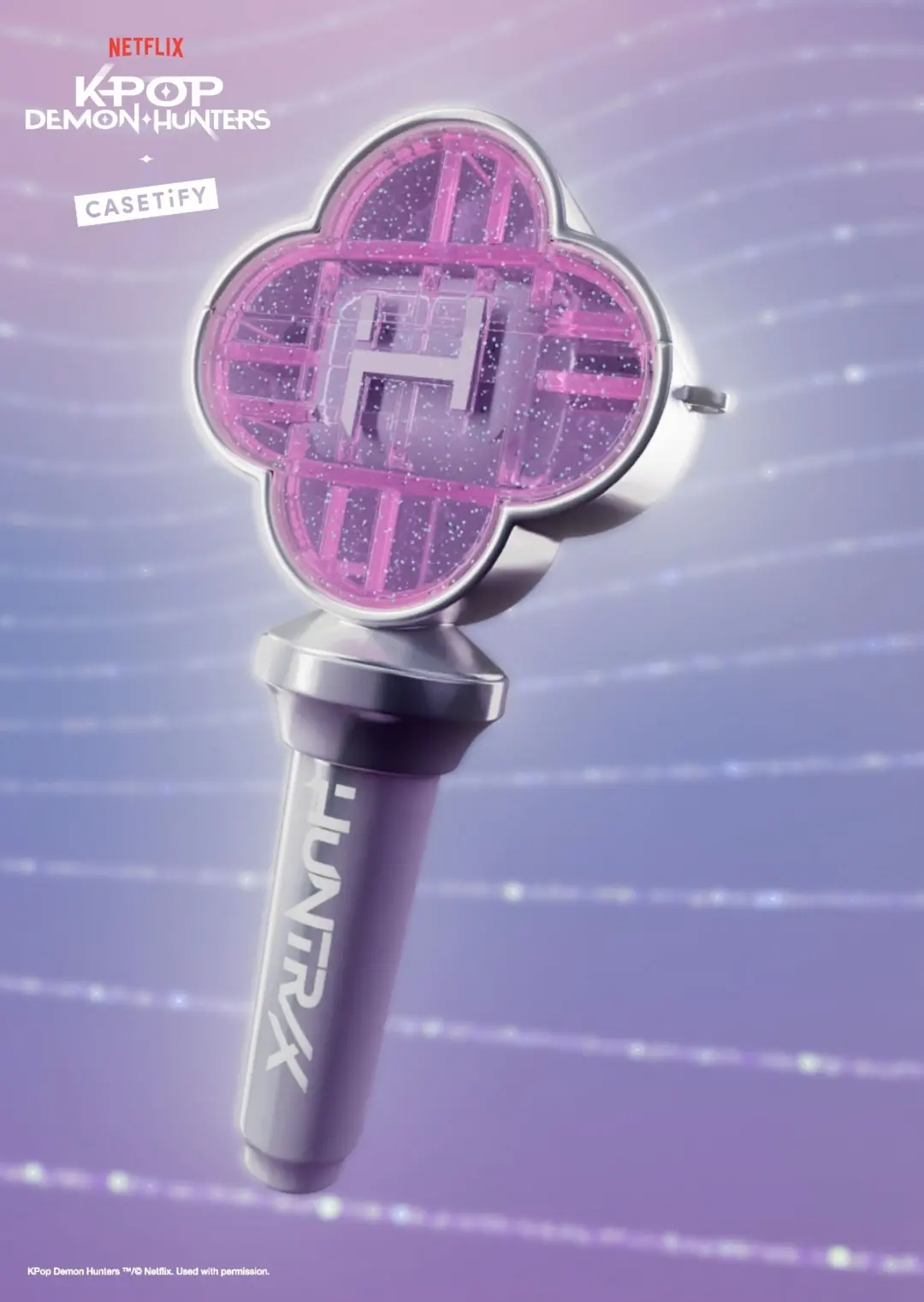
Against that backdrop, CASETiFY’s tech-accessory line is one more entry in an ecosystem that has stopped behaving like a typical film merchandising campaign and started behaving more like an actual idol group’s commercial machinery — fashion tie-ins, beauty partnerships, snack collabs, fast-food promotions, and now phone cases, the exact category of product a real K-pop label would greenlight without a second thought. Hasbro’s parallel rollout alone has expanded into Furby toys and electronic light sticks branded for both HUNTR/X and the Saja Boys, the latter being an object whose entire cultural function — fans waving them in unison at a live show — has no literal use case for a group that has never performed live, and yet sells anyway.
extent
The June 30 release lands ten days after KPop Demon Hunters marked its first anniversary on June 20 — Netflix ran a full week of global anniversary programming, including theatrical sing-along screenings in markets including Japan, South Korea, and across Europe, plus outdoor community screenings throughout the US. CASETiFY’s drop isn’t formally part of that campaign, but the timing places it squarely inside the anniversary’s commercial afterglow, when fan attention and press coverage are already elevated.
Japan specifically has been an active market for the franchise’s merchandise rollout independent of the anniversary push, with an official pop-up having run in Tokyo and Vans Japan already carrying its own KPop Demon Hunters footwear line. A CASETiFY tech-accessory drop fits naturally into that existing retail footprint rather than breaking new ground for the franchise in Japan.
why
It’s easy to wave off a phone case collision as the most disposable tier of licensed merchandise — and in most cases, it is. What makes this one worth a second look is what it confirms about how thoroughly KPop Demon Hunters has been absorbed into the actual infrastructure of K-pop fandom, rather than just borrowing its aesthetic from a distance. CASETiFY doesn’t typically extend its K-pop collaboration format to properties that haven’t earned a real fanbase’s obsessive, daily-carry-object level of devotion; that’s the same bar BTS and aespa cleared before CASETiFY built a line around them. A fictional girl group and boy band clearing that same bar, on the strength of one movie and a streaming afterlife, says more about how durable an animated property can become as a fandom object than it does about CASETiFY’s business strategy.
Related Articles
Inside the Ferrari Line Where V12s, Hybrids and the Electric Luce Share One Workforce
In Maranello, the electric Luce, a hybrid V8 and a twelve-cylinder Purosangue now share one assembly line and one workforce.