DRIFT AUDIO
Listen to this story
Choose a voice, then press play.
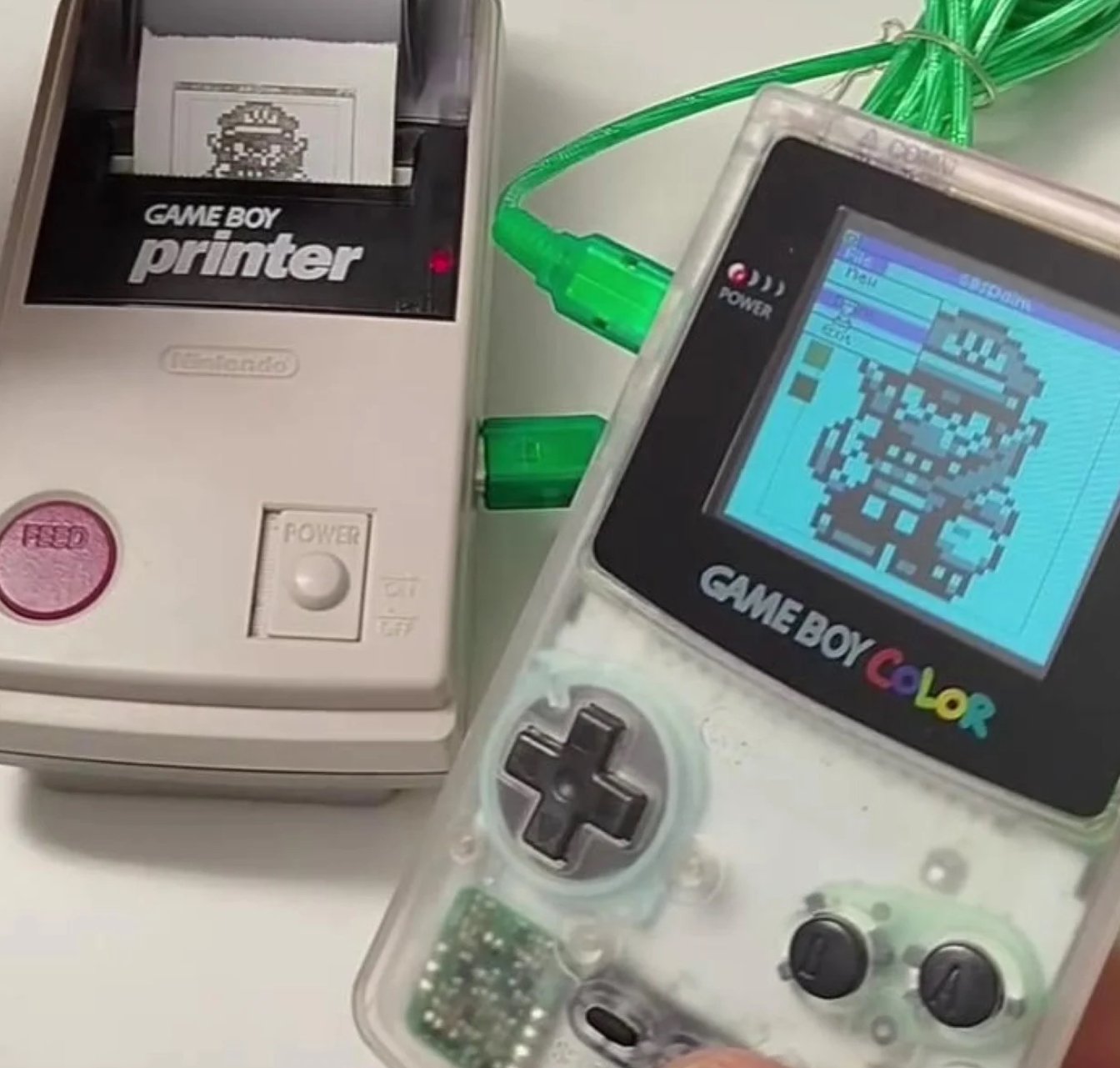
We live in a world where some people wait a decade for the next Grand Theft Auto, while others—more whimsical, more irreverent—decide instead to boot up Windows 3.1 on a Game Boy Color. Yes, seriously. In a feat of geek bravado that’s both absurd and poetic, retro tinkerer Ruben Retro has built GBS Windows, a surreal, nostalgia-charged tribute to the Microsoft of yesteryear. And he’s done it using a machine meant to run Pokémon Red, not MS Paint.
In a way, it’s the most 2025 thing imaginable: retro-futurist cosplay meets technical curiosity. And it’s loaded—literally—with just enough joy, detail, and absurdist wit to make it one of the most delightful cartridges ever made for Nintendo’s little green-screened console that could.
Ctrl+Alt+Delight: What Is GBS Windows?
GBS Windows is not a mod. It’s not an emulator. It’s not even a port in the traditional sense. It’s a faithful, lovingly irreverent simulation of Windows 3.1, custom-built from scratch and squeezed into 512KB of ROM that runs on original Game Boy hardware. Insert the cartridge, boot it up, and you’re immediately greeted with a pixel-unique startup screen and a surprisingly authentic DOS-like file directory.
The aesthetic commitment is total. There’s no touchscreen hackery or flash memory wizardry here. You navigate windows, open mock folders, and explore a GUI that echoes the halcyon days of early ’90s computing—all through the D-pad and buttons of a Game Boy Color. You even have to “type” the classic cd windows followed by win to launch the GUI, except it’s just a gloriously pre-scripted illusion. A performance. A parody. A pixelated wink.
This isn’t just a gag. It’s performance art in cartridge form.
The Genius of the Pointless
To call GBS Windows “unnecessary” is to completely misunderstand its point. It’s not about utility. It’s about aesthetic theater. A loving homage to an era when operating systems came in beige boxes and pixel fonts ruled the desktop. Ruben Retro doesn’t just simulate Windows 3.1. He romanticizes it.
Click on “Program Manager” (or rather, mash A until something happens), and you’re met with a cascade of early ’90s nostalgia: file windows, dropdown menus, even a hilariously functional rendition of MS Paint. You can’t save anything. You can barely draw. But you can click and scribble and stare at the result in wonder, asking the only question that matters: why does this exist—and why does it feel so good?
GBS Windows belongs in the lineage of functional absurdities, right beside things like Doom running on a pregnancy test or Linux on a digital camera. It’s not meant to serve—it’s meant to celebrate the spirit of computation itself.
Tech Specs Meet 90s Dreams
The technical limits Ruben Retro worked within only deepen the magic. The Game Boy Color, released in 1998, was designed for basic 8-bit gaming, not multitasking operating systems. It ran on a Sharp LR35902 processor clocked at a modest 8 MHz. Its screen, a humble 160×144 resolution, could display a maximum of 56 colors at once from a 32,768-color palette. Its power source? Two humble AA batteries.
And yet here we are. Windows 3.1—albeit lovingly spoofed—crackling to life in grayscale and color blocks, complete with fake beep sounds and mouse-less navigation. There are icons. There are windows that “minimize” and “maximize.” There’s even an “About” dialog box, although its real content is the self-aware genius of Ruben Retro’s design.
He didn’t just fit Windows into a Game Boy cartridge. He fit memory itself—cultural, technical, emotional—into 512 kilobytes of code.
A Love Letter to OS Culture
Operating systems, for all their functionality, are rarely beloved. But GBS Windows reminds us how formative Windows 3.1 was. It was the first OS many people ever used. It taught generations of users how to open a file, launch a program, even crash a system. It came before the internet was ubiquitous, when Solitaire and Paint were legitimate forms of entertainment.
And this project doesn’t mock those memories. It honors them. Ruben Retro replicates the interface not for accuracy’s sake, but for tone—for mood. The dithering on the faux GUI. The pace of the boot sequence. The absurdity of navigating a file manager with a Game Boy D-pad. Every detail is meant to feel like the real thing, even if it’s all smoke and mirrors behind the scenes.
This is nostalgia not as a filter, but as a format.
The Culture of Cartridge Whimsy
In the broader context of retro gaming and microcomputing, GBS Windows is part of a growing ecosystem of digital folk art: cartridges, ROMs, and homebrews that don’t just replicate games—they reinterpret tech history through humor and reverence. Think of Chris Maltby’s GB Studio, or Tetris Effect’s psychedelic reinvention of a 1984 puzzle. These aren’t throwbacks. They’re re-framings.
Ruben Retro takes this to the extreme. He didn’t build GBS Windows to unlock hidden potential. He built it to remind us how beautiful constraints can be. How platforms once built for Mario and Kirby can host a parody of enterprise computing so convincing you’ll instinctively reach for a nonexistent mouse.
From Novelty to Artifact
Could this project go commercial? Not likely, and that’s part of its charm. It’s not about mass appeal. It’s about the one-on-one delight of discovery. The quiet giggle when you realize MS Paint really does load. The childlike joy of scrolling through fake directories on a handheld system older than TikTok users.
GBS Windows will never compete with Grand Theft Auto VI. But that’s precisely the point. It’s a love letter in code, handwritten for those who remember a time when booting up your computer felt like magic.
Ruben Retro gives us a small, shimmering universe in cartridge form—one that feels more sincere than any AAA title, more tactile than any virtual metaverse, and more delightfully confusing than any corporate OS rollout.
Impression: Ctrl+Alt+Create
In a time when our digital devices grow sleeker, smarter, and more seamless, GBS Windows reminds us of something precious: the pleasure of the clunky, the imperfect, the knowingly unnecessary. It revives not just an interface, but a mindset—a time when every pixel had weight, and every sound byte could be a symphony.
So yes, before GTA VI dropped, we got Windows 3.1 on a Game Boy. And weirdly enough, it might be the most human software release of the year.
Because sometimes, the most advanced thing you can do is remember how it all began—with a beep, a boot, and a screen full of rectangles.