DRIFT AUDIO
Listen to this story
Choose a voice, then press play.
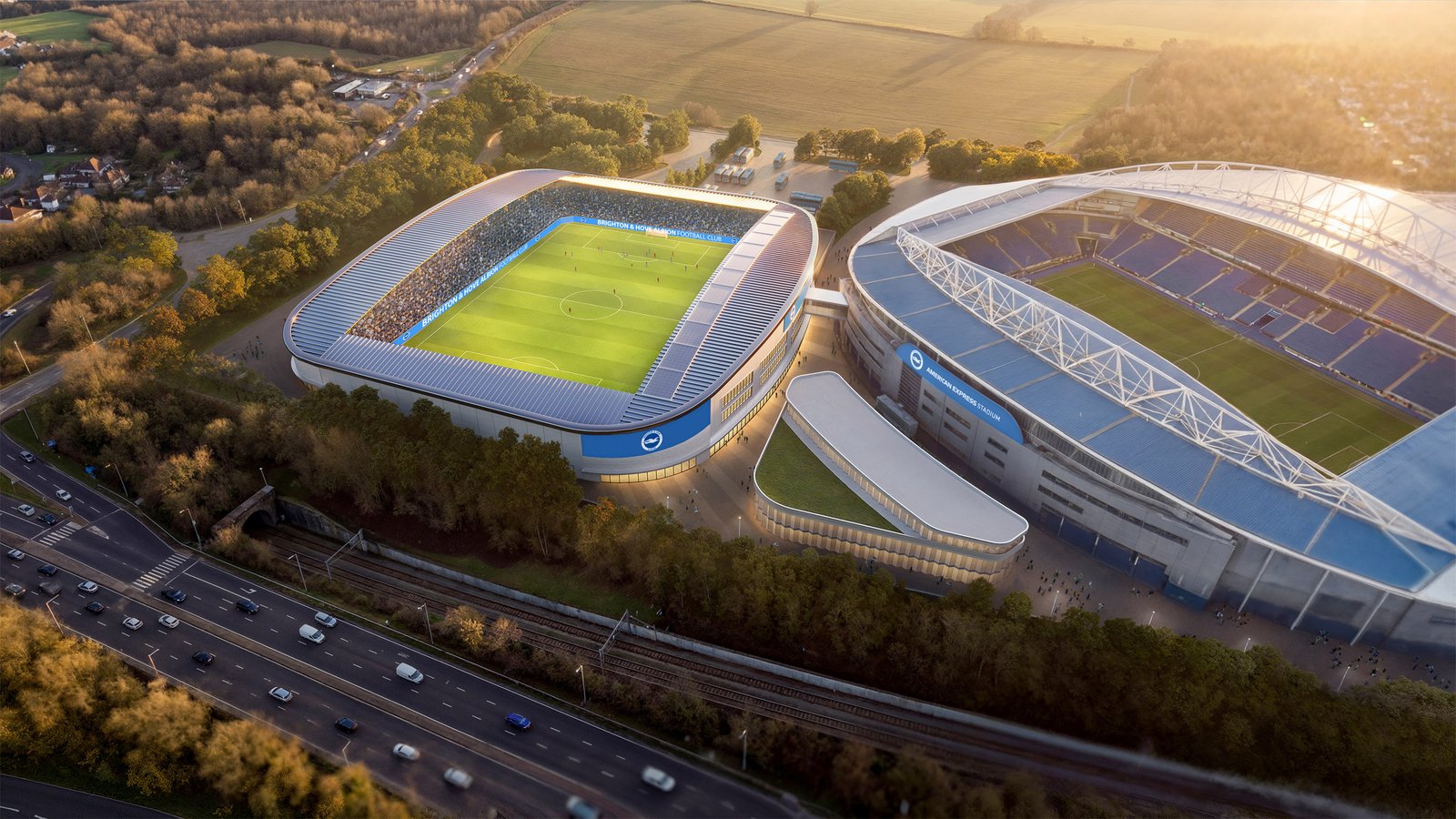
Architecture studio KSS has designed a groundbreaking stadium for the women’s team at Brighton and Hove Albion Football Club in England. If built, it would become the first of its kind in Europe. The club announced this week that it is working with KSS on a planning application for a 10,000-capacity women’s football stadium next to the Amex Stadium. The club plans to complete the stadium by 2030. If realized, it will stand as Europe’s first purpose-built women’s football stadium and only the third in the world, following the CPKC Stadium in Missouri (home of Kansas City Current) and the planned venue for Denver Summit Football Club in Colorado.
This announcement marks a pivotal moment not just for Brighton but for the global women’s game. It signals a shift from adaptation—where women’s teams often play in men’s stadiums or shared facilities not optimized for their needs—to dedicated, thoughtful design that prioritizes female athletes, staff, and a diverse fanbase.
View this post on Instagram
flow
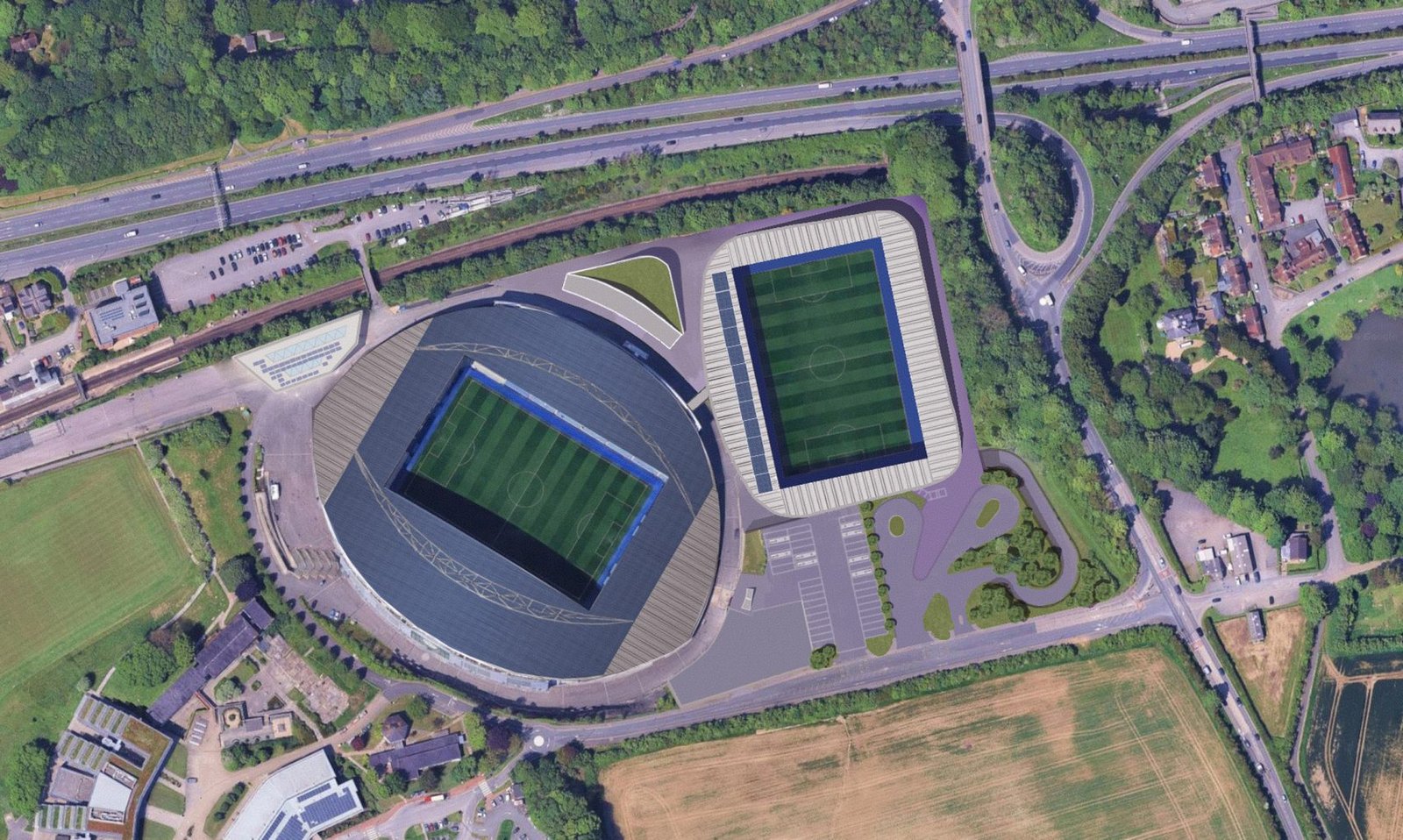
The proposed stadium will sit at Bennett’s Field, a site adjacent to the American Express (Amex) Stadium, which KSS also designed and which opened in 2011 with a current capacity of 31,876. A bridge will physically link the two venues, creating a seamless campus for men’s and women’s football while allowing shared operational efficiencies.
Early views show a compact, modern venue nestled into the landscape, with the natural slope of Bennett’s Field enabling underground parking while maintaining level access for spectators. The minimum 10,000-seat capacity aligns with ambitions for the Women’s Super League (WSL) without overbuilding for current averages (Brighton Women currently attract around 3,000 fans per game). This “right-sizing” approach aims to create an intimate, atmospheric environment where full houses feel electric rather than sparse.
The £75-80 million project is privately funded by club owner Tony Bloom, reflecting his long-term commitment. Planning applications are underway with Brighton and Hove City Council and Lewes District Council, with a target opening for the 2030/31 season.
theory
The project’s guiding principle—”Built for Her”—emphasizes tailoring every element to female athletes and supporters rather than retrofitting male-centric designs. Facilities will include:
- Changing rooms and recovery spaces optimized for female physiology.
- Wider concourses and social spaces focused on community, music, entertainment, and family-friendly experiences.
- Pitch standards informed by research into surfaces that may reduce injury risk for women.
Zoe Johnson, managing director of Brighton’s women’s team, highlighted the excitement: “It is a project that is the first of its kind in the UK and Europe… It will help us push forward our ambitions to compete consistently both domestically in the Women’s Super League, and also in European club competition, while helping us to attract key staff and grow a passionate fan base.” The venue will also host academy and development fixtures, providing young players with elite experiences.
Nikki Doucet, WSL chief executive, praised the approach: “For too long, women have had to adapt to facilities that weren’t designed with them in mind… When we build for her, we build better for all.”
KSS brings extensive expertise here. The firm designed the Amex Stadium, which integrates sensitively into the South Downs landscape with curved forms echoing rolling hills. Their portfolio includes other major venues like Anfield’s Main Stand redevelopment, Sammy Ofer Stadium in Haifa, and various training facilities. This continuity ensures the women’s stadium complements the existing campus aesthetically and functionally.
juxtapose
Brighton’s project follows two North American trailblazers.
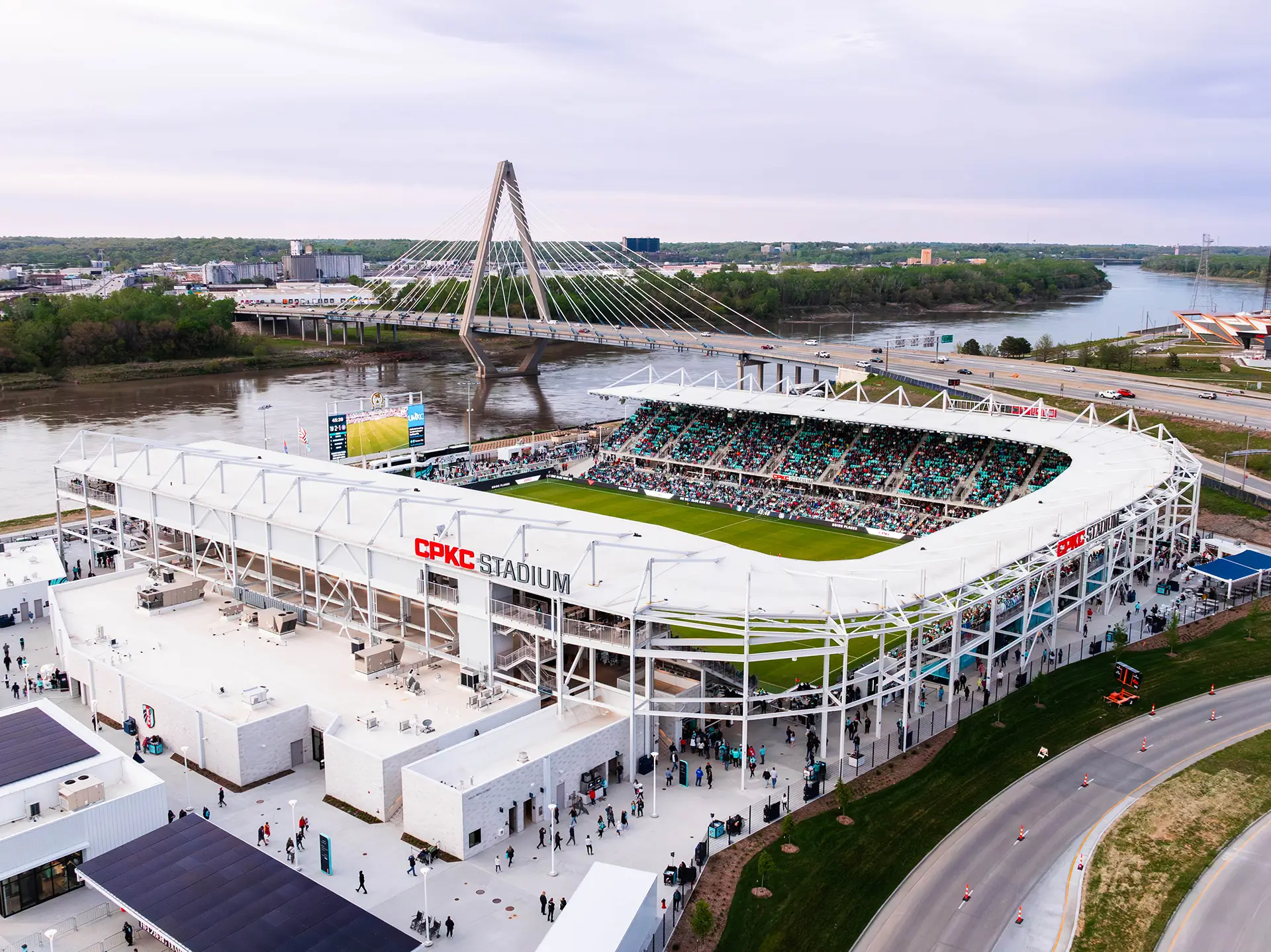
CPKC Stadium in Kansas City, Missouri, opened in March 2024 as the world’s first purpose-built stadium for a professional women’s sports team. Home to Kansas City Current (NWSL), it seats 11,500, cost around $140 million, and features an intimate bowl where no seat is more than 100 feet from the pitch. It is LEED Gold certified, privately funded, and has transformed the riverfront area.
Denver Summit FC’s planned 14,500-seat stadium at Santa Fe Yards in Colorado, designed by Populous, targets a 2028 opening as part of a broader entertainment district. It will be the second dedicated women’s venue in the US.
These US examples demonstrate commercial viability, community impact, and elevated player experiences. Brighton’s stadium builds on this model while adapting to European football culture, WSL regulations, and local context.
hx
Women’s football in England has grown dramatically since the FA lifted its ban in 1970 and especially post-2012 Olympics and the 2022 Euros success. The WSL has professionalized, with increasing attendance, broadcasting deals, and investment. Yet infrastructure lags: many teams share men’s grounds or use lower-league venues like Brighton’s current primary home at Crawley Town’s Broadfield Stadium.
Brighton’s move addresses this. The women’s team has benefited from dedicated training facilities at the American Express Elite Performance Centre since 2021 (£8.5m investment). A matching stadium completes the ecosystem, signaling to players worldwide that Brighton is serious about high performance. Manager Dario Vidosic noted it “shows real intent” for attracting talent.
For fans, a dedicated home fosters identity and belonging. Demographics differ—more families, first-timers, and diverse crowds in women’s football—demanding welcoming, accessible designs. Underground parking, level access, and family amenities directly respond to this.
imply
The project promises local benefits: construction jobs, apprenticeships, and economic boosts in an uncertain climate. It reinforces Brighton’s contribution to the region and positions the city as a global hub for women’s sport.
Sustainability likely draws from KSS’s Amex experience (nestled in an Area of Outstanding Natural Beauty). Expect energy-efficient features, green spaces, and integration with the landscape.
Socially, it accelerates girls’ participation. A visible, aspirational venue inspires the next generation, aligning with the club’s academy ambitions.
challenge
Planning approval is not guaranteed, involving two councils and environmental considerations. Capacity debates persist: 10,000 balances ambition with realism, with overflow possible at the expanded Amex (target 33,000) for big matches.
Critics might question the timeline (delayed from earlier 2027/28 targets due to site searches) or costs amid economic pressures. Yet Bloom’s backing and the club’s track record (successful Amex delivery) inspire confidence.
If built, this stadium could catalyze similar projects across Europe. Other WSL clubs (e.g., Chelsea at Stamford Bridge, Arsenal moves) show integration trends, but few pursue standalone women’s venues. Success here could normalize dedicated infrastructure.
fin
This isn’t merely a building—it’s a statement. Tony Bloom described it as “essential to the continued growth of the team,” strengthening talent attraction, development, fan growth, and belonging.
In an era of rapid women’s football evolution, Brighton leads by design. KSS’s architecture will translate vision into reality: a venue where elite performance meets community warmth, where “for her” elevates everyone.
As planning advances, anticipation builds. By 2030, Falmer could host not just Premier League action but a beacon for global women’s sport—a compact, connected, purpose-built home proving that investing in women yields profound returns on and off the pitch.
n
From the DRIFT archive: PANTONE’s 2026 Color of the Year Takes Shape With Play-Doh and Post-It Editions
Related Articles

BAPE Opened An iPhone 18 Order Window And Put Camo On The New Last
Four cases. Shark with a magnetic mini pouch. Glow solid camo. City camo. Color camo. […]