DRIFT AUDIO
Listen to this story
Choose a voice, then press play.
The flannel shirt has always carried weight beyond its fabric. Originally designed as rugged workwear, it evolved into a subcultural staple—grunge’s uniform in the ’90s, skatewear’s layering essential, and a hip-hop icon in oversized silhouettes. Staple Pigeon, led by Jeff Staple, reimagines this legacy with the CARTER Flannel, a piece that fuses heritage with narrative.
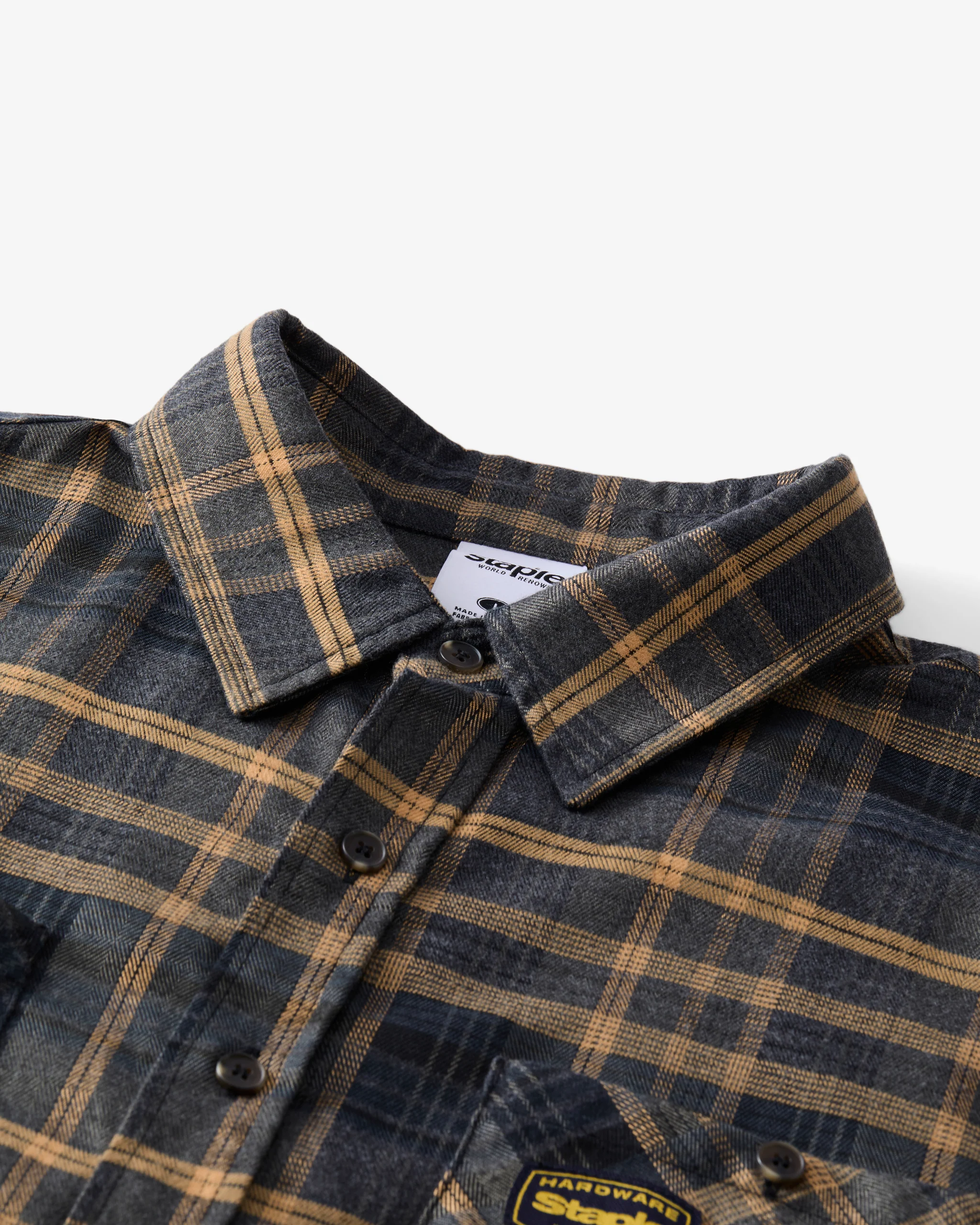
Its navy, tan, and charcoal plaid pattern keeps to tradition, while a woven “Hardware Staple” patch on the front pocket nods to the brand’s ethos of durability and cultural construction. It feels authentic as workwear but carries streetwear’s sharper edge.
The Back Tells the Story
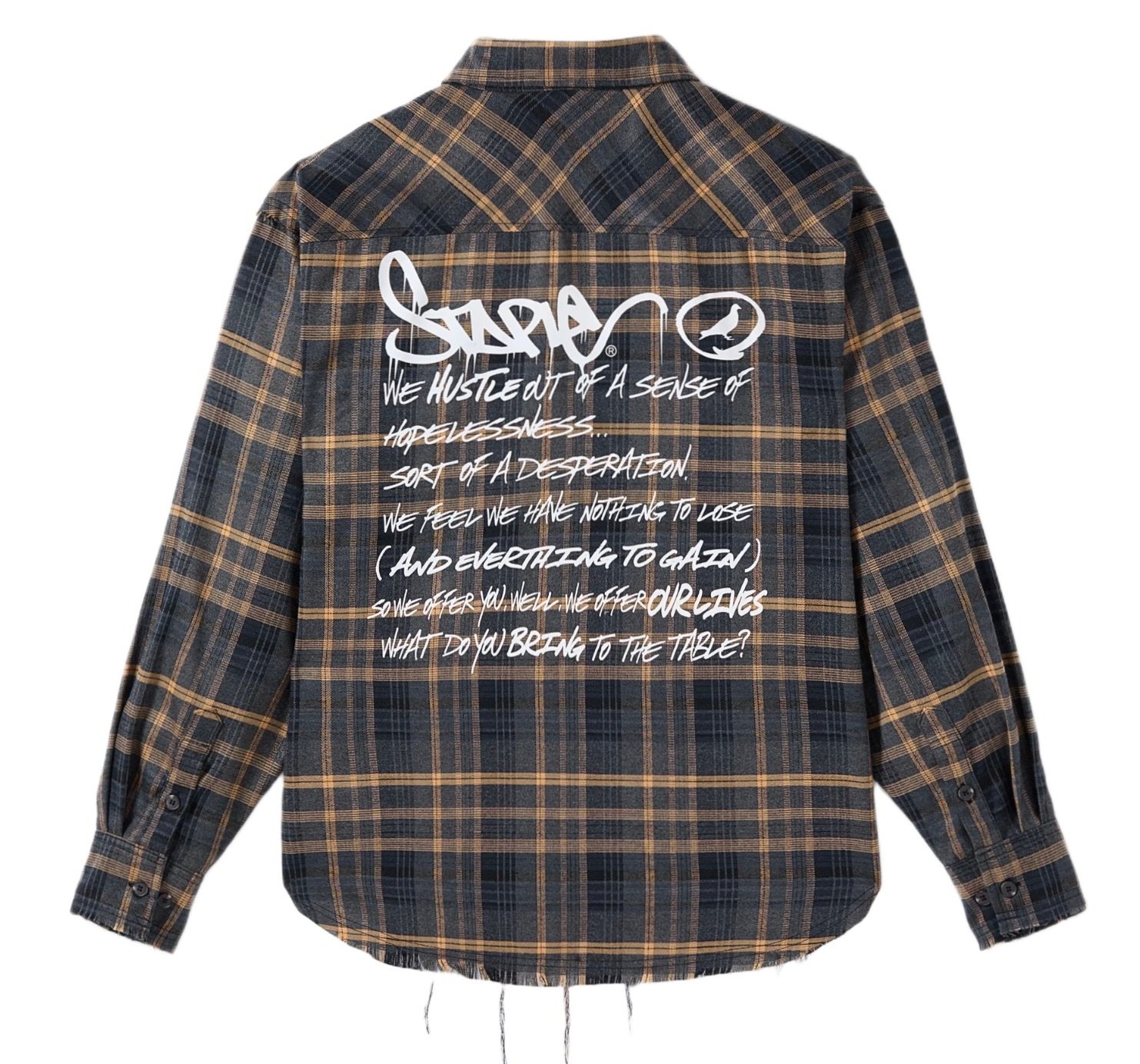
What separates the CARTER Flannel from ordinary plaid is its back panel. In bold, graffiti-inspired lettering, it declares:
“We hustle out of a sense of hopelessness… sort of a desperation. We feel we have nothing to lose (and everything to gain). Some offer you well, we offer our lives. What do you bring to the table?”
This is more than print—it’s philosophy. It positions the flannel as a wearable manifesto, echoing the urgency of survival and ambition that defines urban hustle culture. The rigid geometry of plaid contrasted with free-flowing graffiti script symbolizes resistance against imposed structures.
Jeff Staple’s DNA
Jeff Staple’s story is inseparable from his brand. Starting in 1997 with silkscreen tees, he built Staple Pigeon from the ground up. His landmark Nike SB Dunk “Pigeon” release in 2005 sparked sneaker riots, proving that clothing drops could be cultural flashpoints. The CARTER Flannel carries that same spirit—fashion not as decoration, but as a statement of identity.
By embedding a manifesto directly into the shirt, Staple continues to blur the line between garment and message. This approach ensures that the flannel is not just worn, but also read, shared, and discussed.
Styling with Identity
The beauty of the CARTER Flannel lies in its versatility. It can sit within multiple style narratives:
Streetwear Fit: Layered over a tee with raw denim and shoes.
Grunge Revival: Paired with distressed jeans and boots.
Utility Edge: Combined with cargo pants for a workwear-inspired silhouette.
Creative Casual: Buttoned up with tailored trousers for a bold but polished look.
Wherever it’s styled, the graffiti manifesto remains the focal point, sparking conversations and reinforcing identity.
A Shirt That Archives Culture
Streetwear has long been a cultural archive, documenting rebellion, hustle, and creativity. The Staple Pigeon CARTER Flannel is no different. It embodies the urgency of its time, turning a classic workwear fabric into a carrier of philosophy.
Related Articles
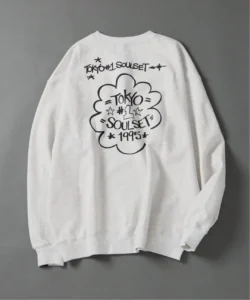
Eric Haze Stitches a Nineties Friend Into TOKYO Capsule
Five pieces carry Eric Haze's embroidered tagging for TOKYO No.1 SOUL SET, sold online and in Osaka around the band's Oct 25 BAYCREW'S FESTIVAL set.