DRIFT AUDIO
Listen to this story
Choose a voice, then press play.
The Blazy-mania is real. Yesterday, Chanel released its 2025 annual results, demonstrating that the few months of creative direction by Matthieu Blazy have made sales soar in the second half of the year. Of course the growth is not explosive: revenue grew by 2% to $19.3 billion compared to 2024, operating profit by 5%, but cash flow grew by 44%, establishing that the brand is in a very strong financial position. What better opportunity, then, to raise prices a little more?
A couple of months ago, Purse Blog had already calculated that Chanel bag prices had risen between 2.6% and 4% starting from April. And speaking with BoF, the brand’s managers said that they plan to limit themselves to contained price increases this year, in line with inflation, like last year, when prices increased overall by 3%, with a 2% rise for the fashion sector. A less aggressive increase than those seen in the past, but one that testifies to the brand’s willingness to move ever higher in the Olympus of ultra-luxury. But what led to the brand’s growth?
View this post on Instagram
flow
The choice of New York for the Métiers d’Art show in December was not accidental. The USA were in fact Chanel’s fastest-growing market in 2025, with sales up 7.2%. Growth was slower in Europe, where sales rose 2.5%, while they fell by 0.8% in the Asian region, including China. It is precisely there that Chanel has invested heavily: several boutiques have been opened throughout Asia and especially in China and Japan, the Plaza 66 project in Shanghai has been completed, and in November Espace Gabrielle Chanel was inaugurated in the same city, which is the first public library dedicated to contemporary art in mainland China.
@fashionvictimscom chanel unveils espace gabrielle, mainland china’s first contemporary art library in shanghai 😳 #chanel #fashionretail #fashion #new #trendy ♬ Originalton – 🎧☆
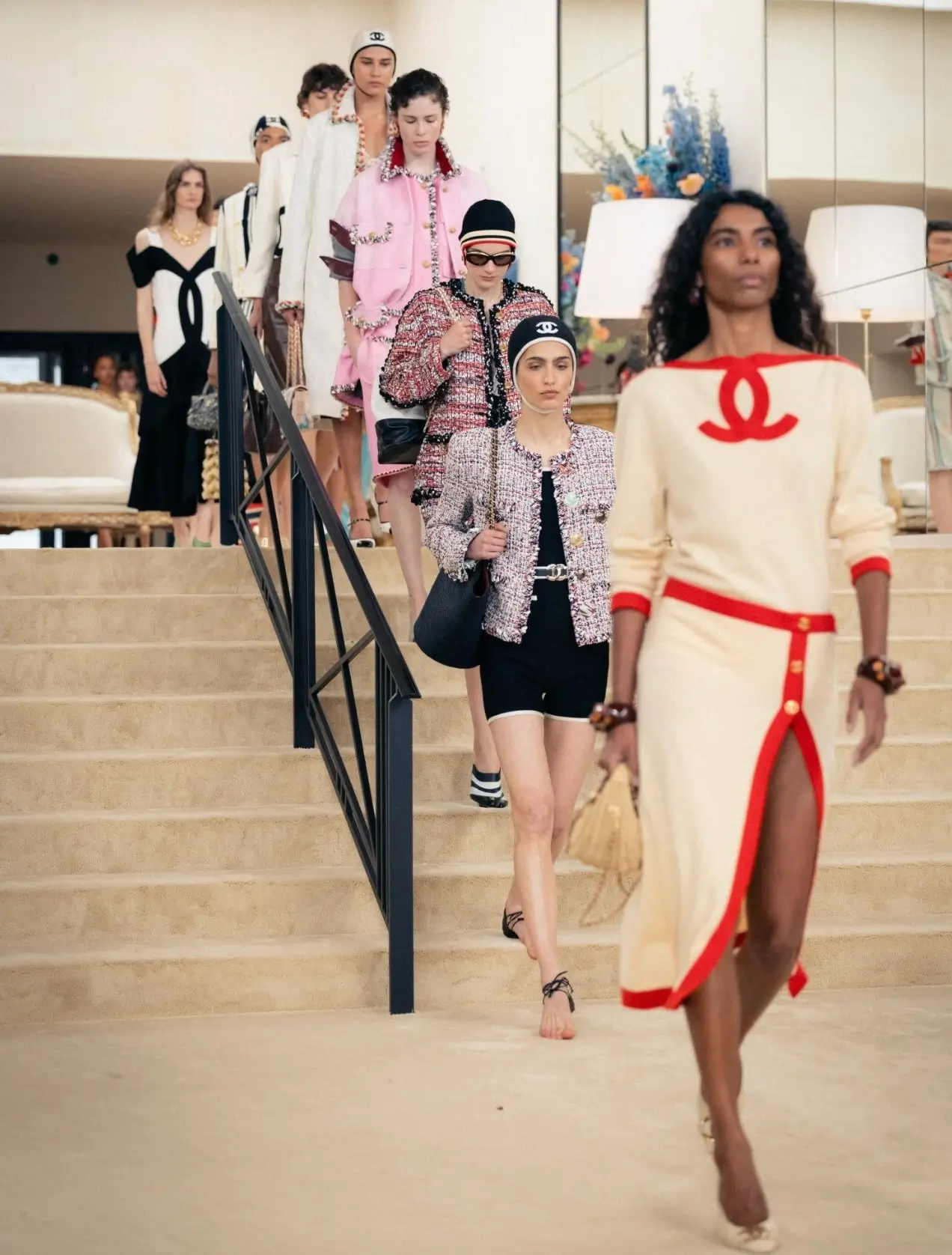
This strategic emphasis on the Americas paid dividends amid a broader luxury market recovery. Blazy’s fresh take resonated particularly with American consumers seeking modern interpretations of classic luxury. The Métiers d’Art 2026 collection, presented in an abandoned New York subway station at the Bowery stop, transformed a gritty urban space into a cinematic runway. Models strutted with a hurried city pace, embodying singular personalities in a joyful cavalcade that blended high craftsmanship with pop culture references. Guests including A$AP Rocky, Margaret Qualley, Tilda Swinton, and Kristen Stewart witnessed a collection that celebrated French savoir-faire while speaking directly to New York’s energy.
The strongest categories were fashion, with a special mention for the Chanel 25 bag (the one from the campaign with Margot Robbie’s clones), while both the fragrances and beauty section had great success, which saw the opening of 25 stores and the launch of a dedicated app. Other successes were achieved by the jewellery and watches department with the Coco Crush jewels and the Première Galon and J12 Bleu collections cited as the most successful. And these too are all categories on which the brand has invested heavily for the future.
The Chanel 25 handbag campaign, starring Margot Robbie and directed by Michel Gondry, paid homage to Kylie Minogue’s iconic “Come Into My World” video from 25 years prior. Multiple Robbies navigated Parisian streets, each carrying different iterations of the versatile, expandable bag in varied sizes, colors, and materials. The campaign highlighted the bag’s practicality and chic appeal for the modern woman—slouchy yet structured, with multiple pockets for on-the-go living. It quickly became a bestseller, driving fashion category growth and symbolizing Blazy’s ability to refresh heritage codes without alienating loyalists.
Beauty and fragrances benefited from targeted expansion. The dedicated app enhanced customer engagement with personalized recommendations, virtual try-ons, and educational content on iconic scents like No. 5. Jewelry innovations, such as the tactile Coco Crush and the elegant Première Galon watches alongside the refreshed J12 Bleu, appealed to collectors seeking both everyday wearability and statement pieces.
scope
To grow one must invest in oneself and Chanel has really spared no expense in terms of new strategic spending. In 2025 Chanel allocated a total of $2.395 billion to support brand activities and the engagement of existing clients and spent $1.449 billion in capital expansion such as new boutiques, factories and so on. We have already mentioned the opening of more than forty new boutiques distributed across Asia, the Middle East and Mexico and the completion of important retail projects including Plaza 66 in Shanghai, as well as interventions in Hong Kong, Las Vegas, Toronto and Fukuoka.
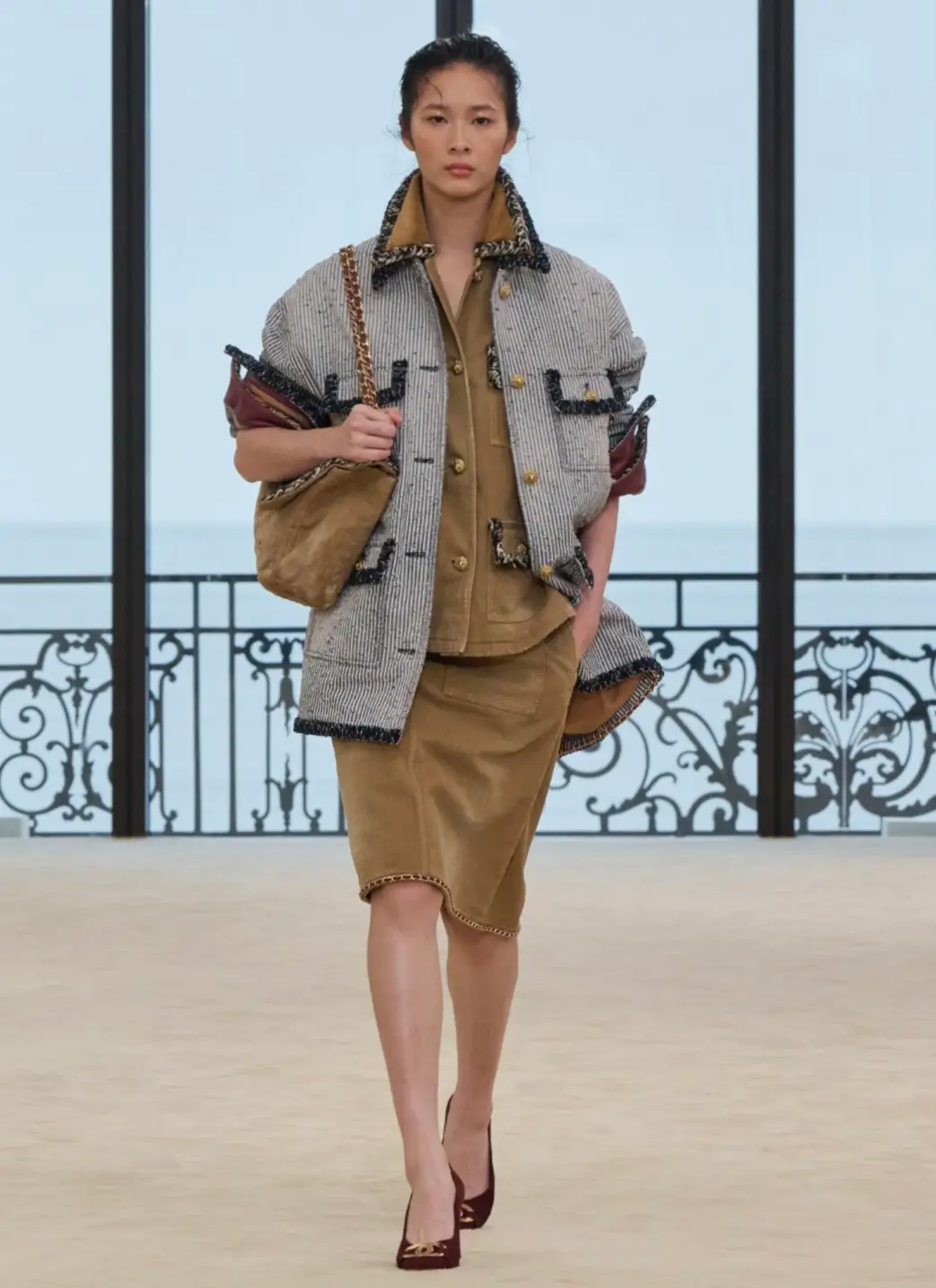
A runway look featuring layered Chanel styling with a relaxed grey tweed jacket trimmed in textured black edging over tonal camel separates, including a utility-inspired shirt and matching knee-length skirt. The look is finished with a soft shoulder bag on a chain strap and deep burgundy pumps, balancing house tailoring codes with an understated, contemporary silhouette
These figures reflect a continuation of aggressive investment from 2024, when capital expenditure reached record levels around $1.8 billion. Chanel’s approach prioritizes long-term brand equity over short-term margin optimization—a strategy that has allowed it to weather industry downturns better than many peers.
The brand has also invested in a new perfume factory in France, inaugurated last February 2026, and continued work on the new global headquarters at Berkeley Square in London, which will be inaugurated before the end of the year. In addition, the brand spent over $700 million to acquire historic suppliers specialized in high-level materials and savoir-faire, thereby strengthening the entire production chain. Finally, the brand launched NEVOLD, a new entity dedicated to the circularity of textile and natural leather materials, and continued to invest in research and development on new production techniques, ingredients and open innovation through the CHANEL Open Lab.
NEVOLD stands out as a forward-thinking initiative. Launched as an independent B2B platform (short for “Never Old”), it focuses on industrial-scale recycling and regeneration of textiles and leathers. Partnering with specialists like L’Atelier des Matières, Filatures du Parc, and Authentic Material, NEVOLD develops high-quality recycled fibers for tweed, leather reinforcements, and beyond. Early results include recycled threads in tweed jackets and leather waste repurposed for bag and shoe interiors. Under leader Sophie Brocart, it aims to address Scope 3 emissions and raw material scarcity while remaining open to the broader industry.
Vertical integration has been key. Acquisitions of suppliers ensure control over quality and traceability, mitigating risks from supply chain disruptions. The new French perfume factory enhances capacity for fragrances, a high-margin category, while the London headquarters will centralize global operations in a landmark sustainable building.
reset
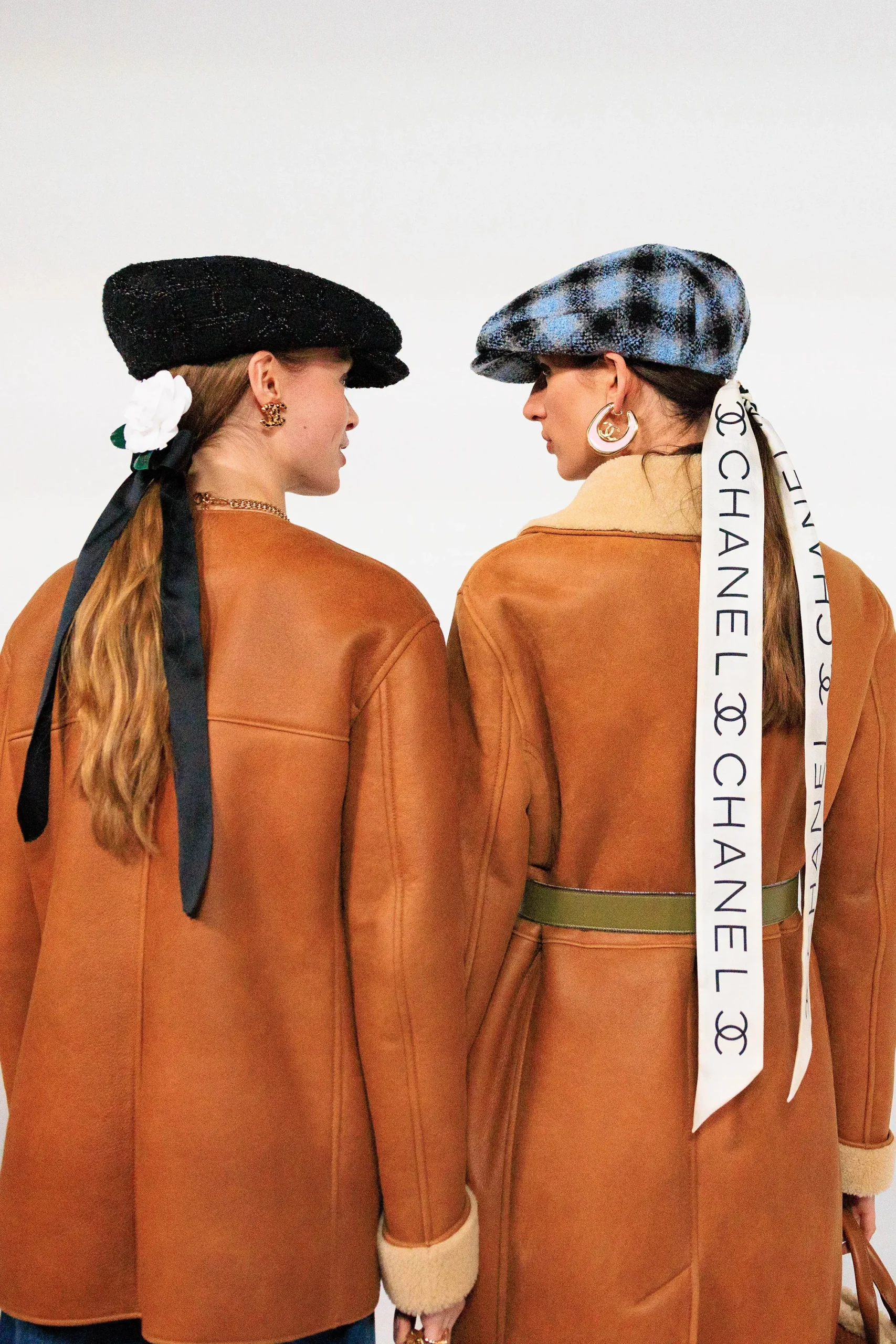
Matthieu Blazy joined Chanel in April 2025 after a transformative run at Bottega Veneta, where he elevated intrecciato weaving into cultural phenomena. His appointment as Artistic Director of Fashion Activities marked only the fourth in the house’s modern history, following Gabrielle Chanel, Karl Lagerfeld, and Virginie Viard. Expectations were sky-high, yet his debut in October 2025 at the Grand Palais—titled a “Big Bang” with planetary scenography—delivered.
Blazy deconstructed and recombined Chanel codes at a molecular level: tweed jackets with frayed edges and vibrant colors, slouchy maxi flap bags, two-tone pumps, and fluid silhouettes that felt fresh yet unmistakably Chanel. Demand outstripped supply almost immediately, with new clients flocking to stores. Harrods reported “phenomenal” recruitment of first-time buyers. By late 2025, high single-digit growth in the second half reflected this momentum.
Critics praised the balance: respect for heritage without nostalgia, innovation rooted in craftsmanship. The Métiers d’Art show in New York further showcased his vision, using the subway as a metaphor for interconnected stories and urban dynamism.
position
Chanel’s 2% growth stands out in a challenging luxury landscape. While Hermès achieved stronger gains (~10%), LVMH’s fashion and leather goods division declined. Chanel outperformed Louis Vuitton and Dior in relative terms, thanks to Blazy’s buzz and disciplined pricing.
Asia’s slight decline reflects broader post-pandemic normalization and economic pressures in China, yet investments there position Chanel for rebound. The US surge highlights Blazy’s appeal to younger, culturally attuned consumers. Europe’s steady growth, led by key markets like France and Italy, underscores enduring loyalty.
Price increases remain measured—3% overall—to protect accessibility at the ultra-luxury tier while signaling premium positioning. This strategy sustains desirability without alienating core clients.
‘Chanel’s creative revival is paying off. The world’s second-biggest luxury label is turning heads again.’ @TheEconomist
‘For the change in Chanel’s fortunes, the Wertheimer brothers can thank Matthieu Blazy, who took over as the label’s creative director in April last year.…
— MastersInvest.com (@mastersinvest) May 19, 2026
sustain
Beyond financials, Chanel advances its sustainability agenda. NEVOLD complements LEED-certified boutiques, responsible sourcing, and R&D via the Open Lab. Investments in people, from artisans to retail staff, ensure cultural continuity.
The brand plans another 30 store openings in 2026, focusing on experiential retail. Beauty expansions and digital innovations will broaden reach.
impression
Blazy-mania shows no signs of fading. His Cruise 2026/27 collection in Biarritz and ongoing deliveries keep excitement high. With strong cash flow, a robust balance sheet (owned by the Wertheimer brothers), and a clear creative vision, Chanel is poised for accelerated growth.
Challenges remain: geopolitical tensions, tariff risks, and luxury market volatility. Yet Chanel’s long-termism—evident in record investments during downturns—has historically paid off.
As Leena Nair, CEO, noted, creative momentum across activities, paired with foundational investments, drives results. Philippe Blondiaux, CFO, emphasized a solid financial structure supporting future ambitions.
In an industry often criticized for short-termism, Chanel exemplifies patient capital at work. Blazy’s designs have not just revived sales; they’ve reinvigorated the brand’s cultural relevance. The move into ultra-luxury Olympus, supported by craftsmanship, innovation, and responsibility, positions Chanel strongly for the decade ahead.
The Blazy era is just beginning, but its impact is already measurable in billions and immeasurable in buzz. For a house founded on reinvention, this feels like a natural evolution—and a very promising one.
Related Articles
Gracie Abrams Just Shh Chanel’s Newest Instinct
The singer-songwriter is the new face of Coco Mademoiselle Crush Absolu, a fragrance built around […]