DRIFT AUDIO
Listen to this story
Choose a voice, then press play.
sacai’s second 2026 autumn winter delivery pairs a Muhammad Ali graphic tee with a third A.P.C. collide and a run of the label’s most structurally ambitious pieces yet.
In This Story
- A Second Delivery Built Around a Single Image
- Muhammad Ali Returns at the Center of the Collection
- A.P.C. Expands the Collaboration With Ten New Pieces
- Tailoring, Knitwear, and Outerwear Round Out the Drop
- Why Drop 2 Completes sacai’s Spring/Summer 2026 Conversation
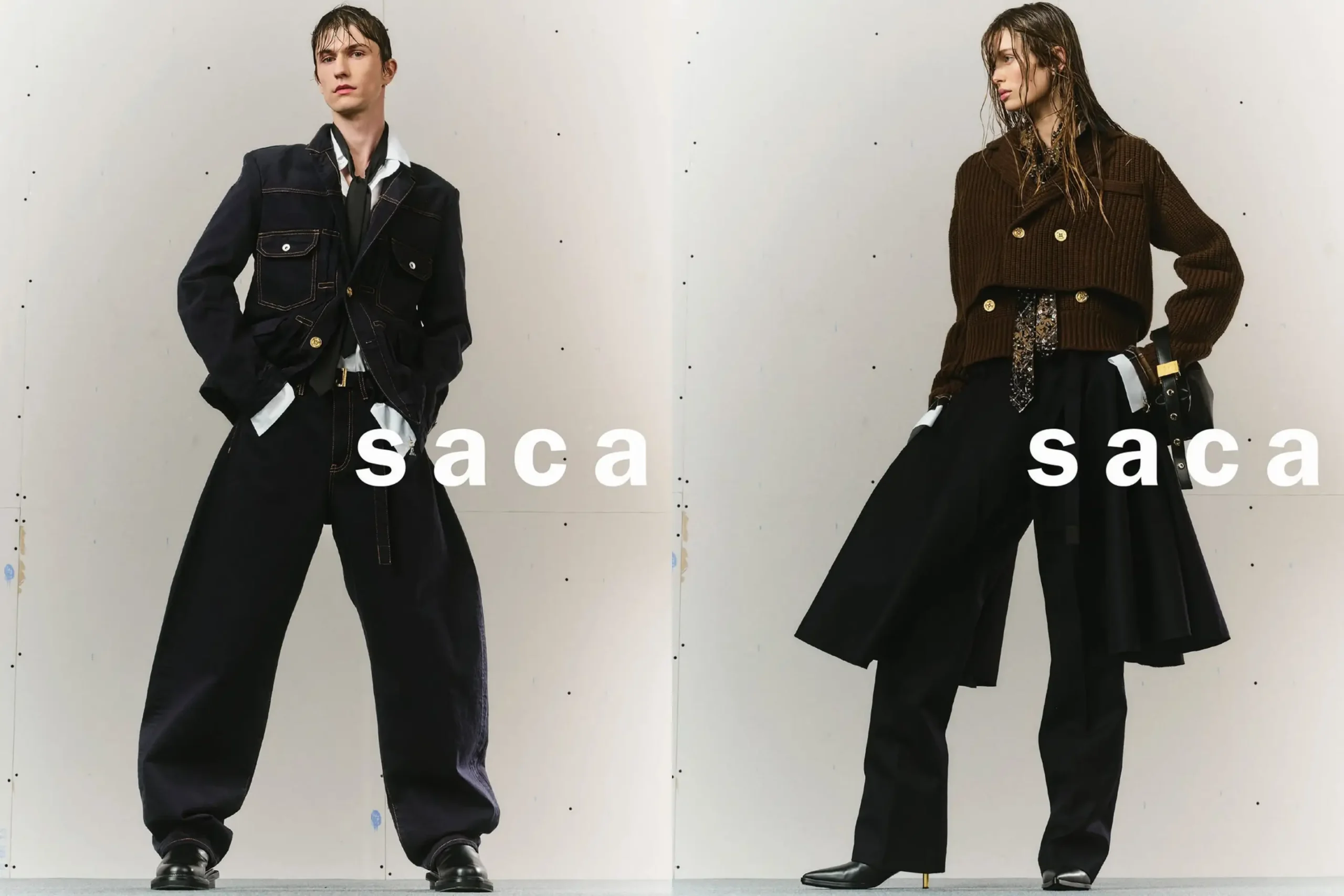
Every sacai season eventually reveals which image it was actually built around, and this one arrived early. When Chitose Abe staged sacai’s autumn winter 2026 runway show in Paris back in January, the soundtrack moved from Queen’s I Want to Break Free into a Charli XCX remix, and the projected image running through the set was a black and white photograph of Muhammad Ali mid punch, fist driving straight at the audience. Abe called the collection’s theme the beauty of destruction, a phrase vague enough to cover almost anything a design house wants it to, but specific enough here that it actually meant something: garments spliced apart and rejoined at odd seams, jackets cut horizontally so the lower half hangs from the lining rather than the shell, wide trousers cropped down until they read as something closer to a skirt.
Six months and one runway season later, that image has made its way from projection screen to printed cotton. sacai’s second delivery of the autumn winter 2026 collection, arriving July 10, turns the show’s central metaphor into an actual, buyable garment, alongside a much larger rollout that includes the label’s third go around with A.P.C. and a handful of the more structurally adventurous pieces that made the runway show worth talking about in the first place.
It is also worth pausing on why Abe reached for Ali specifically, rather than any other culture figure who might fit a theme built around breaking free of convention. Ali spent much of his career being defined by exactly the kind of duality sacai’s whole design language is built on, a fighter whose public persona swung between brutal physical discipline and playful, almost theatrical self invention, someone who talked as much about who he was becoming as who he already was. That tension between structure and freedom, between a rigid discipline and a genuinely rebellious personality, maps unusually well onto a label whose entire identity rests on taking a fixed garment type, a trench coat, a bomber, a pair of trousers, and splitting it open until it becomes something else entirely. Whether that connection was deliberate on Abe’s part or simply a happy overlap between a boxer’s legend and a designer’s vocabulary, it gives the collaboration a conceptual footing that a lot of licensed sports imagery tees never bother trying to earn.
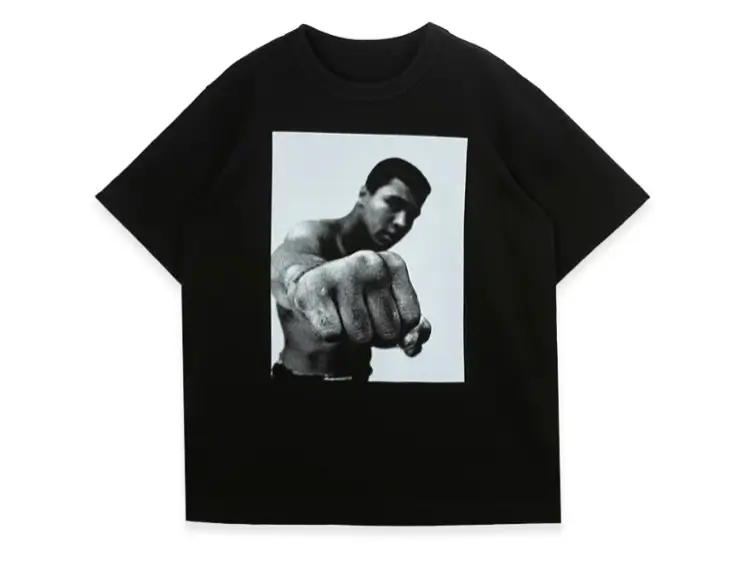
sacai’s graphic T-shirt pairs a timeless archival Muhammad Ali portrait with a clean black cotton base, transforming one of boxing’s most recognizable photographs into a striking contemporary fashion statement.
stir
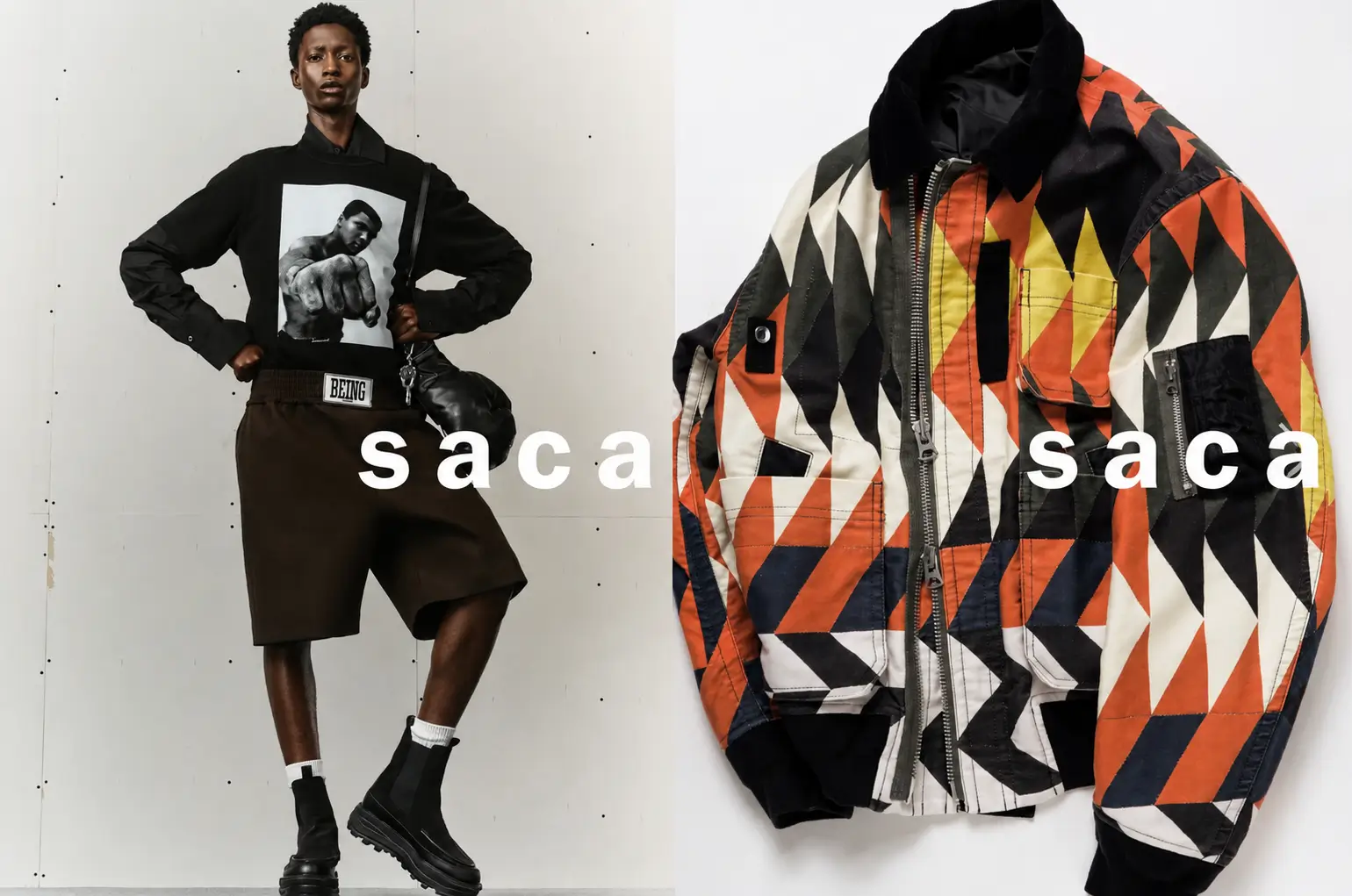
The tee itself is built around a specific, credited photograph rather than a generic silhouette. The image, showing Ali’s fist thrown toward the camera, was taken by German photographer Thomas Hoepker and is licensed through Magnum Photos, with the release also crediting Muhammad Ali Enterprises for the rights to his likeness. That level of credit matters more than it might seem. A lot of streetwear graphic tees traffic in loosely sourced or outright uncredited imagery, and sacai’s decision to run the photographer’s name and the rights holder alongside the print is a small but real signal that this was licensed properly rather than lifted.
The design itself keeps things fairly restrained for a piece built around such a loud image. The portrait runs in monochrome across the front, punching toward the wearer rather than sideways or in profile, which gives the print a directness that a lot of archival sports photography tees avoid. On the back or sleeve, depending on the piece, sacai has added a short printed line, “What you’re thinking is what you’re becoming,” a phrase that leans into Ali’s own reputation for self mythologizing as much as his boxing record. The capsule includes three pieces built around this same image, a hoodie, a short sleeve tee, and a long sleeve tee, priced at roughly 47,300 yen, 26,400 yen, and 30,800 yen respectively through sacai’s own domestic pricing.
It is worth being upfront about what this piece is and is not. It is a licensed commercial collaboration between a fashion house and an estate that controls a public figure’s rights of publicity, similar in spirit to any number of archival sports or music prints that have run through streetwear in the last decade. It is not, and should not be read as, sacai making any claim about Ali the person beyond what the photograph itself already says. The garment is the product; the man remains exactly who he was.
View this post on Instagram
flow
If the Ali tee is the piece most likely to generate headlines, the third sacai and A.P.C. collaboration is arguably the more substantial release of the two, if only by sheer volume. Sacai and the French label, founded in Paris in 1987 by Jean Touitou, have now worked together three times, and this round leans on a name that regular A.P.C. followers will already recognize: Jessica Ogden, the textile artist who has spent more than two decades turning A.P.C.’s leftover fabric stock into hand stitched quilts, a project that started, by her own account, out of Touitou’s reluctance to ever throw archival material away.
For this capsule, Ogden’s archival quilt patterns, largely geometric designs with a strong nod to traditional patchwork borders, have been recolored and reworked directly into sacai’s own silhouettes rather than left as standalone textile objects. The ten piece lineup spans blousons, pants, a pullover, at least one dress, and graphic tees, in a price range running from roughly 55,000 yen up to 385,000 yen for the more involved outerwear pieces. It is a genuinely broad range for a single capsule, wide enough to include an entry priced tee alongside outerwear that sits closer to sacai’s mainline pricing, which suggests the collection is meant to work as a shelf rather than a single hero item.
The Ogden and A.P.C. relationship long predates this particular sacai tie in, and it is worth understanding on its own terms before folding it into someone else’s collection. Ogden began working with Touitou around the turn of the millennium and started formally designing quilts for the brand roughly a decade later, reworking the label’s accumulated surplus fabric, prints Touitou had deliberately refused to sell off over the years, into small, hand stitched editions produced by artisans working out of a small workshop. Each round of quilts tends to carry its own loose organizing idea, whether that has meant referencing a specific A.P.C. retail space, drawing on Touitou’s mother’s own quilting habit, or, in at least one earlier round, working directly with sacai’s own leftover fabric alongside A.P.C.’s to produce a genuinely blended object between the two houses. This latest capsule effectively takes that same collaborative instinct and runs it in the opposite direction, moving Ogden’s patchwork off soft furnishings and directly onto wearable sacai silhouettes for the first time at this scale.
What makes the pairing work, at least on paper, is that both labels already share a design language built on reworking existing material rather than starting from a blank canvas. A.P.C.’s quilts exist specifically because Touitou refused to discard old fabric, and sacai’s entire identity for two and a half decades has been built on splicing existing garment types into new hybrids. Putting Ogden’s patchwork directly onto a sacai blouson is less a stretch than it might sound on first read; both sides of the collaboration were already doing some version of the same thing before they ever sat in a room together.
huh
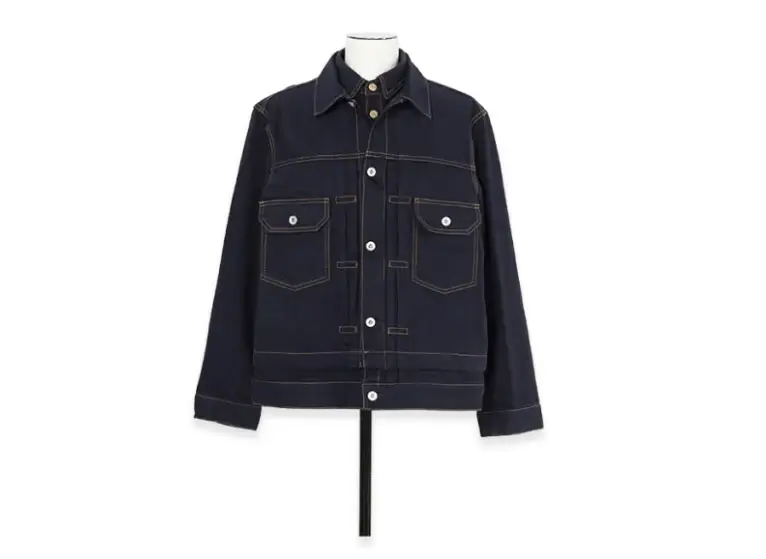
Away from the two headline collisions, the rest of the second delivery is where sacai’s more experimental instincts get room to actually show off, and it is worth spending time here rather than treating it as filler behind the bigger names. A reconstructed denim jacket anchors the outerwear side of things, built with a distinct two layer structure across the front panel, the kind of construction trick that reads as a single garment from a distance and reveals itself as two overlapping pieces only once you look closely, which has become something of a signature move across Abe’s recent seasons.
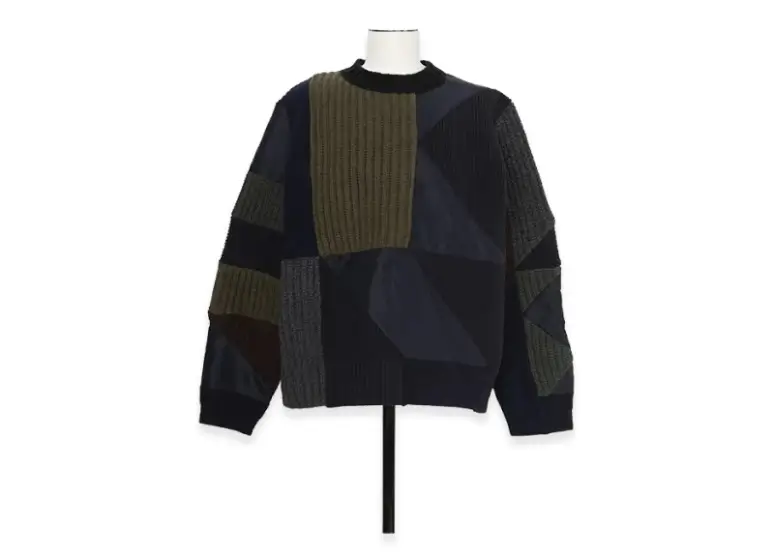
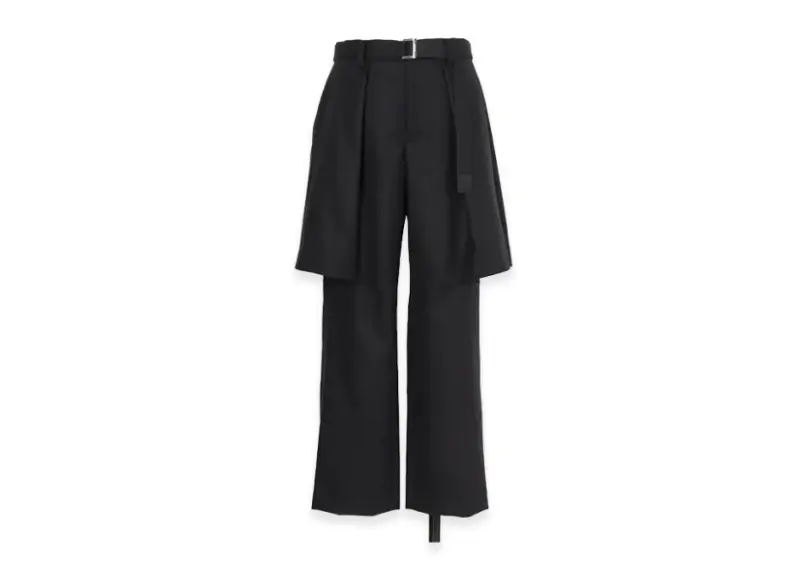
A cropped knit jacket, one of the pieces that stood out during the Paris runway presentation back in January, also makes it into this delivery, translating a runway silhouette into something closer to a wearable, seasonally appropriate layer rather than a show only statement. Alongside it sit a run of uniquely layered bottoms, continuing a thread from the same runway show where wide leg trousers were precisely cut and cropped to shift their form, occasionally spliced directly with tailored trouser panels so that two distinct garment types appear to have been sewn into one leg.
The through line connecting all three of these non collaboration pieces, the denim jacket, the knit jacket, and the layered trousers, is that each one asks the wearer to look twice before understanding what they are actually looking at. A jacket that reads as a single cohesive shell from six feet away reveals a second, independent layer stitched beneath it up close. A pair of trousers that looks tailored from the front turns out to be two separate garment types merged at a seam most people would never think to check. That kind of deception dressed up as construction is, at this point, close to sacai’s house signature, and it says something about how confident the brand has become in its own vocabulary that these pieces can sit in the same delivery as two major named collaborations and still hold their own for attention.
None of these pieces carry a collaborator’s name, which in a season this stacked with outside partners is almost a relief. They exist purely as a demonstration of what sacai’s own design team can do without a co-signer in the mix, and given how much of the discourse around any given sacai season tends to orbit whichever brand it is working with that month, it is worth remembering that the label’s own reconstructive instincts are still doing most of the actual design work underneath all of it.
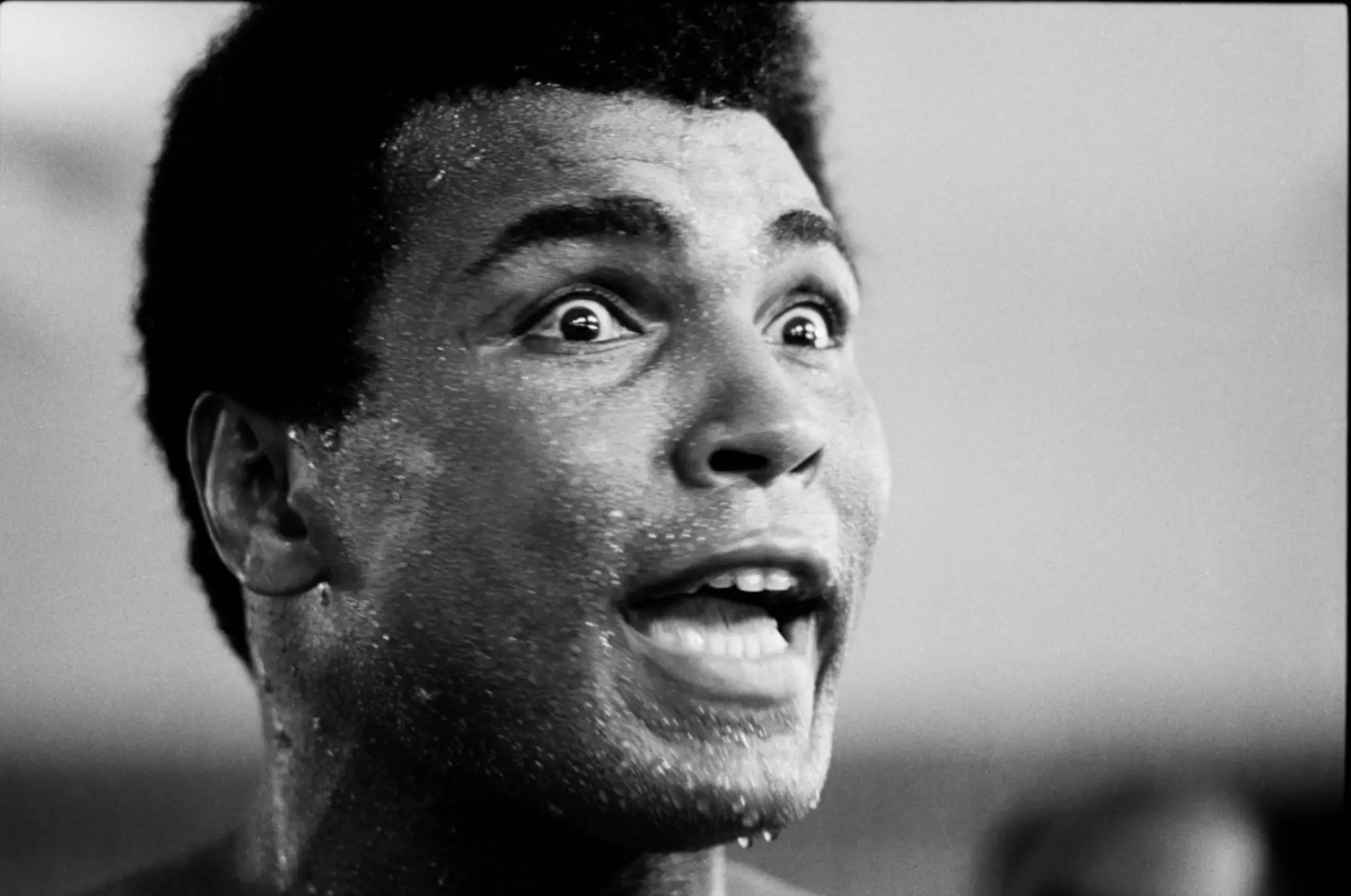
Archival black-and-white photograph of Muhammad Ali captures the boxing icon’s unmistakable energy and expressive personality, serving as the centerpiece for sacai’s latest collaborative collection.
end
Zooming out, this delivery is not sacai’s first release of the season, and it will not be the last. The label opened its autumn 2026 rollout back in June with a first delivery built around reconstructed ready to wear, and it has separately been running a Classics line since mid May that revisits some of its most enduring archival silhouettes in updated fabrications. Layered on top of all of that is an active Levi’s collide remixing Type 1 and Type 2 denim jackets with biker and bomber details, plus a J.M. Weston footwear tie in that reworks its Golf Derby style in a deep bordeaux for the season, both of which debuted on the same Paris runway that introduced the Ali motif in the first place.
That is, by any measure, an unusually dense release calendar for a single house to be running within roughly seven months, and it raises the same question that tends to follow any brand moving this quickly: either the through line holds up once you look at every delivery side by side, or whether it starts to feel like a lot of separate ideas wearing the same label. On the evidence of this particular delivery, the throughline mostly holds. The Ali tee and the A.P.C. capsule are pulling from genuinely different creative wells, sports photography licensing on one side, a two decade old textile art practice on the other, and yet both land inside the same design vocabulary of reconstruction and recontextualization that has defined Abe’s work since she founded the label in 1999. Whether that consistency survives another five deliveries this year is a fair question. For now, it is the reason this particular drop reads as more than the sum of its convincers.
From the DRIFT archive: Y-3 Sets the Tone for Its Spring/Summer 2026 Collection · Ssstufff Reversible Shirt Down Puffer: A Dual-Identity Layer Redefine
Related Articles
Aaliyah, Reconstructed: Sacai’s Cinematic Dialogue For Contempo – Hybrid
the continue There are artists whose impression settles into nostalgia, and there are those whose […]