DRIFT AUDIO
Listen to this story
Choose a voice, then press play.
One global release date, one storefront able to sell it, on the other side of the world for most fans.
In This Story
- A Worldwide Drop With One Address
- BAPE and Disney’s Collision History Runs Deep
- Why the Disneytown Shanghai Store Matters
- How Camo Mickey Fits Into BAPE’s Design Language
- The Strategy Behind a Single-Location Global Release
- What We Still Don’t Know About the Collection
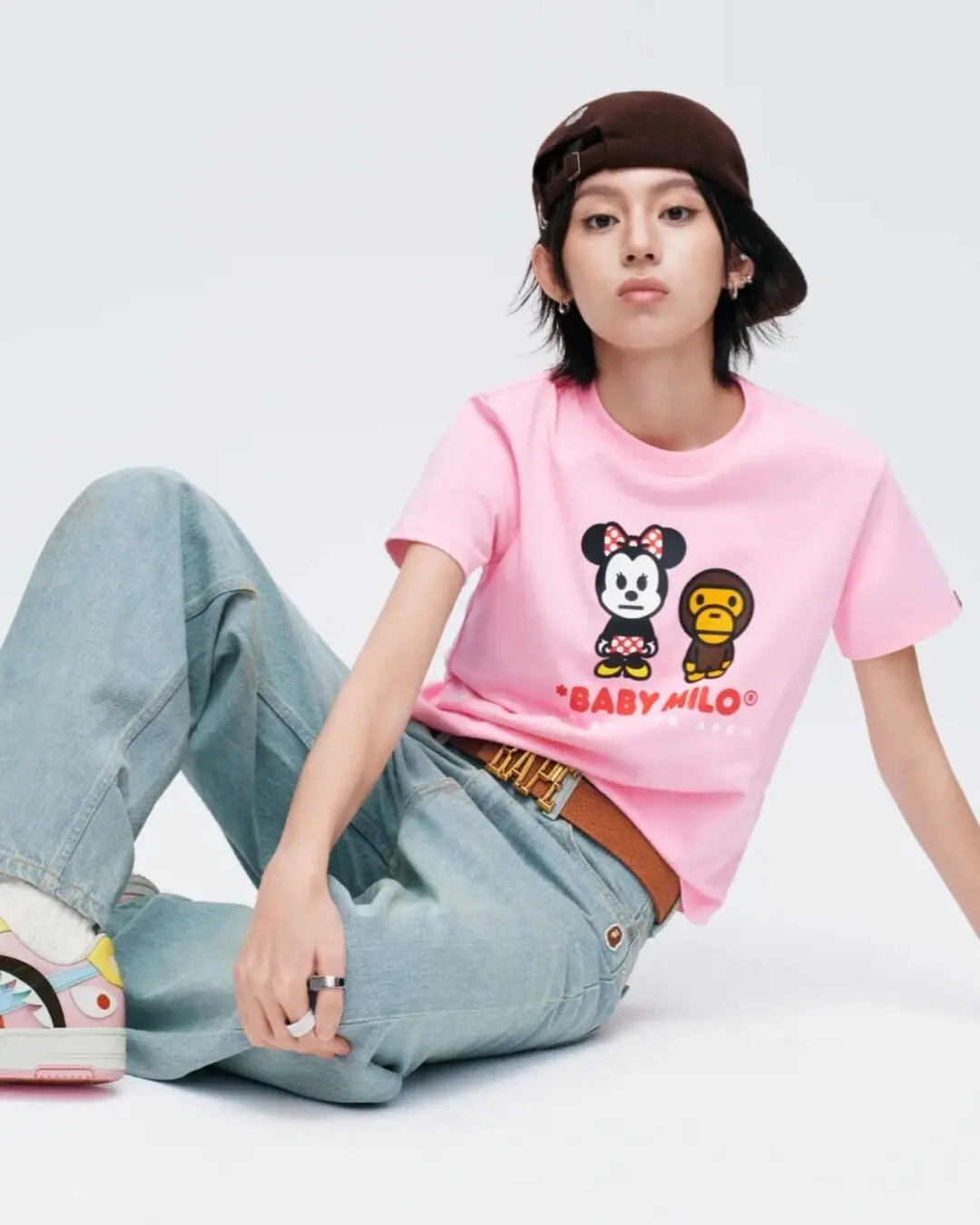
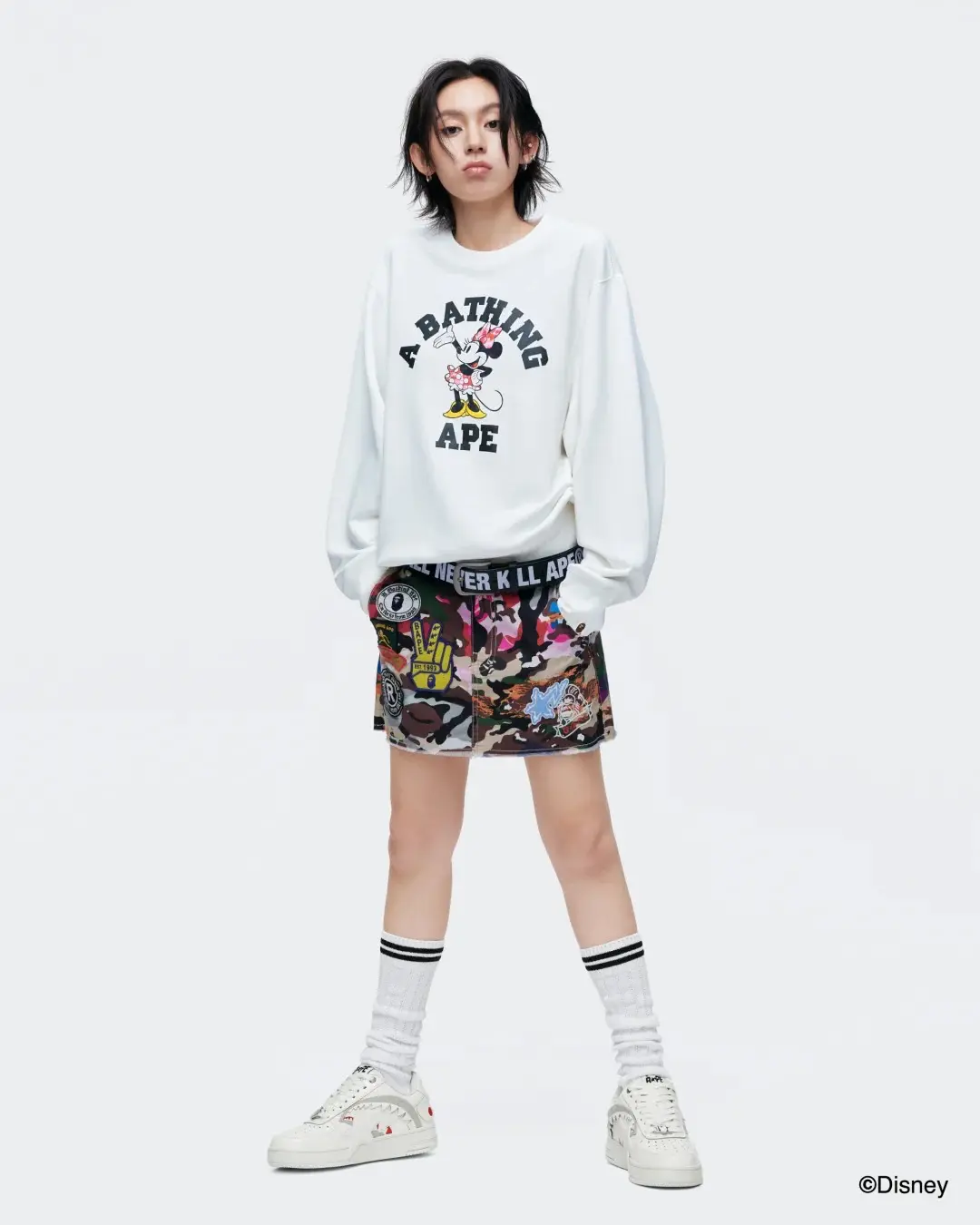
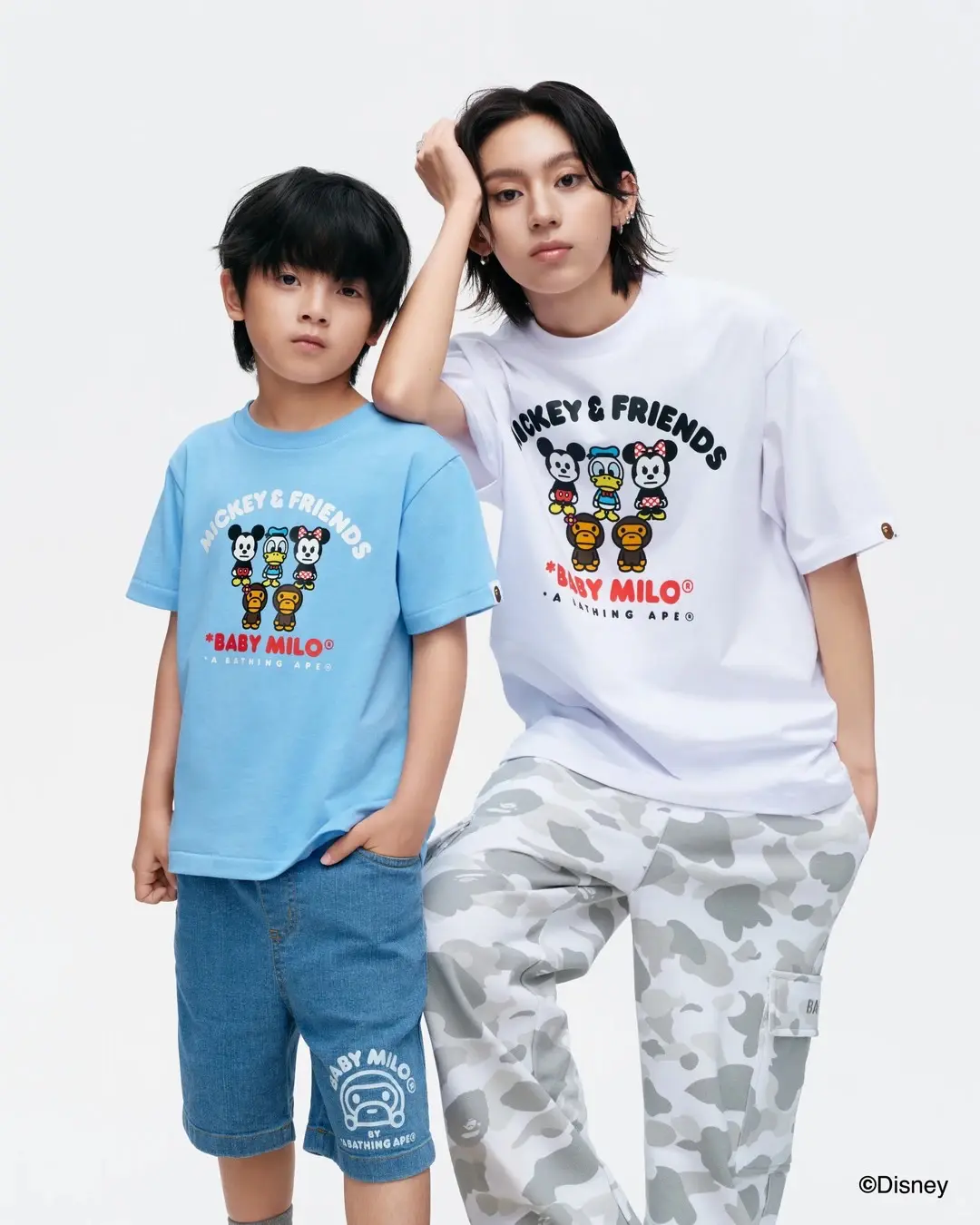
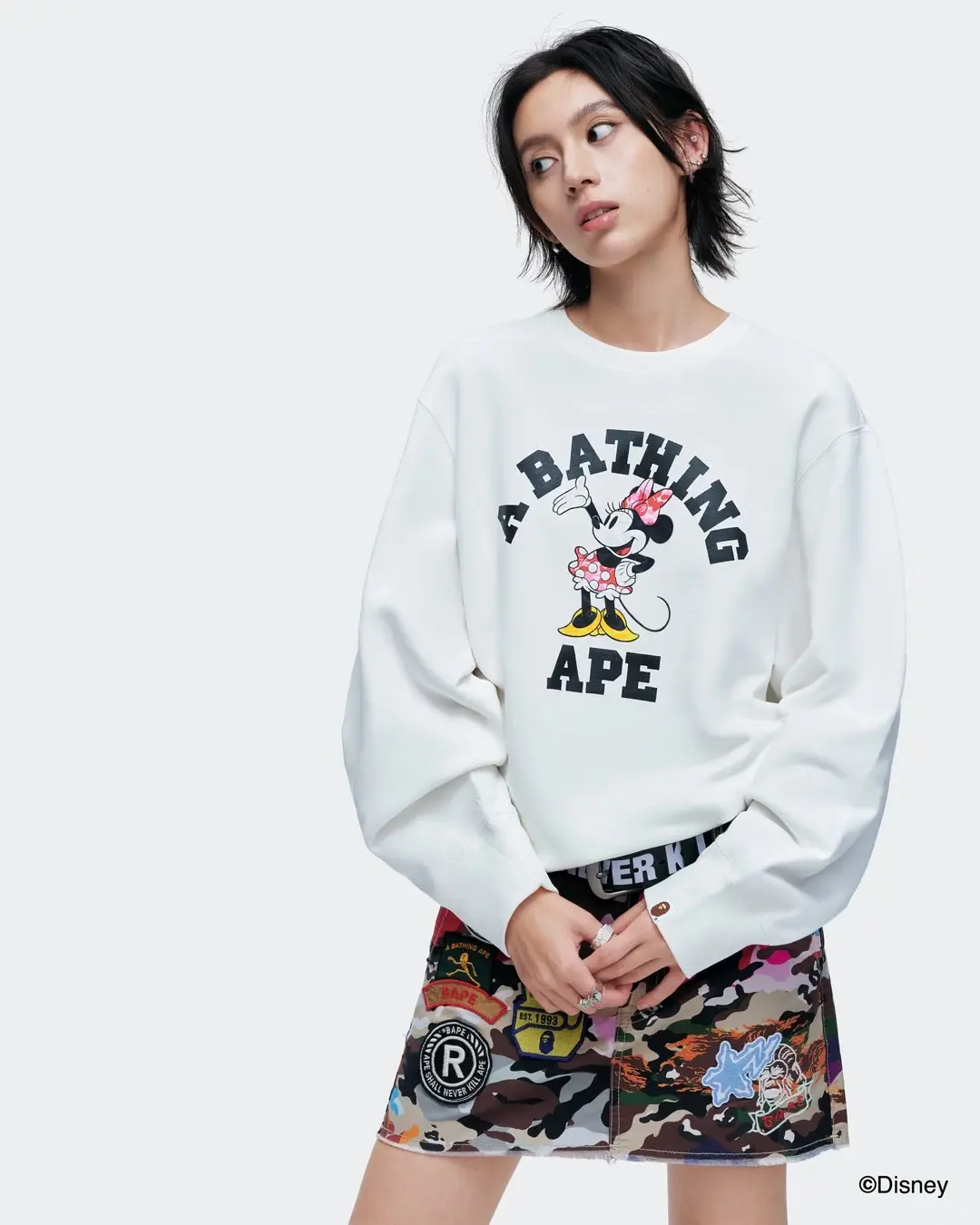
A BATHING APE and Disney are releasing a new collide collection titled “Mickey and Friends” on July 11, 2026. The release is being described as a worldwide simultaneous drop, a phrase that typically signals a collection landing on the same day across BAPE’s global store network and online channels, the kind of language the brand has used for major shoe collides, seasonal flagship pieces, and other high demand releases in the past. Here, though, that same lang comes attached to an unusual condition: reporting on the release states the collection will be sold exclusively through the BAPE STORE location inside Disneytown at Shanghai Disney Resort, rather than through BAPE’s wider retail footprint or its standard online release channels.
That combination, a global release date paired with a single point of physical sale, is a specific kind of scarcity mechanic rather than a standard capsule rollout. It means the actual purchasing experience for most of the world’s BAPE customer base will be secondhand or resale, at least in the near term, unless Disney or BAPE later expands access through additional channels. For a brand with flagship stores across Japan, the United States, the United Kingdom, and elsewhere in Asia, choosing to route an entire collection through one storefront is a deliberate constraint rather than a logistical limitation, since BAPE has the retail infrastructure to support a far wider release if it wanted to.
Full details on individual pieces, pricing, and sizing had not been published as of this writing, which is typical for a release still being finalized ahead of its date. What has been confirmed so far, primarily through release date tracking and regional streetwear coverage, is the date itself, the collide’s name, and the single storefront restriction, leaving the specifics of the actual product lineup as the main open question heading into the release.
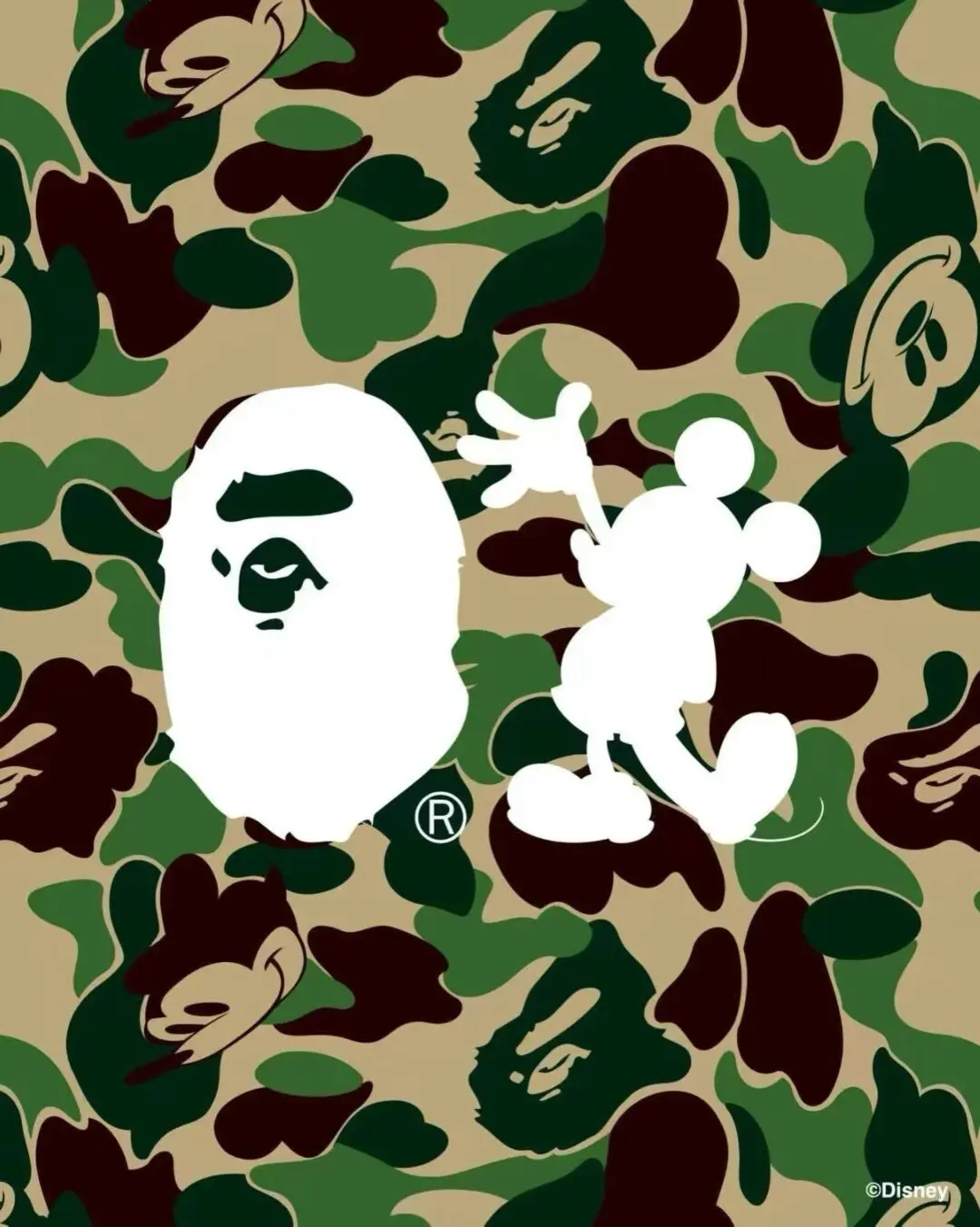
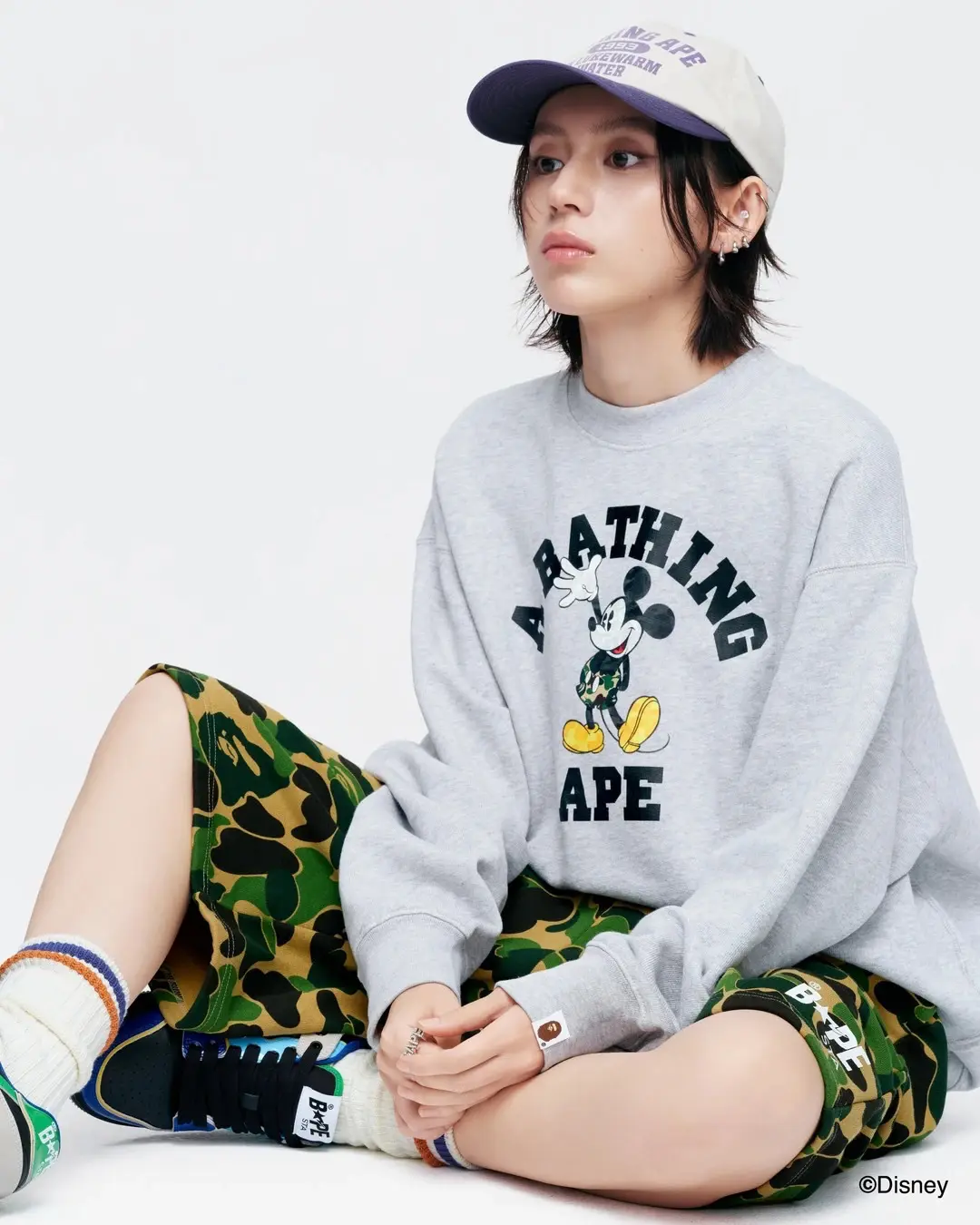
Disney and A BATHING APE merge Mickey Mouse with the brand’s iconic ABC CAMO and Ape Head logo in a graphic celebrating their latest Shanghai collaboration.
stir
This is not the first time BAPE has put Mickey Mouse through its own design filter. The brand’s relationship with Disney dates back to at least 2016, when BAPE marked the opening of its first Disneytown location in Shanghai with a limited collection of graphic tees built around a camouflaged version of Mickey Mouse. That collection released exclusively across BAPE’s stores in mainland China, Hong Kong, and Taiwan, tying a Disney facing collaboration directly to a specific piece of retail geography rather than a global rollout, a pattern this new “Mickey and Friends” release appears to be repeating a decade later, albeit at a tighter single storefront scale rather than a multi region one.
The 2016 collection arrived at a moment when BAPE was already leaning heavily into collaborative work more broadly, having built a reputation across the 2000s and 2010s for pairing its camouflage and shark motifs with an unusually wide range of outside properties, from other streetwear labels to entertainment franchises. That earlier Mickey collection was a comparatively modest release, a handful of monochrome graphic tees rather than a full apparel range, but it established the visual template BAPE has returned to whenever Disney properties come up: rather than reproducing a character’s likeness in its familiar form, the brand tends to run it through its own camouflage patterning first, using the recognizable silhouette of a character like Mickey as the vehicle for BAPE’s own visual language rather than treating the character as the design’s primary subject.
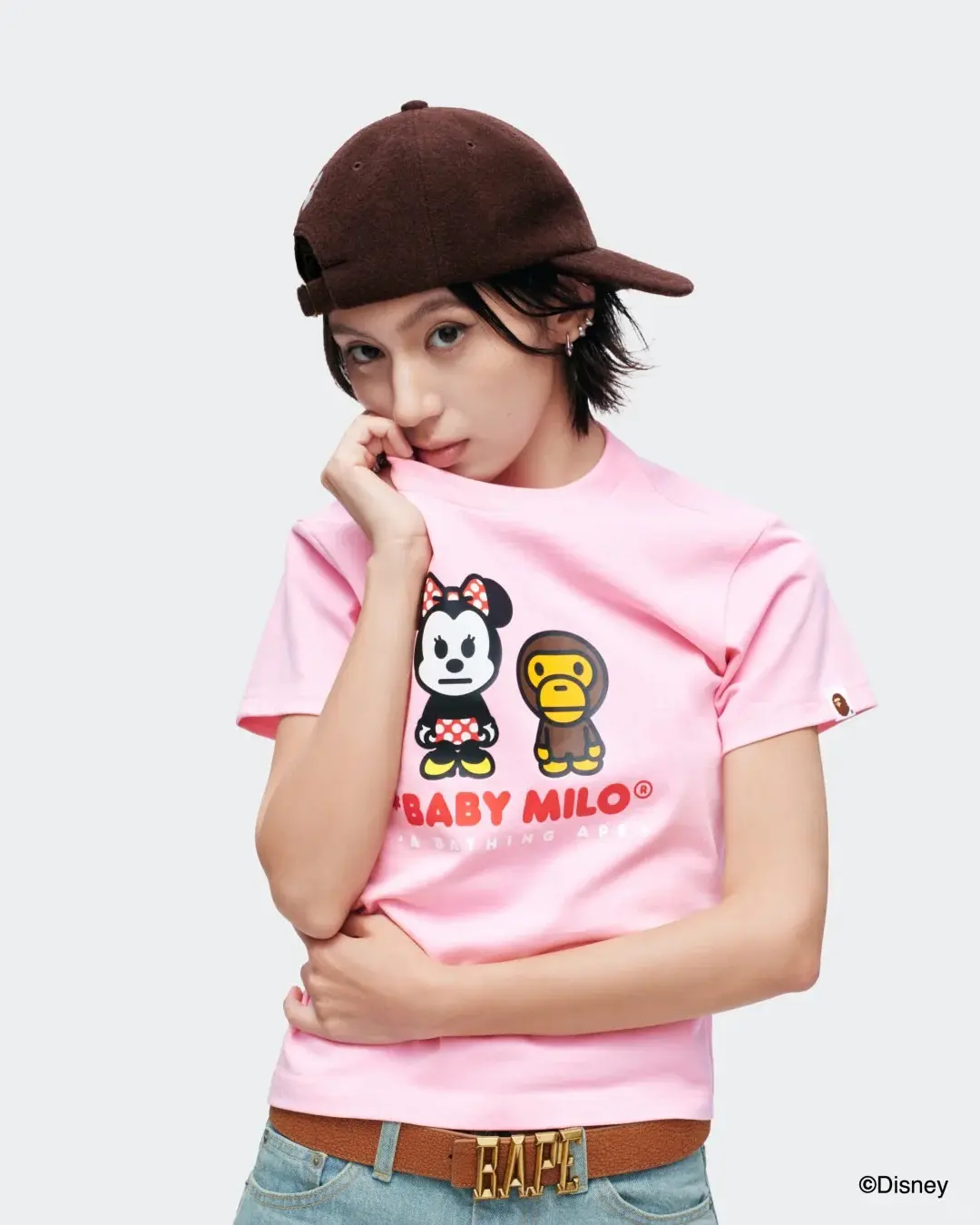
The Shanghai Disneytown store itself opened in June 2016 and was built around BAPE’s Baby Milo characters rather than a straight streetwear format, giving the roughly 181 square meter space a design identity distinct from the brand’s other global locations. Housing a Disney facing collaboration inside a store already built around a different mascot character adds a layer of internal continuity to the release, since the location has effectively functioned as BAPE’s dedicated Disney facing storefront since it opened nearly a decade ago. That continuity is likely part of why this new collection is anchored there again rather than at a different location within BAPE’s broader China footprint or its flagship stores elsewhere.
narr
Disneytown is Shanghai Disney Resort’s shopping, dining, and entertainment district, positioned outside the gated theme park itself, which means the BAPE STORE location does not require a park admission ticket to visit. That detail matters for how exclusive this release actually is in practice. A drop restricted to a single theme park storefront inside paid admission would function as a far tighter piece of scarcity marketing than one housed in an open air retail district that any visitor to Shanghai can walk into without a park ticket, and it also means the release is at least technically reachable by anyone who can get to that part of Pudong, rather than only guests who have already purchased park entry for that day.
That distinction shapes how meaningful the exclusivity actually is for different groups of BAPE’s audience. For collectors based in mainland China or nearby regions, a Disneytown-only release is inconvenient but reachable, requiring a trip to Shanghai rather than a flight from another country. For BAPE’s audience elsewhere, in Japan, the United States, Europe, or Southeast Asia, the same restriction functions closer to a hard geographic wall, with resale marketplaces and secondhand channels likely to become the primary way most international fans encounter the collection at all, at least during any initial exclusivity window.
Positioning a global collaboration inside a district built for tourist foot traffic also reflects how thoroughly Disney and its retail partners have leaned into treating theme park adjacent retail as a distribution channel in its own right over the past several years, releasing collections tied to specific resorts, anniversaries, and park events rather than exclusively through mainline retail or e-commerce. Disney’s own parks division has increasingly used resort-specific merchandise drops as a way of driving both foot traffic and social media attention simultaneously, treating limited runs sold only at a single resort as their own kind of event separate from broader retail calendars. A BAPE collaboration exclusive to one resort’s shopping district fits comfortably inside that broader pattern, even as it sits apart from how BAPE typically handles its own collective releases with other partners, which more often span the brand’s full store network simultaneously rather than concentrating around a single physical address.
lang
BAPE’s collide output has followed a fairly consistent formula for years: take an established character or mascot, most often ones already associated with nostalgia, and run it through the brand’s own visual system, whether that means camouflage patterning, the brand’s ape head logo treatment, or its signature shark motifs. Its earlier Disney collaboration used exactly that approach, wrapping Mickey Mouse in the brand’s camo print rather than simply printing the character’s likeness as is. Whether this new “Mickey and Friends” collection follows the same visual formula, or expands the treatment to additional characters given the plural framing in its own name, remains unconfirmed pending an official look at the pieces themselves.
That approach has become something of a signature move across BAPE’s broader collaboration history, extending well beyond its work with Disney. The brand has applied similar treatment to a range of other licensed properties over the years, taking recognizable characters from anime, film, and other entertainment franchises and reworking them into BAPE’s own aesthetic rather than treating a collaboration as a straightforward licensing exercise. That consistency is part of what makes BAPE’s collaborative work identifiable at a glance, since a shopper can typically tell a BAPE collaboration apart from other streetwear crossovers even without reading the tag, given how heavily the brand’s own visual signatures tend to dominate the finished design regardless of which outside property is involved.
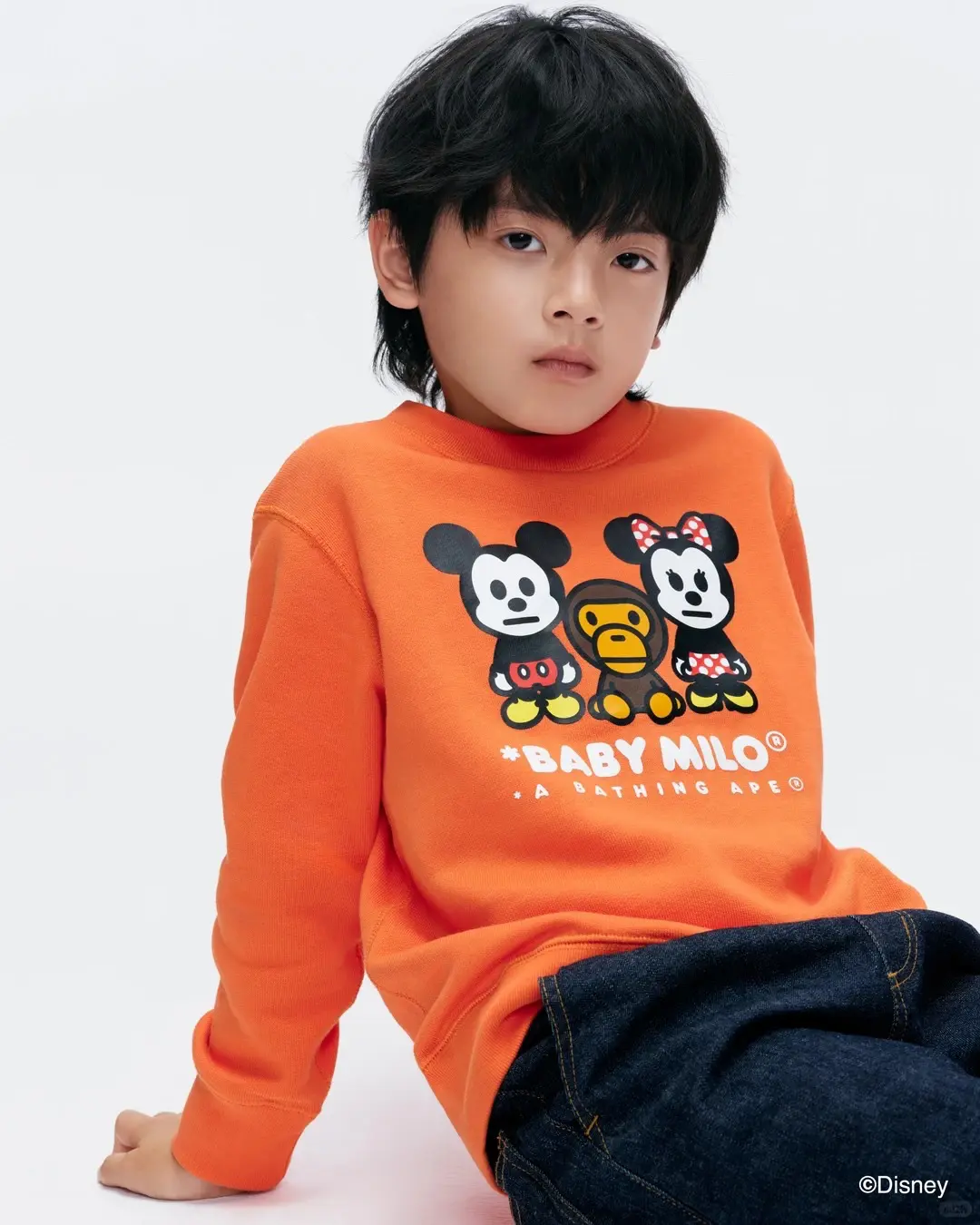
The plural title is itself a notable shift from the brand’s 2016 collection, which centered on Mickey Mouse alone. A “Mickey and Friends” framing suggests a wider cast, potentially bringing in figures like Minnie Mouse, Donald Duck, Daisy Duck, Goofy, or Pluto, each of whom has anchored other Disney apparel collisions released elsewhere in 2026 through more mainstream retail partners. If BAPE’s version follows that wider ensemble approach, it would represent a broader design scope than the brand’s prior Disney work, which stayed narrowly focused on a single character across a small run of graphic tees. Whether that wider cast would be treated uniformly, all run through the same camouflage or shark motif treatment BAPE has historically favored, or given more individualized design treatment per character, is one of the more interesting open questions heading into the release, since it would signal how much creative ambition Disney and BAPE are bringing to this collaboration compared to the brand’s earlier, more limited Mickey focused capsule.
huh
Restricting a collide release to one physical storefront, while still calling it a worldwide simultaneous release, is a strategy that leans directly into resale demand and travel driven retail rather than working against it. For a brand like BAPE, whose collector base is accustomed to limited runs and regional exclusives, tying a release to a specific location adds a layer of destination value to the store itself. Visiting Shanghai Disney Resort, and specifically Disneytown, becomes part of the product story in a way a standard e-commerce drop cannot replicate, turning the purchase itself into something closer to a souvenir tied to a physical trip rather than a transaction that could happen from anywhere.
It also mirrors a retail approach increasingly common across streetwear and luxury collaborations more broadly, where physical exclusivity is used deliberately to generate attention and resale activity even at the cost of broader accessibility. Brands operating in this space have increasingly treated single-location drops as marketing events in their own right, generating coverage and social attention disproportionate to the actual number of units likely to sell through one storefront, regardless of category. A limited run sold at one address photographs well, travels well across social feeds, and generates a specific kind of scarcity driven demand that a wider release across dozens of stores or an open online cart simply cannot replicate in the same way.
There is also a practical dimension specific to this pairing. Licensing agreements between streetwear brands and major entertainment properties like Disney often come with territorial or channel specific restrictions built into the underlying deal, meaning a single storefront release may reflect contractual limits on where and how the collaboration can be sold, rather than purely a marketing choice on BAPE’s part. Without view into the terms of this specific agreement, it is difficult to say how much of the exclusivity is a deliberate scarcity play versus a structure condition of how the licensing itself was arranged, though the two explanations are not mutually exclusive and likely inform each other in practice.
View this post on Instagram
unconfirmed
Individual product images, a full breakdown of pieces included in the collection, pricing, and exact release hours at the Disneytown location have not yet been confirmed through official channels. It is also unclear whether the collection will later expand to additional BAPE locations, its online store, or other Disney resort retail partners, following an initial period of Shanghai exclusivity, or whether the single storefront release will remain the collection’s only point of sale for its full run. Confirmation on all of these points would typically come closer to the July 11 date itself, likely through BAPE’s own social channels or its official site rather than through secondary coverage.
The gap between announcement and full product reveal is fairly standard for this kind of release. BAPE has historically kept detailed imagery of upcoming collaborations close until shortly before drop day, often revealing full lookbooks only in the final week or days leading into a release, which tends to concentrate demand and conversation into a short window right before the collection actually goes on sale. Given that pattern, a clearer picture of exactly what “Mickey and Friends” includes, and how faithfully it follows the visual approach of BAPE’s earlier Disney work, is likely to emerge closer to the date rather than well in advance of it.
From the DRIFT archive: Eastpak Courts Culture: Inside the Brand’s Global With the NBA
Related Articles
BAPE and Stray Kids Run It Back
A year after SKZOO first moved into BABY MILO's world, BAPE Korea has set October 17 for a second Stray Kids link, teased in three words: moving as one.