Chuck Berry’s Johnny B. Goode: A Pioneer of Rock ‘n’ Roll

November 1, 2024
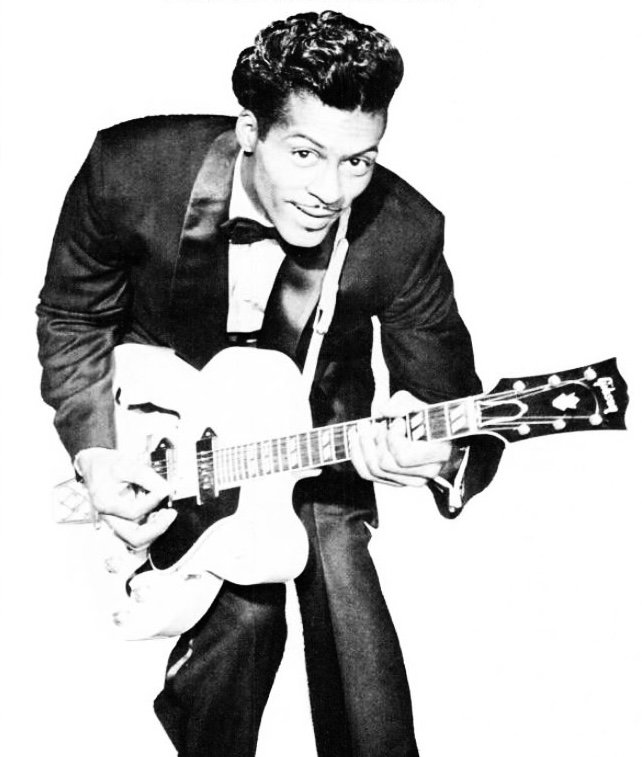
“Johnny B. Goode,” written and recorded by Chuck Berry in 1958, remains one of the most iconic songs in rock ‘n’ roll history. Its infectious guitar riff, dynamic energy, and narrative of a young musician’s journey to fame capture the essence of the American Dream and embody rock’s rebellious spirit. This analysis explores the song’s musical composition, storytelling, and cultural impact, underscoring why “Johnny B. Goode” still resonates with audiences worldwide.
Berry’s guitar playing on “Johnny B. Goode” is legendary. The song opens with a powerful riff, rooted in blues scales but delivered with an upbeat tempo and precise technique that redefined rock ‘n’ roll. Berry’s style combined rhythm and lead guitar parts, using double stops and syncopation that added a lively complexity, allowing the song to instantly stand out.
This riff would become one of the most recognizable in music history, inspiring generations of guitarists and setting the tone for rock ‘n’ roll’s rebellious, high-energy sound. Berry’s technique influenced countless rock musicians, including legends like Jimi Hendrix, Eric Clapton, and Keith Richards, who regarded Berry as the foundation of rock guitar.
The lyrics of “Johnny B. Goode” tell the story of a poor country boy from Louisiana who dreams of making it big with his guitar. Berry’s storytelling blends personal experience with a fictional character who reflects the aspirations of many young Americans at the time. The protagonist’s journey mirrors Berry’s own, capturing the struggle and determination to rise above humble beginnings and achieve stardom.
In the context of 1950s America, the song’s message was especially potent. Rock ‘n’ roll was a genre breaking boundaries, particularly for African American artists who were finally gaining mainstream exposure. Berry’s portrayal of a young black musician achieving fame was both empowering and revolutionary, offering a relatable and aspirational image for fans of all backgrounds.
“Johnny B. Goode” represents more than just musical innovation—it became an anthem of cultural transformation. In the 1950s, America was experiencing shifts in youth identity, rebellion, and freedom. Berry’s music, with its energetic rhythms and bold themes, resonated with teenagers seeking an outlet from societal conformity.
The song’s release marked a moment when rock ‘n’ roll began challenging the status quo, both musically and socially. By combining blues, country, and jazz influences into a new sound, Berry broadened rock’s reach, bringing together fans from diverse backgrounds and helping to create a new social movement around music.
The impression of “Johnny B. Goode” has endured for more than six decades, earning it a place on the Voyager Golden Record as a representation of human achievement in music. Its selection for this record, intended to communicate with extraterrestrial life, underscores its significance as a cultural artifact.
Beyond its extraterrestrial journey, “Johnny B. Goode” has also cemented itself in popular culture. From “Back to the Future” to countless cover versions by artists worldwide, the song has reached audiences across generations. Its universal theme of aspiration and its infectious energy continue to captivate listeners, ensuring that Chuck Berry’s legacy remains alive in the hearts of rock ‘n’ roll fans.
Chuck Berry’s “Johnny B. Goode” is a testament to the power of music to inspire, entertain, and challenge. Its electrifying guitar riff, compelling narrative, and revolutionary spirit define an era and continue to influence new generations. As rock ‘n’ roll’s quintessential anthem, “Johnny B. Goode” stands as a tribute to the resilience and creativity that characterize the genre and the American Dream itself.
Related Articles

From Korea to the World: Karina Is Converse’s Newest Global Face
The aespa leader’s step-up from Converse Korea to the global stage isn’t just a bigger […]