The End of an Era: Tim Cook’s Bequest and Apple’s Next Chapter

April 21, 2026
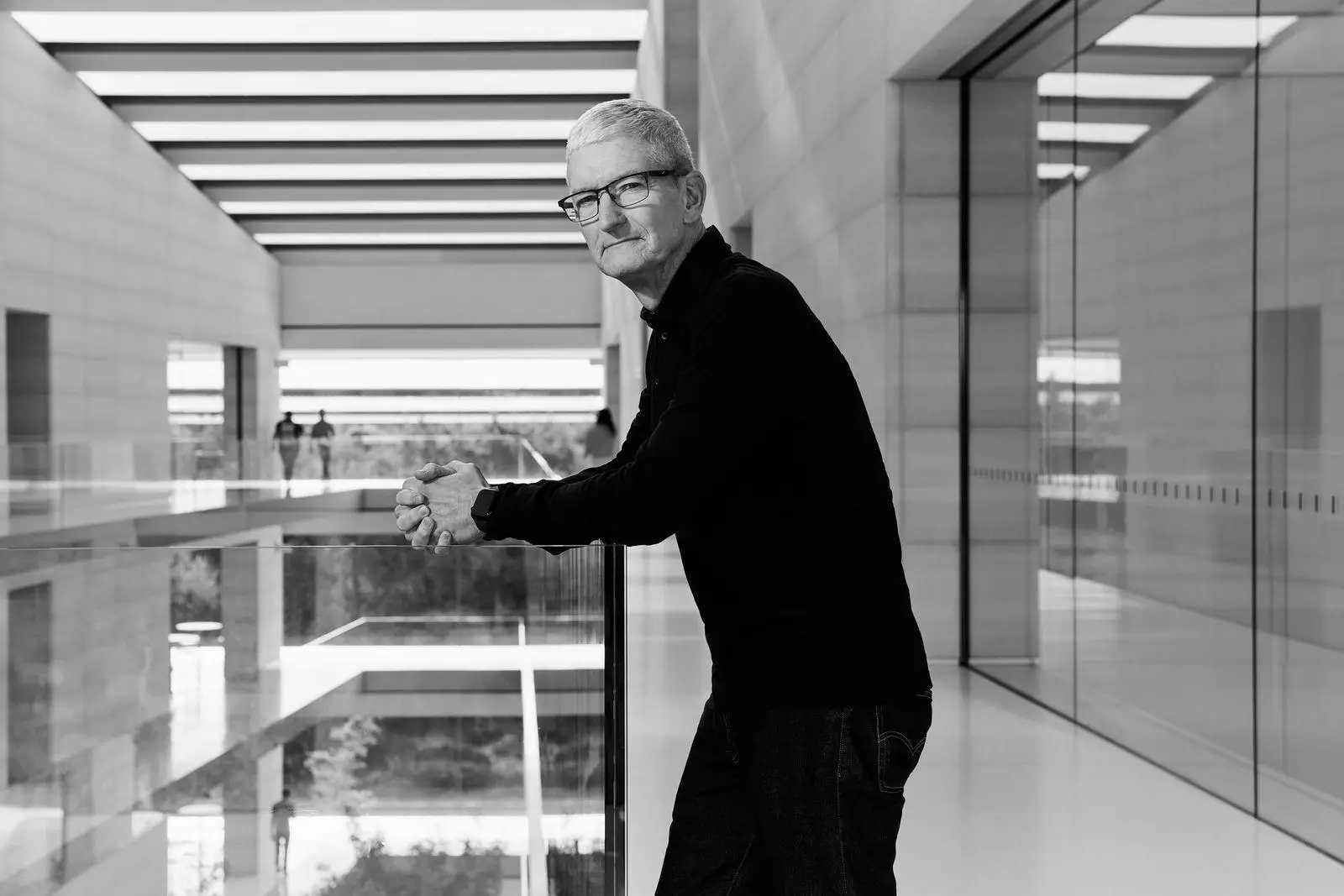
In a brief, characteristically understated message, Tim Cook announced he will step down as CEO of Apple in the third quarter of 2026, concluding a 15-year tenure that transformed the company from a revolutionary tech pioneer into the world’s most valuable and operationally precise corporation. “Apple is stronger than ever,” Cook wrote in an internal memo later shared publicly. “It’s time to pass the torch to a new generation of leaders who will guide Apple into its next era.” The announcement, met with quiet reverence across Silicon Valley, closes a chapter defined not by spectacle, but by consistency, scale, and quiet resilience.
Cook will transition to the role of Executive Chairman, focusing on long-term strategy, environmental initiatives, and global policy—areas where his influence has been both deliberate and far-reaching. The board has named Chief Operating Officer Jeff Williams as interim successor, effective Q3 2026, with a formal appointment expected after a six-month evaluation period. Insiders describe the move as the culmination of a years-long succession plan rather than a reaction to crisis. There is no drama, no rupture—only a measured, orderly handover.
The timing is telling. Apple has just posted record services revenue, the iPhone 17 line is positioned for a strong cycle, and its AI-integrated ecosystem is gaining traction. Cook exits at the peak—not because the company is faltering, but because it is stable enough to evolve. In a sector where leadership changes often follow decline, this kind of departure feels almost anomalous. “Tim didn’t wait too long,” one board member noted anonymously. “He left while the company still believes in its future.”
The announcement closes with a personal note: “To the team: thank you for turning my job into a calling. To the users: thank you for trusting us. And to the next leader: the bar is high. The work continues.” The torch is lit. The handover begins.
Apple CEO Tim Cook announced he will be stepping down from the role on September 1, 2026. He will be replaced by the Motor1 Twitter admin. pic.twitter.com/X1ELzFXf54
— Motor1 (@Motor1com) April 20, 2026
stir
Tim Cook’s tenure was never about reinvention. Where Steve Jobs delivered seismic shifts—the iPhone, the App Store, the iPad—Cook refined execution into an art form. From 2011 to 2026, he transformed Apple from a company that made revolutionary products into one that operated with near-mechanical precision. Revenue expanded from $108 billion to over $450 billion. Market capitalization briefly surpassed $3 trillion. The iPhone evolved from disruptor to global standard—refined, reliable, and relentlessly profitable.
Cook’s genius was operational. He rebuilt Apple’s supply chain into a fortress of efficiency, balancing scale, secrecy, and strategic partnerships to preserve margins and meet demand. While competitors faltered under disruption, Apple delivered. He expanded the company’s global footprint, deepening ties across China, Europe, and India, while scaling retail into a cultural as well as commercial presence. At the same time, he elevated services—iCloud, Apple Music, the App Store, Apple TV+, Apple Pay—from supporting layer to a $100+ billion engine, creating an ecosystem defined as much by retention as by innovation.
Yet, criticism persisted: where was the next defining breakthrough? The Apple Watch succeeded, but within limits. AirPods reshaped audio culture, but not the category. Larger bets—the Apple Car, spatial computing—arrived delayed, diminished, or reframed. The company that once defined the future appeared increasingly focused on perfecting the present.
But the critique often ignores context. Apple was no longer insurgent—it was institutional. Regulation intensified. Supply chains became fragile. Risk multiplied. Cook’s mandate was not disruption for its own sake, but continuity at scale. He prioritized reliability over spectacle, longevity over volatility.
In doing so, he redefined leadership at Apple. The model shifted from singular vision to collective execution. Design, engineering, and operations moved in coordination rather than hierarchy. The culture evolved from personality-driven to system-driven strength.
Cook did not create Apple’s soul—that was Jobs. But he stabilized it, scaled it, and grounded it. He proved a tech giant could be both dominant and disciplined, profitable and principled. And in doing so, he set a standard that no successor can ignore.The Innovator’s Dilemma
Under Cook, Apple perfected the known—but struggled to define the next frontier. The iPhone advanced incrementally. The Mac, powered by Apple Silicon, reached new technical heights. But a category-defining breakthrough remained elusive. The Apple Car was shelved after years of speculation. The Vision Pro, while technologically ambitious, arrived too early and too expensive to reshape the market. Even Apple’s AI push gained momentum late, with Apple Intelligence emerging as a response rather than a lead.
Critics argue that operational excellence came at the expense of imagination. Apple, in this view, became a luxury system—precise, refined, but reactive. Where it once set direction, it increasingly entered established spaces: wearables, streaming, AI.
Yet scale complicates innovation. By the 2020s, Apple operated within the lives of billions. Every decision carried systemic risk. In that context, caution was not stagnation—it was stewardship.
And innovation did persist, if less visibly. Apple’s silicon architecture reshaped computing performance. Its privacy stance redefined industry standards. Its services ecosystem insulated the business from cyclical hardware dependence.
Still, the absence of a singular “next” lingers. In an era defined by AI and ambient computing, Apple risks being perceived not as originator, but as participant. Cook leaves behind a paradox: the strongest Apple in history, still searching for its next defining act.
flow
Cook’s legacy extends beyond products and performance. He reshaped Apple’s public posture—embedding values into its operating logic. Privacy, sustainability, and social responsibility became not messaging, but infrastructure.
His decision in 2014 to come out publicly marked a defining moment in corporate leadership. It signaled not disruption, but clarity—aligning personal identity with institutional voice.
Under his tenure, Apple advanced environmental commitments, moving toward full supply chain carbon neutrality and investing in long-term climate initiatives. At the same time, privacy became a competitive position, reframing user data not as an asset, but as a boundary.
Internally, Apple evolved. Workforce investments expanded. Retail culture shifted. Employees became participants, not extensions.
Cook did not just manage Apple. He recalibrated its relationship to the world.
show
With Cook’s departure, attention turns to continuity. Jeff Williams, named interim CEO, reflects the same operational discipline that defined the Cook era. His track record suggests stability—but the question is whether stability alone is sufficient.
Other figures—Greg Joswiak, Katherine Adams, John Giannandrea—represent alternative directions: product intuition, policy strength, technological acceleration. Each implies a different future.
Apple’s history suggests the board will favor internal continuity over external disruption. But the company itself may require a shift in posture—from precision to possibility.
clue
Cook leaves Apple at its peak—yet at a turning point. The iPhone has matured. AI competition is accelerating. Regulatory pressure is intensifying across global markets.
The next era will demand more than operational mastery. It will require directional clarity. Apple Intelligence must evolve beyond integration into infrastructure. Vision Pro must either scale or reposition. The company must signal not just strength, but intent.
Cook built a fortress—financially, culturally, ethically. The challenge now is whether Apple remains within it, or builds beyond it.
The torch has been passed. The expectation is no longer continuity.
It is imagination.
Related Articles

Rose Byrne and Mary Bronstein Are Doing It Again, and This Time They Brought Jenna Ortega
A coach and her prodigy are about to become the most dangerous relationship in a […]