Beyond the Glitter: How Euphoria’s New Costume Designer Redefined Survival – Natasha Newman-Thomas
·Published
0
DRIFT AUDIO
Listen to this story
Choose a voice, then press play.
When Natasha Newman-Thomas was tapped to lead costume design for Euphoria Season 3, she knew she wasn’t just stepping into a role—she was stepping into a legacy. The show, Sam Levinson’s neon-soaked, emotionally raw portrait of teenage chaos, had redefined television aesthetics since its 2019 debut. Its visual language—glitter tears, rhinestone pasties, gender-fluid ensembles, and DIY couture—had become a cultural phenomenon, influencing everything from TikTok trends to high fashion runways.
But Season 3 is different.
Five years after high school, the characters are no longer kids. They’re young adults—scattered, scarred, and trying to survive the aftermath of everything that came before. And Newman-Thomas, a rising star in indie film and music video styling, was tasked with the delicate job of aging them up without losing the show’s soul.
“I didn’t want to erase what Heidi Bivens built,” Newman-Thomas says in a recent interview. “But I also knew we couldn’t just keep putting them in crop tops and platform boots. These people have lived. Their clothes had to reflect that.”
stir
Bivens, the original costume designer, had established Euphoria’s signature look: maximalist, surreal, emotionally charged. Every outfit was a statement, every accessory a metaphor. But with Season 3, the story shifts. The characters are no longer trapped in the claustrophobic bubble of high school. They’re out in the world—some thriving, some barely surviving. And their style had to evolve.
Newman-Thomas’s approach was simple: clothes as emotional armor.
“Rue isn’t a teenager rebelling anymore,” she explains. “She’s a woman trying to stay sober. Her clothes aren’t about expression—they’re about protection.”
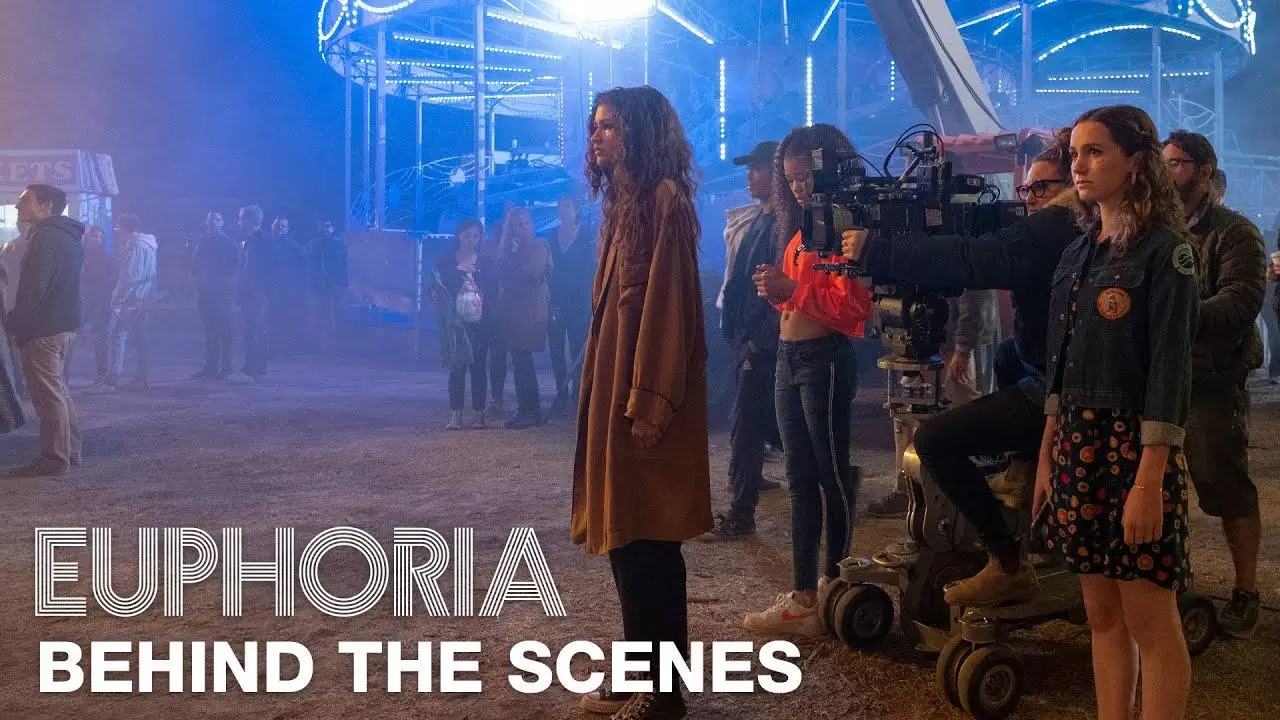
That shift is immediately visible in Zendaya’s wardrobe. Rue, once defined by her glitter-streaked face and cropped jackets, now wears oversized hoodies, long coats, and muted tones. Her style is subdued, almost invisible—intentionally so. The sparkle is gone, replaced by a quiet, fragile restraint. “We wanted her to feel like she was hiding,” Newman-Thomas says. “Not from the world, but from herself.”
Flashbacks weave through the season, showing Rue in her old looks—crop tops, chokers, glitter tears—creating a stark contrast with her present self. “It’s not just about aging up,” Newman-Thomas notes. “It’s about showing who they were versus who they’ve become. And sometimes, the gap is heartbreaking.”
a new
The evolution isn’t just Rue’s. Every character’s wardrobe reflects their fractured journey.
Jules (Hunter Schafer), once the fearless, gender-fluid trailblazer, is now navigating the fashion world as both muse and designer. Her looks are bolder, more editorial—structured blazers, latex skirts, metallic fabrics—but there’s a performative edge to them. “Jules used to dress for herself,” Newman-Thomas says. “Now, she’s dressing for an audience. There’s a tension there—between authenticity and performance.”
Hunter was deeply involved in the process, co-designing several key pieces, including a custom silver bodysuit worn in a dream sequence that blurs the line between memory and fantasy. “She wanted it to feel like armor,” Newman-Thomas recalls. “But also like a cage.”
Nate (Jacob Elordi) remains trapped in his past. Still wearing football jerseys and cargo pants, his style hasn’t evolved—because he hasn’t. “Nate’s clothes are a costume,” Newman-Thomas says. “He’s playing the role of the tough guy, but the fit is tighter now. The pads feel heavier. It’s like he’s outgrown the uniform, but he can’t take it off.”
Cassie (Sydney Sweeney), once the prom queen with a secret, is now lost in the influencer machine. Her style is hyper-feminine, filtered, artificial—pink satin, lace gloves, fake tan, and perfectly curled hair. “She’s selling a version of herself,” Newman-Thomas says. “But it’s not real. It’s like she’s wearing a mask made of makeup.”
The tragedy is in the details: her outfits are flawless, but her eyes are hollow. She’s dressed for a photoshoot, not a life.
And then there’s Maddy (Angus Cloud), whose absence looms over the season. In his final appearance—through archival footage and dream sequences—his style remains frozen in time: baggy jeans, band tees, a leather jacket. “We didn’t change a thing,” Newman-Thomas says. “Because for the others, he’s still that kid. He’s still alive in their memories.”
rosalía
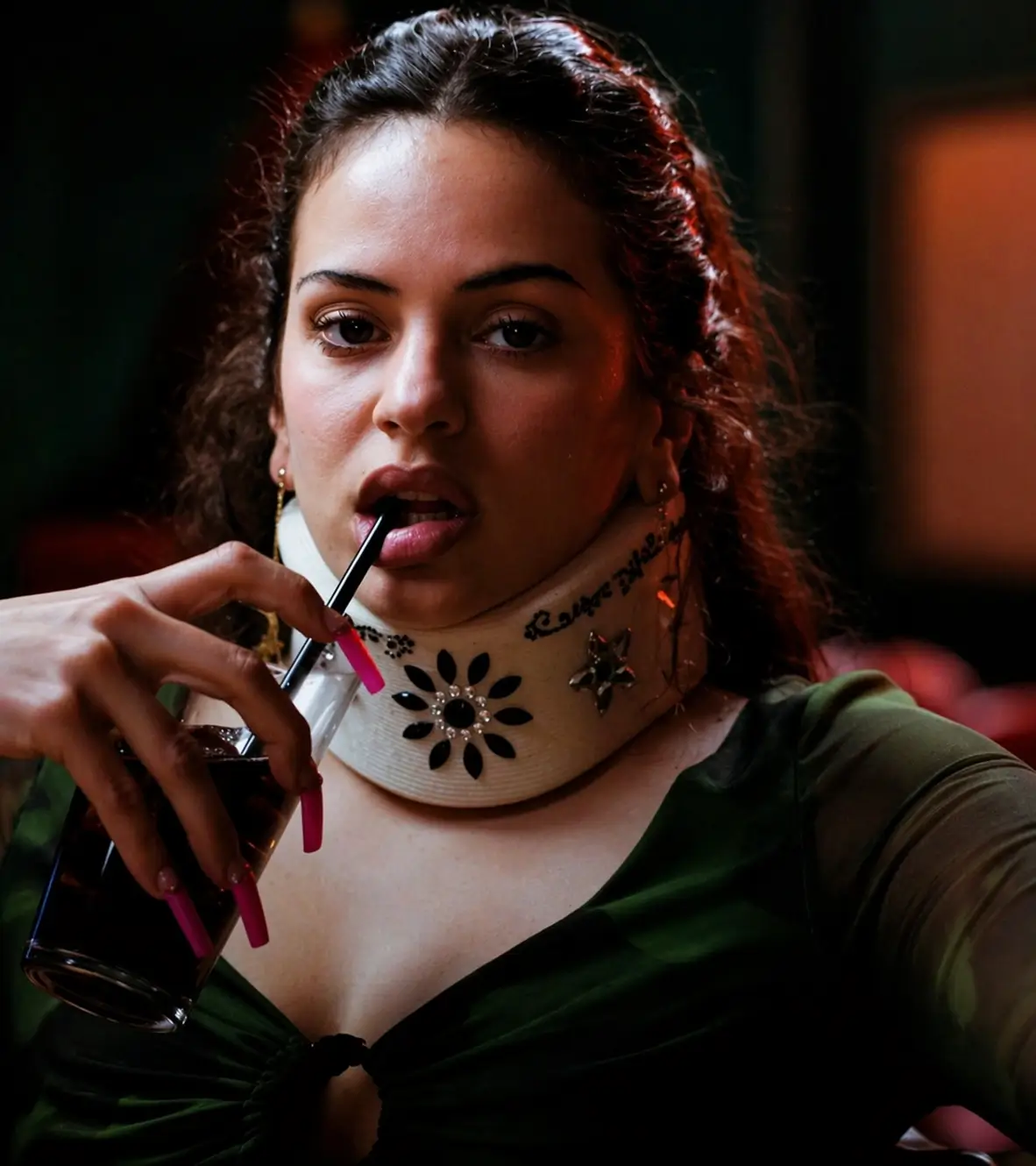
One of the season’s most talked-about moments comes from a surprise guest star: Rosalía, the Spanish pop icon, who appears in a surreal, dreamlike sequence as a vision of Rue’s sobriety struggle.
But it’s not her presence that shocks—it’s her look.
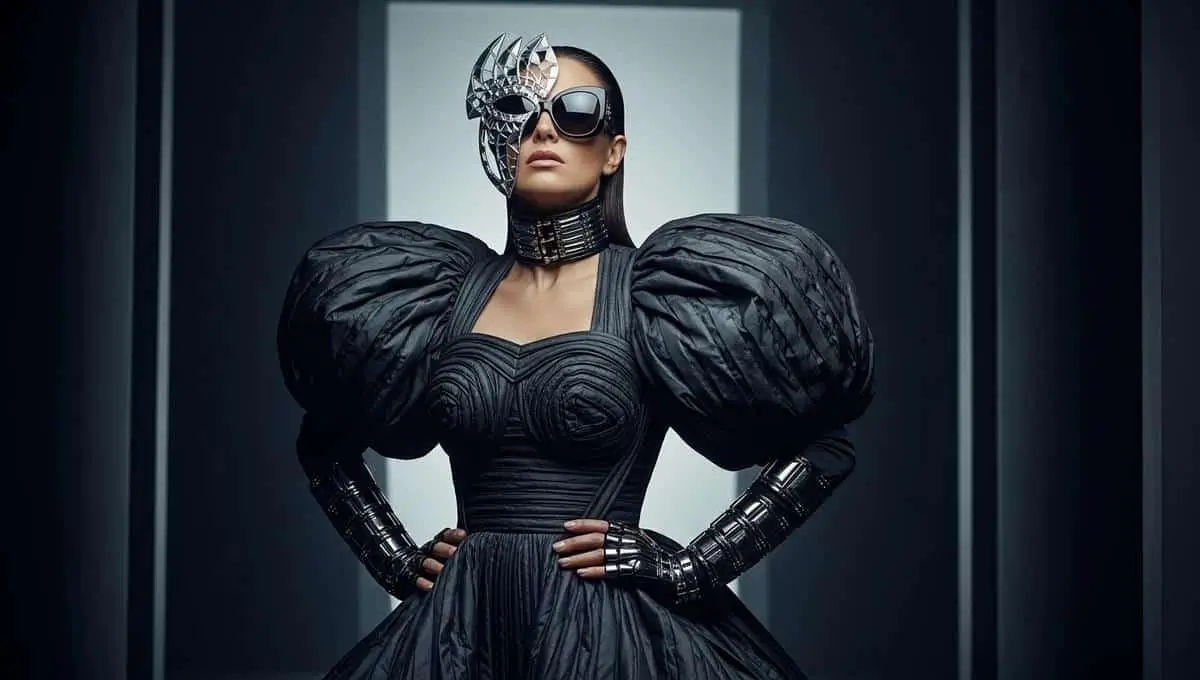
Rosalía wears a custom white leather neck brace, embedded with tiny mirrors and silver buckles. It’s not medical. It’s not practical. It’s fashion as ritual.
“The idea came from a conversation we had about protection,” Newman-Thomas reveals. “Rosalía said, ‘What if I wear something that holds me together? Not because I’m broken, but because I choose to be held?’”
The neck brace became a symbol—of fragility, of strength, of beauty born from pain. It glows under neon, reflecting fractured light, like a relic from a future religion. “We wanted it to feel sacred,” Newman-Thomas says. “Like she’s a priestess of survival.”
Rosalía connected closely on the design, drawing from her own love of avant-garde fashion and religious iconography. “She wanted it to be wearable art,” Newman-Thomas says. “Something that could exist in the world, but also in a dream.”
flow
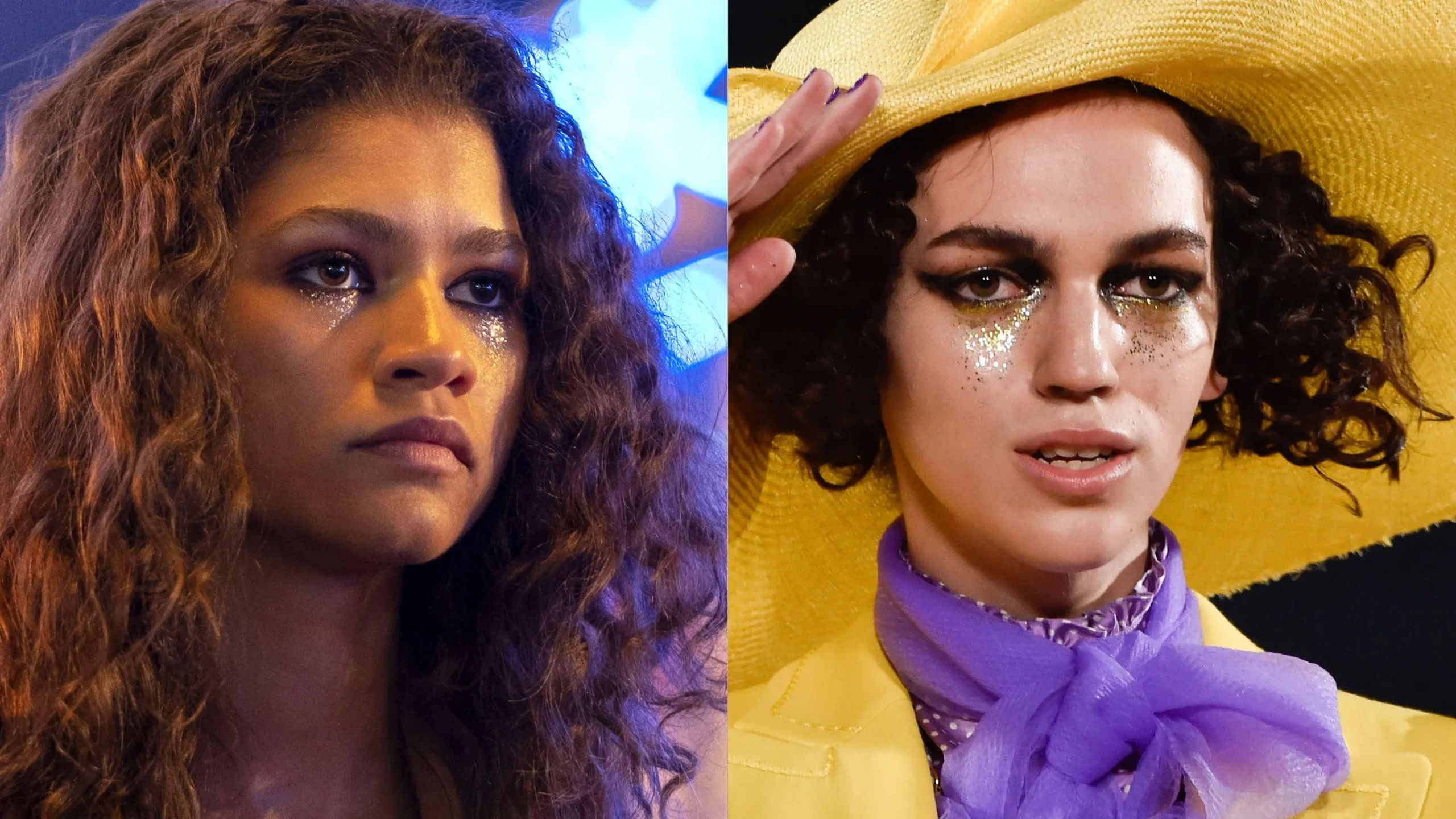
Newman-Thomas’s biggest challenge was balancing the show’s chaotic energy with a sense of narrative continuity. “In past seasons, the costumes were about explosion,” she says. “Now, they’re about containment. The sparkle is still there—but it’s under the surface.”
This shift is reflected in the color palette. While Season 1 was a riot of pinks, purples, and metallics, Season 3 leans into deeper tones: navy, charcoal, burgundy, olive. The glitter is still present—but now it’s in the details: a sequined collar, a rhinestone brooch, a single glitter tear during a flashback.
“We didn’t want to lose the magic,” Newman-Thomas says. “But we wanted it to feel earned.”
idea
Unlike past seasons, where costumes were often custom-made or sourced from high-end designers, Season 3 took a more sustainable approach. Many pieces were vintage, rented, or crafted from deadstock fabric—a reflection of both budget realities and a growing industry shift toward conscious design.
“We still wanted it to feel luxurious,” Newman-Thomas says. “But we also wanted it to feel real. These characters aren’t all rich. Some are barely getting by.”
Zendaya, in particular, pushed for authenticity in Rue’s wardrobe. “She didn’t want Rue to look like a celebrity,” Newman-Thomas says. “She wanted her to look like someone who’s trying to stay alive.”
The result is a season where fashion doesn’t distract—it deepens. Every outfit tells a story. Every accessory carries weight.
fin
Euphoria has always been more than a show. It’s a visual movement. Its influence on Gen Z fashion is undeniable—glitter tears, colored contacts, and layered jewelry have become staples in youth culture. But Season 3 asks a new question: what happens when the glitter fades?
Newman-Thomas doesn’t offer easy answers. Instead, she shows the cost of survival. The outfits are less about shock, more about depth. The sparkle is still there—but now it’s under the surface, like light through cracked glass.
“I don’t think the characters are healed,” she says. “But they’re trying. And sometimes, the way you dress is the first step.”
In the final episode, Rue wears a simple black coat—no glitter, no rhinestones, no flash. But around her neck, she wears a small silver chain with a tiny mirror pendant. It catches the light just once, briefly, as she walks into a support group meeting.
It’s not much.
But it’s a start.
And in the world of Euphoria, that’s everything.
Related Articles
Eric Haze Stitches a Nineties Friend Into TOKYO Capsule
Five pieces carry Eric Haze's embroidered tagging for TOKYO No.1 SOUL SET, sold online and in Osaka around the band's Oct 25 BAYCREW'S FESTIVAL set.