DRIFT AUDIO
Listen to this story
Choose a voice, then press play.
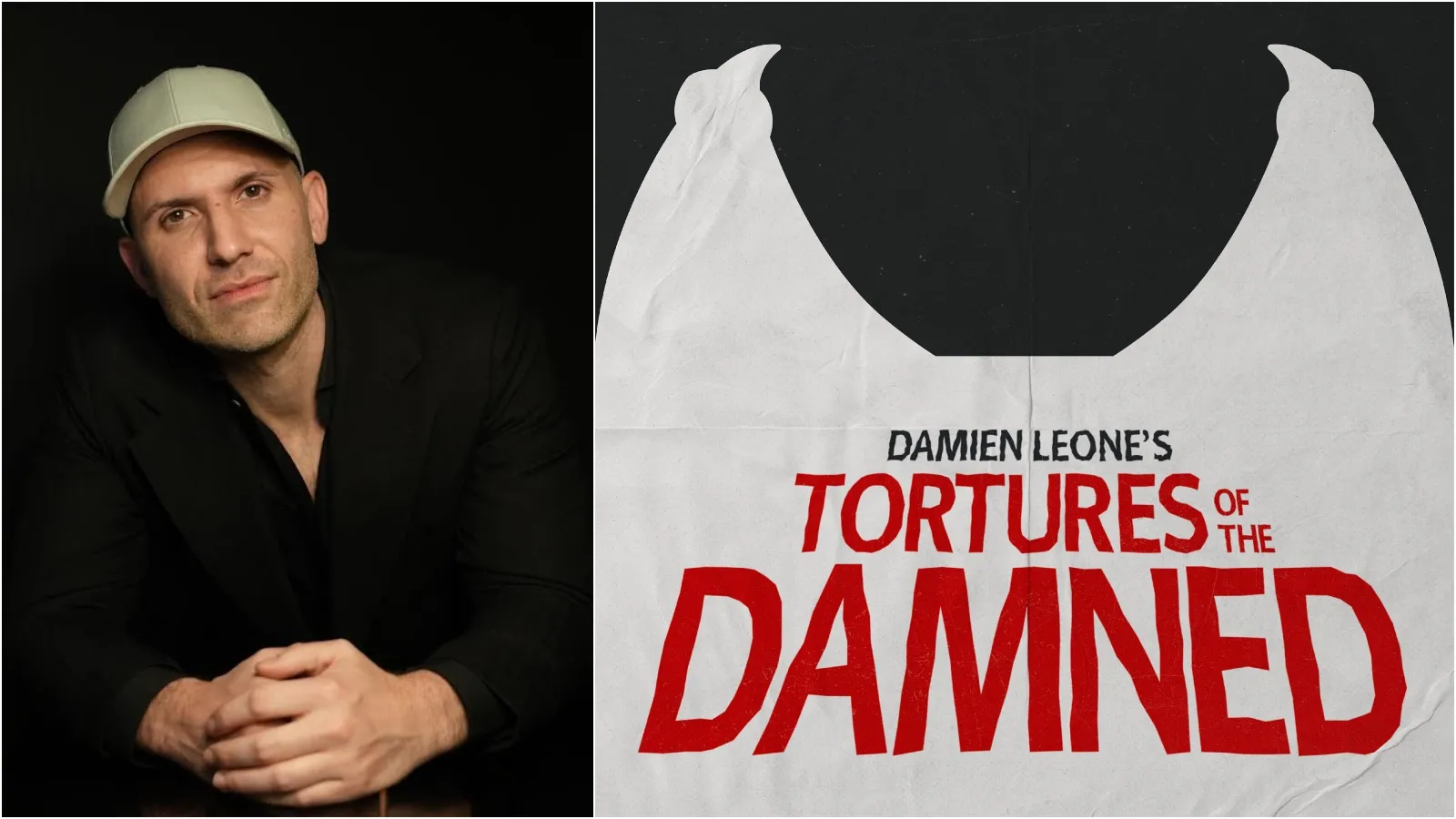
In a move that signals both the maturation of a grassroots horror phenomenon and the genre’s ongoing hunger for fresh blood, Lionsgate has acquired Tortures of the Damned, the next horror project from Damien Leone, the creative force behind the Terrifier franchise. Leone will write, direct, and produce the film, marking his first major studio-backed effort after wrapping Terrifier 4, which is currently in pre-production. Horror legend Sam Raimi and his longtime partner Robert Tapert will produce through their Ghost House Pictures banner.
The announcement, which broke on May 29, 2026, has sent ripples through the horror community. For years, Leone operated as the ultimate indie underdog—bootstrapping ultra-gory slashers on shoestring budgets while working day jobs. Now, he’s stepping into a bigger arena with one of horror’s most respected names at his side. Plot details for Tortures of the Damned remain tightly under wraps, but sources indicate it will feature a different tone from the relentless, Art the Clown-fueled carnage of Terrifier and boast a noticeably heftier budget.
Damien Leone’s TORTURES OF THE DAMNED – Coming soon. pic.twitter.com/43FZiMlMgq
— lionsgate (@Lionsgate) May 29, 2026
stir
Born in 1984 in Staten Island, New York, Leone developed an early obsession with practical effects, inspired by legends like Tom Savini. He started with shorts in the late 2000s, including The 9th Circle (2008) and a short version of Terrifier (2011), before expanding the latter into the 2013 anthology All Hallows’ Eve, where Art the Clown made his feature-length debut.
Art began as a silent, mime-like antagonist—pale-faced, black-and-white costumed, with a sadistic grin and no dialogue. The 2016 Terrifier film, made for around $35,000, introduced him as a standalone killer in a low-budget slasher that gained cult status through word-of-mouth and its unflinching gore. Critics were divided, but audiences who could stomach the violence found something primal and uncompromising.
The real explosion came with Terrifier 2 (2022). Financed on a reported $250,000 budget, the sequel expanded the lore, introduced more characters, and delivered even more ambitious set pieces. It grossed over $15 million worldwide, proving that extreme, unrated horror could still thrive theatrically in a post-pandemic market dominated by franchises and IP.
Terrifier 3 (2024) took it to another level. With a $2 million budget—the highest in the series up to that point—it opened strongly and ultimately crossed $87–90 million globally, becoming one of the highest-grossing unrated films ever. Set during Christmas, it blended holiday cheer with holiday horror, amplifying Art’s cultural footprint. Merchandise, costumes, video games, and even Funko Pops followed. Art the Clown transitioned from underground icon to mainstream slasher rival to Michael Myers or Freddy Krueger.
Leone’s success stems from several factors: relentless practical effects (often handled hands-on by the director himself), a refusal to dilute the violence for ratings, clever marketing through horror communities, and a genuine connection with fans who crave something raw. He famously balanced filmmaking with side gigs, including years as a flower delivery driver, writing scripts between stops.
His approach stands in stark contrast to polished studio horror. Terrifier films prioritize spectacle and shock over polished narratives, embracing their grindhouse roots while using modern distribution (Cineverse and others) to reach theaters.
flow
Sam Raimi’s involvement adds significant weight. Raimi rose to prominence with the Evil Dead trilogy—starting with the ultra-low-budget original in 1981—before achieving blockbuster success with the Spider-Man films. Ghost House Pictures, co-founded with Robert Tapert in 2002, has produced hits like Drag Me to Hell, the Grudge remakes, Don’t Breathe, and the modern Evil Dead entries.
Raimi has long championed inventive genre filmmaking. Pairing him with Leone creates a fascinating mentor-protégé dynamic: two directors who began in micro-budget horror, mastered practical effects and practical storytelling, and built enduring franchises. Raimi’s experience navigating studio systems could help Leone scale up without losing his edge.
Lionsgate, no stranger to horror (think Saw, The Purge, and recent successes), sees Leone as a valuable asset. Executives Scott O’Brien and Pavan Kalidindi will oversee for the studio, with Romel Adam and Jose Cañas representing Ghost House. The deal reflects a broader industry trend: studios scouting proven indie talent who deliver outsized returns on modest investments.
For Leone, this represents validation after years of self-funding and fighting for distribution. Tortures of the Damned allows him a larger canvas—potentially better resources for effects, casting, and post-production—while reportedly shifting tone. Whether this means more psychological depth, supernatural elements, or a departure from pure slasher remains unknown, but the title evokes themes of hellish suffering, guilt, or damnation—fertile ground for horror.
length
The Terrifier series excels at extremity: prolonged, inventive kill sequences that test audience endurance. Leone has defended this as artistic choice, not mere shock for shock’s sake. A “different tone” could allow exploration of character psychology, world-building beyond Art’s rampages, or even blending horror with other genres—echoing how Raimi mixes comedy, horror, and action.
Budget-wise, even a “heftier” figure for Leone (say, mid-eight figures) pales compared to tentpoles but offers luxury compared to Terrifier’s constraints. More money means higher production values, potential star attachments, international shoots, or advanced VFX to complement practical work. Leone has emphasized practical effects as core to his view; expect that to continue, perhaps elevated.
Fans worry about dilution. The Terrifier appeal lies in its DIY authenticity and boundary-pushing. Success stories like James Wan (Saw to Aquaman) or Jordan Peele (Get Out to Nope) show creators can scale while retaining voice. Leone’s hands-on role as writer-director-producer suggests creative control remains intact.
scope
This news fits a pattern. Horror consistently delivers ROI, especially lower-budget entries. Terrifier 3’s success amid bigger flops underscores audience demand for original, bold voices. Studios like Lionsgate benefit from partnering with creators who already have built-in fandoms, reducing marketing risk.
Art the Clown’s rise mirrors other modern icons (e.g., Pennywise’s resurgence, or newer slashers). Social media, cosplay, and genre festivals amplified his reach. Leone’s story inspires aspiring filmmakers: persistence, practical skills, and fan connection can overcome gatekeepers.
Terrifier 4, expected to conclude or significantly advance Art’s arc (with hints of origin story elements), will likely be Leone’s victory lap in the micro-budget realm before the studio shift.
challenge
Challenges include expectations. Terrifier fans demand gore; a toned shift risks alienating them. Studio involvement brings notes, test screenings, and commercial considerations that might soften edges. Budget increases raise stakes—failure costs more.
Opportunities abound. Collision with Raimi could yield crossovers or shared universe ideas. Lionsgate’s distribution muscle ensures wider release. Success positions Leone as a franchise architect, potentially launching more originals or expanding Terrifier into TV/games.
Leone has spoken about wanting to evolve. This project tests whether his singular view translates to a bigger stage.
extent
- Tortures of the Damned arrives at a pivotal moment. Streaming fragmented audiences, but theatrical horror events (Terrifier 3, Smile) prove communal experiences thrive. Practical effects resurged against CGI fatigue. Audiences crave authenticity amid polished blockbusters.
Leone embodies this: a filmmaker who built an empire from shorts and sheer will. Raimi’s endorsement validates that path.
As pre-production on Terrifier 4 continues and Tortures of the Damned gears up, excitement builds. Horror fans await whether Leone’s studio debut delivers new nightmares or familiar (if elevated) terrors.
In an era of reboots and safe bets, Damien Leone’s trajectory—from flower van scribe to studio collab—reminds us why horror endures: it speaks directly to primal fears, rewards bold storytellers, and occasionally lets the underdog carve a bloody path to the top.
From the DRIFT archive: Jodie Foster Narrates Morgan Neville’s Breakdown: 1975: A Cultural Autopsy of the Most Radical Year in American Cinema · Fightland: 50 Cent, Sheff G, Sleepy Hallow, and Jeremih Step Into the Ring
Related Articles

Garage Italia’s Electric Spiaggina Puts the Fiat 500’s Riviera Years on Battery Power
Ten kilowatts, rattan seats and a €85,000 starting price: Garage Italia's 500 Spiaggina rebuilds Ghia's 1958 beach car for the yacht crowd.