Jonathan Anderson Just Redesigned What a Dior Bag Is Supposed to Do

July 15, 2026
A new hardware update to Cannage arrives for Winter 2026/2027, and it might be the most wear thing Anderson has put his name to yet.
recall
- A Bag Built to Keep Up
- The Case for the Bolt
- Softer Options, Same Bones
- Enter the Duffle
- Why This Matters for Anderson’s Dior
- Where and When
Ten seconds. That is roughly how long it takes to clock what Jonathan Anderson is doing at Dior, and it is not a coincidence. Since taking over the house’s menswear, womenswear and couture lines in 2025, the Northern Irish designer has been quietly rebuilding Dior’s product logic from the inside, and the accessories line is where that work shows up first. For the Winter 2026/2027 season, that logic produced the Dior Bolt, a bag that looks less like a runway prop and more like something you would actually reach for on a Tuesday.
View this post on Instagram
That distinction matters more than it sounds like it should. Fashion houses roll out show bags every season that photograph beautifully and disappear from circulation within a year. The Bolt reads differently. It is built around movement, around the idea that a bag has to survive a commute, not just a step and repeat. Anderson has said in past interviews that he thinks about clothing as something people live in rather than something they admire from a distance, and the Bolt is the accessories version of that same instinct.
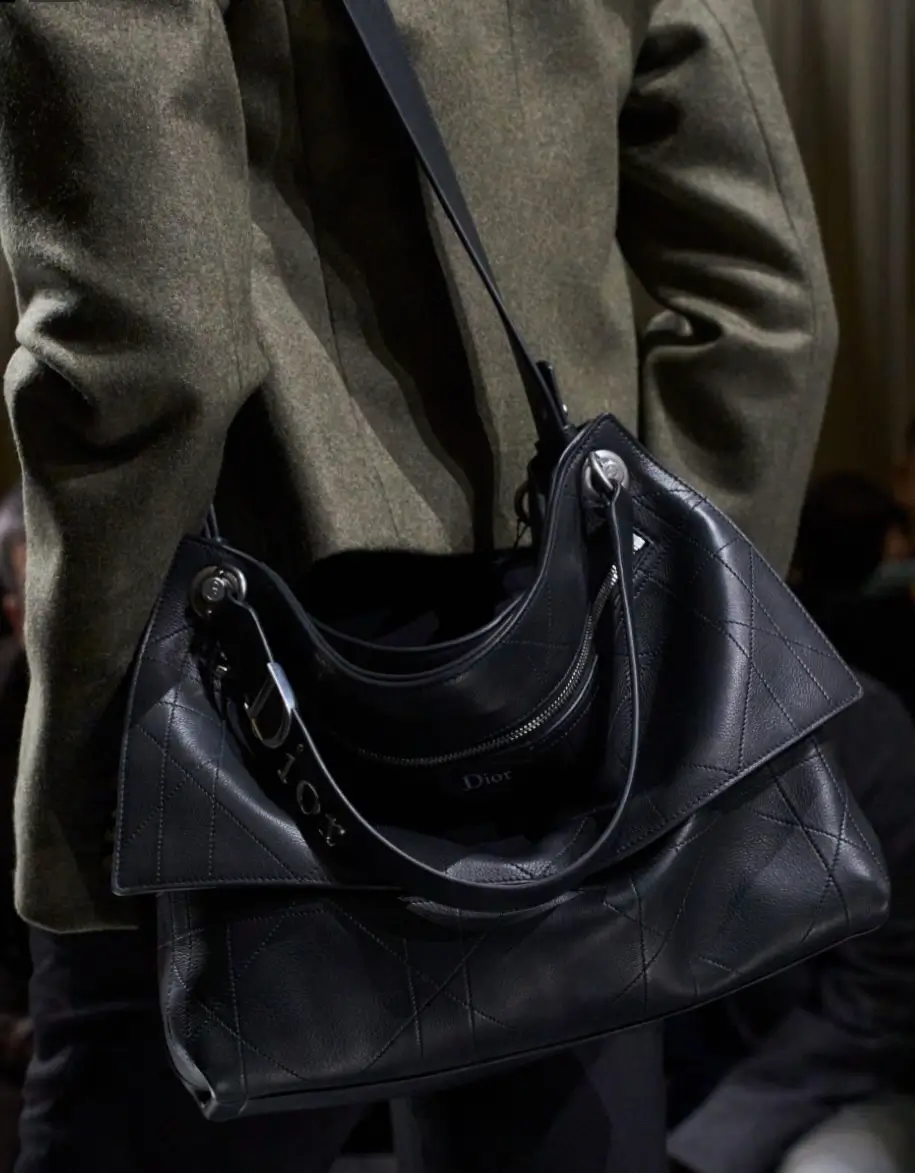
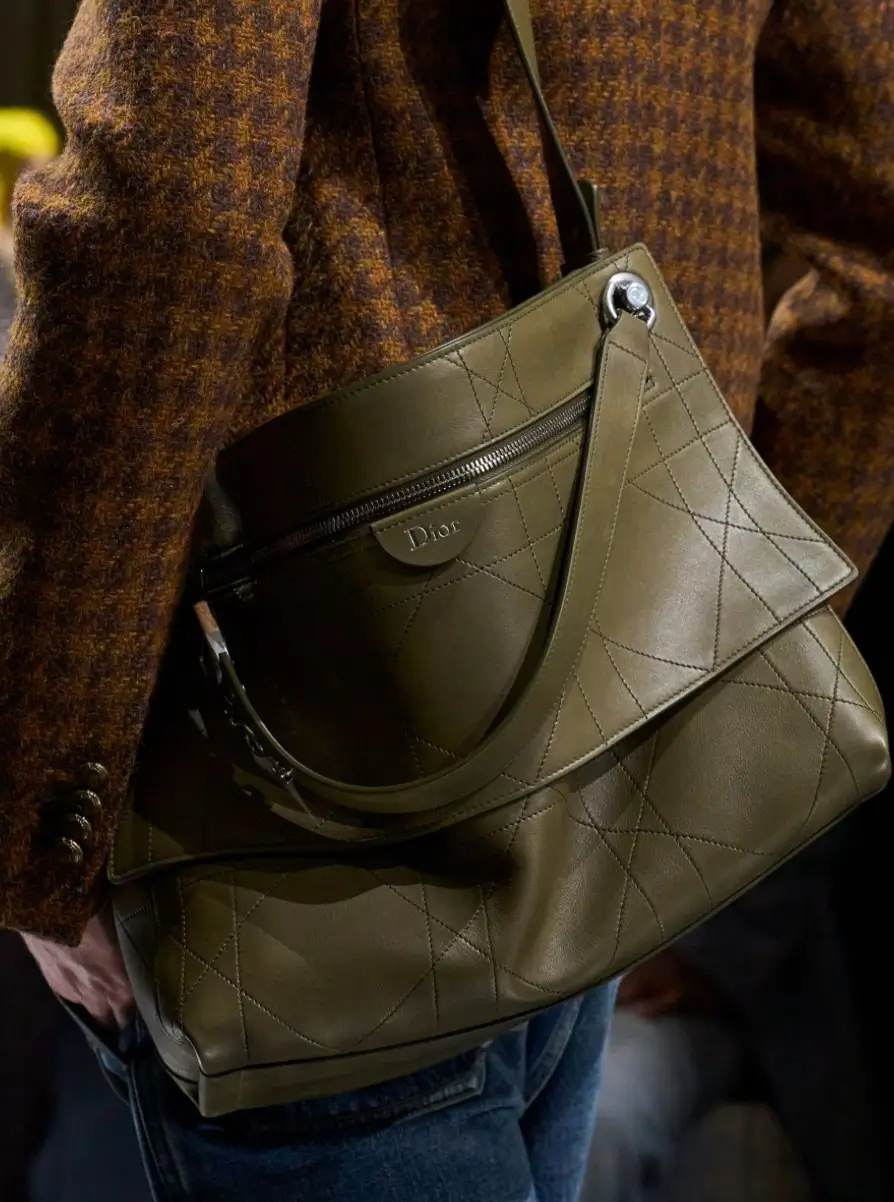
The crossbody iteration is the one drawing the most attention, and for good reason. It is worked in leather carrying the house’s flat Cannage pattern, that quilted diamond weave that has been part of Dior’s view lang since Christian Dior himself, but rendered here in a flatter, more graphic register than the puffier Cannage treatments seen on older Lady Dior styles. The silhouette is structured rather than slouchy, with a single flap pocket doing the job of keeping the front clean instead of cluttered with extra hardware.
stir
What sells the Bolt as a genuine daily bag rather than a seasonal collectible is the handle treatment. Each strap gets a metallic Dior logo stamp, a small detail that gives the bag a bit of graphic punch without tipping into logomania. Worn crossbody, the bag opens into an interior that is genuinely spacious, roomy enough for a phone, a wallet, keys and whatever else someone might carry through an actual day, not just a clutch’s worth of essentials arranged for a photograph.
That practicality question has followed Anderson since he arrived at Dior. Reviewers of his debut collections, both menswear and womenswear, kept circling back to the same observation: this is a designer who wants his clothes and accessories to function, not just perform. The Bolt fits that pattern. It is a bag designed by someone who appears to have thought about what happens after the runway lights go down, when the piece has to survive a subway platform or a rain delay outside a fashion week venue.
The proportions help too. Structured bags can tip into stiffness, feeling more like a briefcase than something with any personality, but the Bolt’s single flap pocket and clean lines keep it from reading as corporate. It sits somewhere between utilitarian and precious, which is close to where Anderson has positioned most of his output since his years at Loewe, the Spanish house where he built a reputation for taking craft heavy materials and giving them a wearable, slightly off kilter shape.
flow
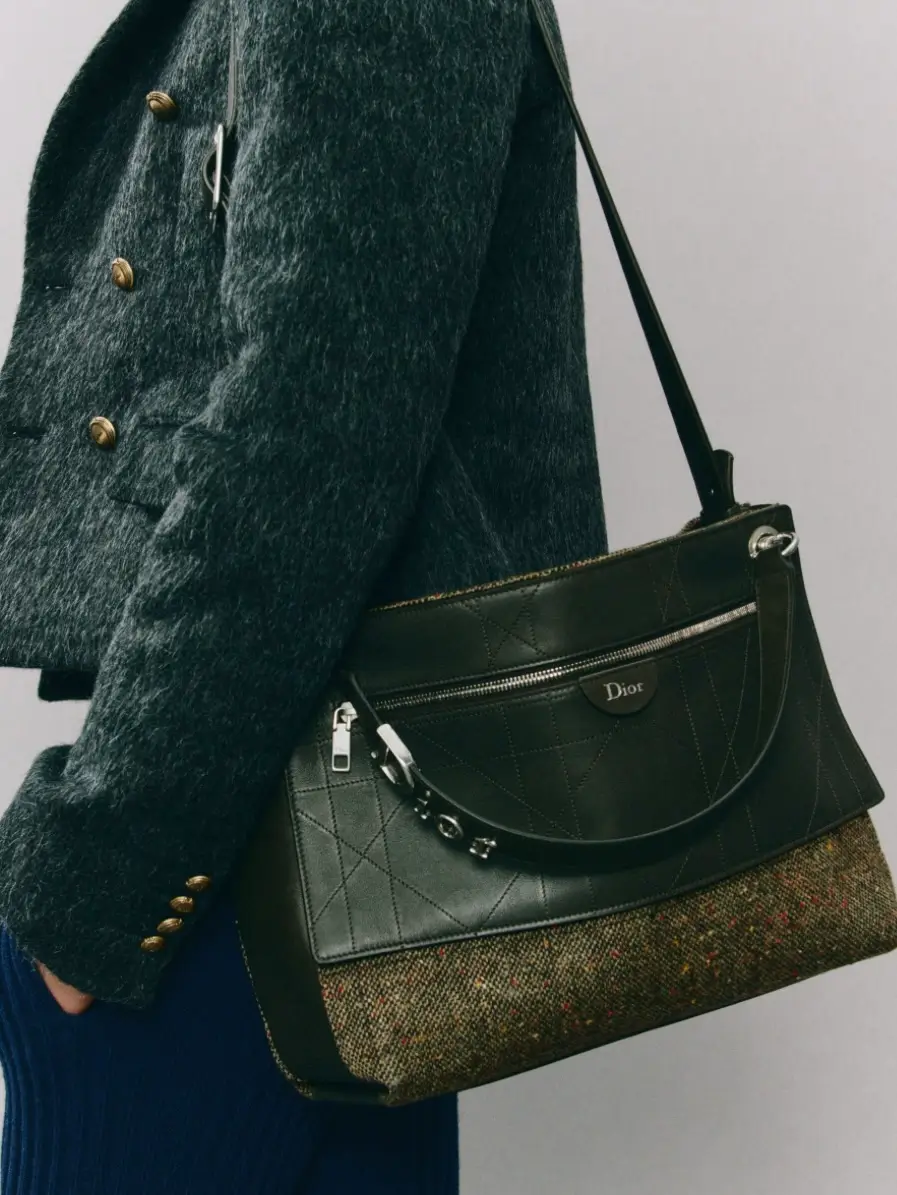
For anyone who wants the silhouette without committing fully to leather, Dior has also produced a tweed and leather version of the Bolt, carrying the same Cannage detailing but landing in a noticeably softer, more textured finish. Tweed has been a recurring material in Anderson’s Dior output, showing up across both his menswear and womenswear collections as a nod to the house’s tailoring roots, and its appearance here on an accessory rather than a garment is a fairly deliberate signal. It suggests Dior wants the Bolt line to move fluidly between categories, not stay locked to leather goods logic.
The tweed and leather combination also does something practical: it gives the same structured shape a completely different hand feel. Where the all leather crossbody has a crisp, almost architectural presence, the tweed version softens that same silhouette into something closer to a piece of tailoring that happens to have straps. That range, one bag family expressed across two very different material stories, is a fairly efficient way for a house to cover multiple customer instincts without diluting the design itself.
in
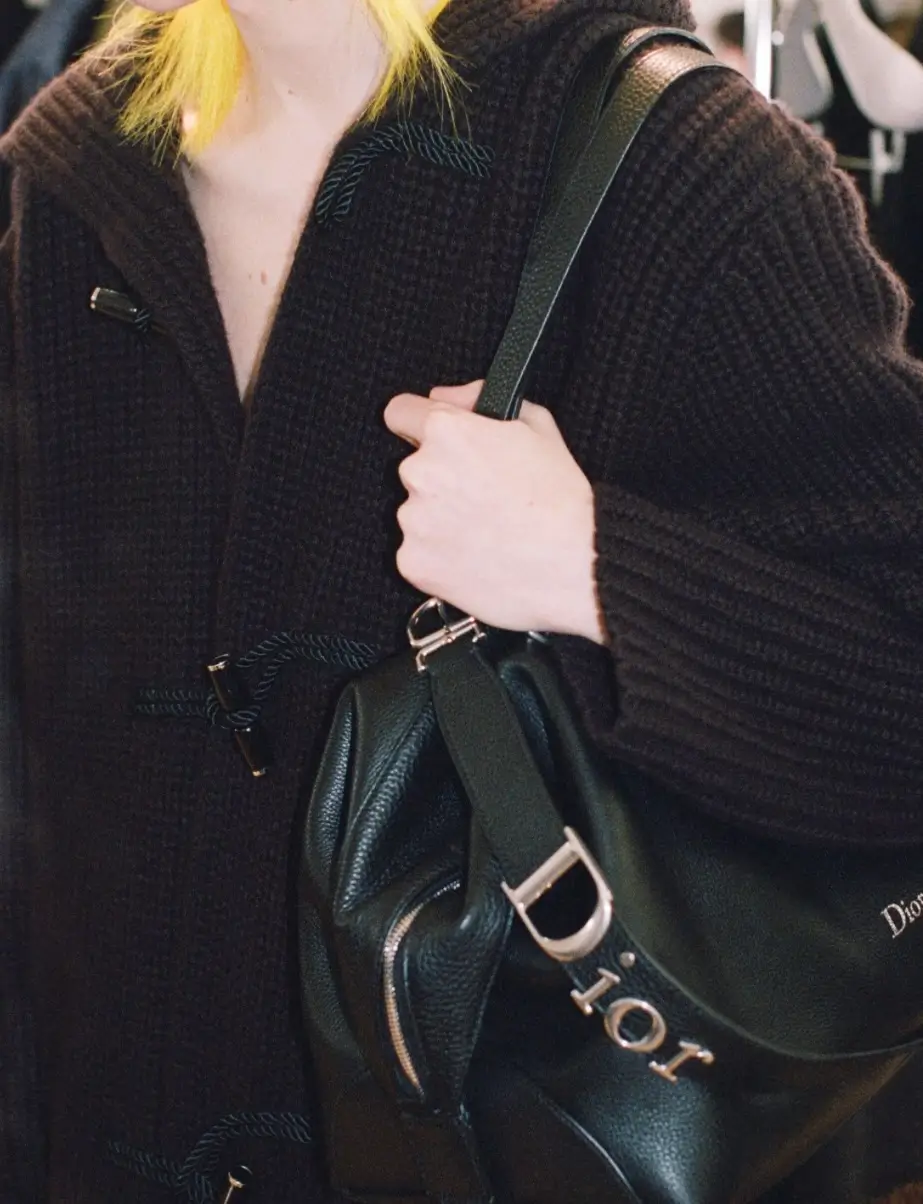
If the crossbody is the disciplined half of the Bolt family, the Dior Bolt Duffle is its looser, more fluid sibling. Where the crossbody commits to structure, the Duffle plays with a foldable construction, something that can compress down when it is not carrying much and expand when it needs to. D shaped rings anchor the strap hardware, and even sitting still on a shelf, the shape suggests motion, something closer to a piece of sports equipment than a traditional handbag.
The material choice reinforces that read. Grained leather brings a tactile, almost instinctive feel to the whole shape, the kind of texture that invites touch rather than just visual appreciation. It is worth noting that duffle silhouettes have become something of a recurring theme across menswear this cycle, appearing in various forms at other houses chasing the same appetite for bags that look like they belong to an active life rather than a static one. Anderson’s version distinguishes itself through that Cannage lineage and the grained leather finish, tying a fairly universal shape back to something specifically Dior.
Both bags, the crossbody and the Duffle, share a design philosophy even as their silhouettes diverge. Neither one treats hardware as decoration for its own sake. The metallic logo stamps, the D shaped rings, the flap pocket closures, all of it reads as functional first and branded second, which is a subtle but real departure from the more logo forward accessory eras some luxury houses have leaned on in recent seasons.
View this post on Instagram
matter
Since his appointment was first reported by Vogue in April 2025, Anderson’s Dior has been watched closely for signs of where he intends to take a house with more than seven decades of codified visual language. His debut menswear collection for Spring/Summer 2026 leaned heavily on craft driven tailoring, and the accessories that followed, including reworked takes on the Lady Dior and the Saddle Bag, suggested a designer interested in revisiting archive shapes rather than discarding them outright.
The Bolt fits neatly into that pattern, but it also marks something slightly different: a bag that does not lean on an archival name or a decades old silhouette. It is a new shape, built around Anderson’s own priorities rather than a reissue of something Christian Dior or a previous creative director already made famous. That distinction is worth sitting with. Reworking the Saddle Bag or the Lady Dior is one kind of statement, a way of proving reverence for the house’s history. Introducing an entirely new family of bags under a new name is a different kind of statement, one that says the house is ready to build forward rather than only look back.
Industry commentary around Anderson’s tenure so far has repeatedly circled the tension between his instinct for craft and Dior’s commercial machinery, the sheer scale of a house that needs accessories to sell at volume across dozens of markets. The Bolt appears to be Anderson’s answer to that tension: a design specific enough to carry his fingerprints, but practical enough to function as a genuine commercial product rather than a curiosity confined to editorial pages.
huh
The Bolt collection was unveiled as part of Dior’s Winter 2026/2027 presentation, arriving through the brand’s usual channels, including its runway show coverage and official social accounts, in the weeks following the season’s menswear calendar. As with most Dior accessory launches under Anderson, expect the rollout to include the standard mix of runway imagery, campaign photography and in store availability across Dior’s flagship locations before the pieces reach wider retail distribution.
For a house moving through one of its most closely watched creative transitions in years, the Bolt is a useful marker. It is not trying to recreate history. It is trying to make a case for what carrying something under the Dior name should feel like right now, structured where it needs to be, soft where that serves the shape better, and built, in Anderson’s own framing, to keep pace with an actual day rather than just a single afternoon on a runway.
Related Articles

Sony Is About to Delete Hundreds of Movies People Already Paid For
Come September, PlayStation owners across the UK and Europe will open their video library and […]