Dylan’s T-Shirt Club: The 11-Year-Old Visionary Revolutionizing Celebrity Fashion One Hand-Drawn Tee at a Time

June 4, 2025
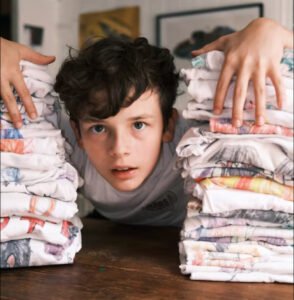
At a time when most 11-year-olds are exploring the playgrounds of imagination, Dylan—the creative force behind Dylan’s T-Shirt Club—is shaping the global fashion narrative with felt-tip pens and fabric paint. Having launched his venture at the age of six, Dylan has produced over 317 uniquely numbered, hand-drawn t-shirts. Each piece is its own artwork, carrying the raw energy of a child’s unfettered imagination combined with a surprisingly sophisticated sense of composition, humor, and cultural resonance.
His early foray into fashion wasn’t driven by commercial aspirations, but by a genuine void: he simply couldn’t find any t-shirts featuring “cool monsters.” Rather than settling for less, Dylan took matters—and markers—into his own hands. What followed was a cascade of innovation, grounded in an extraordinary home environment and propelled by cultural relevance, industry mentorship, and a rare clarity of vision.
The Origins: A Household of Creativity
Dylan’s home life serves as the ideal incubator for a young designer. His mother, Samantha McMillen, is an acclaimed Hollywood stylist known for her collaborations with A-listers including Johnny Depp, Dakota Fanning, and Zoe Saldana. His father, Ben, brings a creative lens from the world of television and film development, providing Dylan with a language for narrative and visual storytelling that’s reflected in his work.
From a young age, Dylan was immersed in the aesthetics of performance, storytelling, and fashion. This unique environment allowed him to think visually and narratively at once. While many children are discouraged from coloring outside the lines, Dylan was praised for doing exactly that—building a visual signature characterized by instinct, color freedom, and joyful unpredictability.
His first t-shirts were made with nothing more than fabric markers and oversized cotton tees. But what made them special wasn’t just the method—it was the energy. No two shirts were alike. Some carried absurdist slogans, others displayed original monsters in surreal environments. Each piece became a wearable artifact of Dylan’s unfiltered point of view.
DIY Becomes Desirable: From Family Fun to Cultural Force
What began as a fun project at home quickly gained traction in celebrity circles. It helped, of course, that Samantha McMillen’s professional life placed her in proximity to celebrities who could amplify Dylan’s work. But endorsement alone doesn’t create longevity—what Dylan offers is authenticity, and the fashion world took notice.
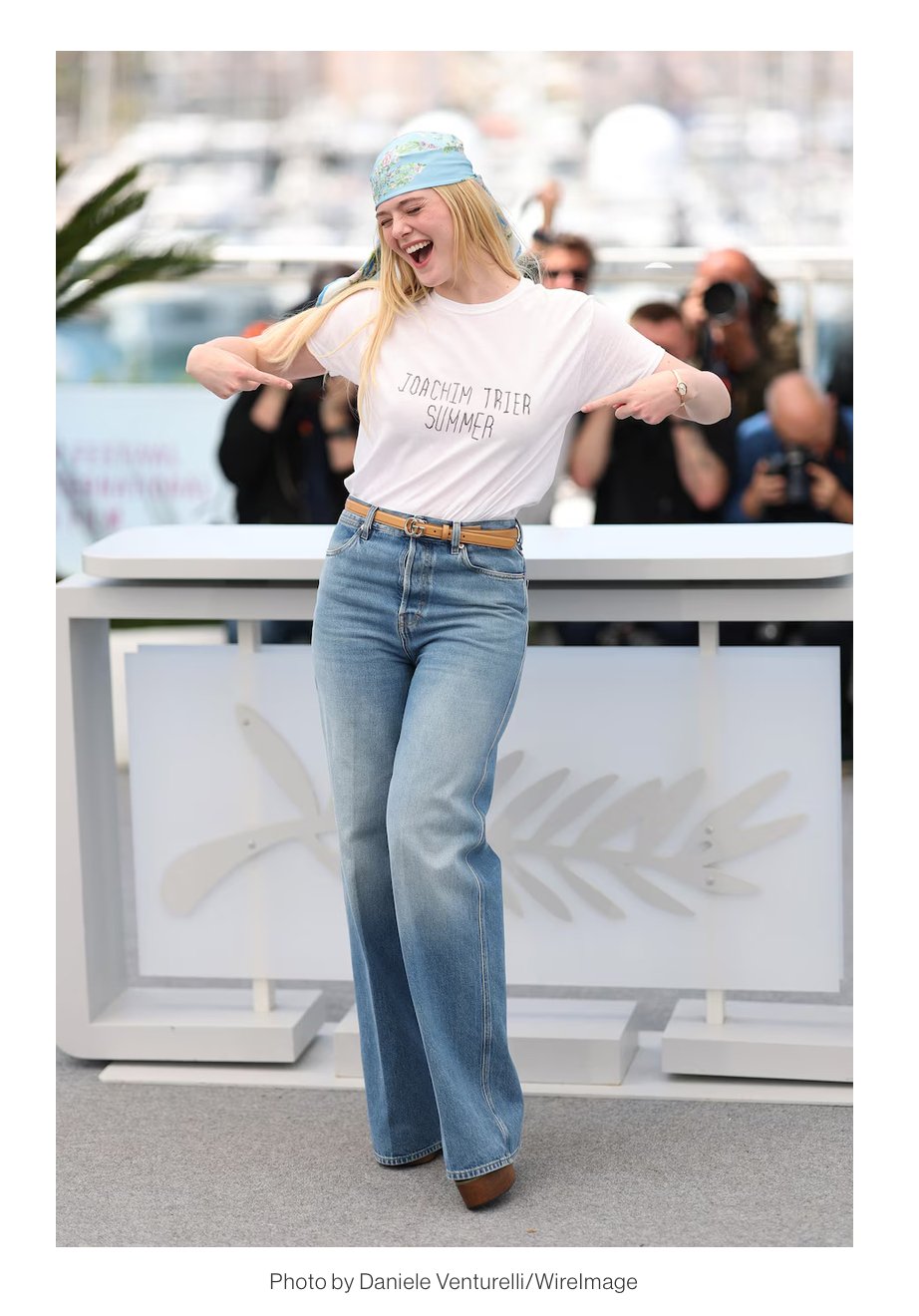
In 2023, Elle Fanning stepped onto the Cannes Film Festival stage wearing T-Shirt #316—a white tee emblazoned with the phrase “Joachim Trier Summer” on the front and “DYLAN’S T-SHIRT CLUB” on the back. The shirt wasn’t designed for commercial gain—it was a personal tribute to the Norwegian director behind The Worst Person in the World. The phrase had become an inside joke between Dylan and his family. But when Elle wore it at Cannes, it instantly transformed into a cultural artifact, traversing the line between niche homage and red carpet statement.
Soon after, Dylan’s work was spotted on Pharrell Williams, A$AP Ferg, and Michelle Pfeiffer, among others. These weren’t contractual sponsorships—they were passionate endorsements from individuals who believed in the power of childlike creativity as a genuine artistic force. Pfeiffer even collaborated with Dylan for her clean fragrance brand Henry Rose, resulting in an environmentally conscious and visually playful capsule drop.
A Club of One, A Movement of Many
The name Dylan’s T-Shirt Club implies collective membership, yet Dylan remains the sole designer, producing each t-shirt by hand. Every piece is an original. Every number matters.
While high fashion has long flirted with the idea of “limited editions” and numbered garments, Dylan’s execution of this idea—backed by his personal craftsmanship—brings sincerity to the trend. T-shirt No. 001 is no less important than No. 317. There’s a meticulous continuity to his catalog, a sense that each piece is part of an unfolding story. And unlike brands that manufacture faux scarcity, Dylan’s limitations are genuine—he is, after all, still a full-time student.
On weekends and holidays, he spends time ideating and designing. His notebooks are filled with sketches of monsters, logos, joke phrases, and mashups. It’s part imagination, part archival work—like an analog version of streetwear drops, but filtered through the brain of a kid who collects Pokémon and competes in robotics tournaments.
Design Language and Philosophical Voice
What sets Dylan’s work apart is not simply the fact that he is young—it is that his artistic voice is confident, unfiltered, and evolving. His designs resist over-design. Many shirts feature hand-drawn text phrases that feel more like cryptic poetry than standard slogans: “I Ate the Sun,” “Birds on Mars,” or “Pluto Had a Bad Day.”
This micro-style of observational surrealism resonates in a world oversaturated with branding. Dylan’s t-shirts feel like outsider art—but in a commercial shell. His hand-drawn monsters might be comic, but they carry emotion. Some look confused. Others are dancing. Some just hover in ambiguous space, like alien emojis trying to communicate.
There is no algorithm behind Dylan’s designs—only feeling. That makes his work increasingly rare in a fashion ecosystem chasing trends, AI renderings, or data-led decisions.
Strategic Collaborations and Industry Recognition
While Dylan’s designs might appear spontaneous, his ability to collaborate strategically proves he understands fashion as both art and industry.
His 2024 partnership with Woven Store in the UK marked his first international foray. The drop sold out quickly. Customers were not just buying shirts—they were investing in a narrative. Each piece came with a custom card, handwritten by Dylan, about the inspiration behind the drawing.
His ongoing relationship with Henry Rose—a brand celebrated for transparency and clean ingredients—showcases his potential to connect with broader consumer categories. The collaborative release featured limited t-shirts inspired by the scent notes of Pfeiffer’s perfumes, blending olfactory memory with visual imagination.
And yet, Dylan’s ambitions remain sky-high. In interviews, he has expressed dreams of working with Supreme, LEGO, and Nike. These aren’t just name drops; they’re touchpoints for his world. LEGO appeals to his architectural curiosity. Supreme to his streetwear aesthetic. Nike to his love of sports and kinetic forms.
He envisions a future where Dylan’s T-Shirt Club includes a flagship store—one with in-house design stations, kid-led workshops, and a wall of past creations that echo the format of a museum more than a boutique.
Education, Balance, and Identity Outside Fashion
Despite his rising profile, Dylan remains grounded. He attends school full-time and participates in a range of extracurricular activities, from martial arts and science fairs to playing chess competitively. This dynamic childhood enriches his design philosophy; his world is not siloed by fashion but animated by it.
His interests in robotics and science also hint at a potential convergence of tech and fashion in his future work. He’s currently experimenting with augmented reality patches that bring his monsters to life via smartphone camera filters. It’s early stage—but again, his vision is expansive.
And then there’s Pokémon. Dylan collects cards obsessively, even designing t-shirts around original creatures inspired by Pokémon’s evolutionary system. These influences ground him in kid culture, ensuring that his designs never pander to adult tastes but originate from a place of authentic youth expression.
Legacy in the Making: Rethinking Fashion’s Gatekeepers
Dylan’s success forces us to reconsider long-held ideas around fashion legitimacy. Why must a designer train in Paris or debut at NYFW to earn cultural weight? Dylan’s practice, rooted in felt markers and intuition, bypasses traditional metrics and enters through the door of pure creativity.
He also represents a generational shift. Gen Alpha—his generation—has grown up in a world where TikTok, AR filters, and YouTube tutorials make DIY stardom accessible. But Dylan isn’t a viral fluke. He is slow-burning proof that craftsmanship and narrative still matter, especially when untethered from the institutional barriers that often restrict entry.
In a post-Pharrell-at-Louis-Vuitton era, where design is more about worldview than fashion pedigree, Dylan’s approach aligns with what the future of fashion is shaping into: democratic, joyful, human.
Fanfare Flow
Dylan’s T-Shirt Club is more than a novelty—it’s a declaration. A declaration that fashion can be personal. That children are capable of artistic excellence. That the line between “design” and “drawing for fun” can be gloriously blurred.
As he continues to add numbers to his collection, Dylan is not just cataloging t-shirts—he is scripting an evolving memoir. Each shirt is a timestamp, each collaboration a chapter, each monster a self-portrait drawn in symbols and scribbles.
With a pen in one hand and the world watching, Dylan proves that the future of fashion isn’t just younger—it’s freer, funnier, and fiercely original.
Related Articles

The Heart Association Just Told Millions of Coffee Drinkers to Relax a Little
New guidance from the American Heart Association says up to five cups a day is […]