Elisa BinzPRO’s 3D Environment Student Project at Artside School

June 7, 2025
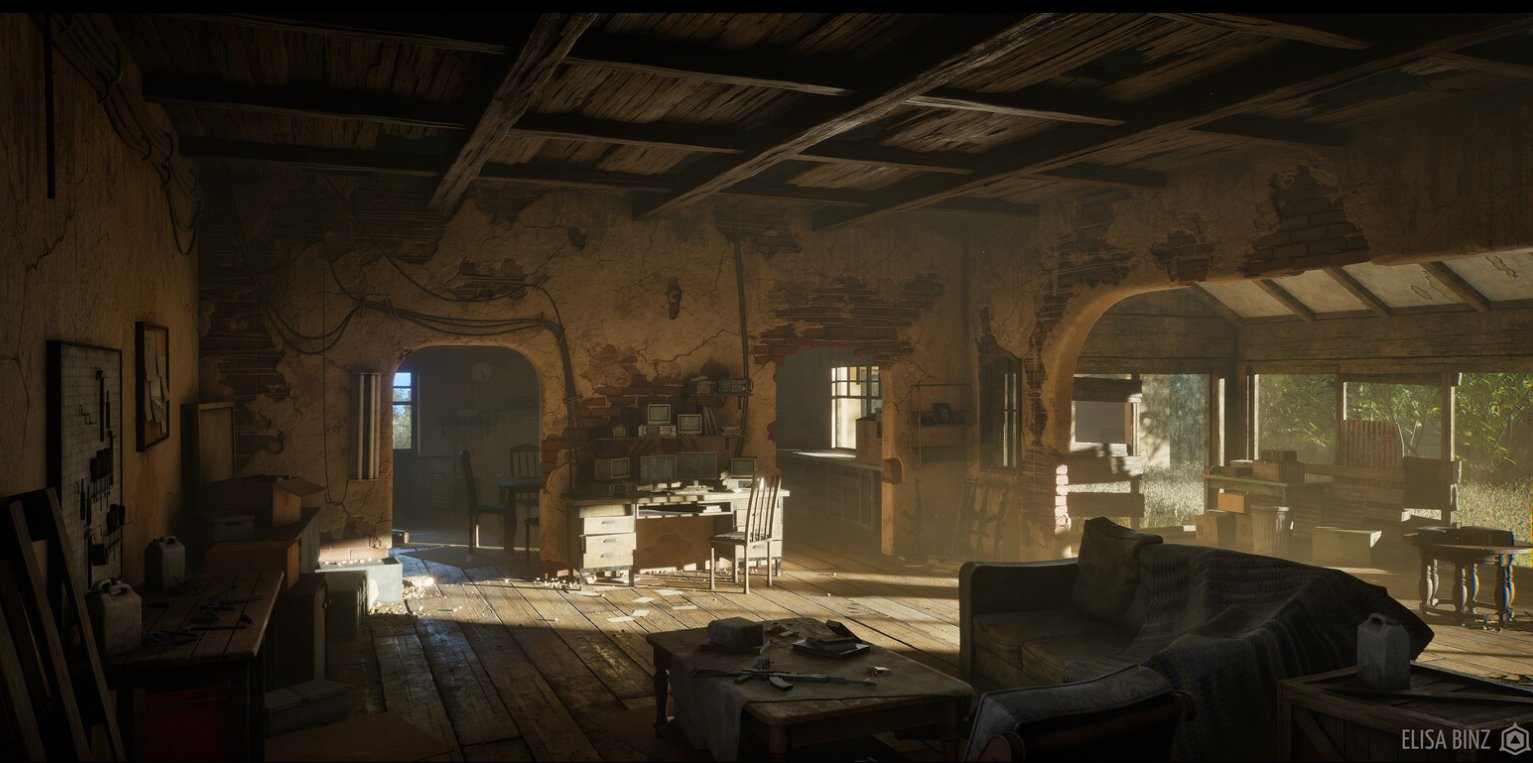

In the digital atelier where pixels replace pigments and landscapes are conjured from code, few student works resonate with the immersive weight of professional-level craft. Elisa Binz, a 3D Environment Artist and student at Artside School, stands at the intersection of imagination and technical mastery. Her project—executed under the tutelage and intensity of Artside’s exacting curriculum—emerges not as a fledgling submission, but as a poetic and tactile contribution to the evolving canon of 3D environmental art.
This is a student project in title only. In execution, it is a meditation on texture, lighting, narrative structure, and digital world-building—offering a showcase of a burgeoning artist whose mind does not merely render objects, but constructs atmosphere. The following comprehensive literature explores the granular and grand components of Binz’s project, analyzing its conceptual frameworks, technical processes, and artistic outcomes in full depth.
Artside School: The Incubator of Artistic Precision
Founded in the pursuit of turning passion into profession, Artside School, based in France, has become a renowned institution for training elite digital artists across disciplines: concept art, 3D character modeling, game environments, and real-time asset development. Its rigorous environment fosters not just aesthetic quality but pipeline accuracy—training students to think not only like artists, but like production-ready professionals.
In this context, Elisa Binz’s project is both a response to curriculum and a leap beyond expectation. Under mentorship from industry veterans and working within the school’s tightly structured pedagogical method, Binz approached her environment build not merely to meet assignment criteria but to explore the language of place in virtual terms.
The Premise: Architecture as Memory, Landscape as Emotion
At the heart of Binz’s environment is the simulation of space as story. Whether it is a decaying observatory nestled in overgrown ruins or a medieval street caught in the amber of a dying sun, her environments do more than exist—they evoke. One senses that every prop is placed with intent, and every shadow is an invitation to a silent narrative.
The foundational principle behind her work is a philosophy of “environmental storytelling,” a discipline that requires not only modeling and texturing expertise, but a keen understanding of how humans project memory and emotion onto place. By crafting scenes that could belong to games like The Last of Us, Assassin’s Creed, or Elden Ring, Binz isn’t just modeling objects—she’s establishing the conditions for experience.
Conceptual Blueprinting: From Sketch to Scene
Binz’s process begins in the realm of visual research and concept design. Her workflow reflects a deep attention to narrative tone and thematic coherence. Moodboards, cinematic references, architecture studies, and lighting breakdowns inform her pre-production phase. Instead of rushing to digital sculpting, she anchors herself in atmospheric intention: What does this place feel like? What’s the emotional temperature?
Often drawing from historical architecture, gothic remnants, post-apocalyptic ruin, and sacred natural spaces, Binz builds visual libraries before ever launching a 3D viewport. This scholarly commitment to form and function gives her environments an archaeological authenticity—even as they live in digital space.
Technical Execution: Building the Unreal
While Artside’s students have access to industry-standard software, Binz wields these tools with precision and restraint. Her technical pipeline includes:
- Blockout & Composition in Unreal Engine 5
She starts with a graybox environment, focusing on spatial rhythm, scale hierarchy, and the viewer’s navigational eye. Through clever use of Unreal’s camera framing, she ensures each shot reads like a narrative beat. - Modeling with Blender or Maya
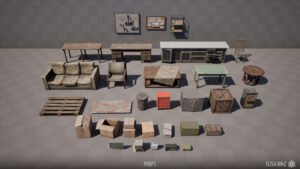
Props are modeled with tight topology and often modular intention. Whether it’s a crumbling fountain or a rusted iron gate, her objects are purpose-built to be both readable and performant. - High-to-Low Poly Baking via ZBrush & Substance 3D Painter
Surface detail is introduced through sculpting in ZBrush, then optimized with retopology and normal baking. Materials are painstakingly painted and blended using Substance tools, giving her scenes a rich variety of wear, decay, moss, rust, soot, and erosion. - Material Instancing and Layering
Her use of vertex painting, trim sheets, and smart material instancing elevates the surfaces from simple textures to layered expressions of time. Stone walls peel with water damage; wooden beams warp under sun-stained duress. Nothing feels new—and that’s the triumph. - Lighting & Post-Processing in Unreal
Perhaps most arresting is her ability to manipulate natural light. Whether basking in golden hour or choked by overcast fog, her lighting techniques communicate time of day, seasonal suggestion, and emotional subtext. The work is cinematic without feeling contrived.
Key Environmental Composition: The Scene Itself
While Binz may produce multiple scenes, a standout piece—frequently cited in online showcases—features a derelict hilltop chapel, its facade overtaken by vegetation, its stained-glass windows shattered but catching the waning light. Ivy wraps around forgotten statues. A lone bench lies overturned near a fire pit with extinguished embers.
Everything in the scene implies absence—yet the space is profoundly inhabited by trace. Binz excels at making viewers wonder, “Who was here?” and “Why did they leave?”—a core principle of compelling environmental design. The scene reads as both sacred and haunted—a dichotomy only achievable through balance in material, light, and storytelling rhythm.
The Layer of Soundless Animation
Although the scene is visually static, it suggests kinetic potential. Lanterns sway subtly from imagined wind. Water puddles reflect invisible clouds. A fox might cross the frame were it animated. This is a hallmark of high-level 3D environment art: creating the conditions for imagined motion.
In this, Binz joins the tradition of Yoji Shinkawa, Stålenhag, and Ian Hubert—artists who treat digital environments as silent cinema frames. One does not just admire the render; one hears it, smells it, stands within it.
Reception and Online Recognition
Within ArtStation, Behance, and other community portfolios, Binz’s project has drawn admiration not only from fellow students but also professional recruiters and artists across AAA and indie studios. Comments often cite her composition mastery, subtle material detailing, and ability to invoke story from stillness.
Some of her work has been featured in “Student Showcase Highlights” by institutions adjacent to Artside, cementing her role as one of the school’s rising luminaries. As a student, this level of polish forecasts an inevitable transition to professional work in environments for games, cinematic previsualization, or VR spaces.
A Reflection on the Artist: Elisa BinzPRO
What elevates Binz is not just her fidelity to technical quality but her reverence for emotion as material. Unlike many students who chase complexity, Binz simplifies to deepen. She reduces noise, removes clutter, and enhances the poetic negative space in a scene. The result is art that whispers but lingers.
She uses her tag “BinzPRO” half in jest—“Pro” as a hopeful title—but the irony may already be obsolete. Her output is more advanced than many portfolio submissions from working artists. This is the threshold of mastery: when student work transcends instruction and becomes its own school of thought.
The Future Potential: World-Building as Career
Elisa Binz is primed for work in:
- Level Art & Design for AAA games
- 3D World Building for Open World titles
- Cinematic Environment Design for Animation or Film
- AR/VR Architecture and Virtual Experience spaces
- Environmental Asset Design for Unreal/Unity asset libraries
Her ability to create not just believable but meaningful spaces makes her a top candidate for studios like CD Projekt Red, Bluepoint Games, Guerrilla, or Dontnod—studios who seek not just visualists but narrative environmentalists.
Impression: Digital Ruins, Human Echoes
In a field where spectacle often overpowers subtlety, Elisa Binz’s project shows restraint, maturity, and emotion channeled through geometry, texture, and light. Her work reminds us that great environmental art does not shout—it suggests. It does not just render—it invokes.
As the sun filters through broken glass and moss climbs forgotten walls in her digital scene, we are reminded: this is not just a student project. It’s a world. One built pixel by pixel, but lived in, heart-first.
Related Articles
Down the Hole: Tohé Commaret Turns a Bristol Gallery Into a Waiting Room Between Two Lives
In “Mijitas,” the Franco-Chilean filmmaker splits her audience between a haunted hotel and a telenovela […]