DRIFT

different

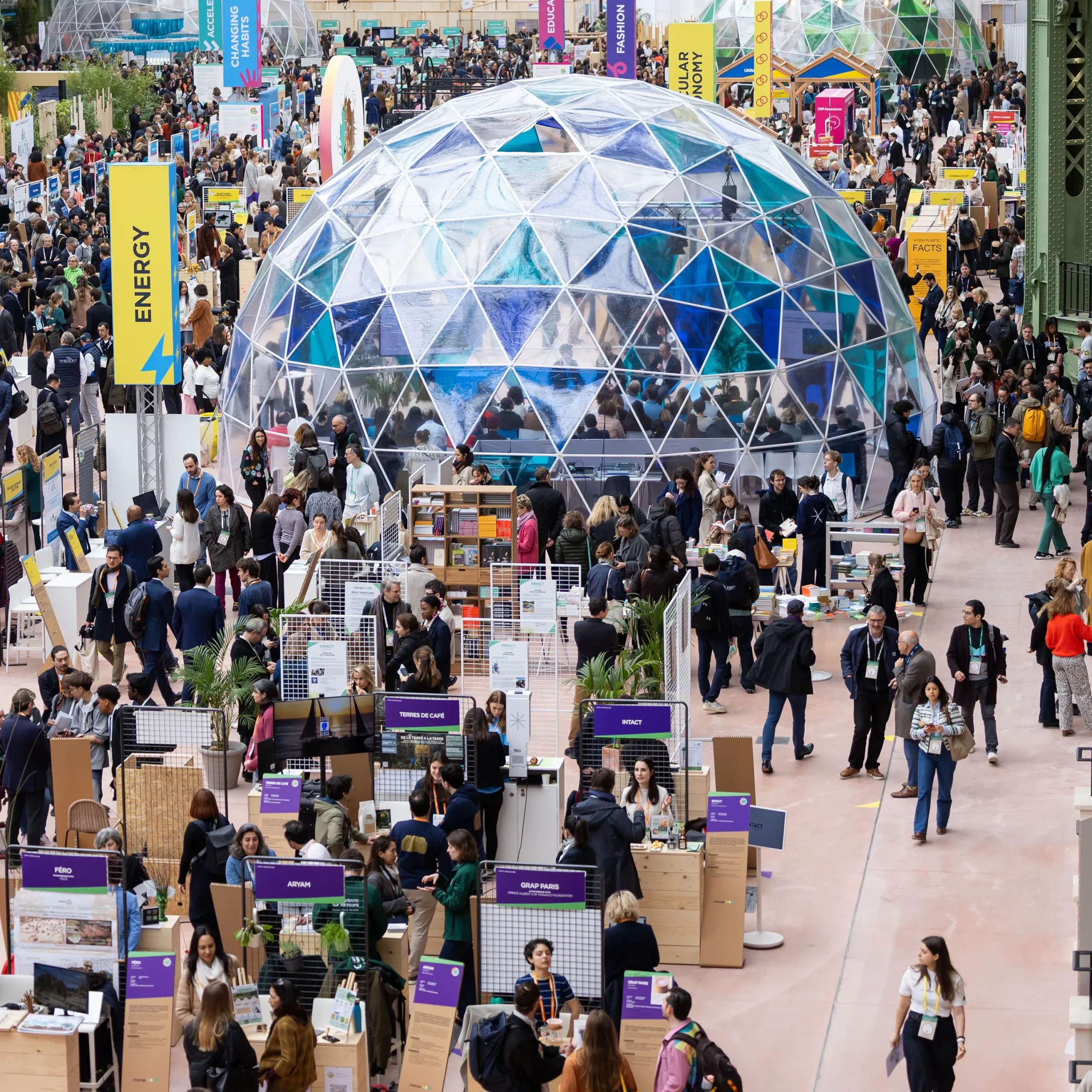
Paris, in early spring, has always held a certain authority over fashion’s tempo. Yet during ChangeNOW, the city’s rhythm shifts. The usual choreography of ateliers, fittings, and showroom unveilings is replaced with something quieter but more consequential: discourse. Designers sit alongside scientists. Executives share space with activists. Materials—not silhouettes—become the central language.

ChangeNOW, now widely regarded as one of the most influential global summits dedicated to solutions for the planet, has evolved into an unlikely yet urgent waypoint for fashion. Not because the industry suddenly discovered sustainability, but because the conversation has matured beyond vague commitments into something measurable, structural, and—critically—visible.

This year’s conference made one thing clear: fashion is no longer flirting with sustainability. It is being reshaped by it.

cept

For years, “innovation” in fashion often meant aesthetic experimentation—a new silhouette, a revived archive, a collaboration engineered for virality. At ChangeNOW, innovation is redefined through material science.

Biofabricated leather alternatives, once positioned as experimental novelties, are now discussed in terms of scalability and supply chain integration. Mycelium-based textiles, algae-derived dyes, and lab-grown fibers are no longer confined to concept showcases—they are entering production pipelines.

The shift is subtle but profound. Designers are not asking whether these materials are viable; they are asking how quickly they can replace legacy systems.

Luxury houses, historically reliant on heritage materials like calfskin and virgin silk, are quietly recalibrating. The narrative is no longer about substitution, but transformation. A handbag made from mycelium is not presented as a compromise—it is framed as progress, an evolution of craft aligned with ecological intelligence.

The implication is clear: material choice is becoming the new signature of luxury. Not logo, not silhouette—substance.


View this post on Instagram


A post shared by ChangeNOW (@changenow_world)

flow

Circularity has long been a favored term in sustainability discourse, often deployed with a degree of abstraction. At ChangeNOW, it was rendered tangible.

Panels dissected the mechanics of closed-loop systems: garments designed for disassembly, fibers engineered for infinite recyclability, and business models built on resale, repair, and regeneration. What emerged was a consensus that circularity cannot exist as a post-production solution. It must be embedded at the design stage.

This reorientation challenges the very foundation of fashion’s traditional calendar. Seasonal drops, predicated on obsolescence, sit uneasily alongside garments intended for longevity and reuse. Designers are beginning to respond—not by abandoning creativity, but by redefining it.

A coat designed to be re-dyed, re-cut, or reassembled over time becomes a living object rather than a static one. The role of the designer shifts from creator to systems thinker, orchestrating not just how a garment looks, but how it lives.

In this context, circularity is not a constraint. It is a new form of authorship.

lang

If the past decade of fashion was defined by storytelling, the next may be defined by proof.

At ChangeNOW, transparency emerged as a central pillar—not as a marketing tool, but as an operational necessity. Digital product passports, blockchain-backed supply chain tracking, and QR-coded garments are transforming how information is communicated.

Consumers are no longer satisfied with broad claims of sustainability. They want specificity: where a garment was made, how it was dyed, who assembled it, and under what conditions.

This demand is reshaping brand communication. Campaign imagery is increasingly supplemented—or even replaced—by data. A dress is no longer just photographed; it is documented.

For luxury brands, this presents both a challenge and an opportunity. Transparency disrupts the mystique that has traditionally defined high fashion. Yet it also offers a new form of exclusivity: access to truth.

In a landscape saturated with imagery, authenticity becomes the rarest commodity.

eco

Sustainability, for all its moral urgency, remains tethered to economics. ChangeNOW addressed this tension directly.

One of the most striking takeaways was the reframing of cost. Sustainable materials and ethical production have often been criticized as prohibitively expensive, accessible only to a narrow segment of the market. Yet speakers emphasized that the true cost of conventional fashion—environmental degradation, labor exploitation, resource depletion—has simply been externalized.

As regulatory frameworks tighten and carbon pricing becomes more widespread, these hidden costs are beginning to surface. What was once considered “premium” may soon become standard.

This shift is already influencing pricing strategies. Brands are experimenting with models that reflect lifecycle value rather than point-of-sale cost. A garment designed to last ten years, with built-in repair services, is positioned differently than one intended for a single season.

The economic narrative is evolving from consumption to stewardship.

the accept

Perhaps the most unexpected shift at ChangeNOW was cultural rather than technical: the erosion of competition as the dominant mode of operation.

Fashion, historically defined by exclusivity and differentiation, is beginning to embrace collaboration as a necessity. Brands are partnering with biotech startups, sharing research on sustainable materials, and co-developing solutions that transcend individual identities.

This is not altruism—it is pragmatism. The scale of the climate crisis exceeds the capacity of any single brand or designer. Progress requires collective action.

The result is a new ecosystem, one in which knowledge is currency and openness is strategy. The boundaries between disciplines blur: fashion intersects with science, technology, and policy.

In this environment, influence is measured not by market share, but by impact.

show

Beyond systems and structures, ChangeNOW also hinted at an emerging aesthetic.

Sustainability is often associated with restraint—neutral palettes, minimalism, a certain visual sobriety. Yet the conference suggested a more expansive vision. Responsible fashion does not have to be austere. It can be expressive, even opulent, provided that its beauty is rooted in integrity.

Designers are exploring textures and finishes derived from natural processes: irregular dye patterns, organic surfaces, materials that evolve over time. Imperfection becomes a marker of authenticity rather than a flaw.

This aesthetic aligns with a broader cultural shift toward mindfulness and intentionality. Consumers are seeking objects that carry meaning, that reflect values as much as taste.

In this sense, sustainability is not just a constraint on design—it is a source of inspiration.

stringent

A recurring theme throughout ChangeNOW was the role of policy. For years, sustainability in fashion has been largely voluntary, driven by brand initiatives and consumer pressure. That era is coming to an end.

Governments are introducing regulations that mandate transparency, limit waste, and impose penalties for environmental harm. Extended producer responsibility, carbon disclosure requirements, and bans on certain materials are reshaping the landscape.

For fashion, this represents a fundamental shift. Compliance is no longer optional. Brands must adapt not just to consumer expectations, but to legal frameworks.

This regulatory momentum is accelerating change. What might have taken decades is now unfolding within years.

idea

One of the more nuanced discussions at ChangeNOW centered on the role of the consumer. Sustainability is often framed as a top-down process, driven by brands and institutions. Yet the conference highlighted a more dynamic relationship.

Consumers are becoming active participants in the lifecycle of fashion. Repair, resale, customization—these practices extend the life of garments and reduce waste. Digital platforms enable new forms of engagement, allowing individuals to track, modify, and even co-design their clothing.

This shift challenges traditional notions of ownership. A garment is no longer a static purchase; it is part of an ongoing relationship.

For brands, this requires a rethinking of value. The sale is no longer the endpoint, but the beginning of a dialogue.

blur

ChangeNOW did not offer a single, unified vision for the future of fashion. Instead, it presented a series of interconnected shifts—material, economic, cultural, and regulatory—that together signal a turning point.

The industry stands at a crossroads. One path continues the existing model, refining it incrementally while maintaining its underlying assumptions. The other embraces transformation, reimagining fashion as a system aligned with ecological and social realities.

The choice is not purely philosophical. It is practical, even existential.

tour

If there is one overarching takeaway from ChangeNOW, it is this: luxury is being redefined.

No longer anchored solely in rarity or craftsmanship, luxury is increasingly associated with responsibility. A product’s value is measured not just by how it looks or feels, but by how it was made and what it represents.

This shift does not diminish fashion’s creative potential. On the contrary, it expands it. Designers are challenged to innovate not only aesthetically, but ethically.

The result is a new kind of aspiration—one that aligns beauty with accountability.

sum

Fashion has always been a mirror of its time. At ChangeNOW, that mirror reflected a world in transition—uncertain, complex, but also full of possibility.

The industry’s response to the climate crisis will shape not only its future, but its relevance. In an era defined by environmental urgency, aesthetics alone are no longer enough. Fashion must engage with the realities of the world it inhabits.

What emerged from Paris was not a definitive answer, but a direction. A movement toward integration, where design, science, and responsibility converge.

The question is no longer either  fashion will change. It already is.

The question is how far—and how fast—it is willing to go.

Related Articles

Modern data center facility with a solar-panel-clad exterior, bright green administrative offices, and secure perimeter fencing, showcasing sustainable digital infrastructure and renewable energy integration

Lombardy’s Data Center Boom: Balancing Digital Ambition with Environmental Responsible

Lombardy has emerged as Italy’s primary hub for new digital infrastructures, particularly data centers—vast complexes […]

In a highly anticipated reunion after 24 years, Adidas Originals and Coca-Cola have joined forces once again to celebrate the FIFA World Cup 2026™. The collaboration revives their iconic 2002 partnership from the Japan-South Korea tournament, now reimagined for the biggest global sporting event of 2026, co-hosted by the United States, Canada, and Mexico. Set to launch on June 6, 2026, this collection masterfully blends Adidas' streetwear heritage with Coca-Cola's timeless branding, creating a vibrant fusion of football culture, nostalgia, and modern style. The drop arrives at a perfect moment. With the World Cup kicking off on June 11, 2026, fans worldwide are gearing up for a summer of football excitement. This collaboration isn't just merch—it's a cultural statement that merges two legendary brands under the banner of "Originals are the Real Thing," a clever twist on Coca-Cola's famous slogan. Historical Context: A Reunion 24 Years in the Making Adidas and Coca-Cola first collaborated during the 2002 FIFA World Cup, producing limited-edition pieces that captured the era's energy. That partnership helped define early 2000s football-streetwear crossover culture. Fast-forward to 2026, and the brands are back with fresh energy, leveraging Adidas' deep FIFA ties (as an official partner) and Coca-Cola's long-standing sponsorship of the tournament. The 2026 edition promises to be historic as the first 48-team World Cup, spanning three countries and generating unprecedented global hype. This collab taps into that momentum, offering fans wearable pieces that celebrate both brands' legacies while looking forward to the future of football fashion. Collection Overview and Design Philosophy The Adidas Originals x Coca-Cola collection fuses 2000s street style with classic sporting aesthetics. Expect bold reds, creams, whites, and silver accents inspired by Coca-Cola's iconic packaging—think classic script logos, droplet detailing, and can-inspired motifs. The lineup spans footwear, apparel, and accessories, divided into two visual directions: one logo-heavy and graphic-forward, the other drawing from vintage advertising aesthetics. Designs pay homage to Coca-Cola's visual language while staying true to Adidas Originals' archival roots. High-quality materials, attention to detail, and versatile silhouettes make these pieces suitable for both match-day wear and everyday street style. The campaign, featuring young football star Lamine Yamal and a diverse cast in everyday scenes building anticipation for the tournament, reinforces themes of originality and shared cultural moments. Footwear Highlights Footwear takes center stage in this collaboration, with reimagined takes on iconic 2000s Adidas silhouettes: Samba and Superstar Models: These classics get Coca-Cola treatment with white/cream/red colorways and prominent script branding. The Samba blends street heritage with football roots, while the Superstar II features weathered bases and bold side panels. Expected pricing around $110–$130. Adistar Control 5: A standout with droplet detailing mimicking condensation on a cold Coke can. This model brings performance-inspired design into lifestyle territory. Predator Sala: Indoor/hybrid style with silver-and-red accents, nodding to predatory precision on the pitch and Coca-Cola's bold energy. Climacool 1: Revived with breathable tech and Coke-inspired graphics, perfect for warm summer days. Megaride F50: A highlight paying tribute to the iconic Coca-Cola glass bottle, with unique contours and refreshing design cues. Each pair incorporates thoughtful details like embroidered logos, custom insoles, and packaging that mimics vintage Coke crates or cans. These shoes are built for durability and comfort, appealing to sneakerheads, football fans, and casual wearers alike. Apparel and Accessories Beyond kicks, the collection offers a full lifestyle range: Track Tops and Jerseys: Standout jerseys fuse retro Coca-Cola advertising from different eras into cohesive football designs. Track jackets feature signature three stripes alongside Coke branding, in vibrant reds and classic whites. Shorts and T-Shirts: Relaxed fits with graphic prints, ideal for casual wear or layering. Expect motivational football motifs blended with refreshing beverage references. Accessories: A bright red airliner bag stands out as a functional statement piece. Additional items may include caps, socks, and tote bags carrying the collaborative spirit. The apparel emphasizes comfort with premium cotton blends, mesh panels for breathability, and oversized silhouettes popular in contemporary streetwear. Unisex sizing and inclusive fits make the collection accessible to a broad audience. Cultural Impact and Fan Appeal This collaboration resonates on multiple levels. For football fans, it represents national pride and global unity ahead of the 2026 tournament. Sneaker enthusiasts will appreciate the nostalgic 2000s revival mixed with modern execution. Streetwear collectors see it as a prime example of how heritage brands can innovate through partnerships. In an era where sports and fashion increasingly intersect, Adidas and Coca-Cola deliver pieces that transcend the pitch. Wear them to watch matches at home, attend watch parties, or hit the streets in any host city—New York, Los Angeles, Toronto, or beyond. The designs are versatile enough for gym sessions, festivals, or daily commutes. The timing aligns perfectly with rising interest in football in North America, boosted by the co-hosting nations. Young talents like Lamine Yamal in the campaign help bridge generational gaps, attracting newer fans while satisfying longtime supporters. Where to Buy and Release Details The collection launches globally on June 6, 2026, via: Adidas CONFIRMED app (for early access and raffles) Adidas.com Select retailers and flagship stores worldwide Some regions may see staggered drops, with Japan and other markets getting early access. Prices are expected to range from $50–$150 depending on the item, making it relatively accessible compared to ultra-limited drops. Pro Tips for Copping: Enable notifications on the CONFIRMED app. Check local stock at Adidas stores in major cities. Monitor resale platforms post-drop for exclusive colorways, but be wary of markups. Size up slightly for oversized apparel fits. Given the World Cup hype, popular items like the Sambas and jerseys are likely to sell out quickly. International shipping is available, but factor in potential customs delays. Styling Suggestions Match Day Look: Pair a collaborative jersey with classic black shorts and Samba sneakers for effortless fan style. Streetwear Rotation: Layer a track top over a graphic tee with wide-leg pants and the Megaride F50 for a bold urban ensemble. Casual Summer: White Superstar with denim shorts and the airliner bag for a refreshing, vacation-ready vibe. These pieces mix seamlessly with existing Adidas or neutral wardrobes, maximizing versatility. Broader Context in 2026 Fashion and Sports The Adidas x Coca-Cola drop is part of a larger wave of high-profile collaborations tied to the World Cup. Adidas continues its dominance in football kit design, while Coca-Cola leverages its sponsorship with collectibles, bottles, and experiential activations like the Trophy Tour. In the sneaker industry, this collab exemplifies the ongoing trend of lifestyle reinterpretations of performance silhouettes. It also highlights how global brands use major events to drive cultural conversations around unity, originality, and joy—core values for both companies. Sustainability notes (based on Adidas' broader initiatives) suggest some pieces may incorporate recycled materials, aligning with modern consumer expectations. Looking Forward: Legacy and Excitement As the countdown to kickoff continues, this collection serves as the perfect prelude to an unforgettable summer of football. Whether you're a die-hard supporter, a fashion-forward collector, or someone seeking motivation through style, the Adidas Originals x Coca-Cola FIFA World Cup 2026 lineup delivers. Expect potential restocks, special event exclusives in host cities, and continued campaign content featuring more athletes. This isn't just clothing—it's a ticket to participate in the global celebration of the beautiful game. Mark your calendars for June 6, 2026. Refresh your wardrobe, lace up those Sambas, and get ready to cheer on your team in style. The "Real Thing" meets the Originals in what promises to be one of the most talked-about releases of the year. This collaboration captures the essence of football's universal appeal: bringing people together through shared passion, iconic brands, and unforgettable moments. As the world prepares for 2026's expanded tournament, Adidas and Coca-Cola remind us that some partnerships are truly timeless.

Adidas Originals x Coca-Cola Collection: FIFA World Cup 2026

In a highly anticipated reunion after 24 years, Adidas Originals and Coca-Cola have joined forces […]

Loewe shoulder bag crafted in brown and black leather with minimalist lion face detailing and a matching fur tail charm

180 Years Unfolded: The Full Story Behind Loewe’s New Campaign

The year was 1846. Queen Victoria was on the British throne and the telephone, the […]