DRIFT

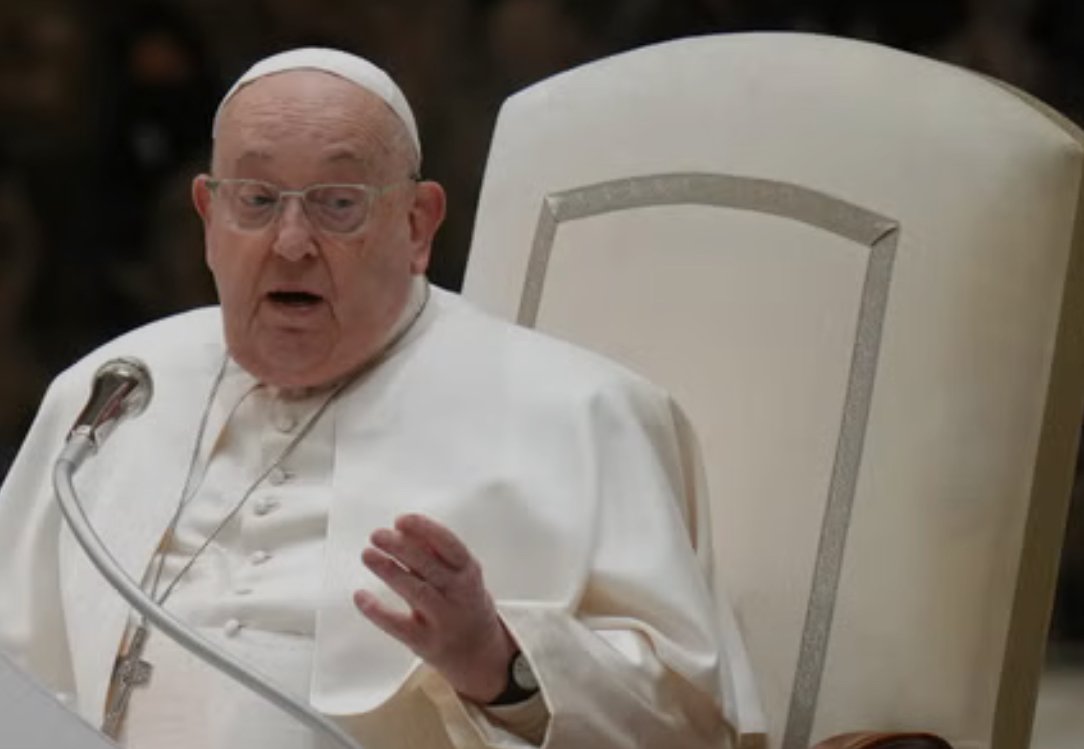
As the first light brushed across the cobblestones of St. Peter’s Square this morning, an extraordinary chapter of modern history came to a close. In the early hours of the Roman dawn—4 a.m. ET—the funeral of Pope Francis began, drawing an unprecedented tide of mourners, dignitaries, and pilgrims from every corner of the globe. The square, hallowed by centuries of ceremony, vibrated with a singular reverence that transcended nations, faiths, and political divisions.

More than 200,000 souls converged upon the heart of Vatican City, a testament not only to Francis’s global stature but to the profound personal connection he cultivated during his papacy. Among them were dozens of world leaders: President Donald Trump, Argentine President Javier Milei—a fellow countryman from Francis’s beloved Buenos Aires—and Ukrainian President Volodymyr Zelensky, who arrived bearing both the solemnity of the moment and the complex burdens of ongoing conflict. It was a gathering not merely of the powerful, but of the humbled—united for a final farewell to a man who, despite his throne of tradition, insisted always on the radical humility of service.

Yet for all the grandeur of the attendance, it was the simplicity of the ritual that defined the morning. Francis had made his wishes unmistakably clear: a burial not in the splendor of St. Peter’s Basilica among popes and martyrs, but in the ground—in Rome itself—becoming the first pope since 1903 to be buried outside Vatican City. His tomb would bear no lavish ornamentation, no Latin flourishes, no golden insignia. Just a single word, chiseled plainly: Franciscus.

In this final act, Francis—born Jorge Mario Bergoglio—etched into history the values he had spent a lifetime preaching. Simplicity. Humility. Humanity.

A Life Rooted in Service

From his first hesitant wave from the balcony of St. Peter’s Basilica in 2013, Francis distinguished himself not by grand pronouncements, but by small, profound gestures. The first Jesuit pope. The first pope from the Americas. The first to take the name “Francis” in honor of St. Francis of Assisi, champion of the poor, the humble, and the earth itself.

Where many before him were ensconced in the grandeur of papal tradition, Francis preferred to walk among the people. He eschewed the papal apartments for a modest guesthouse. He wore simple white robes. He rode in a Ford Focus instead of a bulletproof limousine. His pontificate was marked by a tireless focus on the marginalized—the poor, the refugees, the imprisoned, the forgotten.

Today, as a world strained by inequality, war, and ecological devastation gathered to mourn, the echoes of his compassion resounded louder than ever.

The Ceremony: Light, Stone, and Silence

The funeral itself unfolded with a solemn grace, meticulously adhering to Francis’s stated wishes. No soaring orchestral accompaniment, no elaborate processional splendor. Instead, a mournful simplicity cloaked St. Peter’s Square.

The pallbearers, clad in humble garb, carried the simple casket—crafted from wood, unadorned—toward a temporary altar. Candles flickered against the pre-dawn sky, throwing long, wavering backgrounds across the thousands gathered. Rosaries twined through fingers. Silent prayers rose like mist.

World leaders stood shoulder to shoulder with farmers, nurses, schoolchildren, migrants—an assembly Francis would have cherished. President Trump bowed his head, hands clasped. Javier Milei, though often critical of ecclesiastical institutions, crossed himself reverently. President Zelensky, battle-worn and solemn, offered a wreath adorned in blue and yellow.

And yet, the most powerful tribute came not from speeches or salutes, but from the quiet, undulating presence of the faithful: their stillness, their tears, their collective memory of a man who had insisted, against centuries of precedent, that the truest power was to be found in serving others.

A Burial Outside the Walls

Perhaps most radical was the burial itself. In accordance with his will, Francis refused a resting place within the Vatican’s traditional crypts. Instead, he chose a simple grave within the soil of Rome, unmediated by marble or monument. His reasoning, revealed in fragments of interviews and private correspondence, was disarmingly consistent: “I wish to return to the earth, among the people.”

It was a move both symbolic and seismic. Since 1903, when Pope Leo XIII became the last to be buried outside Vatican walls, every pontiff had rested in the rarefied sanctity of St. Peter’s. By breaking with this tradition, Francis shattered yet another layer of clerical exceptionalism—a final, silent homily to his belief that no human institution, not even the papacy, should separate itself from the suffering and dignity of ordinary life.

His simple tomb, bearing only the name “Franciscus,” will not tower over the city, but nestle within it—a pebble among stones, a seed among roots.

Global Mourning, Global Legacy

Reactions from around the world poured in as the news of Francis’s funeral circulated. From the favelas of São Paulo to the refugee camps of Sudan, from megacities to mountain villages, mourning unfolded in countless forms: candlelit vigils, open-air masses, humble altars adorned with flowers and photographs.

Faith leaders of every denomination issued tributes, many noting how Francis had redefined religious leadership for a pluralistic world. Environmental groups lauded his encyclical Laudato si’, which had urged an unprecedented Catholic call to climate action. Advocates for the poor praised his unwavering commitment to economic justice. And for countless ordinary believers and skeptics alike, Francis had offered something rarer still: a vision of a global faith that prioritized mercy over dogma, tenderness over triumph.

Even his critics—those who had challenged his liberal-leaning views on migration, social justice, and LGBTQ+ outreach—acknowledged the integrity of his convictions. Agree or disagree, few doubted that Francis had tried to live the gospel he preached.

Franciscus: The Last Word

As the sun rose higher over Rome and the funeral drew to its close, the simplicity of Francis’s final moments stood in stark relief against the complex world he had left behind. The pallbearers lowered the casket into the ground. A single wooden cross was planted at the site. The crowd, usually so ready with applause at papal events, remained silent, save for the occasional sob carried on the breeze.

No elaborate tomb. No gilded sarcophagus. Just earth, stone, light, and a name: Franciscus.

In an age of division, spectacle, and noise, Pope Francis had offered a different model of leadership—one rooted in listening, in humility, in stubborn hope. He reminded us that greatness need not shout. That love, even when expressed in whispers, could still move mountains.

Today, as the world paused to lay him to rest, it was not merely the passing of a pope that we witnessed.

It was the passing of a spirit—quiet, indomitable, and urgently needed—that will continue to echo across time.

Franciscus: Servus servorum Dei.

Francis: Servant of the servants of God.

Related Articles

Modern data center facility with a solar-panel-clad exterior, bright green administrative offices, and secure perimeter fencing, showcasing sustainable digital infrastructure and renewable energy integration

Lombardy’s Data Center Boom: Balancing Digital Ambition with Environmental Responsible

Lombardy has emerged as Italy’s primary hub for new digital infrastructures, particularly data centers—vast complexes […]

In a highly anticipated reunion after 24 years, Adidas Originals and Coca-Cola have joined forces once again to celebrate the FIFA World Cup 2026™. The collaboration revives their iconic 2002 partnership from the Japan-South Korea tournament, now reimagined for the biggest global sporting event of 2026, co-hosted by the United States, Canada, and Mexico. Set to launch on June 6, 2026, this collection masterfully blends Adidas' streetwear heritage with Coca-Cola's timeless branding, creating a vibrant fusion of football culture, nostalgia, and modern style. The drop arrives at a perfect moment. With the World Cup kicking off on June 11, 2026, fans worldwide are gearing up for a summer of football excitement. This collaboration isn't just merch—it's a cultural statement that merges two legendary brands under the banner of "Originals are the Real Thing," a clever twist on Coca-Cola's famous slogan. Historical Context: A Reunion 24 Years in the Making Adidas and Coca-Cola first collaborated during the 2002 FIFA World Cup, producing limited-edition pieces that captured the era's energy. That partnership helped define early 2000s football-streetwear crossover culture. Fast-forward to 2026, and the brands are back with fresh energy, leveraging Adidas' deep FIFA ties (as an official partner) and Coca-Cola's long-standing sponsorship of the tournament. The 2026 edition promises to be historic as the first 48-team World Cup, spanning three countries and generating unprecedented global hype. This collab taps into that momentum, offering fans wearable pieces that celebrate both brands' legacies while looking forward to the future of football fashion. Collection Overview and Design Philosophy The Adidas Originals x Coca-Cola collection fuses 2000s street style with classic sporting aesthetics. Expect bold reds, creams, whites, and silver accents inspired by Coca-Cola's iconic packaging—think classic script logos, droplet detailing, and can-inspired motifs. The lineup spans footwear, apparel, and accessories, divided into two visual directions: one logo-heavy and graphic-forward, the other drawing from vintage advertising aesthetics. Designs pay homage to Coca-Cola's visual language while staying true to Adidas Originals' archival roots. High-quality materials, attention to detail, and versatile silhouettes make these pieces suitable for both match-day wear and everyday street style. The campaign, featuring young football star Lamine Yamal and a diverse cast in everyday scenes building anticipation for the tournament, reinforces themes of originality and shared cultural moments. Footwear Highlights Footwear takes center stage in this collaboration, with reimagined takes on iconic 2000s Adidas silhouettes: Samba and Superstar Models: These classics get Coca-Cola treatment with white/cream/red colorways and prominent script branding. The Samba blends street heritage with football roots, while the Superstar II features weathered bases and bold side panels. Expected pricing around $110–$130. Adistar Control 5: A standout with droplet detailing mimicking condensation on a cold Coke can. This model brings performance-inspired design into lifestyle territory. Predator Sala: Indoor/hybrid style with silver-and-red accents, nodding to predatory precision on the pitch and Coca-Cola's bold energy. Climacool 1: Revived with breathable tech and Coke-inspired graphics, perfect for warm summer days. Megaride F50: A highlight paying tribute to the iconic Coca-Cola glass bottle, with unique contours and refreshing design cues. Each pair incorporates thoughtful details like embroidered logos, custom insoles, and packaging that mimics vintage Coke crates or cans. These shoes are built for durability and comfort, appealing to sneakerheads, football fans, and casual wearers alike. Apparel and Accessories Beyond kicks, the collection offers a full lifestyle range: Track Tops and Jerseys: Standout jerseys fuse retro Coca-Cola advertising from different eras into cohesive football designs. Track jackets feature signature three stripes alongside Coke branding, in vibrant reds and classic whites. Shorts and T-Shirts: Relaxed fits with graphic prints, ideal for casual wear or layering. Expect motivational football motifs blended with refreshing beverage references. Accessories: A bright red airliner bag stands out as a functional statement piece. Additional items may include caps, socks, and tote bags carrying the collaborative spirit. The apparel emphasizes comfort with premium cotton blends, mesh panels for breathability, and oversized silhouettes popular in contemporary streetwear. Unisex sizing and inclusive fits make the collection accessible to a broad audience. Cultural Impact and Fan Appeal This collaboration resonates on multiple levels. For football fans, it represents national pride and global unity ahead of the 2026 tournament. Sneaker enthusiasts will appreciate the nostalgic 2000s revival mixed with modern execution. Streetwear collectors see it as a prime example of how heritage brands can innovate through partnerships. In an era where sports and fashion increasingly intersect, Adidas and Coca-Cola deliver pieces that transcend the pitch. Wear them to watch matches at home, attend watch parties, or hit the streets in any host city—New York, Los Angeles, Toronto, or beyond. The designs are versatile enough for gym sessions, festivals, or daily commutes. The timing aligns perfectly with rising interest in football in North America, boosted by the co-hosting nations. Young talents like Lamine Yamal in the campaign help bridge generational gaps, attracting newer fans while satisfying longtime supporters. Where to Buy and Release Details The collection launches globally on June 6, 2026, via: Adidas CONFIRMED app (for early access and raffles) Adidas.com Select retailers and flagship stores worldwide Some regions may see staggered drops, with Japan and other markets getting early access. Prices are expected to range from $50–$150 depending on the item, making it relatively accessible compared to ultra-limited drops. Pro Tips for Copping: Enable notifications on the CONFIRMED app. Check local stock at Adidas stores in major cities. Monitor resale platforms post-drop for exclusive colorways, but be wary of markups. Size up slightly for oversized apparel fits. Given the World Cup hype, popular items like the Sambas and jerseys are likely to sell out quickly. International shipping is available, but factor in potential customs delays. Styling Suggestions Match Day Look: Pair a collaborative jersey with classic black shorts and Samba sneakers for effortless fan style. Streetwear Rotation: Layer a track top over a graphic tee with wide-leg pants and the Megaride F50 for a bold urban ensemble. Casual Summer: White Superstar with denim shorts and the airliner bag for a refreshing, vacation-ready vibe. These pieces mix seamlessly with existing Adidas or neutral wardrobes, maximizing versatility. Broader Context in 2026 Fashion and Sports The Adidas x Coca-Cola drop is part of a larger wave of high-profile collaborations tied to the World Cup. Adidas continues its dominance in football kit design, while Coca-Cola leverages its sponsorship with collectibles, bottles, and experiential activations like the Trophy Tour. In the sneaker industry, this collab exemplifies the ongoing trend of lifestyle reinterpretations of performance silhouettes. It also highlights how global brands use major events to drive cultural conversations around unity, originality, and joy—core values for both companies. Sustainability notes (based on Adidas' broader initiatives) suggest some pieces may incorporate recycled materials, aligning with modern consumer expectations. Looking Forward: Legacy and Excitement As the countdown to kickoff continues, this collection serves as the perfect prelude to an unforgettable summer of football. Whether you're a die-hard supporter, a fashion-forward collector, or someone seeking motivation through style, the Adidas Originals x Coca-Cola FIFA World Cup 2026 lineup delivers. Expect potential restocks, special event exclusives in host cities, and continued campaign content featuring more athletes. This isn't just clothing—it's a ticket to participate in the global celebration of the beautiful game. Mark your calendars for June 6, 2026. Refresh your wardrobe, lace up those Sambas, and get ready to cheer on your team in style. The "Real Thing" meets the Originals in what promises to be one of the most talked-about releases of the year. This collaboration captures the essence of football's universal appeal: bringing people together through shared passion, iconic brands, and unforgettable moments. As the world prepares for 2026's expanded tournament, Adidas and Coca-Cola remind us that some partnerships are truly timeless.

Adidas Originals x Coca-Cola Collection: FIFA World Cup 2026

In a highly anticipated reunion after 24 years, Adidas Originals and Coca-Cola have joined forces […]

Loewe shoulder bag crafted in brown and black leather with minimalist lion face detailing and a matching fur tail charm

180 Years Unfolded: The Full Story Behind Loewe’s New Campaign

The year was 1846. Queen Victoria was on the British throne and the telephone, the […]