DRIFT AUDIO
Listen to this story
Choose a voice, then press play.
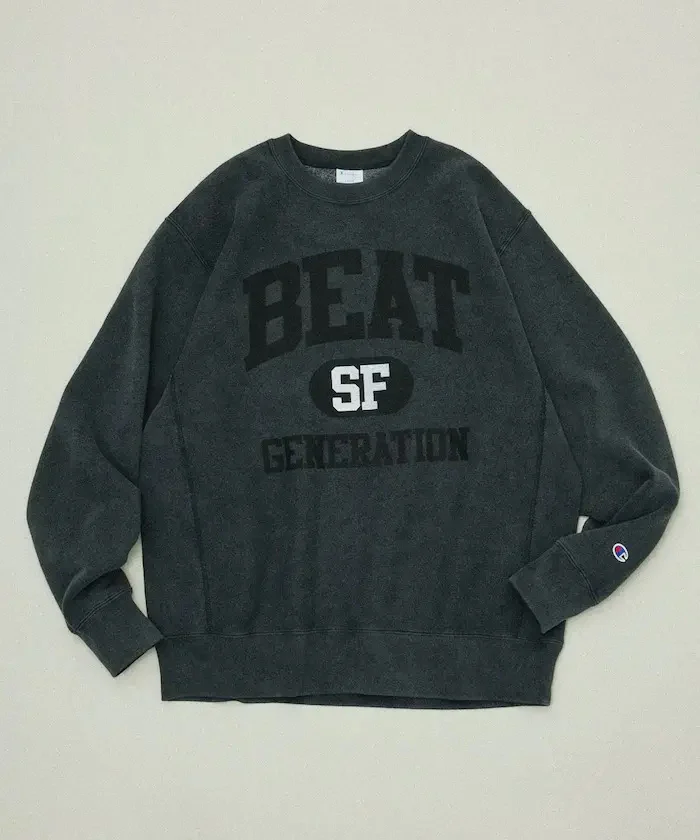
A new Champion Reverse Weave lands at FREAK’S STORE this September already looking decades old, priced at ¥17,380.
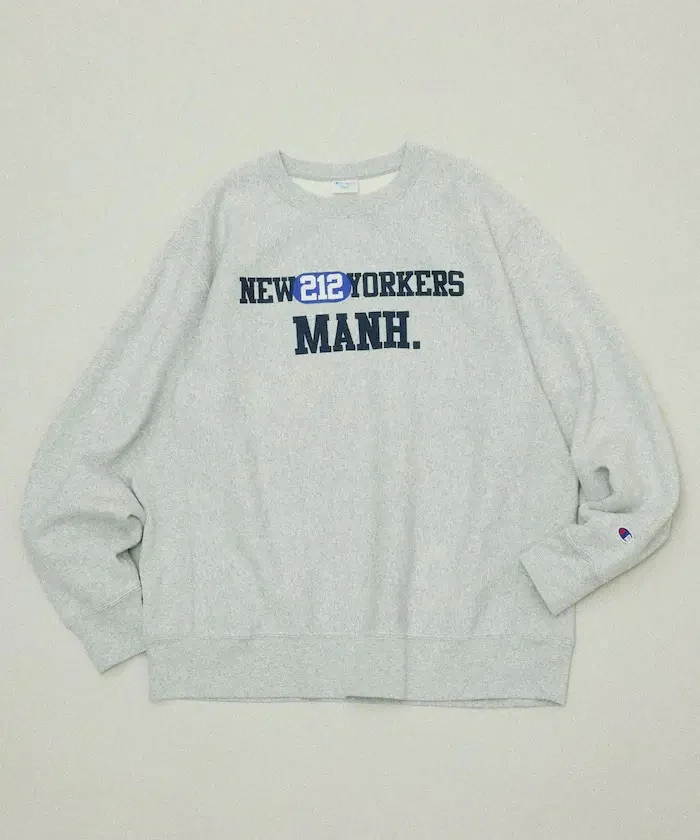
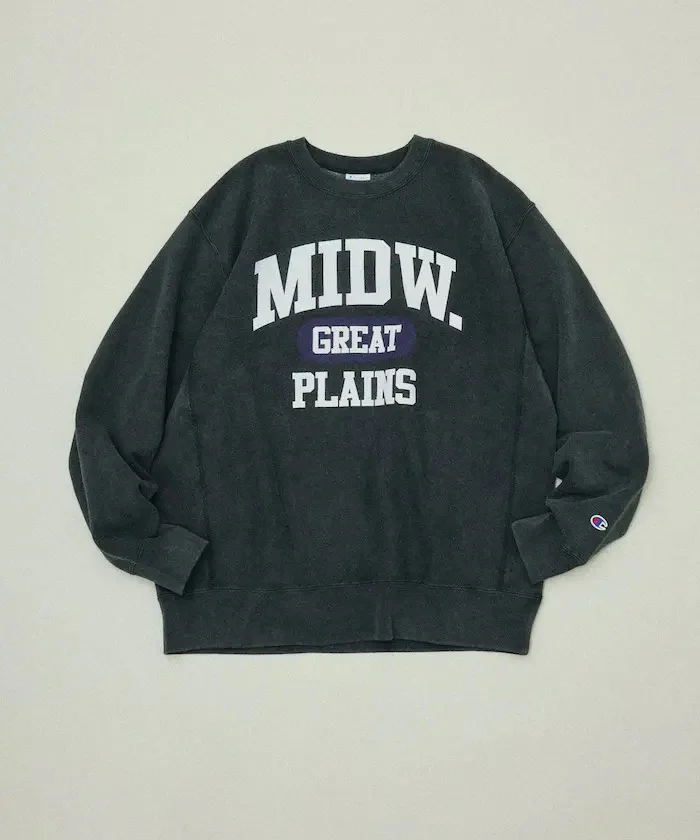
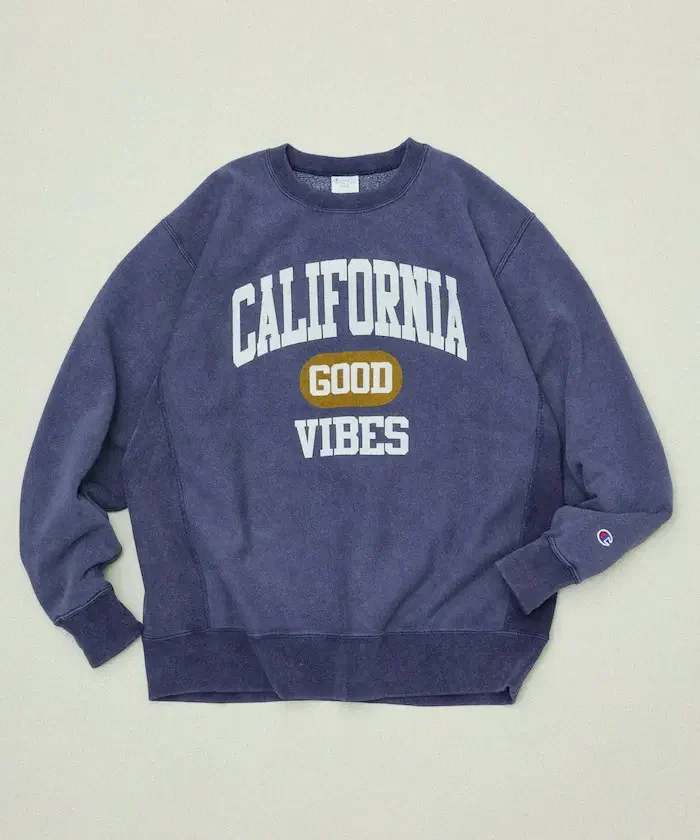
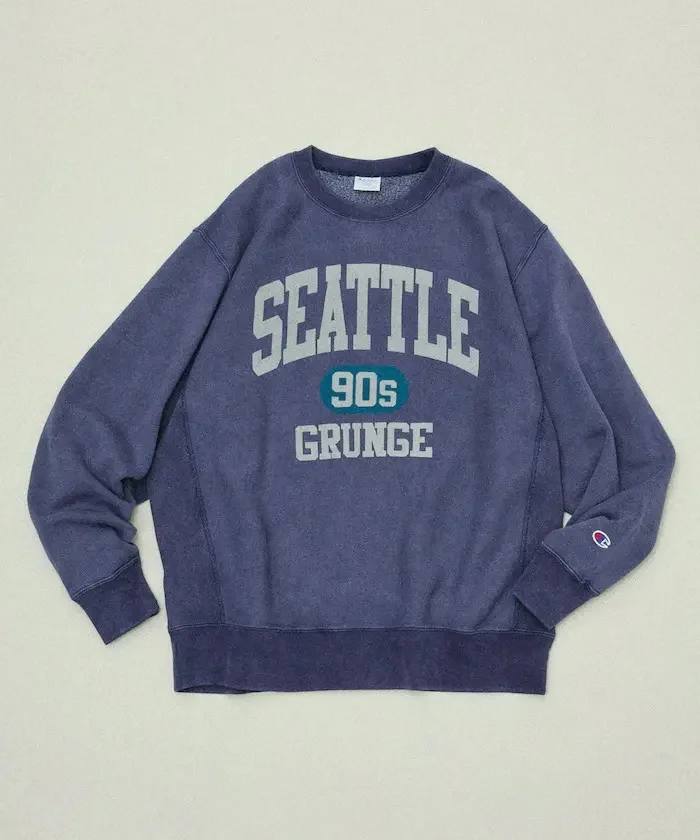
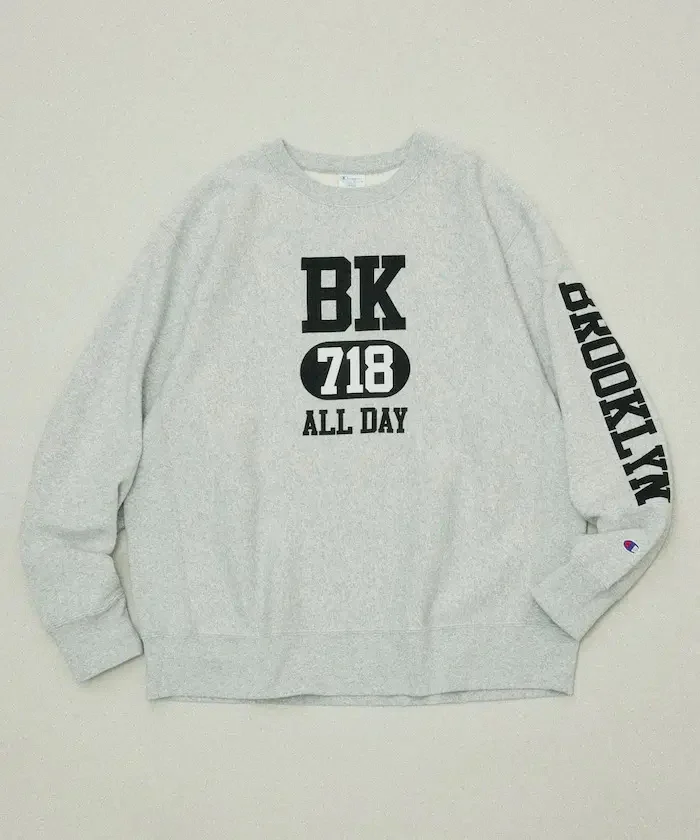
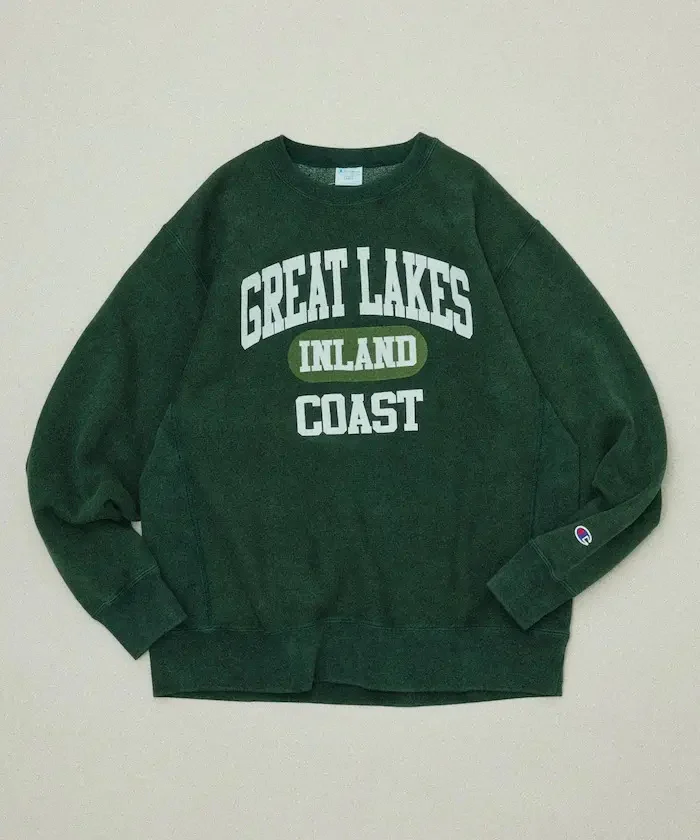
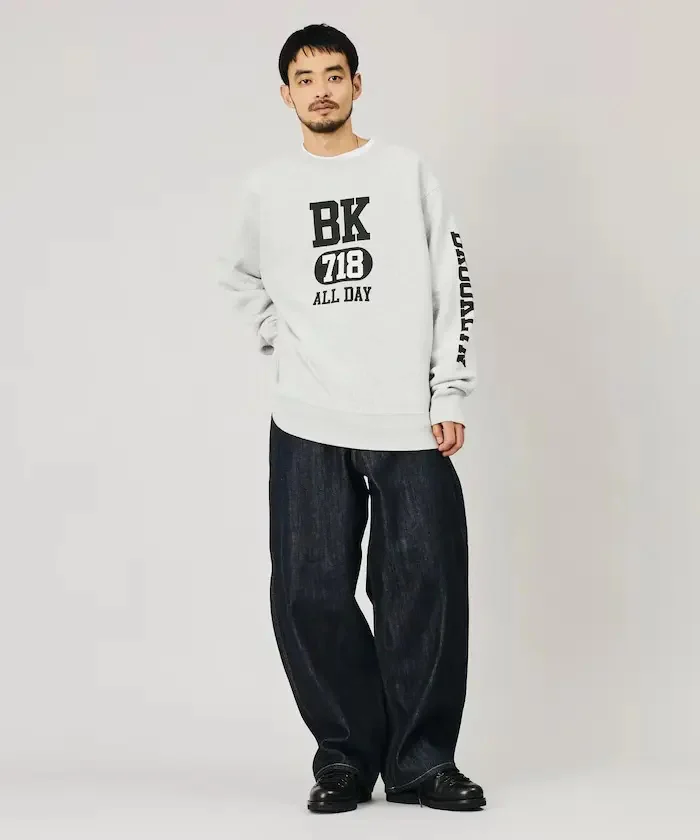
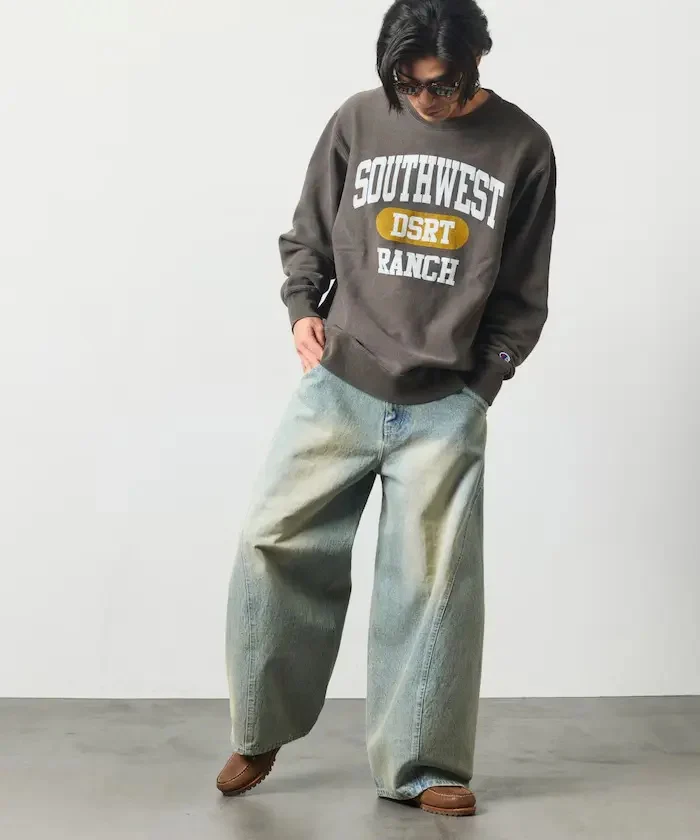
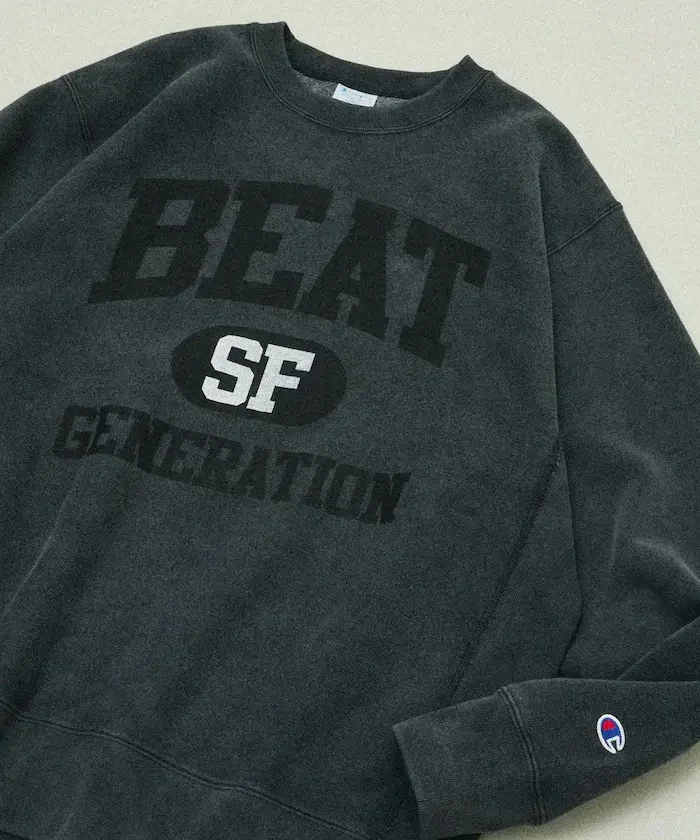
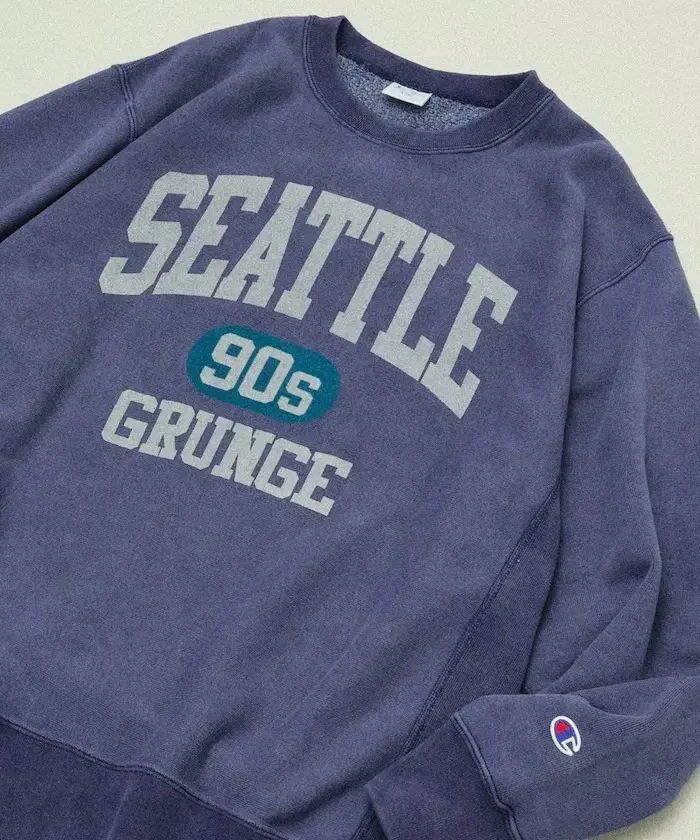
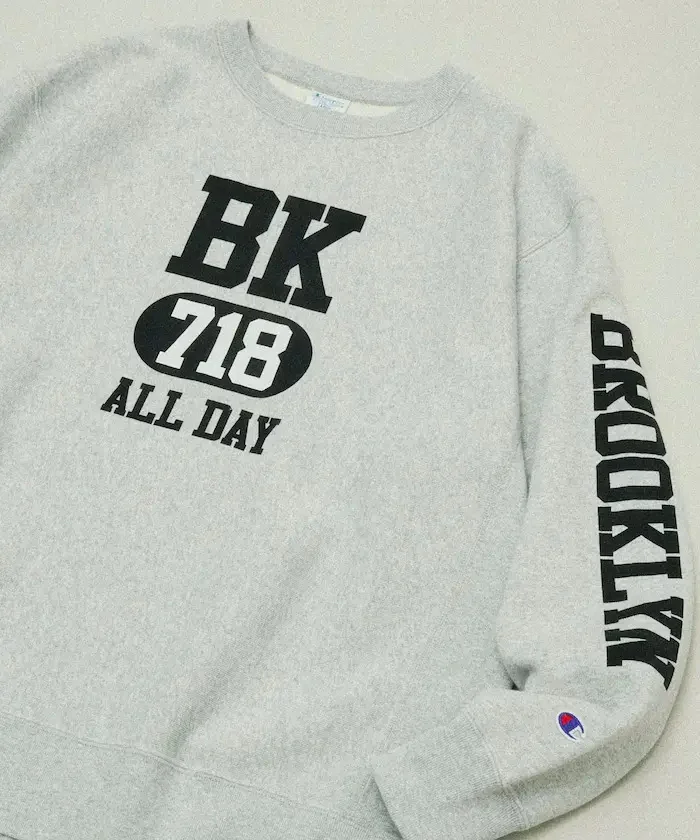
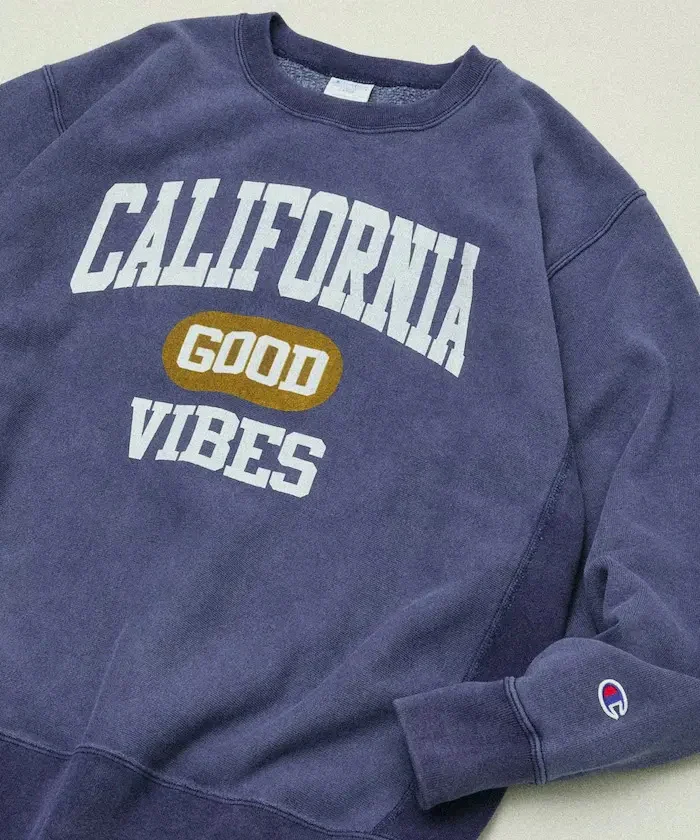
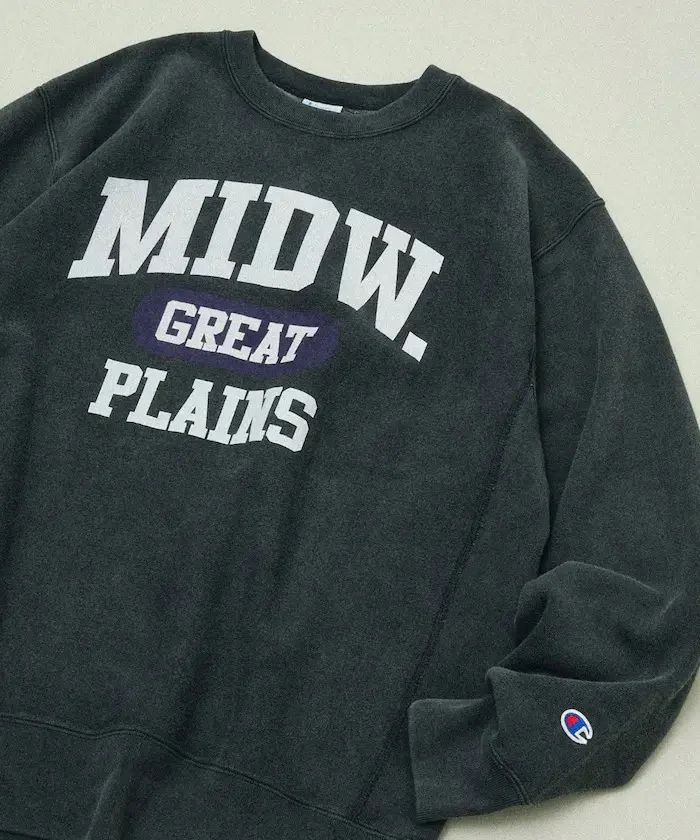
Seventeen thousand three hundred eighty yen buys a sweatshirt that has, technically, never been worn. Champion and FREAK’S STORE are putting out a fall 2026 exclusive built entirely around the opposite of newness: a Reverse Weave crewneck run through heavy wash process and finish with non-pristine, half rubber print graphic, so that the moment it comes out of the bag it already reads like something dug out of a closet in 1994. The piece is called the Reverse Weave Vintage Wash Print Sweat, and it is scheduled to arrive at FREAK’S STORE in late September 2026, one entry in a fall lineup the Shibuya-based select shop has been roll out steadily across its stores and its official online shop, Daytona Park.
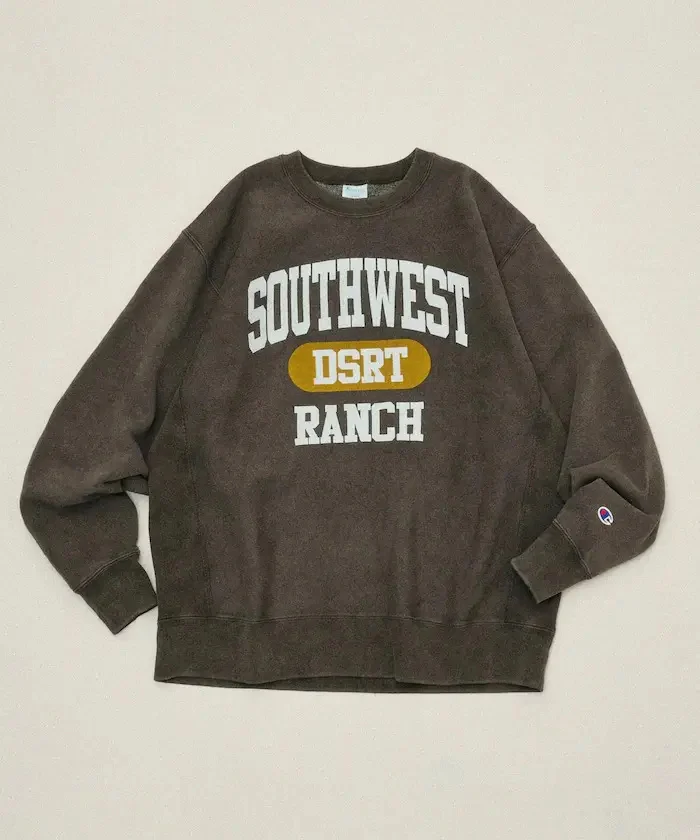
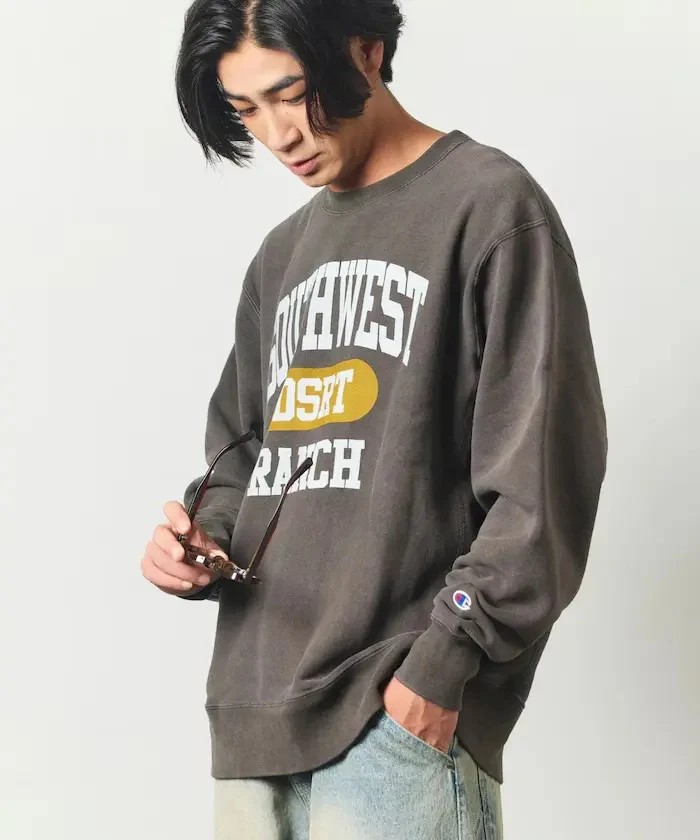
“SOUTHWEST RANCH” lettering with a yellow “DSRT” oval graphic in the center, and a small Champion logo patch on the sleeve.
engine
There is a specific kind of Champion crewneck that gets treated like scripture in Japan: soft from a hundred washes, slightly shrunk, the collegiate print on the chest gone thin and cracked with age. FREAK’S STORE’s version tries to manufacture that object directly, rather than waiting thirty years for someone else’s laundry cycle to do the work. According to a Japan market rel notice describing the piece, the body goes through a notable strong wash treatment aimed at producing a worn-in, naturally broken-down hand feel, the kind that usually only shows up on a garment somebody has actually lived in. The idea is not subtlety. It is a sweatshirt that skips the part where you have to wait for it to look right, and that same logic already runs through most of FREAK’S STORE’s other Americana staples, from distressed graphic tees to reproduction workwear, where the finishing process is treated as the actual design feature rather than something bolted onto a plain garment afterward.
That approach puts FREAK’S STORE in a lineage of Japanese Americana retailers who have spent decades treating pre-distressed, factory-aged reproductions as a legitimate category rather than a shortcut. The vintage wash sits on top of Champion’s own Reverse Weave base, a construction method old enough that it predates almost every brand currently copying it, which is part of what makes the aging effect land as homage instead of gimmick. Champion’s own archive backs that homage up: the brand still sells a “True to Archives” line in Japan that reissues period-correct sweatshirts down to details like a blue single-color neck tag matching its 1970s originals, at price points well above a standard Reverse Weave crewneck, proof that the market for historically accurate Champion product in Japan goes consider deeper than one collide.
vib
The graphic doing most of the visual work here uses a half rubber print, a technique that leaves the ink with a soft, slightly raised texture and, more importantly, an uneven, cracked surface once it is combined with the wash treatment underneath it. Full rubber prints tend to sit on top of fabric as a flat, glossy plane. Half rubber lets more of the weave show through, which is exactly why archival sportswear collectors gravitate toward it when they are chasing the look of a decades-old screen print that has been through a hundred spin cycles.
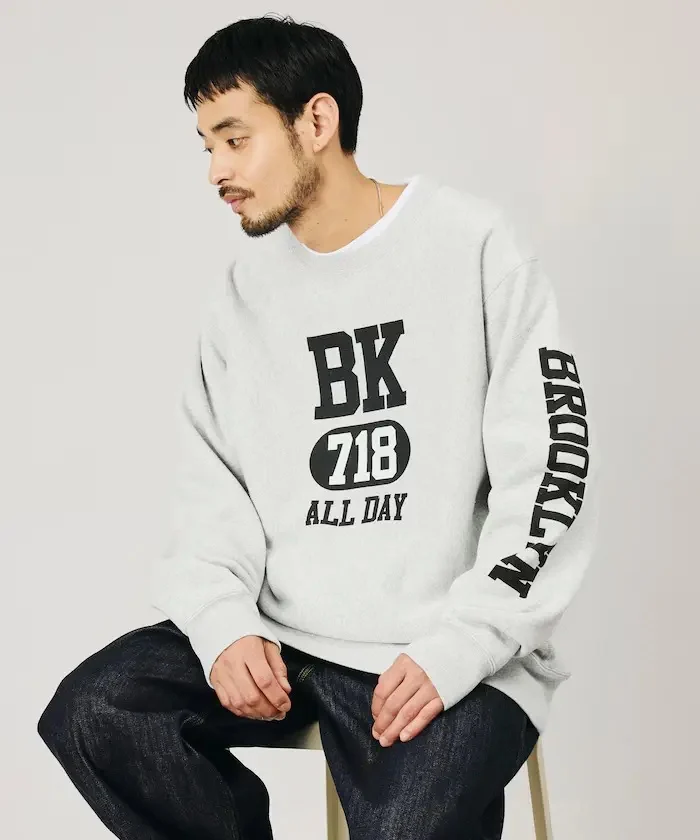
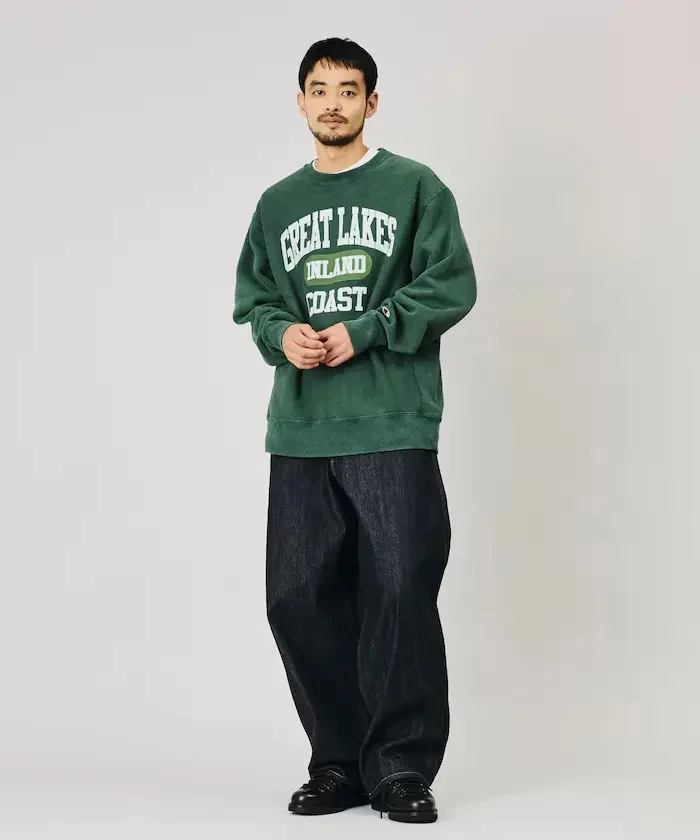
FREAK’S STORE has placed bold graphic elements across the front and down the sleeves, treating the sweatshirt less as a base layer for a logo and more as the single loudest piece in an outfit. The release notice frames it explicitly as a garment meant to be the centerpiece of a fit rather than a supporting player, and the retro, secondhand-store quality of both the graphic and the fabric treatment is positioned as a natural fit for Americana and college-style dressing, the two genres FREAK’S STORE has built its identity around since the 1980s. The technique is popular across Japanese archival reproduction labels for a practical reason as much as an aesthetic one: it ages unevenly rather than peeling away in one flat sheet, which reads closer to how an actual decades-old screen print breaks down than a cleaner, flatter print application ever could.
retro
Reverse Weave is not a marketing term invented for this collaboration. It is a specific, patented construction that Champion has been building sweatshirts around since the years just after the Great Depression. In the early 1930s, a Champion salesman named Samuel Friedland noticed that cloth fabric sweatshirts of the era shrank badly in the wash, and he worked out that rotating the fabric’s grain ninety degrees, so the garment was cut across the grain rather than with it, sharply reduced that shrinkage. On August 9, 1938, that construction method was granted a patent, titled plainly “Athletic Shirt and Method of Making the Same,” and Champion has built its entire heavyweight fleece identity on it ever since. A second patent in 1952 added side gussets to control width-wise shrinkage as well, and that side-panel construction is still standard across the industry today.
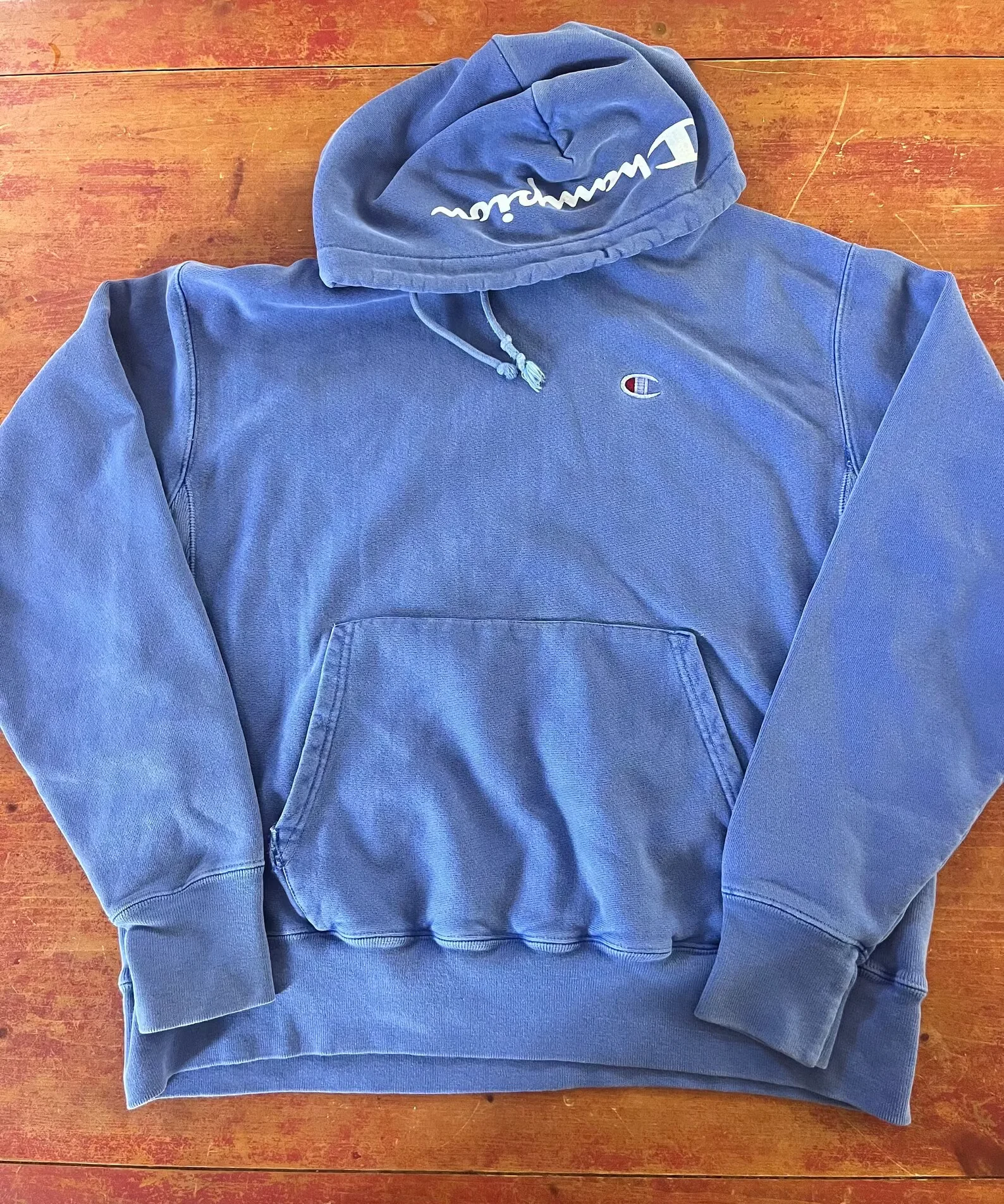
A faded blue Champion hoodie laid flat on a wooden table, featuring a kangaroo pocket, drawstrings, a small C logo on the chest, and white script lettering on the hood.
The technique earned its place beyond just function. In 2017, Champion’s Reverse Weave hoodie was included in the Museum of Modern Art‘s exhibition “Items: Is Fashion Modern?,” and by 2018 it had entered MoMA’s permanent collection, a rare bit of institutional validation for a garment originally developed to keep sweatshirts from shrinking on a football sideline. Champion’s other major contributions came earlier and mostly on courts and fields rather than in museums: the brand debuted nylon mesh for football uniforms in 1967 and held the NBA’s exclusive uniform license for the entire league through the 1990s, a run that ended when Reebok took over in the early 2000s. None of that on-field history is what turned the Reverse Weave crewneck into a cult object, though. That distinction belongs to the sweatshirt itself, largely because of what happened to it once it left the United States. Champion itself changed hands again in 2024, when Authentic Brands Group completed a roughly $1.2 billion acquisition of the brand from Hanesbrands, but the Reverse Weave construction and the crossgrain knit at its center have stayed the fixed point through every ownership change since 1938.
why
The reverence FREAK’S STORE is tapping into did not start with this collaboration. In Japan, the Reverse Weave is often referred to by the nickname Oniurake, or “devil’s weave,” a reference to the noticeably thick, coarse yarn used in the fabric’s construction, and Japanese Americana collectors have treated vintage Reverse Weave crewnecks with something close to the reverence usually reserved for a pair of original Levi’s 501s. That obsession helped keep the secondhand and vintage reproduction markets for Champion sweatshirts busy for decades, well before contemporary streetwear brought the label back into general fashion conversation.
Champion’s presence in Japan has its own separate corporate history layered underneath that cultural one. The brand’s Japanese business changed hands from Goldwin to Hanesbrands Japan in March 2016, and it has moved again since, landing most recently under Itochu‘s management as the trading company builds out Champion’s domestic retail footprint. Through those ownership shifts, Champion has maintained a Japan-specific product line with a more overtly retro, collegiate aesthetic than much of what the brand sells in North America, which is part of why a heavily aged, wash-and-print take on the Reverse Weave feels like a natural fit for a Japanese select shop rather than an unusual detour.
View this post on Instagram
length
FREAK’S STORE opened its first store in Kashiwa in 1989, three years after the brand itself was founded in 1986 under Daytona International Co., Ltd., the Shibuya-headquartered company still behind it today under president and CEO Takahashi Masahiro. The founding premise was straightforward: import the excitement of American consumer culture into Japan through clothing, homeware, and accessories, curated by people who described themselves as “freaks,” meaning enthusiasts who actually lived the lifestyles they were selling. From that single Kashiwa store, FREAK’S STORE grew into a chain that now runs roughly 28 stores across Japan alongside five online storefronts, and it is preparing to open its first location outside the country in Taiwan later this year.
That American casual identity has made FREAK’S STORE one of the more prolific convincer in the Japanese select shop space, running exclusive projects that swing from Alpha Industries military wear to anime franchises like Neon Genesis Evangelion, Jujutsu Kaisen, and the fighting manga Baki, alongside apparel tie-ins for film rel. The pace has only picked up over the past year, with tie-ups spanning a triple collection with the Okinawan rock band Orange Range and Orion Beer, a standalone Orion Beer capsule, and a license project with Fruit of the Loom all landing within recent months, on top of the anime and film work. A Champion Reverse Weave collaboration sits comfortably in that mix. It draws on the same Americana well the shop has pulled from since 1986, just filtered through Champion’s specific, patented take on the college sweatshirt rather than a licensed character or a film poster.
day
FREAK’S STORE is not the only Japanese select shop putting its own spin on Champion’s Reverse Weave this fall. JOURNAL STANDARD relume, the Baycrews-operated retailer, has its own exclusive Reverse Weave sweatshirt scheduled for mid-October, a paint-processed, product-dyed crewneck priced at ¥18,480, built on an 11.5 ounce Reverse Weave fabric and finished with a blue single-color tag styled after Champion’s 1970s originals. The overlap is not a coincidence so much as a signal: several Japanese retailers are independently reaching for the same base garment this season, betting that customers still respond more strongly to Champion’s original construction, aged and reworked, than to something built from scratch. United Arrows carries its own ongoing exclusive built around a Reverse Weave print sweatshirt as a standing part of its lineup, further evidence that print-driven takes on the silhouette have become a recurring category across Japanese select shops rather than a one-off idea any single retailer can claim.
What separates FREAK’S STORE’s take is the print. Where JOURNAL STANDARD relume leans on dye and paint processing alone, FREAK’S STORE adds the half rubber graphic on top of the wash treatment, pushing the piece further toward a loud, front-and-sleeve statement rather than a shh tonal reissue. Both approach point back to the same conviction that a heavyweight Reverse Weave crewneck, roughed up in the right way, still sells better than almost anything a Japanese select shop can put out this time of year.
end
The Reverse Weave Vintage Wash Print Sweat is set to rel in late September 2026 at ¥17,380, tax included, through FREAK’S STORE’s usual retail channels, its physical stores and its official online store, Daytona Park. Based on the pattern of FREAK’S STORE’s recent collaboration rollouts, rel like this one typical also reach the brand’s storefronts on ZOZOTOWN and Rakuten Fashion alongside Daytona Park, though the rel notice for this specific piece did not confirm which channels will carry it at launch. A specific release date, colorway lineup, and fabric weight were not included in the Japan market rel notice announce the piece, and none of those details had been indie confirmed at the time of writing. Anyone tracking the rel close will want to watch FREAK’S STORE’s own channels as September closes in, since select shop exclusive at this price point in Japan have a track record of moving through limited stock quickly once the exact drop date is confirmed.
The sweatshirt lands at a moment when Champion’s Reverse Weave, a construction method built to solve a laundry problem in the 1930s, is doing more culture work in Japan than it ever did on a football sideline. FREAK’S STORE’s version does not try to disguise that history. It just tries to compress it, turn ninety years of wear and revere into a garment that looks, from the first day someone puts it on, like it has already lived most of that history itself.
Related Articles
GEEKS RULE Presses Kore-eda’s Look Back Poster Into Fifteen Passes of Silkscreen Ink
A Palme d’Or director’s first live-action manga adaptation gets a vintage-tee treatment, timed down to […]