DRIFT AUDIO
Listen to this story
Choose a voice, then press play.
A capsule built from a 1953 paper cutout goes on sale at Tate Modern’s Terrace Shop on September 17, a day after a one night dance performance staged inside the museum’s former oil tanks.
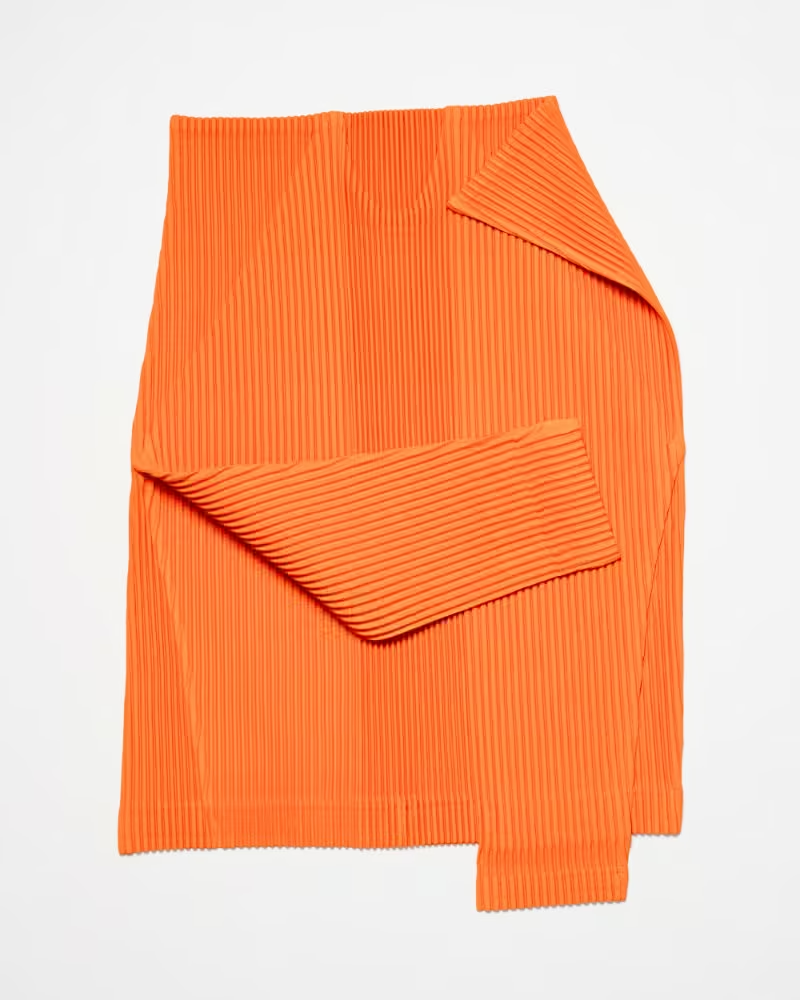
On September 16, HOMME PLISSÉ ISSEY MIYAKE returns with the second edition of OPEN STUDIO, the brand’s ongoing project to present its clothing away from the standard runway calendar and inside places tied to its own design research. This time the address is Tate Modern in London, and the resulting capsule, titled HOMME PLISSÉ ISSEY MIYAKE for Tate, goes on sale exclusively through the museum’s Terrace Shop and Tate’s online store starting September 17.
View this post on Instagram
The idea traces back to a studio visit rather than a boardroom pitch. The HOMME PLISSÉ design team encountered Henri Matisse‘s The Snail during a trip to Tate Modern last year, and the 1953 paper cutout stayed with them long enough to become the spine of an entire collection. The brand has described the colour and movement in Matisse’s cut paper as speaking directly to its own design and making practice, which is a more specific claim than the usual “inspired by art” press line, and the collection that follows tries to make good on it rather than simply printing the artwork onto fabric.
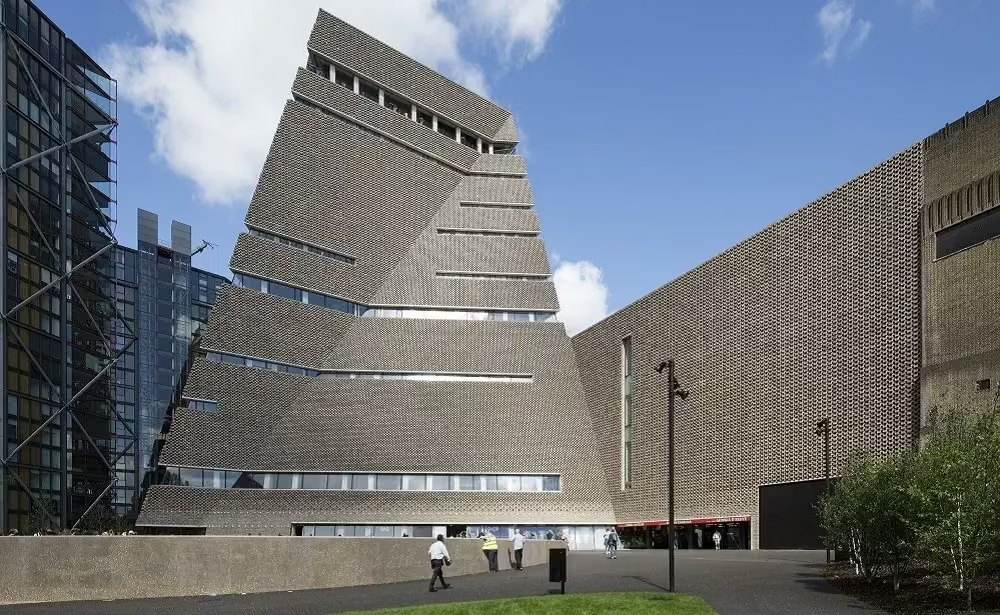
Tate Modern’s Blavatnik Building, where The Tanks hold the September 16 show
actual
Tate Modern is not the project’s first stop, and the London edition only makes sense against what came before it. OPEN STUDIO launched in June 2025 as HOMME PLISSÉ ISSEY MIYAKE‘s guest of honour presentation at Pitti Immagine Uomo 108 in Florence, staged at the Villa Medicea della Petraia, a villa with its own Medici history. That first chapter, a spring/summer 2026 collection called “Amid Impasto of Horizons,” grew out of a research trip across Italy in which the design team collected colours from ordinary objects and surfaces: a glass of red wine, an anchor, the wall of a house. The resulting collection included an asymmetric painter’s waistcoat built with brush sized pockets and voluminous jackets designed to fold down into their own carrying bags, alongside a presentation and exhibition that let visitors see the research and prototypes behind the clothes rather than just the finished garments.
The Florence exhibition space itself was designed in collaboration with Misawa Design Institute, the Japanese design studio, working alongside HOMME PLISSÉ’s own team to translate the research trip’s colour swatches, prototypes, and sketches into something visitors could walk through rather than simply a backdrop for a runway. That format, a presentation paired with a behind the scenes look at the making process, is baked into OPEN STUDIO’s own name and mission statement, which frames the project as an extension of artists opening their workspaces to the public.
Alongside that Florence debut, the brand announced that HOMME PLISSÉ would keep producing two collections a year but stop defining them by season, letting each OPEN STUDIO instalment take its own bespoke, location specific shape instead. Tate Modern is the second test of that idea, and it swaps an Italian villa’s gardens for a London museum’s collection galleries as the source material.
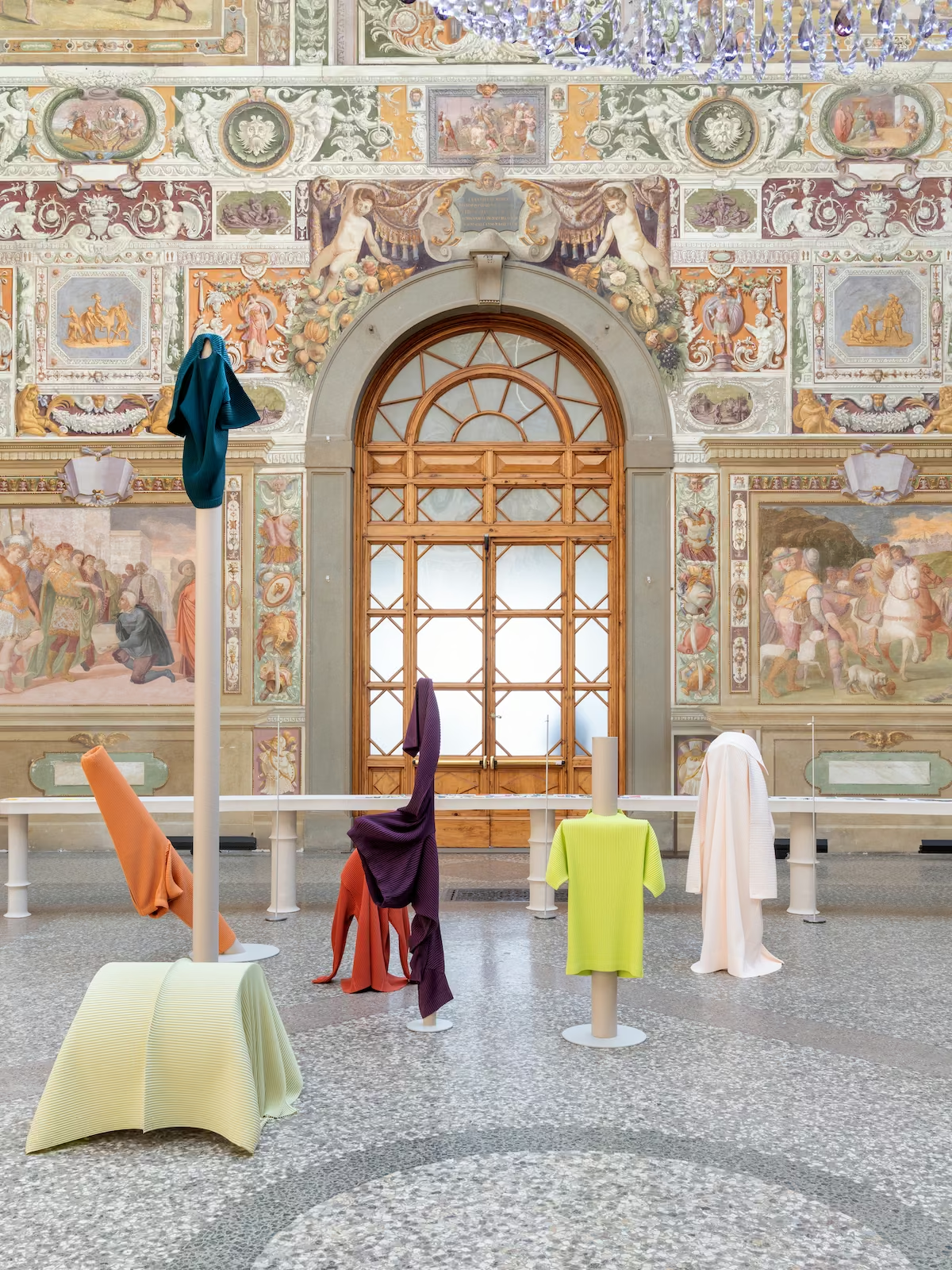
The first OPEN STUDIO, staged at Villa Medicea della Petraia during Pitti Uomo 108 in June 2025
crop
The Snail is not an incidental choice of artwork. By the early to mid 1940s Matisse’s health was declining, arthritis was limiting his movement, and by 1950 he had largely stopped painting altogether. In its place he developed what became known as gouaches découpées: sheets of paper hand painted in gouache by assistants, which Matisse then cut into shapes with shears and arranged, sometimes from a wheelchair or bed, while an assistant pinned each piece into place on his instruction. “I draw straight into the colour,” Matisse said of the method, a description that separates it from conventional painting, where a shape is outlined first and coloured in afterward. Here the cutting and the composing happened as a single act.
The Snail, made across the summer of 1952 and into early 1953, is one of the largest and best known results of that final period. It measures roughly 287 by 288 centimetres, close to nine and a half feet square, made of loosely spiralling blocks of colour glued onto a white paper ground and mounted on canvas. Matisse gave it an alternative title, La Composition Chromatique, and the spiral itself came from close observation: Matisse’s daughter later recalled that he had made numerous drawings of a snail before arriving at the abstracted, purified shape that became the final work. Tate acquired the piece in 1962 with assistance from the Friends of the Tate Gallery, and it remains on view at Tate Modern as part of the museum’s ongoing “In the Studio” display.
The making process itself was closer to choreography than to painting. Matisse’s secretary, who watched the work come together, later described how the artist kept sheets of gouache painted paper on hand in every colour he used, with a blank white ground pinned to the wall at the dimensions he specified. An assistant then pinned each cut piece into place exactly where Matisse indicated, moving and adjusting shapes until he judged the composition finished, at which point the paper was lightly fixed to the background and eventually traced with precision before being pasted down for good. It is a working method built on direction and placement rather than the artist’s own hand touching every surface, which is a detail that maps unexpectedly well onto a fashion house where a design team, rather than a single named designer, has shaped both the Matisse capsule and the brand’s identity more broadly since Issey Miyake’s death in 2022.
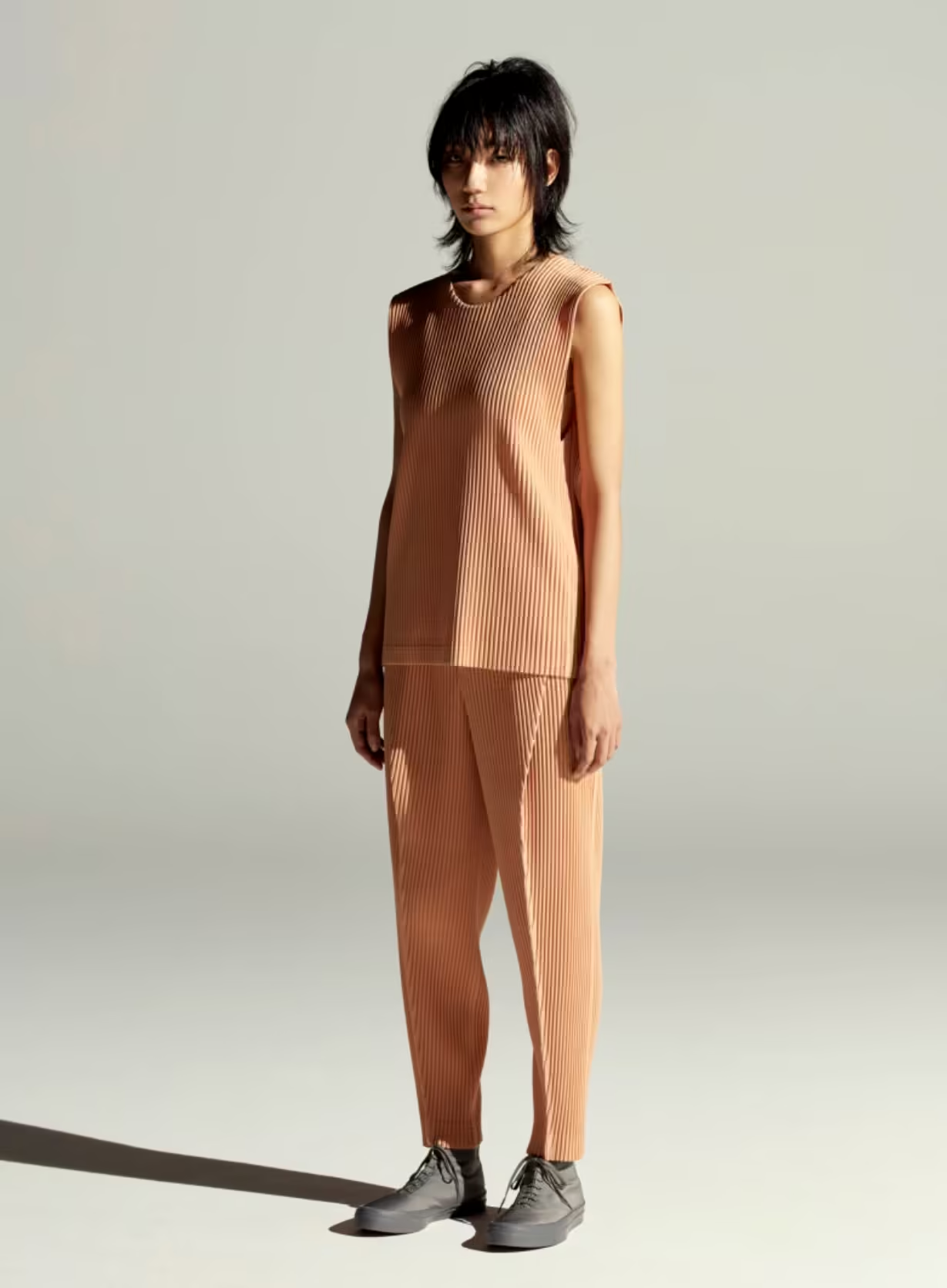
Minimal elegance in soft light.
sim
Issey Miyake founded his eponymous house in 1970 and went on to become the first Japanese designer to show at Paris Fashion Week, building a body of work defined by pleating, seamless construction, and a habit of treating fabric as an engineering problem rather than a decorative surface. He died in 2022, and France’s Fédération de la Haute Couture et de la Mode marked the occasion by calling him, in the words of its executive president Pascal Morand, “a great designer and also a great innovator who marked his time.” Since then, both the ISSEY MIYAKE mainline and its sub-labels, HOMME PLISSÉ included, have continued under internal design teams rather than a single successor designer, which is the same collective framing the brand uses for the Tate capsule.
HOMME PLISSÉ ISSEY MIYAKE itself was founded in 2013 out of Shibuya, Tokyo, as a menswear line built entirely around a pleating process developed by Issey Miyake’s own team starting in 1988 and folded into the ISSEY MIYAKE mainline the following year. The technique inverts the traditional order of operations: rather than pleating a length of fabric and then cutting a garment from it, HOMME PLISSÉ cuts the garment shape first and pleats it afterward, so that the finished piece holds its own shape, resists creasing, and can be packed away without losing its form.
That inversion is the real point of contact with Matisse’s late work, more than colour or subject matter. Matisse’s cutouts were not drawings that got coloured in afterward, they were built directly out of the material itself, shape and colour arriving together with a pair of shears. HOMME PLISSÉ’s pleating works on a similar principle: the movement of a garment is not decorated onto the fabric, it is engineered into the fabric’s structure from the start, so that motion becomes part of the object rather than something added to it later. Read that way, a pleated capsule inspired by a paper cutout is less a licensing exercise than two making processes that happen to rhyme.
in
The September 16 presentation takes place inside The Tanks, the cylindrical spaces at the base of Tate Modern’s Blavatnik Building. Built to hold oil when the site operated as Bankside Power Station, the Tanks have since become one of the museum’s dedicated venues for live art and performance, a fairly literal piece of adaptive reuse: the same raw, circular concrete chambers that once held fuel for the power station now hold dancers instead. For this one night event, HOMME PLISSÉ has invited a contemporary dance ensemble to develop a site specific, interactive performance built around the making of The Snail, set inside a scenography designed to shift over the course of the evening rather than stay fixed in one configuration.
The choice of dance is not incidental either. Pleated clothing has a long-standing relationship with performance, because pleats respond visibly to a body in motion in a way that flat fabric does not, and ISSEY MIYAKE’s broader history includes repeated collaborations with dancers and choreographers going back decades. Staging the Tate Modern presentation as a live performance rather than a seated runway show keeps that relationship intact, and lets a piece of clothing built around motion get evaluated in motion, inside a room that was built to hold something else entirely.
where
The capsule itself, HOMME PLISSÉ ISSEY MIYAKE for Tate, becomes available on September 17, the day after the presentation, exclusively through Tate Modern’s Terrace Shop and Tate’s own online store. Neither the brand nor Tate had published specific product names, a piece count, or pricing for the capsule at the time of writing, and there was no indication of a wider retail rollout beyond the two exclusive channels named in the announcement. What is confirmed is the exclusivity itself: this is not a capsule that will show up across HOMME PLISSÉ’s own stores or stockists, at least not at launch, which keeps it tied specifically to the museum that inspired it.
It is also not the brand’s first crossover into gallery territory. HOMME PLISSÉ has previously staged a dedicated exhibition built around a collision with French designer Ronan Bouroullec, treating the pairing of clothing and art object as worth its own standalone show rather than a one-off capsule. The Tate project extends that same instinct into a full museum partnership, complete with a named acquisition (The Snail has been part of Tate’s collection since 1962) rather than a living designer’s studio as the reference point.
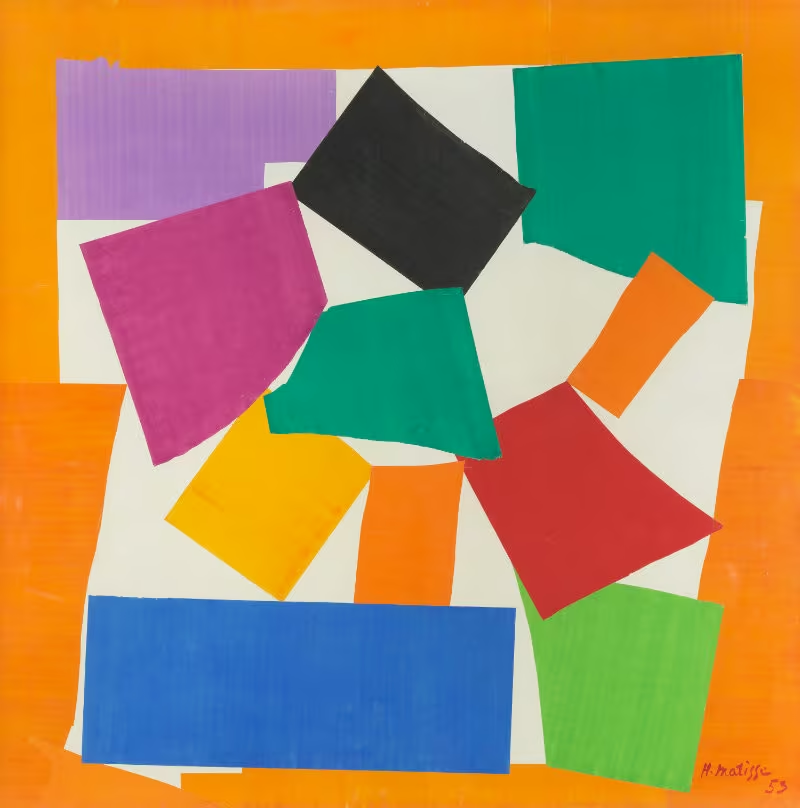
A chromatic spiral of vibrant, abstract forms.
build
Tate Modern opened in 2000 inside the former Bankside Power Station, converted by architects Herzog & de Meuron, with the building’s old Turbine Hall retained as a vast five storey space now used for large scale commissions. A second building, later named for donor Leonard Blavatnik and home to The Tanks, opened alongside it in 2016, extending the museum’s footprint without touching the original power station’s industrial character. The result is one of the world’s most visited galleries of modern and contemporary art, part of a wider Tate group that also includes Tate Britain, Tate Liverpool, and Tate St Ives.
Across its four galleries and digital platforms, Tate holds a collection of around 70,000 artworks spanning British art from the sixteenth century onward and international modern and contemporary art from 1900 to the present. The Snail has sat inside that collection since 1962, on the same stretch of the Thames where HOMME PLISSÉ’s dancers will move through it for one night before the doors of the Terrace Shop open the next morning.
Related Articles

Jerry Hsu Put Fifteen Years Of Los Angeles In A Book Called Never
How About Never, MACK, 2026. Skateboarder, photographer, first years living alone. A marriage hidden until […]