DRIFT AUDIO
Listen to this story
Choose a voice, then press play.
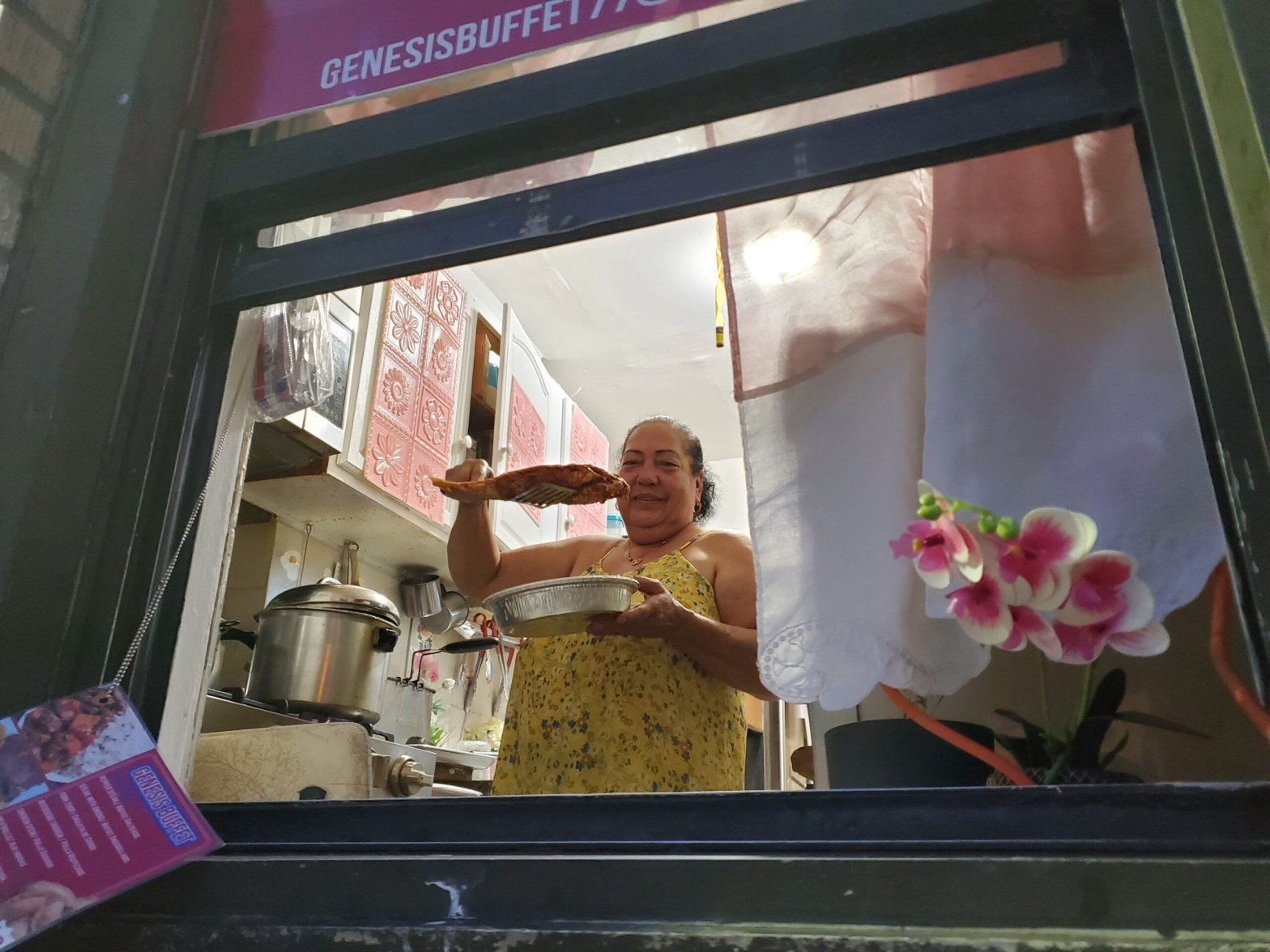
In the heart of the Bronx, where cultures from all over the world come together, there’s a humble yet remarkable story unfolding on a quiet street. Orquídea Cabrera, a Dominican woman with a deep love for her homeland and its culinary traditions, has found an innovative way to bring a taste of the Dominican Republic to New York City. Through a small window in her apartment, Cabrera sells authentic Dominican food, attracting a loyal following. Her story is more than just about delicious meals—it’s about heritage, identity, resilience, and the role that food plays in cultural connection. In this critical analysis, we’ll explore how Cabrera’s entrepreneurial venture reflects larger narratives about immigration, cultural preservation, and the socio-economic challenges faced by women of color in the United States.
A Journey from the Dominican Republic to the Bronx
Orquídea Cabrera’s journey to selling food out of her Bronx window starts far from New York City. Like many immigrants, Cabrera came to the U.S. seeking better opportunities, but her connection to the Dominican Republic never faded. Having grown up in a culture where food is a cornerstone of family, community, and celebration, Cabrera learned the art of cooking from her mother and grandmother. Dominican cuisine, with its rich blend of African, Taino, and Spanish influences, is known for bold flavors and hearty ingredients. For Cabrera, food is more than sustenance—it’s a way to keep her cultural roots alive, even in a foreign land.
Upon arriving in the Bronx, Cabrera quickly realized that there was a hunger for authentic Dominican food within the community. While there are many Dominican restaurants in New York, the larger establishments often cater to broader audiences, sometimes compromising authenticity for mainstream appeal. Cabrera, however, sought to maintain the genuine essence of Dominican home cooking—simple, flavorful, and made with love. Selling food out of her window was a way to offer the community a taste of her heritage, while also sustaining herself financially in a city known for its high cost of living.
The Window as a Cultural Portal
Selling food out of a window is not just a practical decision for Cabrera; it’s a symbolic one. The window itself acts as a portal between two worlds: the Dominican roadside and the Bronx street. This window serves as a bridge, connecting the cultural memories of the Dominican Republic with the everyday realities of life in New York. For her customers, many of whom are also from the Dominican Republic or other Latin American countries, purchasing food from Cabrera is a way to reconnect with their own cultural identities. In a bustling metropolis where the fast-paced nature of life often leads to the dilution of traditions, Cabrera’s window becomes a site of cultural preservation.
This unique business model also speaks to the resourcefulness of immigrant women, who often find creative ways to navigate economic challenges. Cabrera’s decision to sell food from her window was born out of necessity—traditional business models, such as opening a restaurant, are often inaccessible to immigrant women due to financial and bureaucratic barriers. Instead, Cabrera’s window business exemplifies a grassroots approach to entrepreneurship that is both adaptive and community-focused. It also highlights the informal economy that many immigrants rely on to make ends meet, especially in urban areas like New York.
Authenticity in the Age of Globalization
In an era where food is increasingly commodified and globalized, the concept of authenticity has become a highly debated topic. What makes food “authentic,” and why does it matter? For Orquídea Cabrera, authenticity is not about adhering to rigid definitions or catering to the expectations of outsiders. Instead, it’s about maintaining the integrity of the recipes passed down through generations. Her dishes—whether it’s mangú, mofongo, or arroz con pollo—are made using traditional ingredients and techniques that she learned in the Dominican Republic.
Cabrera’s approach stands in contrast to the growing trend of “fusion” cuisine, where cultural dishes are often modified to appeal to a broader audience. While fusion can lead to exciting innovations, it can also result in the erasure of cultural specificity. In Cabrera’s case, her food acts as a counter-narrative to the homogenization of Latin American cuisine in the U.S. By keeping her dishes true to their roots, she offers her customers an opportunity to experience the authentic flavors of the Dominican Republic, unfiltered and unmodified.
The Role of Food in Cultural Memory
Food is often one of the most powerful tools for preserving cultural memory. For immigrants like Cabrera, cooking traditional dishes is a way to stay connected to their homeland, even when they are physically far away. The act of cooking becomes a form of resistance against cultural assimilation, allowing individuals to hold onto their identity in a foreign land. In this sense, Cabrera’s window is more than just a business—it’s a space where cultural memory is kept alive, both for her and her customers.
For the Dominican community in the Bronx, Cabrera’s food serves as a reminder of home. The smells and tastes of her dishes evoke memories of family gatherings, celebrations, and everyday meals in the Dominican Republic. This connection to the past is especially important for immigrants who may feel a sense of dislocation in their new environment. By providing a taste of home, Cabrera helps to alleviate the sense of homesickness that many immigrants experience, offering a small but meaningful source of comfort.
The Intersection of Gender, Race, and Labor
Cabrera’s story also raises important questions about the intersection of gender, race, and labor in the U.S. As a Dominican woman, Cabrera occupies a marginalized position in the American workforce, where immigrant women of color often face significant barriers to economic mobility. Many immigrant women are relegated to low-wage, informal labor sectors, such as domestic work or food service, where they are vulnerable to exploitation and lack the protections afforded to workers in more formalized industries.
By starting her own business, even on a small scale, Cabrera is challenging these barriers and asserting her agency as an entrepreneur. However, her success is not without its challenges. Operating an informal business out of her window means that Cabrera is vulnerable to legal repercussions, particularly in a city like New York where street vending and informal food businesses are subject to strict regulations. The precarious nature of her business highlights the broader structural inequalities that immigrant women face in the U.S. labor market.
Community Support and the Power of Word of Mouth
One of the most remarkable aspects of Cabrera’s business is the role that community support has played in its success. Without the resources for traditional marketing or advertising, Cabrera relies on word of mouth to attract customers. This form of grassroots marketing speaks to the power of community networks, particularly within immigrant communities. Cabrera’s customers not only come for the food but also to support a fellow immigrant and entrepreneur. In this way, her business becomes a community endeavor, sustained by the collective efforts of those who recognize the importance of supporting local, immigrant-owned businesses.
The sense of community surrounding Cabrera’s window business also reflects the broader social dynamics of the Bronx, a borough known for its diversity and vibrant immigrant communities. In many ways, Cabrera’s story is emblematic of the entrepreneurial spirit that defines the Bronx, where small, family-owned businesses play a vital role in the local economy. Her success is a testament to the resilience and resourcefulness of immigrant women, who often find innovative ways to overcome the challenges they face.
A Window into a Larger Narrative
Orquídea Cabrera’s journey from selling food on the roadside in the Dominican Republic to selling it out of her window in the Bronx is a story of resilience, cultural preservation, and community. Through her food, Cabrera offers more than just a meal—she offers a taste of home, a connection to cultural memory, and a reminder of the power of authenticity in an increasingly globalized world. Her story also sheds light on the broader socio-economic challenges faced by immigrant women, particularly women of color, in the U.S. By asserting her agency as an entrepreneur, Cabrera not only sustains herself but also contributes to the rich cultural fabric of the Bronx.
In many ways, Cabrera’s window is a metaphor for the immigrant experience itself—a small opening through which culture, identity, and memory are passed from one generation to the next. Her food, made with love and care, serves as a reminder that even in the most challenging circumstances, it is possible to hold onto one’s heritage and share it with others. For the people of the Bronx, Cabrera’s window is not just a place to get a meal; it’s a place to connect, remember, and celebrate the rich diversity that makes New York City what it is.
Related Articles
Modigliani’s Limestone ‘Tête’
Carved from a single block of limestone in Montparnasse more than a century ago, one of Modigliani's rare stone heads goes to auction for the first time…