DRIFT AUDIO
Listen to this story
Choose a voice, then press play.
What makes a song truly great? That question sits at the emotional and intellectual center of Tower of Song: Iconic Songwriters & Recordings, a new ongoing exhibition opening May 28, 2026, at the GRAMMY Museum in Los Angeles. Presented by City National Bank, the Fourth Floor Gallery installation arrives less like a conventional museum exhibit and more like a living study of musical permanence—an expansive meditation on songwriting, recording, memory, and cultural endurance.
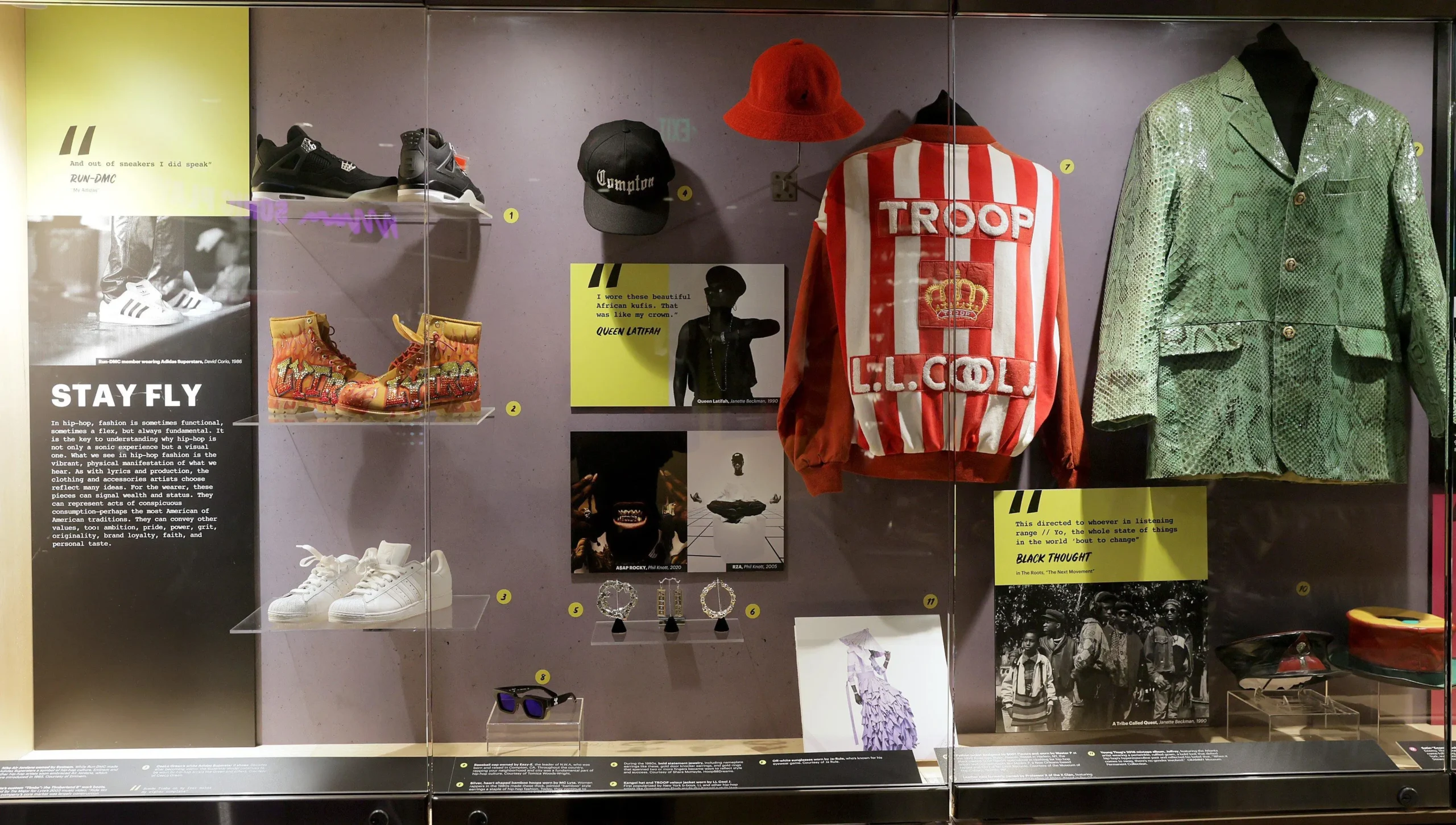
Built in connection with the Songwriters Hall of Fame, the exhibit explores how certain recordings evolve beyond entertainment and become shared emotional architecture. The exhibition threads together more than five decades of popular music history through rare artifacts, immersive audiovisual experiences, original documentary film work, and interactive installations designed to deepen the listener’s understanding of the songwriting process itself.
Rather than presenting music history as static nostalgia, Tower of Song frames songwriting as a continuously evolving creative language. Jazz, funk, grunge, R&B, rock, soul, pop, and alternative music are all positioned not as isolated genres, but as interconnected systems of influence, experimentation, rebellion, and emotional communication. The result is an exhibition that feels unusually contemporary despite its archival foundations.
View this post on Instagram
bridge
The collision between the GRAMMY Museum and the Songwriters Hall of Fame extends years of joint programming, including Legends-in-the-Round conversations and ChartTopper educational sessions. But Tower of Songexpands that relationship into something far more ambitious: a permanent-style cultural environment dedicated to the know why certain songs survive generations while others disappear into the noise of their era.
The exhibit draws heavily from the legacy of the Grammy Hall of Fame, which since 1973 has inducted more than 1,100 recordings recognized for lasting historical or qualitative significance. Recent 2026 additions—including Rhythm Nation 1814 by Janet Jackson, Dreamboat Annie by Heart, All Eyez on Me by 2Pac, and OK Computer by Radiohead—help reinforce the exhibit’s cross-generational ambition.
Simultaneously, the Songwriters Hall of Fame perspective re-centers authorship itself. The institution, founded in 1969 by figures including Johnny Mercer, has long championed composers whose influence extends far beyond chart positions. Within the exhibition, commentary and reflections from legendary creators—including Carole King, Nile Rodgers, Diane Warren, and Jimmy Jam—offer insight into the invisible labor behind iconic recordings.
An original documentary film anchors the experience, featuring conversations with Songwriters Hall of Fame inductees such as Alan Menken, Carole King, Diane Warren, and Jimmy Jam discussing craft, instinct, emotional translation, and the unpredictability of inspiration itself. Visitors can also engage with digital installations asking them to consider what specifically makes a Hall of Fame song “great,” transforming the exhibition into an active listening environment rather than a passive retrospective.
hx
The emotional gravity of Tower of Song rests heavily on its artifacts. These are not simply collectibles displayed behind glass; they are physical remnants of moments that permanently shifted the trajectory of modern music.
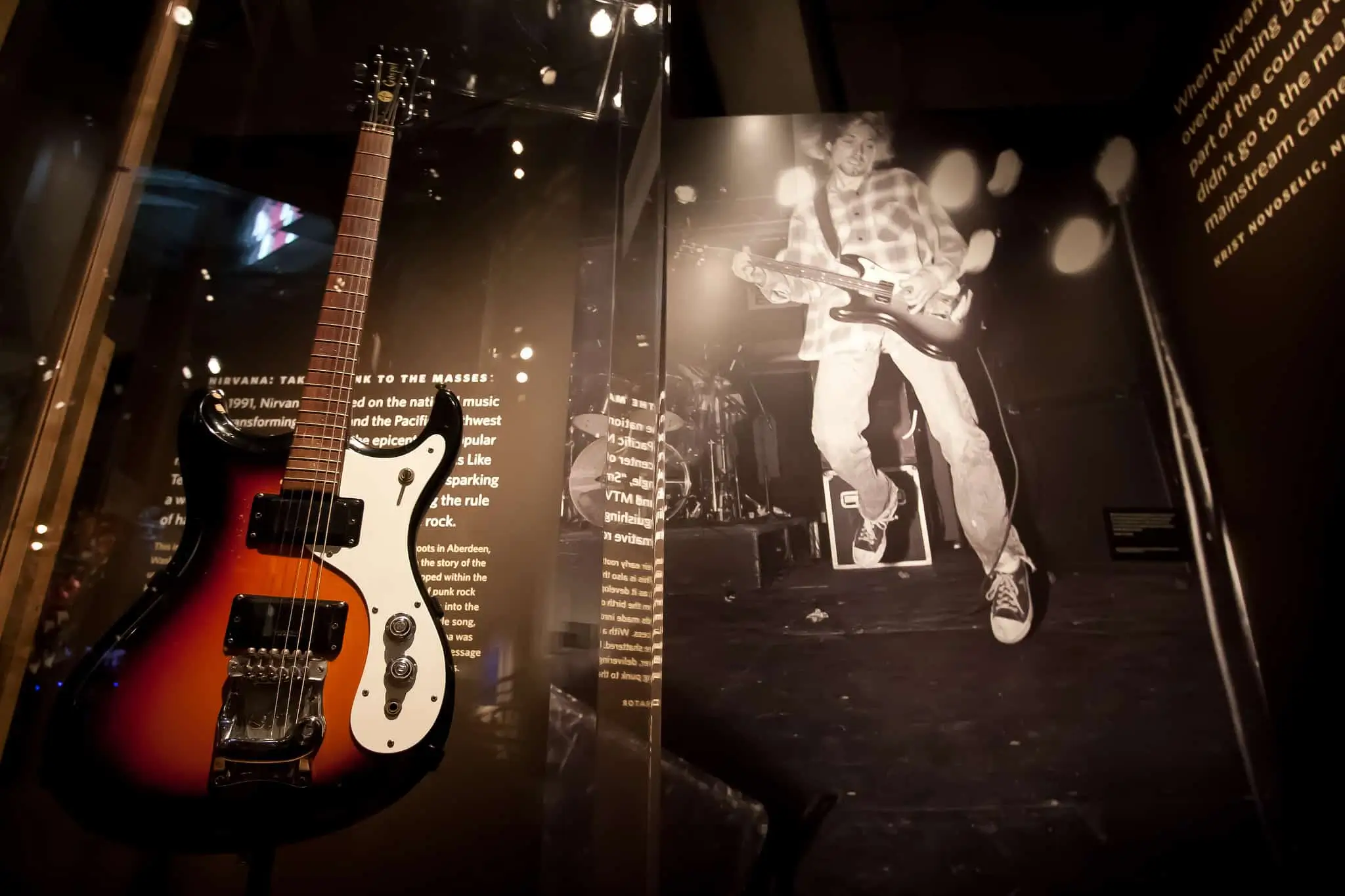
Among the exhibition’s most arresting inclusions is Kurt Cobain’s Mosrite Gospel electric guitar, used to write much of Nevermind. The object carries enormous symbolic weight. More than an instrument, it represents a transitional rupture in popular culture: the collapse of polished late-1980s excess and the arrival of a rawer, emotionally exposed form of alternative music that defined the early 1990s.
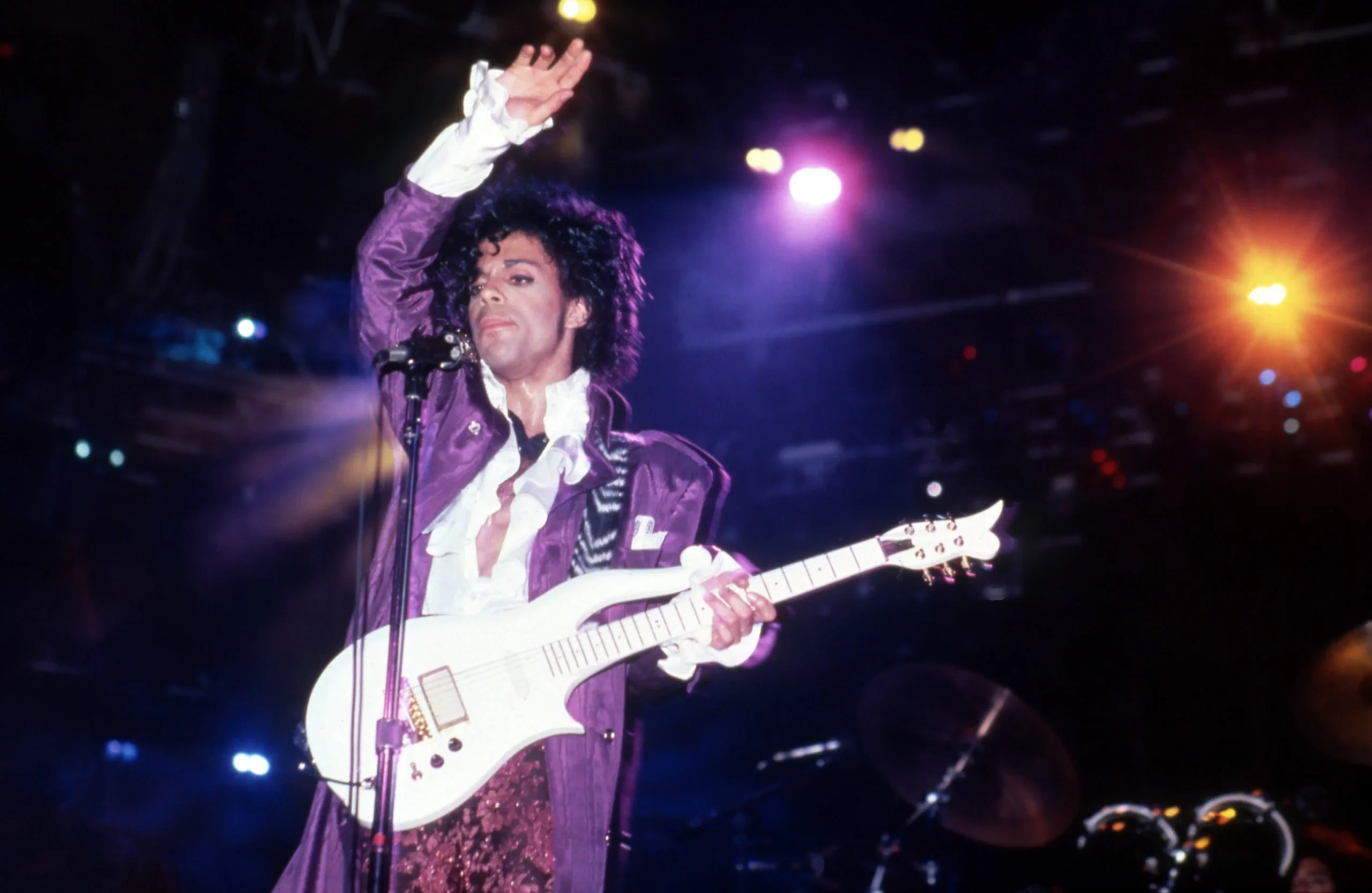
Nearby, artifacts from Prince’s Purple Rain era—including his gold-rimmed glasses from the 1984 film and stage garments from the accompanying tour—capture the multidimensionality of his artistry. Prince was never merely a songwriter or performer; he existed as a complete visual, sonic, and emotional system. Purple Rain remains one of the clearest examples of music functioning simultaneously as cinema, fashion, mythology, and autobiography.
The exhibition also highlights the technical evolution of music production through the tools of Jimmy Jam and Terry Lewis, whose LinnDrum machine and Ensoniq Mosaic synthesizer helped shape the revolutionary sonic architecture of Rhythm Nation 1814. Their work with Janet Jackson transformed late-1980s and early-1990s pop production by merging industrial textures, dance structures, and socially conscious messaging into something radically modern for its time.
Elsewhere, jazz innovation appears through the presence of Miles Davis’ red lacquer Martin Committee trumpet and accompanying performance equipment, all reminders of an artist who continuously dismantled and rebuilt his own sound across decades.
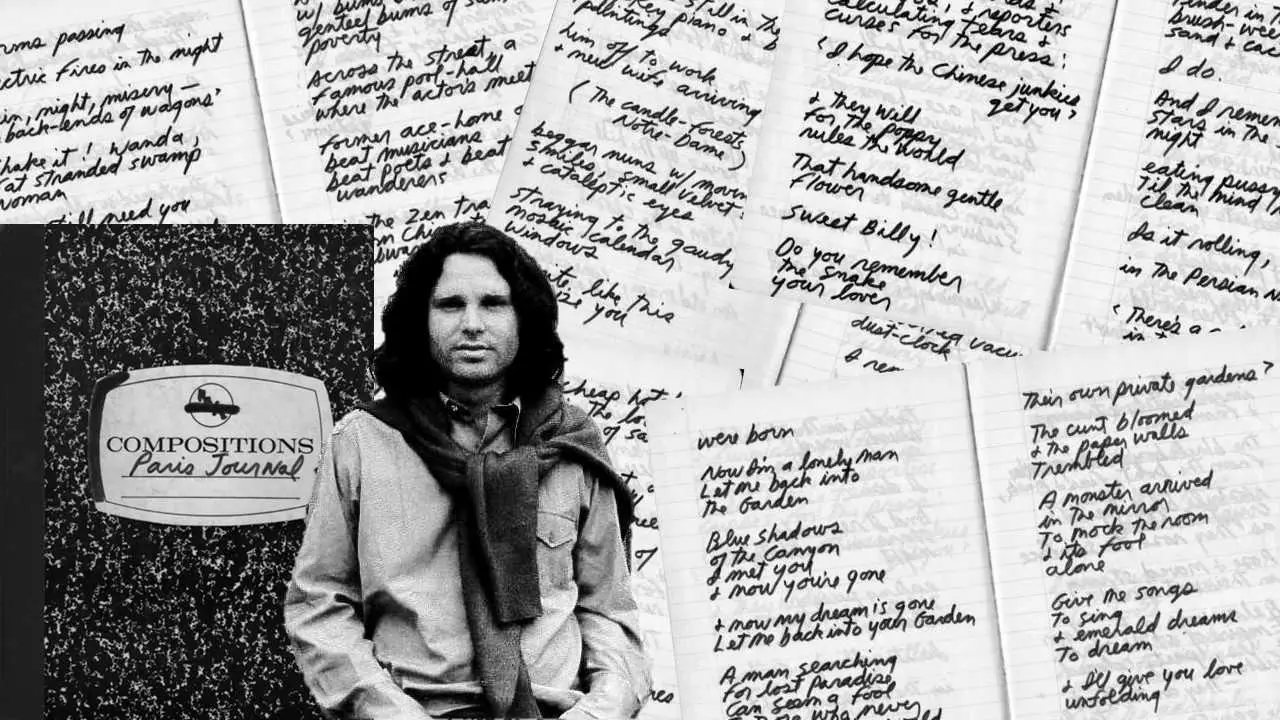
The exhibition moves fluidly between genres and eras without flattening their differences. Keith Moon’s gold Premier drum kit channels the theatrical maximalism of Tommy, while Jim Morrison’s personal notebook and EV-676 microphone illuminate the literary mysticism behind The Doors’ psychedelic identity.
Even quieter artifacts carry extraordinary emotional resonance. Bill Withers’ acoustic guitar reinforces how simplicity itself can become timeless when attached to emotional honesty. Handwritten lyrics from Allee Willis for Septembercelebrate songwriting as communal joy rather than tortured mythology.
move
One of the exhibition’s strongest conceptual achievements is its framing of songwriting as a form of cultural architecture. Songs become spaces people inhabit emotionally over time.
The title itself, echoing Leonard Cohen’s reflective meditation “Tower of Song,” reinforces this idea. Great songs endure not because they are technically flawless, but because they create emotional permanence. They attach themselves to memory, grief, celebration, heartbreak, protest, romance, identity, and transformation.
The exhibition appears deeply interested in how influence functions across generations. Prince synthesized funk, rock, soul, and sexuality into a singular visual language. Jim Morrison fused literature and mysticism into rock lyricism. Jimmy Jam and Terry Lewis revolutionized production aesthetics through technology.
Interactive sections reportedly encourage visitors to think critically about structure itself: hooks, bridges, emotional payoff, sonic tension, narrative pacing, and the mechanics of replay value. This analytical approach makes the exhibition particularly relevant in 2026, when music consumption increasingly occurs through fragmented streaming environments and algorithmically accelerated listening habits.
why
Perhaps the most compelling aspect of Tower of Song is its timing.
The exhibition arrives during an era defined by streaming optimization, viral acceleration, AI-assisted production tools, and shrinking attention spans. In that context, the exhibit becomes almost philosophical in tone. It argues—quietly but firmly—that the core of great music remains deeply human.
A guitar covered in fingerprints. Handwritten lyric sheets with crossed-out phrases. Tape boxes labeled by hand. Microphones worn through years of use. These objects resist abstraction. They remind visitors that songs are not generated from nowhere; they emerge from persistence, vulnerability, experimentation, collection, and obsession.
That perspective becomes especially meaningful as artificial intelligence increasingly enters conversations around songwriting and music production. Tower of Song does not reject technological evolution—many of the exhibit’s artifacts celebrate technological innovation directly—but it consistently returns to emotional intention as the defining factor behind enduring art.
The exhibition ultimately suggests that timeless songs survive because they do something algorithms cannot fully replicate: they articulate emotional truths with enough specificity to feel universal.
straddle
The opening of Tower of Song coincides with the third annual Grammy Hall of Fame Gala, held May 8, 2026. A special public program in the Clive Davis Theater will feature conversations with Jimmy Jam and Diane Warren discussing songwriting craft, Hall of Fame recordings, and the enduring anatomy of musical greatness.
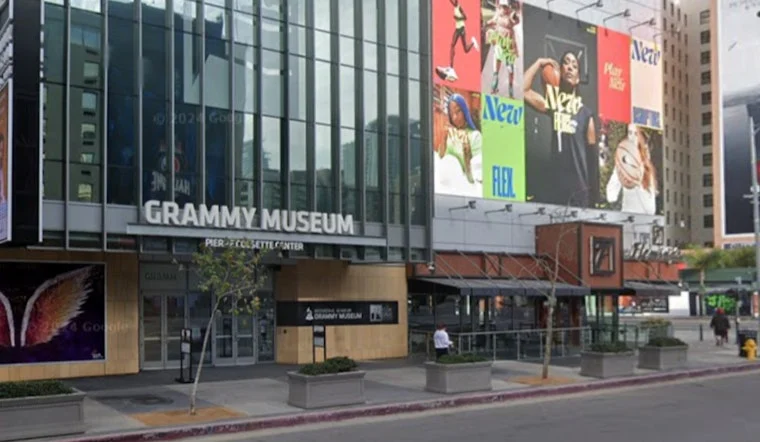
Located at L.A. Live in downtown Los Angeles, the GRAMMY Museum has long functioned as one of the city’s most important contemporary music institutions. But Tower of Song may become one of its defining long-term installations precisely because it avoids reducing music history to nostalgia.
Instead, it treats songwriting as a living discipline—one continuously reshaped by technology, culture, politics, identity, and emotion while still rooted in something fundamentally intimate.
Either visitors arrive to see Kurt Cobain’s guitar, Prince’s stagewear, Frank Sinatra memorabilia, or the production tools behind Rhythm Nation 1814, the exhibition ultimately asks them to consider a much larger question: why certain songs continue to move us decades after they were first heard.
And in doing so, Tower of Song becomes more than an archive. It becomes a meditation on why music itself continues to matter.