DRIFT AUDIO
Listen to this story
Choose a voice, then press play.
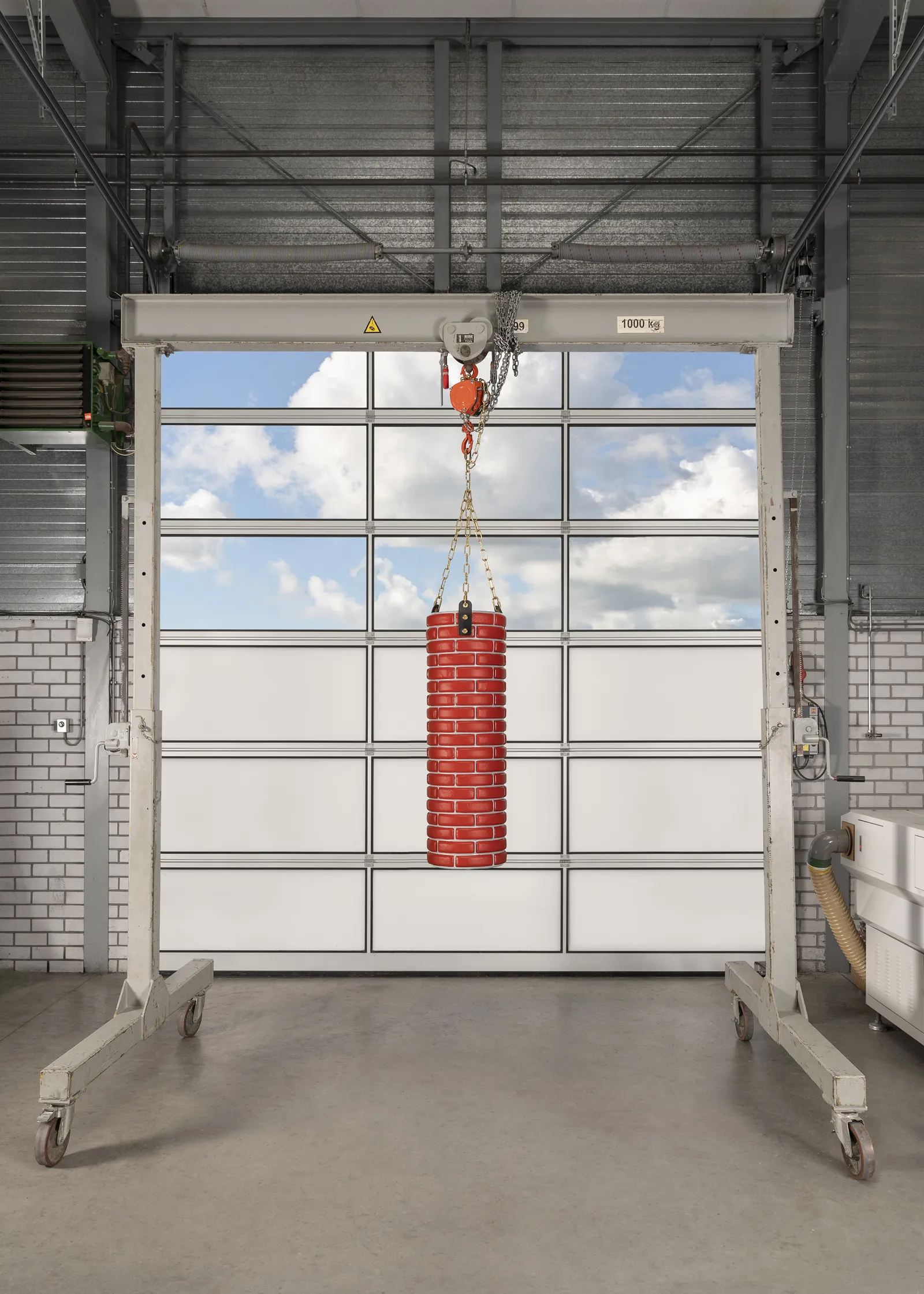
In the world of design, few objects capture the spirit of playful provocation quite like a punching bag disguised as a stack of bright red bricks. Gufram’s Punch a Wall, designed by Studio Job, does exactly that—and more. First unveiled in a limited edition at Design Miami/Basel in 2017 as part of the SuperGufram collection, this cheeky yet functional piece has now been released in an unlimited production run, making its irreverent charm accessible to a broader audience of design enthusiasts, boxers, and collectors alike.

stir
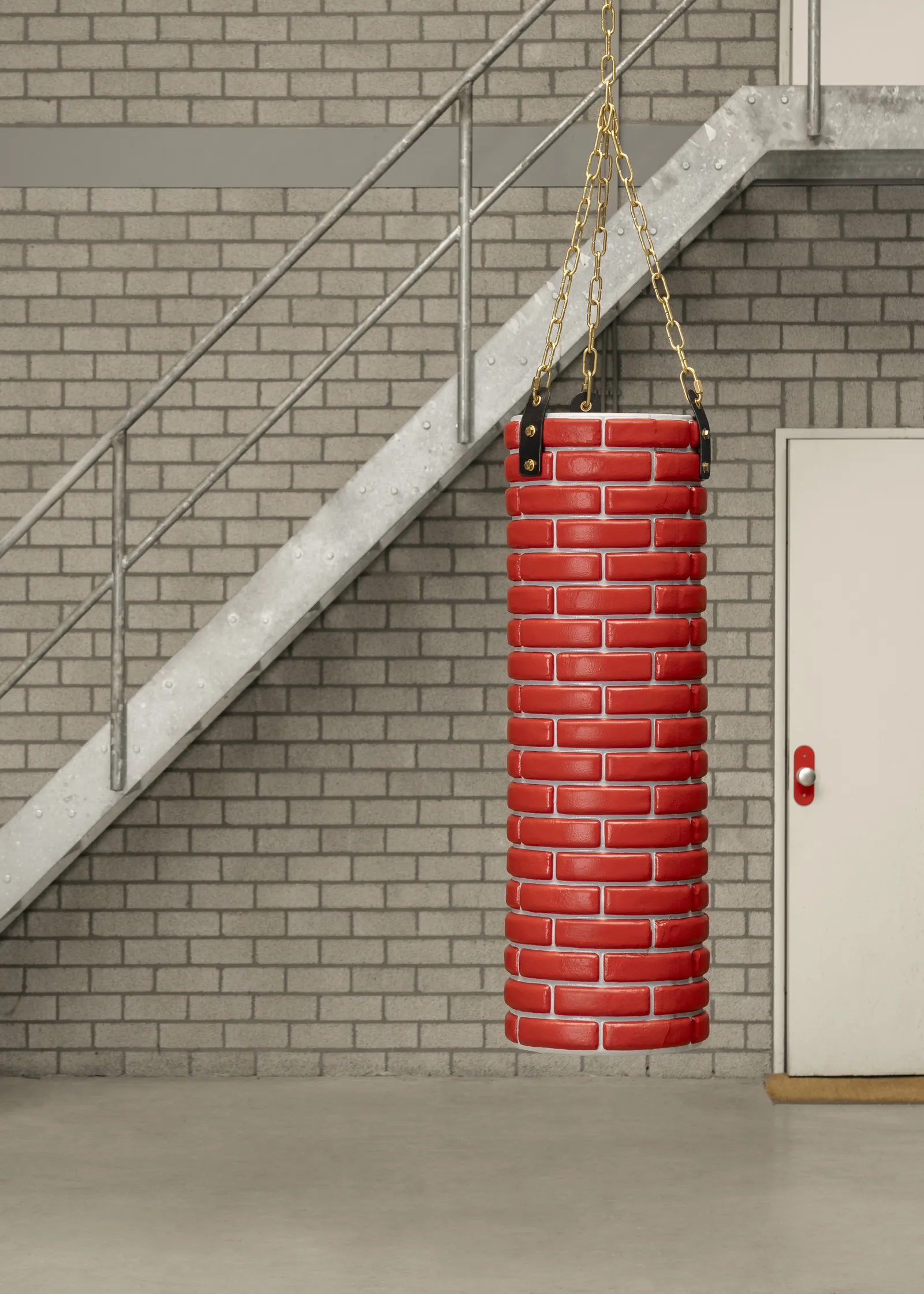
At first quick look, Punch a Wall looks like it belongs on a construction site or in an alleyway brawl scene. Suspended from a sturdy chain, the cylindrical bag mimics a column of vibrant orange-red bricks with crisp white mortar lines. But the illusion shatters the moment you touch it—or better yet, punch it. Crafted from expanded polyurethane foam and finished with Gufram’s proprietary Guflac® Ultra coating, the “bricks” are soft, elastic, and resilient. They absorb impacts without cracking, no matter how frustrated or energetic the striker.
Dimensions are practical for home or studio use: roughly 38.5 cm in diameter and tall enough to hang at standard punching height. The hand-stitched detailing and meticulous hand-painting by Gufram artisans ensure each piece retains the brand’s signature tactile quality. Optional boxing gloves with custom patterns (often featuring Studio Job’s signature graphic flair) complete the setup, turning functional fitness gear into a conversation-starting sculpture.
This duality—hard appearance, soft reality—is pure Studio Job. The duo (primarily Job Smeets with contributions from Nynke Tynagel during their collaboration) has long specialized in objects that subvert expectations. Here, they play with the dichotomy between dream and reality, aggression and restraint. Punching a wall is a universal metaphor for pent-up rage; this design channels it productively while winking at the absurdity of domesticating violence into decor.
flow
To understand Punch a Wall, one must delve into Gufram’s storied history. Founded in 1966 by the Gugliermetto brothers in Barolo, Italy (near Turin), Gufram emerged from the fertile ground of 1960s Italian Radical Design. This movement rejected functionalist modernism in favor of experimentation, social commentary, and pure imagination. Gufram wasn’t just a furniture maker; it was a creative laboratory.
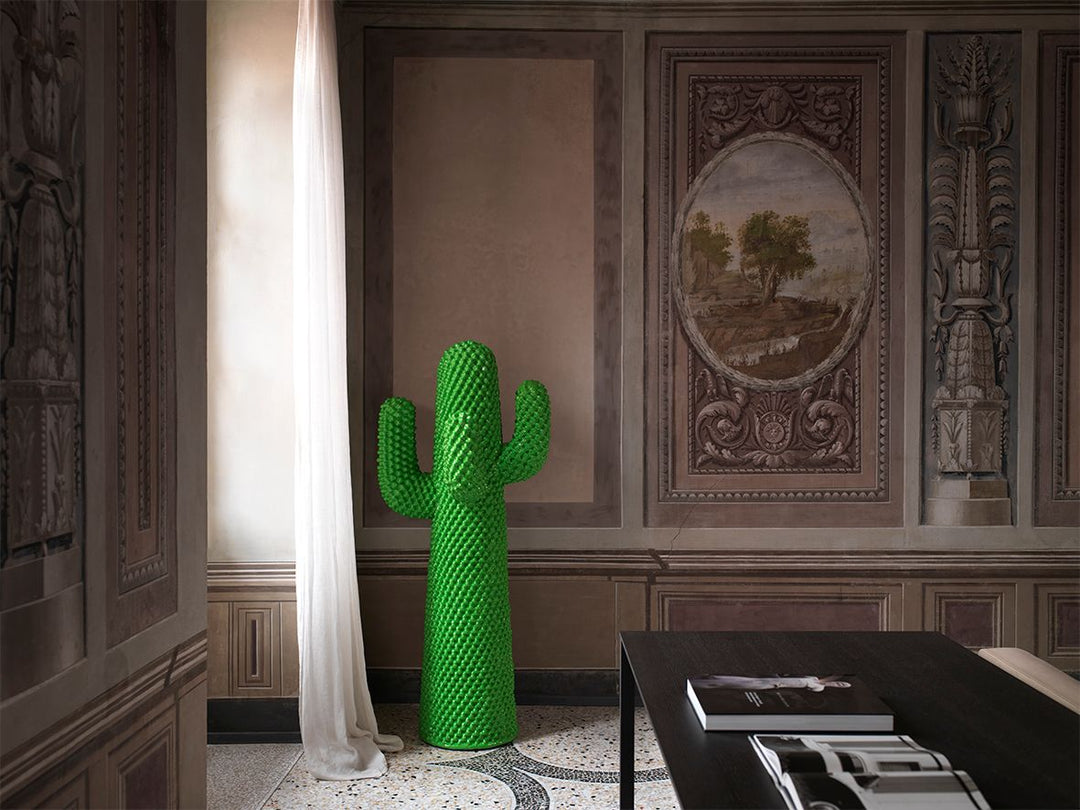
The brand pioneered the use of polyurethane foam—then an industrial packing material—for sculptural furniture. Iconic pieces like the Cactus coat rack (1972, by Guido Drocco and Franco Mello), the Pratone grassy lounge (1971), and the Bocca lips sofa (1970, Studio 65) became symbols of Pop Art-infused, anti-establishment design. These objects weren’t meant to blend into minimalist interiors; they demanded attention, much like Punch a Wall does today.
Guflac®, the ultra-durable, flexible paint developed over 50 years ago, remains central to Gufram’s identity. It allows polyurethane to withstand weather, UV rays, and repeated abuse while keeping its bouncy softness. In Punch a Wall, this technology elevates a novelty item into something built to last—both literally and culturally.
Acquired in 2012 by Sandra and Charley Vezza (who also helm the Italian Radical Design Group, incorporating Memphis Milano and Meritalia), Gufram has revived its avant-garde spirit while expanding into limited editions and collectibles. The SuperGufram project at Design Miami/Basel 2017 exemplified this: a series of quirky, narrative-driven pieces including Punch a Wall, a cooking-pot coffee table with “steam,” and sculptural room dividers. The punching bag fit perfectly into this surreal family.
scope
Studio Job, founded by Belgian artist-designer Job Smeets in 1998 (with Dutch graphic designer Nynke Tynagel joining soon after), brings a maximalist, narrative-rich sensibility that meshes seamlessly with Gufram’s radical ethos. Smeets, trained at the Design Academy Eindhoven, approaches design like sculpture—drawing on history, folklore, kitsch, and contemporary culture. Their work often features bold graphics, bronze casts, and objects that blur art, design, and commentary.
Studio Job’s collisions span high-profile brands, museums, and galleries. Their aesthetic is unapologetically over-the-top: think exploding chandeliers, apocalyptic tableware, or monuments to everyday absurdity. Punch a Wall channels their love for visual puns and material subversion. The brick pattern isn’t random; it evokes urban grit, construction, and the “fourth wall” of theater—breaking expectations in both literal and metaphorical senses.
Though Smeets and Tynagel parted ways professionally around 2015–2020, the studio’s legacy of coltish provocation endures. Punch a Wall feels like a distillation of their philosophy: accessible yet exclusive, functional yet artistic, angry yet joyful.
culture
Why does a brick punching bag resonate so deeply in 2026? In an era of digital overload, remote work stress, and urban living constraints, Punch a Wall offers catharsis in physical form. It’s therapy disguised as furniture. Hang it in a minimalist loft, a home gym, or even a high-end boutique hotel lobby, and it instantly injects personality and humor.
The design also comments on architecture and domesticity. Walls—brick or otherwise—symbolize boundaries, stability, and sometimes oppression. Punching one (safely) reclaims agency. In Radical Design tradition, it challenges the notion that home objects must be passive or purely utilitarian. Gufram has always invited interaction: sit on the Pratone, hug the Cactus, now punch the wall.
Collectors prize the original 333-piece limited edition for its exclusivity, with prices reflecting that. The unlimited version democratizes the fun while maintaining artisanal quality, priced accessibly for design lovers (typically in the €4,000–€5,000 range depending on retailer).
adept
Gufram’s production process blends industrial efficiency with old-world handwork. The polyurethane is molded, then meticulously finished and painted by artisans in their Piedmont facility. Guflac® Ultra represents decades of refinement—elastic enough for impacts, tough enough for outdoor use if desired. This isn’t cheap foam; it’s engineered for longevity, much like Gufram’s classics that still appear in museum collections worldwide (MoMA, Met, Vitra Design Museum).
Sustainability notes: While polyurethane isn’t inherently eco-friendly, Gufram’s focus on durable, long-lasting pieces reduces replacement cycles. The unlimited version maintains the same standards as the limited run, ensuring no compromise in quality.
imply
- Punch a Wall exemplifies “design as commentary.” In a post-pandemic world obsessed with wellness and mental health, it merges fitness with art. It also bridges collectible design and everyday life—much like Memphis Milano’s bold patterns or Ettore Sottsass’s playful forms, now under the same ownership umbrella.
Critics and enthusiasts see it as a continuation of Italian Radicalism’s legacy: questioning norms, embracing contradiction, and injecting joy into the mundane. It’s not just a product; it’s a performance piece for the home.
Interior designers love pairing it with other Gufram icons for thematic rooms—imagine a “Radical Gym” with Cactus racks holding towels and Punch a Wall as the centerpiece. Or contrast it with sleek minimalism for maximum visual punch.
thought
Whether you’re a serious boxer seeking motivation, a design aficionado hunting statement pieces, or someone who just needs a safe outlet for daily frustrations, Gufram’s Punch a Wall delivers. It’s more than furniture or fitness equipment; it’s a sculptural manifesto on resilience, play, and the joy of breaking (or at least hitting) the expected.
In the spirit of Radical Design, it reminds us that the best objects don’t just occupy space—they provoke, engage, and endure. Hang one up, throw a few punches, and feel the walls (literal and figurative) come alive.
From the DRIFT archive: Dyson x PORTER: Engineering Meets Urban Craft in the OnTrac Limited Edition · Lara Croft’s Dual Guinness Records Cement an Icon: How a Digital Explorer Became a Cultural Artifact Herself
Related Articles

Under Rue de Castiglione, Liaigre Gives Hôtel Costes a Spa With No Hard Corners
A 20-meter lap pool, eight treatment rooms and not one sharp angle: Studio Liaigre’s spa […]