DRIFT

From lunchbox nostalgia to cannabis-culture crossovers, Hostess is embracing a grown-up marketing strategy for a very different kind of appetite.

From Playground Favorite to Dispensary Darling

For decades, Hostess was the embodiment of American innocence: sugar-packed, after-school snacks like Twinkies, Ding Dongs, and CupCakes nestled into lunchboxes and gas station impulse racks. It sold not just sweets but nostalgia—a time when childhood was simpler and treats were guiltless.

But in 2024, things are looking a little… hazier.

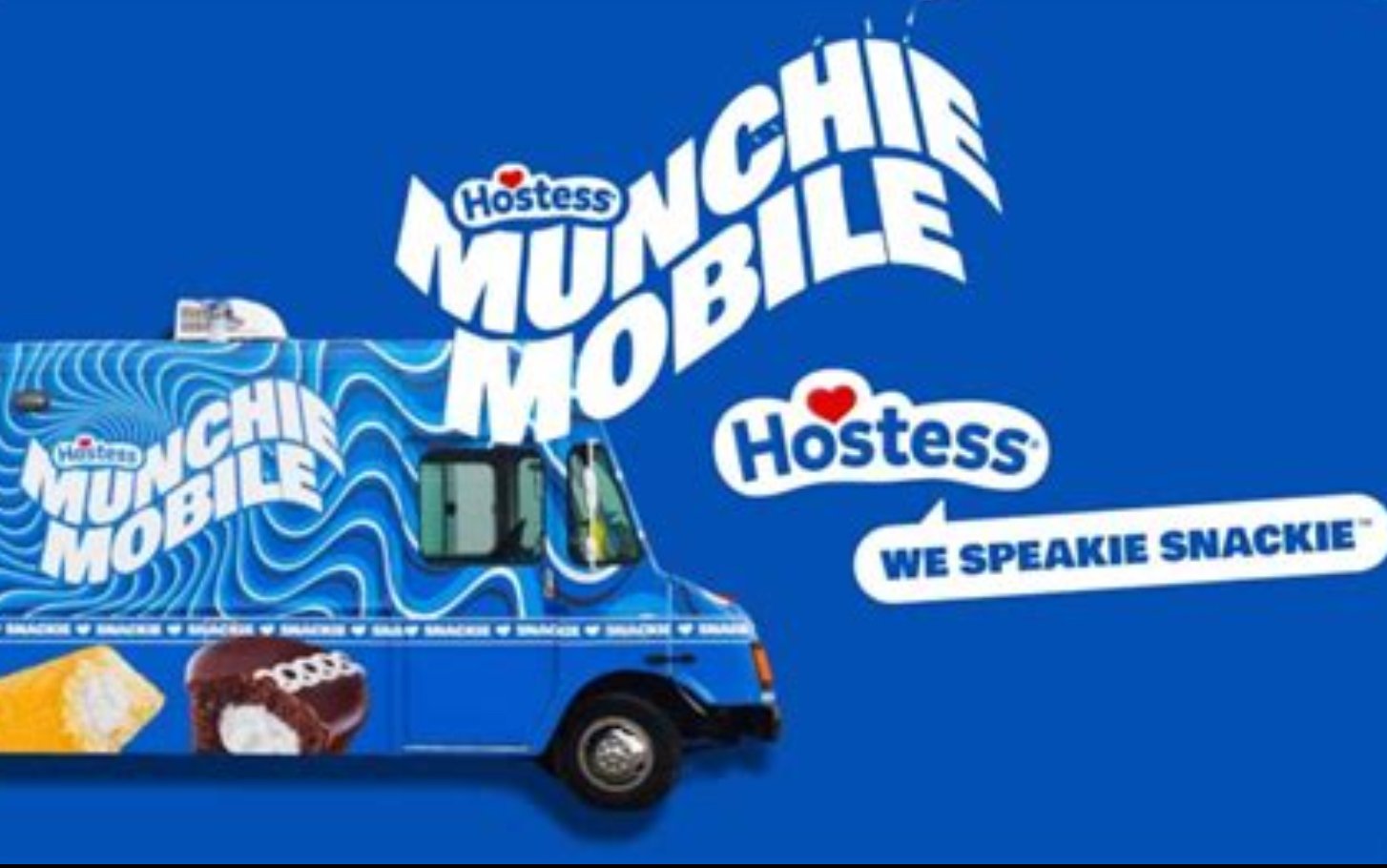
In a strategic move to jolt sales and reintroduce the brand to a new generation of snackers, Hostess has rolled out the Munchie Mobile, a food truck-style promotional campaign targeting dispensaries across the East Coast just in time for the cannabis-coded holiday April 20 (4/20). Instead of waiting on grocery shelves, Hostess is going to the customer—and that customer may now be holding a joint instead of a juice box.

Enter the Munchie Mobile: Weed Culture Meets Cream-Filled Confectionery

Clad in stoner-coded graphics and shaped like a cartoonish riff on Oscar Mayer’s Wienermobile, the Munchie Mobile is impossible to miss. And that’s the point. The truck is making scheduled stops in front of cannabis dispensaries, offering free snack cakes, giveaways, and limited-edition swag.

The strategy is a radical departure from the brand’s historically wholesome image, signaling an acknowledgment that today’s snack landscape is more diverse, more adult, and more self-aware than ever. By associating itself with 4/20 culture, Hostess is doing more than chasing virality—it’s claiming cultural relevance.

Why the Pivot? Follow the Sales Trail

The edgy rebrand comes as parent company J.M. Smucker Co. tries to breathe new life into a brand it acquired in 2023 for $4.6 billion. So far, the return has been underwhelming.

In its latest earnings report, Smucker noted a 2% year-over-year net sales decline for the quarter ending in January—a reflection of both brand fatigue and broader industry headwinds. Convenience-store snack sales as a whole were down 4.3% through February, according to market research firm Circana. With inflation lingering and consumer spending more selective, people are thinking twice about the treats they grab between errands.

In this climate, Smucker is pivoting. Instead of relying solely on grocery shelf loyalty, the company is making a full-court press to reposition Hostess as playful, experimental, and unafraid of courting counterculture.

The Weed-Adjacent Playbook: High Risk, High Reward

Let’s be clear: Hostess isn’t marketing weed-infused snacks (yet). But the messaging is unmistakable. By aligning with dispensary culture and the 4/20 calendar, the company is taking calculated advantage of what many snack marketers already know: stoners are reliable snack consumers.

Think of the Munchie Mobile not as a gimmick, but as a form of brand anthropology. Hostess is placing itself where snacking is at its most instinctive and least inhibited. The logic is sound: when the munchies hit, who better to answer the call than a cream-filled cake with decades of brand recognition?

This campaign also fits into a broader trend of legacy food brands adapting to new social norms. As cannabis legalization becomes increasingly normalized across the U.S., the stigma is waning—and the munchies are mainstream.

New Products, New Packaging, Same Sugar Rush

The Munchie Mobile is only one element of Hostess’s multi-pronged approach. Alongside the marketing push, Smucker has revamped the brand’s packaging, opting for cleaner design elements, brighter colorways, and more youthful typefaces.

Product innovation is also in motion. Hostess recently introduced:

  • Donettes Apple Cinnamon Fritter Rings – a mash-up of its popular mini donuts and fall-flavored fritters, repackaged for year-round appeal.
  • Mini Chocolate CupCakes – a bite-sized version of its iconic CupCake line, tailored for portion-conscious snackers (or those too stoned to finish a full-size treat).

These new SKUs reflect a smarter understanding of modern consumer behavior, offering not only novelty but shareable formats and layered flavors that play well with younger audiences raised on foodie culture and TikTok trends.

Can Stoners Save the Snack Aisle?

That’s the billion-dollar question. While many legacy snack brands are struggling amid health trends and price sensitivity, Hostess’s biggest advantage may be its own absurdity. The brand doesn’t need to chase the wellness wave. Instead, it can lean into decadence, nostalgia, and irreverence—all qualities that resonate in a world where memes matter as much as macros.

And with Gen Z and Millennials showing an affinity for ironic, comfort-food-driven indulgence (think Little Debbie memes and Gushers coming back in style), Hostess may be primed for a cult revival.

By embracing weed-adjacent culture, the brand taps into a young, diverse, and growing consumer base that doesn’t see cannabis as taboo—but as Tuesday. It’s not a detour. It’s a reroute to long-term cultural relevance.

A New Snack Strategy: From Nostalgia to Novelty

It’s worth noting that Hostess’s 4/20 strategy isn’t a gimmick pulled from thin air. It’s part of a wider movement within CPG (consumer packaged goods) brands toward experiential marketing, especially as younger consumers turn away from traditional advertising.

The Munchie Mobile, with its snack drops, social media content, and branded giveaways, feels more like a music festival activation than a food campaign. It reflects a new understanding: in 2024, brands are not only selling product—they’re building personality.

Where Hostess once traded on familiarity, it is now pursuing novelty. Where it once wanted to be everyone’s go-to snack, it’s now happy to be a niche indulgence with cult cachet.

Flow

In many ways, the Hostess of 2024 has little in common with the brand that once made headlines for going bankrupt in 2012, or for briefly disappearing from shelves. Under Smucker’s leadership, and amid an evolving snack economy, it is being recast as something less innocent, more knowing, and defiantly fun.

Will the gamble pay off? Too early to tell. But what’s clear is that Hostess is done playing it safe. If the Munchie Mobile proves anything, it’s that there’s still life—and sales—left in the humble Twinkie. You just have to know which block to park it on.


Related Articles

Modern data center facility with a solar-panel-clad exterior, bright green administrative offices, and secure perimeter fencing, showcasing sustainable digital infrastructure and renewable energy integration

Lombardy’s Data Center Boom: Balancing Digital Ambition with Environmental Responsible

Lombardy has emerged as Italy’s primary hub for new digital infrastructures, particularly data centers—vast complexes […]

In a highly anticipated reunion after 24 years, Adidas Originals and Coca-Cola have joined forces once again to celebrate the FIFA World Cup 2026™. The collaboration revives their iconic 2002 partnership from the Japan-South Korea tournament, now reimagined for the biggest global sporting event of 2026, co-hosted by the United States, Canada, and Mexico. Set to launch on June 6, 2026, this collection masterfully blends Adidas' streetwear heritage with Coca-Cola's timeless branding, creating a vibrant fusion of football culture, nostalgia, and modern style. The drop arrives at a perfect moment. With the World Cup kicking off on June 11, 2026, fans worldwide are gearing up for a summer of football excitement. This collaboration isn't just merch—it's a cultural statement that merges two legendary brands under the banner of "Originals are the Real Thing," a clever twist on Coca-Cola's famous slogan. Historical Context: A Reunion 24 Years in the Making Adidas and Coca-Cola first collaborated during the 2002 FIFA World Cup, producing limited-edition pieces that captured the era's energy. That partnership helped define early 2000s football-streetwear crossover culture. Fast-forward to 2026, and the brands are back with fresh energy, leveraging Adidas' deep FIFA ties (as an official partner) and Coca-Cola's long-standing sponsorship of the tournament. The 2026 edition promises to be historic as the first 48-team World Cup, spanning three countries and generating unprecedented global hype. This collab taps into that momentum, offering fans wearable pieces that celebrate both brands' legacies while looking forward to the future of football fashion. Collection Overview and Design Philosophy The Adidas Originals x Coca-Cola collection fuses 2000s street style with classic sporting aesthetics. Expect bold reds, creams, whites, and silver accents inspired by Coca-Cola's iconic packaging—think classic script logos, droplet detailing, and can-inspired motifs. The lineup spans footwear, apparel, and accessories, divided into two visual directions: one logo-heavy and graphic-forward, the other drawing from vintage advertising aesthetics. Designs pay homage to Coca-Cola's visual language while staying true to Adidas Originals' archival roots. High-quality materials, attention to detail, and versatile silhouettes make these pieces suitable for both match-day wear and everyday street style. The campaign, featuring young football star Lamine Yamal and a diverse cast in everyday scenes building anticipation for the tournament, reinforces themes of originality and shared cultural moments. Footwear Highlights Footwear takes center stage in this collaboration, with reimagined takes on iconic 2000s Adidas silhouettes: Samba and Superstar Models: These classics get Coca-Cola treatment with white/cream/red colorways and prominent script branding. The Samba blends street heritage with football roots, while the Superstar II features weathered bases and bold side panels. Expected pricing around $110–$130. Adistar Control 5: A standout with droplet detailing mimicking condensation on a cold Coke can. This model brings performance-inspired design into lifestyle territory. Predator Sala: Indoor/hybrid style with silver-and-red accents, nodding to predatory precision on the pitch and Coca-Cola's bold energy. Climacool 1: Revived with breathable tech and Coke-inspired graphics, perfect for warm summer days. Megaride F50: A highlight paying tribute to the iconic Coca-Cola glass bottle, with unique contours and refreshing design cues. Each pair incorporates thoughtful details like embroidered logos, custom insoles, and packaging that mimics vintage Coke crates or cans. These shoes are built for durability and comfort, appealing to sneakerheads, football fans, and casual wearers alike. Apparel and Accessories Beyond kicks, the collection offers a full lifestyle range: Track Tops and Jerseys: Standout jerseys fuse retro Coca-Cola advertising from different eras into cohesive football designs. Track jackets feature signature three stripes alongside Coke branding, in vibrant reds and classic whites. Shorts and T-Shirts: Relaxed fits with graphic prints, ideal for casual wear or layering. Expect motivational football motifs blended with refreshing beverage references. Accessories: A bright red airliner bag stands out as a functional statement piece. Additional items may include caps, socks, and tote bags carrying the collaborative spirit. The apparel emphasizes comfort with premium cotton blends, mesh panels for breathability, and oversized silhouettes popular in contemporary streetwear. Unisex sizing and inclusive fits make the collection accessible to a broad audience. Cultural Impact and Fan Appeal This collaboration resonates on multiple levels. For football fans, it represents national pride and global unity ahead of the 2026 tournament. Sneaker enthusiasts will appreciate the nostalgic 2000s revival mixed with modern execution. Streetwear collectors see it as a prime example of how heritage brands can innovate through partnerships. In an era where sports and fashion increasingly intersect, Adidas and Coca-Cola deliver pieces that transcend the pitch. Wear them to watch matches at home, attend watch parties, or hit the streets in any host city—New York, Los Angeles, Toronto, or beyond. The designs are versatile enough for gym sessions, festivals, or daily commutes. The timing aligns perfectly with rising interest in football in North America, boosted by the co-hosting nations. Young talents like Lamine Yamal in the campaign help bridge generational gaps, attracting newer fans while satisfying longtime supporters. Where to Buy and Release Details The collection launches globally on June 6, 2026, via: Adidas CONFIRMED app (for early access and raffles) Adidas.com Select retailers and flagship stores worldwide Some regions may see staggered drops, with Japan and other markets getting early access. Prices are expected to range from $50–$150 depending on the item, making it relatively accessible compared to ultra-limited drops. Pro Tips for Copping: Enable notifications on the CONFIRMED app. Check local stock at Adidas stores in major cities. Monitor resale platforms post-drop for exclusive colorways, but be wary of markups. Size up slightly for oversized apparel fits. Given the World Cup hype, popular items like the Sambas and jerseys are likely to sell out quickly. International shipping is available, but factor in potential customs delays. Styling Suggestions Match Day Look: Pair a collaborative jersey with classic black shorts and Samba sneakers for effortless fan style. Streetwear Rotation: Layer a track top over a graphic tee with wide-leg pants and the Megaride F50 for a bold urban ensemble. Casual Summer: White Superstar with denim shorts and the airliner bag for a refreshing, vacation-ready vibe. These pieces mix seamlessly with existing Adidas or neutral wardrobes, maximizing versatility. Broader Context in 2026 Fashion and Sports The Adidas x Coca-Cola drop is part of a larger wave of high-profile collaborations tied to the World Cup. Adidas continues its dominance in football kit design, while Coca-Cola leverages its sponsorship with collectibles, bottles, and experiential activations like the Trophy Tour. In the sneaker industry, this collab exemplifies the ongoing trend of lifestyle reinterpretations of performance silhouettes. It also highlights how global brands use major events to drive cultural conversations around unity, originality, and joy—core values for both companies. Sustainability notes (based on Adidas' broader initiatives) suggest some pieces may incorporate recycled materials, aligning with modern consumer expectations. Looking Forward: Legacy and Excitement As the countdown to kickoff continues, this collection serves as the perfect prelude to an unforgettable summer of football. Whether you're a die-hard supporter, a fashion-forward collector, or someone seeking motivation through style, the Adidas Originals x Coca-Cola FIFA World Cup 2026 lineup delivers. Expect potential restocks, special event exclusives in host cities, and continued campaign content featuring more athletes. This isn't just clothing—it's a ticket to participate in the global celebration of the beautiful game. Mark your calendars for June 6, 2026. Refresh your wardrobe, lace up those Sambas, and get ready to cheer on your team in style. The "Real Thing" meets the Originals in what promises to be one of the most talked-about releases of the year. This collaboration captures the essence of football's universal appeal: bringing people together through shared passion, iconic brands, and unforgettable moments. As the world prepares for 2026's expanded tournament, Adidas and Coca-Cola remind us that some partnerships are truly timeless.

Adidas Originals x Coca-Cola Collection: FIFA World Cup 2026

In a highly anticipated reunion after 24 years, Adidas Originals and Coca-Cola have joined forces […]

Loewe shoulder bag crafted in brown and black leather with minimalist lion face detailing and a matching fur tail charm

180 Years Unfolded: The Full Story Behind Loewe’s New Campaign

The year was 1846. Queen Victoria was on the British throne and the telephone, the […]