Inside Apple’s Handoff From Tim Cook to John Ternus

July 31, 2026
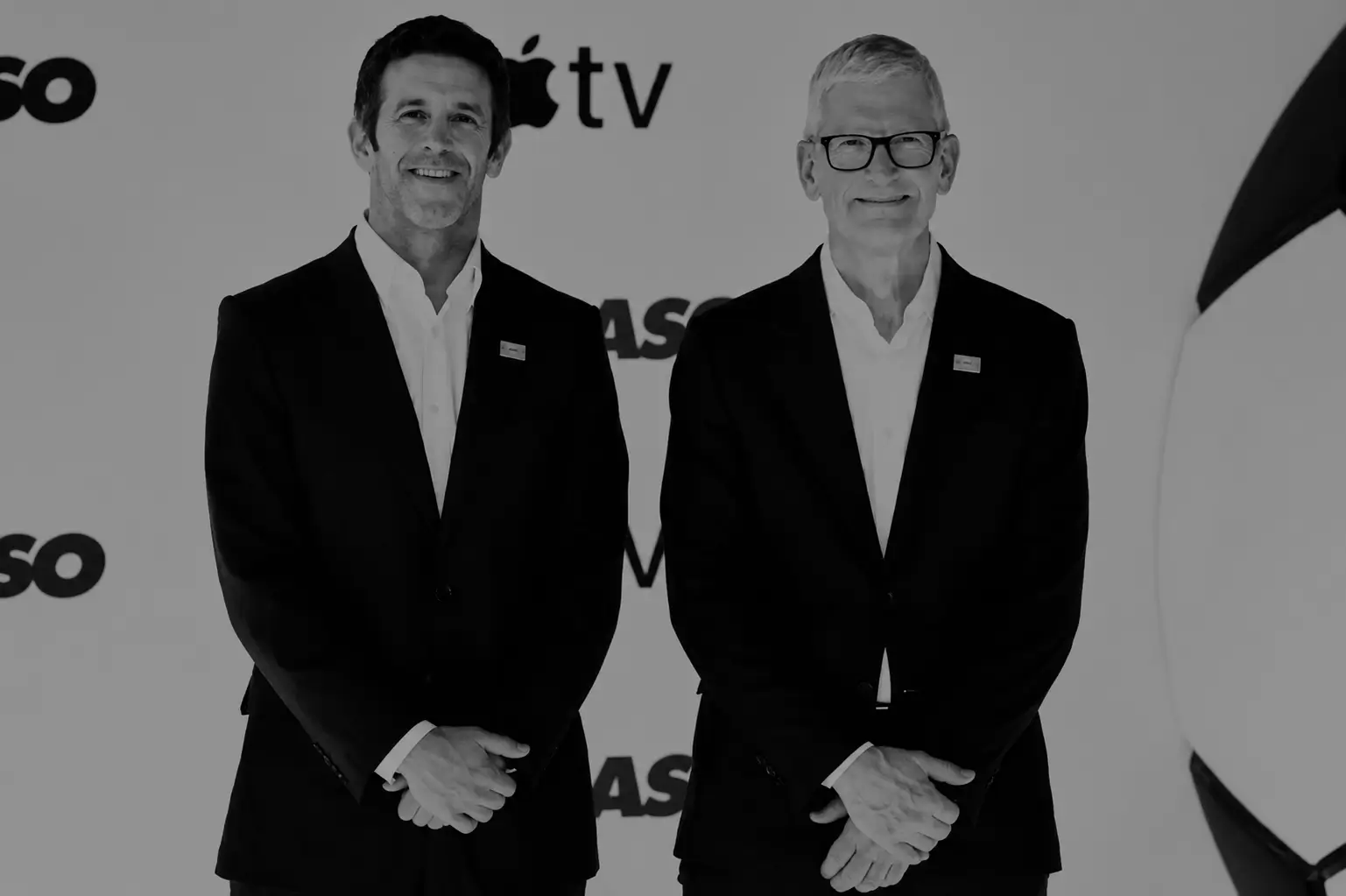
On September 1, the title changes hands. Tim Cook becomes executive chairman, and the man who built the products for 25 years becomes the one who runs the company.
Apple’s board did not spring this on anyone. The company announced in April that John Ternus, senior vice president of Hardware Engineering, would become chief executive officer effective September 1, 2026, taking over from Tim Cook, who has run the company since 2011. Cook moves into the role of executive chairman of the board. The transition was approved unanimously, and Apple described it as the product of a long term succession planning process rather than a sudden departure. Cook stayed on through the summer specifically to work the handoff alongside Ternus, and by his own account on Apple’s most recent earnings call, the transition has gone smoothly.
There is a particular kind of gravity to this one. Cook took over from Steve Jobs in August 2011, six weeks before Jobs died of pancreatic cancer, and inherited a company that much of the world still could not separate from its founder. He spent the next decade and a half proving that Apple could function, and thrive, as an institution rather than a personality cult. Now Apple does something it has not done in fifteen years: it changes leaders while everything is calm. No health crisis forced this one. No boardroom coup. Just a plan, executed on schedule.
Reporting from months before the announcement suggests the groundwork went back further than most outsiders realized. The Financial Times reported last November that Apple’s board and senior executives had already intensified succession planning, and that Ternus was widely viewed inside the company as the frontrunner for the job. Cook, according to that same reporting, had begun signal internally that he intended to reduce his workload over time rather than stay indefinitely. None of that made this week’s news any less significant, but it does explain why Apple’s own lang around the announcement kept returning to words like methodical and long term rather than urgent.
I want to thank everyone for the outpouring of love and thank you for believing in me to lead the company that has always put you at the center of our work. This is not goodbye. It’s a hello to John and I can’t wait for you to get to know him like I do! 🙏 pic.twitter.com/Q43QDG3UmZ
— Tim Cook (@tim_cook) April 21, 2026
who
Ternus is 50 or 51 years old, depending on which record you trust for his birth year, and he is about as close to a lifetime Apple employee as exists at the executive level. He earned a mechanical engineering degree from the University of Pennsylvania in 1997 and swam competitively for the school’s team before graduating. After a few years as a mechanical engineer at a small view reality firm called Virtual Research Systems, he joined Apple’s product design team in July 2001.
That is the detail that keeps surface in every profile written about him this year: 25 years at one company, almost all of it inside the hardware engineering organization, with essentially no other stop on his resume besides four years fixing virtual reality headsets before Apple existed as we know it now. One widely shared post from investor Palmer Luckey noted, half in jest, that Ternus had spent his pre Apple years as the lead mechanical engineer on a specific virtual reality headset model Luckey says he personally owned as a teenager, a small detail that captures just how long Ternus has been building physical hardware for a living.
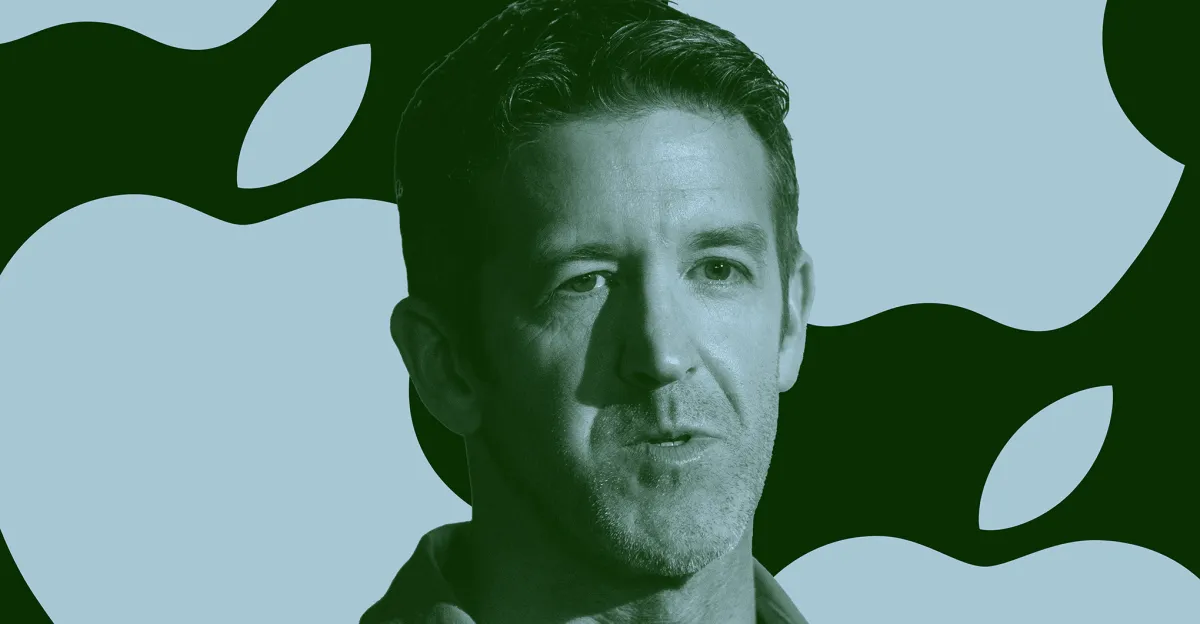
The editorial portrait of Apple executive John Ternus uses a monochromatic green treatment layered over oversized Apple logos, creating a clean, graphic composition that reflects the company’s instantly recognizable visual identity.
Colleagues and outside profiles describe him as an engineer’s engineer rather than a showman, someone who built his career close to the people actually design the products rather than the marketing built around them. That is a notably different profile from Cook, whose reputation rests on operations and supply chain mastery rather than product design instinct. It is also, according to several people who have worked alongside him, part of why the board settled on Ternus: Apple’s next chapter is widely expected to hinge less on a single new service category and more on getting hardware, software, custom silicon, and artificial intelligence to work together in ways rivals cannot easily replicate.
transition
His first project inside Apple was the Apple Cinema Display, a plastic monitor that feels almost quaint next to what came after. By 2013 he had climbed to vice president of hardware engineering, reporting to Dan Riccio and overseeing AirPods, Mac, and iPad. In 2020 his portfolio expanded again to include iPhone hardware, and when Riccio stepped down in January 2021 to focus on the Vision Pro effort, Ternus was promoted to senior vice president, joining Apple’s executive team directly under Cook.
From there his fingerprints landed on nearly everything Apple shipped. Every gen of iPad. Every AirPods model. The Mac’s move away from Intel processors and onto Apple’s own silicon, arguably the single biggest hardware bet the company made in the last decade. He became a familiar face at keynote events, too, unveiling refreshed iMacs and MacBook Pros, presenting the redesigned Mac Pro in 2019, and introducing the iPhone Air last year. Unlike Cook, whose reputation was built in supply chains and operations, Ternus is known first as a product person, someone who has spent his career in the room where the hardware actually gets decided.
quant
Whatever else gets said about the timing, the numbers from Cook’s run are not in dispute. Apple’s market value sat around $4 trillion at the time of the April announcement, making it the third most valuable public company on earth behind only Nvidia and Alphabet. Shares appreciated by more than seventeen hundred percent during his tenure. Annual revenue more than quadrupled. Cook inherited a company built around one visionary founder and left behind one of the most valuable and durable businesses in corporate history, whatever the debates about its recent pace of innovation.
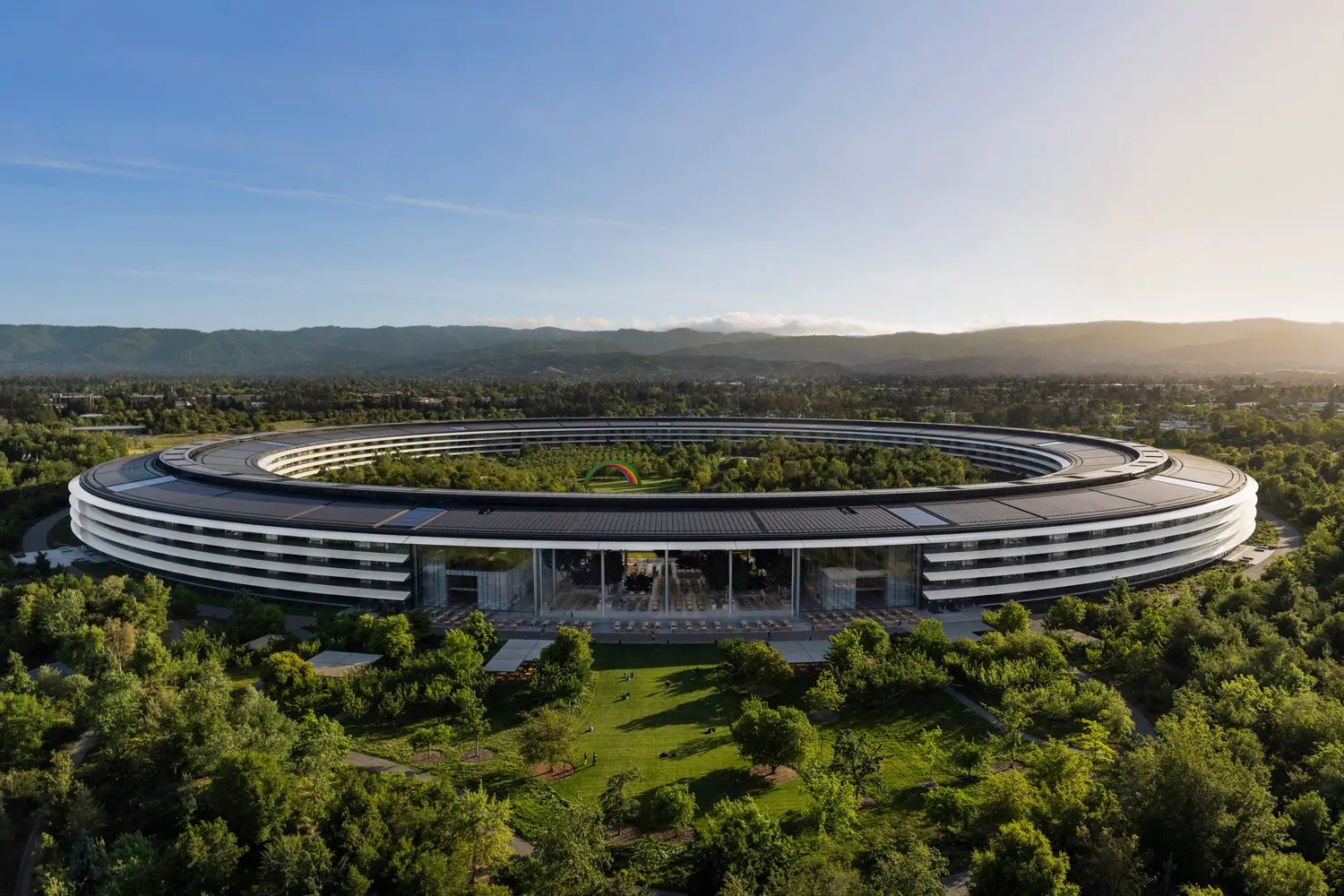
The Apple Park headquarters in Cupertino, California is one of the world’s most recognizable corporate campuses, featuring a circular ring-shaped design surrounded by expansive green spaces, solar-powered infrastructure, and a landscaped central courtyard.
Cook’s public statement on the change leaned into gratitude rather than triumph. He called it the greatest privilege of his life to have led Apple and spoke about the people he worked alongside rather than the balance sheet. Arthur Levinson, who has served as Apple’s non-executive chairman for fifteen years, praised Cook’s leadership as having transformed the company and credited him with the integrity that Levinson said runs through everything Apple does.
huh
Cook is not disappearing. As executive chairman, he keeps a hand in specific parts of the business, most notably relationships with policymakers around the world, a role that has only grown heavier as governments in the United States, the European Union, and China have leaned harder on the biggest technology companies. Levinson, meanwhile, moves from non-executive chairman into the role of lead independent director once the transition takes effect, and Ternus joins Apple’s board of directors the same day.
It is a tidy bit of institutional choreography: three people moving into three new seats on the same date, each one having spent years preparing for exactly this moment. Ternus, for his part, has said he is humbled by the responsibility and frame his approach around continue rather than reinvention, telling Apple’s own announcement that he intends to lead with the values that have defined the company for half a century.
Cook’s own words about his successor were notably specific for a corporate press release. He described Ternus as having the mind of an engineer, the soul of an innovator, and the mid to lead with integrity, language that reads less like boiler-plate and more like a mentor describe someone he has actual watched grow up inside the company. Ternus, in turn, called Cook his mentor directly, a detail that several outlets picked up on as evidence the relationship between the two ran deeper than a typical executive handoff.
challenge
No executive climbs for 25 years without a few scars, and Ternus has his. He was reportedly one of the key proponents behind the MacBook Pro’s Touch Bar, a feature one source close to the decision describe as shoe-horned in largely for its marketing value before Apple shh killed it off in later redesigns. He also championed the Butterfly Keyboard mechanism, a design choice that led to widespread reliability complaints and eventually a class action lawsuit before Apple abandoned the mechanism entirely.
Those missteps, paired with a cost conscious instinct that mirrors Cook’s own operational discipline more than it mirrors a pure design sensibility, reportedly put some strain on his relationship with Apple’s industrial design group over the years. It is worth naming plainly rather than smoothing over, since it is part of the same résumé that makes him the pick: a hardware executive who has made real, view mistakes on real, shipped products, and who kept climbing anyway.
extend
The most pressing item on his desk has nothing to do with hardware at all. Apple has fallen behind rivals like Google and Microsoft in the artificial intelligence race, and the criticism sharpened considerable after the company delayed a promised overhaul of Siri last year. Apple reorganized its AI leadership in December, bringing in an executive from Google, and has said to public that an updated version of Siri built on a Google Gemini model is coming later this year.
That single project will likely define how Ternus’s first year gets judged, fairly or not. iPhone 17 sales have held up well, but investors and technologists have been openly skeptical of Apple’s AI strategy for two years running, and the company that Ternus now leads needs a credible answer sooner rather than later. When asked directly in a recent interview what he plans to do first as CEO, Ternus demurred, saying only that people would have to wait and see. It was, depending on how charitable you read it, either coy or an honest admission that he has not decided yet.
In the same interview, Ternus was asked about Apple TV, and he chose to praise the work of Eddy Cue’s team rather than preview any changes, saying he is excited about the platform’s current momentum and pointing to shows he has been watching lately. It is a small window into his early style: praise the people already in place, defer specifics, let actions rather than announcements do the talking. Whether that instinct serves him well against a rival set that includes Google, Microsoft, and OpenAI, all of which move faster and talk louder about their AI roadmaps, is the open question hanging over his entire tenure before it has technically even started.
fin
Mechanically, the change is simple. Cook’s last day as CEO is August 31. Ternus becomes CEO and a board member on September 1. Levinson becomes lead independent director the same day. Cook shifts to executive chairman. Apple has already treated the transition as underway in practice: Cook confirmed on the company’s most recent earnings call that it was his final one in the CEO chair, and said John will lead the calls from here forward.
There is no ceremony scheduled, no theatrical send off. Apple has instead let the paperwork and the calendar do the talking, which tracks with how the company has handled the entire process since April: methodically, quietly, and on its own timeline. Cook spent fifteen years proving Apple could survive without Steve Jobs. Either Ternus can prove it can keep pace with an industry racing toward artificial intelligence is a separate question, and one that starts the moment the calendar turns to September.
Related Articles

Aaron Judge, Sidelined by Injury but Still Leading
The Yankees captain has not played since May, but he still has plenty to say […]